

Motmot

ヤマシギ 対 ヨーロッパジシギ

Scolopax rusticola 対 Gallinago media

ヤマシギとヨーロッパジシギのクイズ
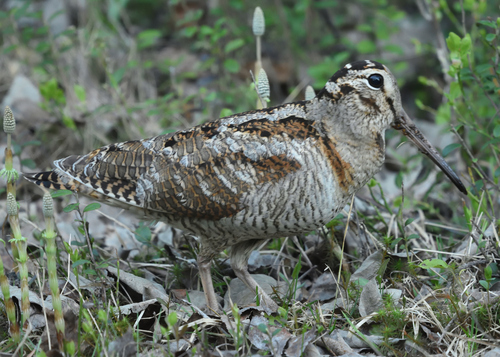
ヤマシギ (Scolopax rusticola) ヤマシギ
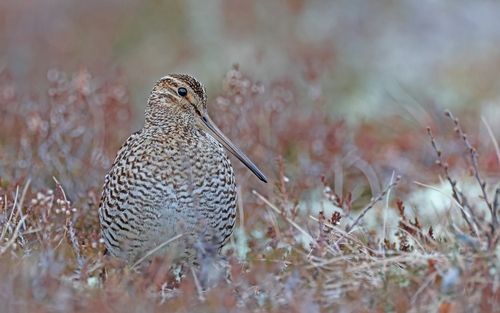
ヨーロッパジシギ (Gallinago media) ヨーロッパジシギ

メディア

読み込み中…

要点

最も信頼できるフィールドマークは頭の模様です:ヤマシギは頭頂に太い黒い帯を示し、ヨーロッパジシギは目を通る暗いストライプとよりストライプの多い頭を持っています。飛行中、ヨーロッパジシギは目立つ淡い翼帯と白い外尾羽を示し、ヤマシギにはこれらがありません。構造的には、ヤマシギは大きく、長くて真っ直ぐなくちばしと丸い翼を持ち、ヨーロッパジシギはずんぐりしていますが、くちばしは短いです。生息地も強い手がかりです:ヤマシギは密な森林を好み、ヨーロッパジシギは開けた湿地や湿った草地を好みます。もし頭に帯模様のある隠れたような水鳥を森林で見かけたら、それはほぼ確実にヤマシギです;開けた湿地では、ヨーロッパジシギの翼帯とストライプのある顔を探してください。

識別のコツ

  1. 頭の模様が重要です: ヤマシギは頭頂に太い黒い帯を示します(横方向);ヨーロッパジシギは目を通る暗いストライプとよりストライプの多い(縦方向の)頭を持っています。これはすべての年齢と季節で機能します。
  2. 飛行中の翼帯: すべての年齢のヨーロッパジシギは上翼に淡い翼帯を示し、特に飛行中に明らかです。ヤマシギは翼帯を示さず、その上翼は均一な模様です。
  3. 白い外尾羽: ヨーロッパジシギは尾を広げて白い外羽を示し、特にディスプレイ中や驚かされたときに目立ちます;ヤマシギの尾は均一な模様で白はありません。
  4. くちばしの長さと形: ヤマシギは長くて真っ直ぐなくちばし(6–8 cm)を持ち、基部は肉色で先端は暗いです。ヨーロッパジシギのくちばしは短く(6–7 cm)、フィールドではあまり目立ちません。
  5. サイズと体格: ヤマシギはヨーロッパジシギ(26–30 cm、43–50 cmの翼幅)よりも大きくてずんぐりしています(33–38 cm、55–65 cmの翼幅)。飛行中、ヤマシギはより重く、より丸みを帯びて見えます。
  6. 翼の形: ヤマシギは丸い翼を持ち、ヨーロッパジシギの翼は広いですが、あまり丸くなく、翼帯が幅の印象を強めます。
  7. 飛行スタイル: ヤマシギはジグザグに飛び、すぐにカバーに戻ります;ヨーロッパジシギは真っ直ぐで速く、長距離を飛んでから降ります。
  8. 生息地: ヤマシギは密な森林や背の高いヒースに生息し、ヨーロッパジシギは開けた湿地や湿った草地に生息します。生息地だけでもしばしば彼らを区別できます。
  9. 腹部の模様: ヤマシギは下側が淡い色で、ヨーロッパジシギは下側が帯模様です。これは微妙で、常に見えるわけではありません。
  10. 目の位置: ヤマシギの目は高く、後方に位置しており、特徴的な「大きな目」の外観を与えます;ヨーロッパジシギの目はスナイプに典型的です。
  11. 脚の色: ヤマシギの脚は灰色からピンクがかっています;ヨーロッパジシギの脚の色はフィールドでは目立ちません。
  12. 鳴き声: ヤマシギのローディングコール(「オル、オル、オル、ピスト」)は夕暮れ時にユニークです;ヨーロッパジシギのディスプレイ音は多様ですが、レクスでしか聞かれません。
  13. 性別/年齢: ヤマシギの性別はフィールドで区別できません;ヨーロッパジシギも羽毛に明らかな性差がありません。幼鳥/未成熟のマークは、ヨーロッパジシギの翼帯を超えては目立ちません。
  14. 文脈: 森林で隠れた水鳥を見かけたら、それはほぼ常にヤマシギです;開けた湿地では、ヨーロッパジシギの翼帯とストライプのある顔を確認してください。
  15. 一般的な落とし穴: 直接比較がない限り、サイズだけに頼らないでください。翼帯と頭の模様はすべての年齢で最も信頼できるフィールドマークです。

大きさ

ヤマシギは明らかに大きいです:長さ33–38 cm、翼幅55–65 cmで、ヨーロッパジシギの長さ26–30 cm、翼幅43–50 cmと比較されます [wikipedia]。ヤマシギはまた、特に休んでいるときにずんぐりして重いように見えます。ヤマシギのくちばしは長く(6–8 cm)真っ直ぐですが、ヨーロッパジシギのくちばしは短く(6–7 cm)やや目立たなくなります。手に持ったり近距離で見ると、ヤマシギはより重く、より頑丈な鳥ですが、フィールドでは、両種が一緒に見られない限り、サイズを判断するのが難しいことがあります。

羽色

行動

ヤマシギは通常、孤独で秘密主義的であり、近距離でのみ驚き、丸い翼でジグザグに飛び、すぐにカバーに戻ります。その飛行は強いですが、特に速くはありません。ヨーロッパジシギは、よくカモフラージュされていて見えにくいですが、驚かされたときの速くて真っ直ぐで持続的な飛行が注目され、降りる前にかなりの距離を飛ぶことがよくあります。繁殖期には、ヨーロッパジシギのオスはレクスでディスプレイを行い、尾を広げてジャンプしますが、ヤマシギのオスは夕暮れ時に「ローディング」ディスプレイ飛行を行い、森林の上を飛び回り、鳴き声を発します。採餌行動も異なります:ヤマシギは柔らかい森林の土を掘り、ヨーロッパジシギは開けた湿った地面を好み、視覚で食べ物を選ぶこともあります。

生息環境

生息地は強い区別要因です。ヤマシギは密な森林や背の高いヒースの鳥であり、夜以外は開けた地面に出ることはほとんどありません。もし深いカバーから隠れた水鳥を森林で驚かせたら、それはほぼ確実にヤマシギです。ヨーロッパジシギは開けた湿地や短い植生の湿った草地で繁殖し、決して密な森林には生息しません。移動中、ヨーロッパジシギは似たような開けた湿った生息地に見られることがありますが、本当の森林は避けます。もし環境が開けて湿地であれば、ヨーロッパジシギを優先し、森林であればヤマシギを優先してください。

声

ヤマシギのオスは夕暮れ時に特徴的な「ローディング」飛行を行い、「オル、オル、オル、ピスト」と表現される繰り返しの鳴き声を発します。これらの鳴き声は低く、粗く、機械的であり、春の存在の重要な指標です。ヨーロッパジシギの声はレクスでしか聞かれず、オスはかすかな「イエー」とさまざまな rattles、クリック、ブザー、笛を発し、時には遠くから聞こえることがあります。ほとんどのフィールド状況では、ヤマシギのローディングコールは、いかなるヨーロッパジシギの鳴き声よりも聞かれる可能性が高いです。

より良い説明を送る

比較と同じ項目を使ってください。文章はすぐに公開されます。

The most reliable field mark is the head pattern: Eurasian Woodcock shows bold black bars across the crown, while Great Snipe has a dark stripe running through the eye and a more striped head. In flight, Great Snipe displays a conspicuous pale wingbar and white outer tail feathers, both lacking in Woodcock. Structurally, Woodcock is larger, with a longer, straight bill and rounded wings, while Great Snipe is stocky but shorter-billed. Habitat is also a strong clue: Woodcock prefers dense woodland, Great Snipe open marshes and wet meadows. If you see a cryptically patterned wader in woodland with a barred crown, it's almost certainly a Woodcock; in open marsh, look for the wingbar and striped face of Great Snipe.

  1. Head pattern is key: Woodcock shows bold black bars across the crown (side-to-side); Great Snipe has a dark stripe through the eye and a more striped (longitudinal) head. This works in all ages and seasons.
  2. Wingbar in flight: Great Snipe of all ages shows a pale wingbar across the upperwing, especially obvious in flight. Woodcock never shows a wingbar; its upperwing is uniformly patterned.
  3. White outer tail: Great Snipe fans its tail to show white outer feathers, especially during display or when flushed; Woodcock's tail is uniformly patterned with no white.
  4. Bill length and shape: Woodcock has a long, straight bill (6–8 cm), flesh-coloured at the base with a dark tip. Great Snipe's bill is shorter (6–7 cm), and less striking in the field.
  5. Size and bulk: Woodcock is larger and bulkier (33–38 cm, 55–65 cm wingspan) than Great Snipe (26–30 cm, 43–50 cm wingspan). In flight, Woodcock appears heavier and more rounded.
  6. Wing shape: Woodcock has rounded wings; Great Snipe's wings are broad but less rounded, and the wingbar adds to the impression of width.
  7. Flight style: Woodcock flushes with a zigzag, dropping quickly back into cover; Great Snipe flies straight and fast for a long distance before dropping.
  8. Habitat: Woodcock in dense woodland or tall heather; Great Snipe in open marshes and wet meadows. Habitat alone can often separate them.
  9. Underpart pattern: Woodcock is buff below; Great Snipe is barred below. This is subtle and not always visible.
  10. Eye placement: Woodcock's eyes are set high and far back, giving a distinctive 'wide-eyed' look; Great Snipe's eyes are more typical for a snipe.
  11. Leg colour: Woodcock's legs are grey to pinkish; Great Snipe's leg colour is not distinctive in the field.
  12. Vocalizations: Woodcock's roding call ('orr, orr, orr, pist') at dusk is unique; Great Snipe's display sounds are varied but rarely heard except at leks.
  13. Sex/age: Woodcock sexes cannot be separated in the field; Great Snipe also lacks obvious sex differences in plumage. Juvenile/immature marks are not distinctive beyond the wingbar in Great Snipe.
  14. Context: If you see a cryptic wader in woodland, it's almost always Woodcock; in open marsh, check for the wingbar and striped face of Great Snipe.
  15. Common pitfalls: Do not rely on size alone unless you have direct comparison. The wingbar and head pattern are the most reliable field marks at all ages.

Eurasian Woodcock is significantly larger: 33–38 cm in length with a 55–65 cm wingspan, compared to Great Snipe's 26–30 cm length and 43–50 cm wingspan [wikipedia]. Woodcock also appears bulkier and heavier-bodied, especially at rest. The bill of Woodcock is longer (6–8 cm) and straight, while Great Snipe's is shorter (6–7 cm) and slightly less prominent. In the hand or at close range, Woodcock is the heavier, more robust bird, but in the field, size can be hard to judge unless both species are seen together.

  • Juvenile/immature/flight views:
  • Great Snipe in flight shows a distinct pale wingbar across the upperwing, visible in all ages and especially obvious in good light. The white outer tail feathers are also conspicuous when the tail is fanned, especially during display. Eurasian Woodcock lacks both the wingbar and the white outer tail, showing instead a uniform, intricately patterned upperwing and tail with no strong contrast.
  • Head pattern:
  • Woodcock has bold black bars across the crown (from side to side), never a stripe through the eye. Great Snipe has a dark stripe through the eye and a more longitudinally striped head, lacking the Woodcock's transverse bars.
  • Body and underparts:
  • Woodcock: Reddish-brown, intricately patterned upperparts, buff underparts. Great Snipe: Mottled brown above, barred below.
  • Bill and legs:
  • Woodcock: Long, straight, flesh-coloured at base with dark tip; legs grey to pinkish. Great Snipe: Shorter bill, not as striking; leg colour not diagnostic.
  • Sex/age variation:
  • Woodcock is sexually dimorphic in size but not in plumage; sexes cannot be separated in the field. No age-specific plumage marks noted for either species beyond the wingbar and tail pattern in Great Snipe.

Eurasian Woodcock is typically solitary, secretive, and flushes only at close range, flying off in a zigzag with rounded wings and dropping quickly back into cover. Its flight is strong but not especially fast. Great Snipe, though also well-camouflaged and difficult to see, is noted for its fast, straight, and sustained flight when flushed, often flying a considerable distance before dropping. During the breeding season, Great Snipe males display at leks, fanning their tails and jumping, while Woodcock males perform 'roding' display flights at dusk, flying circuits over woodland and calling. Feeding behavior also differs: Woodcock probes in soft woodland soil, while Great Snipe prefers open, wetter ground and may pick food by sight as well as probe.

Habitat is a strong separator. Eurasian Woodcock is a bird of dense woodland or tall heather, rarely venturing into open ground except at night. If you flush a cryptic wader from deep cover in a forest, it's almost certainly a Woodcock. Great Snipe breeds and feeds in open marshes and wet meadows with short vegetation, never in dense woodland. In migration, Great Snipe may be found in similar open, damp habitats but avoids true forest. If the setting is open and marshy, favor Great Snipe; if wooded, favor Woodcock.

Eurasian Woodcock males perform a distinctive 'roding' flight at dusk, giving repeated calls described as 'orr, orr, orr, pist.' These calls are low, gruff, and mechanical, and are a key indicator of presence in spring. Great Snipe's voice is much less likely to be heard except at leks, where males produce a faint 'yeah' and a variety of rattles, clicks, buzzes, and whistles, sometimes audible at great distance. In most field situations, Woodcock's roding call is much more likely to be heard than any Great Snipe vocalization.

変更を破棄しますか?

保存していない編集があります。今離れると失われます。

ヤマシギ · ヨーロッパジシギ · 苦手な鳥