

Cyprustapuit vs Bonte tapuit
Oenanthe cypriaca versus Oenanthe pleschanka
Speel een quiz met Cyprustapuit en Bonte tapuit
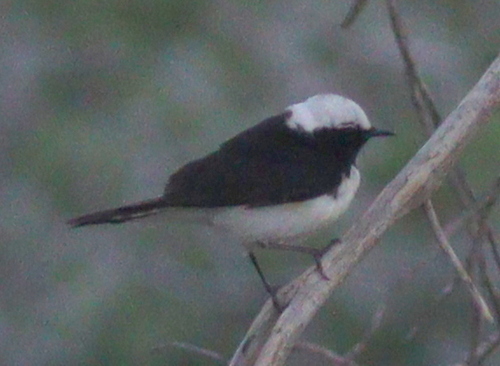 Cyprustapuit
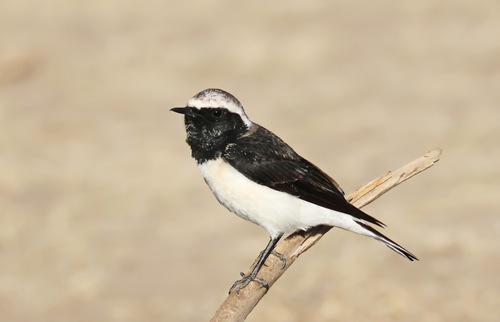 Bonte tapuit
Kort gezegd
Het meest betrouwbare veldkenmerk om de Cyprustapuit van de Bonte tapuit te scheiden, is het gebrek aan seksuele dimorfisme bij de Cyprustapuit: mannetjes en vrouwtjes lijken op elkaar, terwijl de Bonte tapuit sterke man-vrouwverschillen vertoont, vooral in het broedkleed. De Cyprustapuit is over het algemeen donkerder aan de bovenkant, met meer zwart op het hoofd, de rug en de staart, en mist de zandige of bufftinten die typisch zijn voor vrouwelijke en jonge Bonte tapuiten. In de vlucht of in rust vertoont de Bonte tapuit meestal een kenmerkend 'omgekeerd T'-patroon op de staart, terwijl de staart van de Cyprustapuit over het algemeen donkerder is. Het leefgebied kan ook een aanwijzing zijn: de Cyprustapuit geeft de voorkeur aan meer bosrijke en arboreale omgevingen, terwijl de Bonte tapuit gebonden is aan open, stenige grond. Vocalisaties zijn heel verschillend, maar zijn niet altijd beschikbaar in het veld.
Herkenningstips
- Seksueel dimorfisme: Alleen de Bonte tapuit vertoont sterke man-vrouwverschillen in het kleed. Als je een paar ziet en ze lijken op elkaar, is de kans veel groter dat het Cyprustapuiten zijn.
- Staartpatroon: Zoek naar de 'omgekeerde T' op de staart bij de Bonte tapuit—centrale veren zijn zwart, buitenste veren zijn wit met zwarte punten. De staart van de Cyprustapuit is over het algemeen donkerder, met meer zwart en minder helder wit.
- Kleur van de bovenkant: De Cyprustapuit is donkerder aan de bovenkant, met meer zwart op het hoofd en de rug, terwijl de Bonte tapuit (vooral vrouwtjes en jongeren) bruiner is en vaak zandige of bufftinten vertoont.
- Kroon en hoofd: Het mannetje van de Bonte tapuit heeft een witte kroon met een bruine tint, wat contrasteert met een zwart gezicht en keel. De Cyprustapuit mist de witte kroon en heeft een meer uniform donker hoofd.
- Gezichtspatroon: De Bonte tapuit vertoont een smalle bufflijn van de snavel over het oog; het gezicht van de Cyprustapuit is eenvoudiger en donkerder.
- Romp en bovenste staartdekkveren: De Bonte tapuit heeft een witte romp en bovenste staartdekkveren; de romp van de Cyprustapuit is minder contrasterend en donkerder.
- Onderkant: De Bonte tapuit vertoont crèmekleurige buff onderkant, vooral bij vrouwtjes en jongeren; de Cyprustapuit is witter aan de onderkant, met minder buff.
- Jongerenpatroon: Jonge Bonte tapuiten zijn gespikkeld aan de bovenkant (lichte centra op bruine veren); jonge Cyprustapuiten worden niet als gespikkeld beschreven en zouden donkerder en uniformer moeten lijken.
- Leefgebied: In Cyprus is een tapuit in bos, bosrand of hoog in de bomen bijna zeker een Cyprustapuit. In open, stenige grond, vooral buiten Cyprus, is de Bonte tapuit waarschijnlijker.
- Zithoogte: De Cyprustapuit zit vaak hoog (5–10 m) in bomen; de Bonte tapuit geeft de voorkeur aan rotsen en lage zitplaatsen.
- Zang: Het gezang van de Cyprustapuit is hoog en insectachtig; dat van de Bonte tapuit is laag, muzikaal en variabel. Als je een zoemend gezang hoort, is het de Cyprustapuit.
- Roep: De Bonte tapuit geeft een harde 'zack zack'; de roepen van de Cyprustapuit worden hier niet in detail beschreven.
- Vlucht jizz: Beide soorten vertonen typische tapuitvlucht, maar de Cyprustapuit kan meer thuis lijken in bomen en gebruikt meer luchtige sprongen.
- Verspreiding: De Cyprustapuit broedt alleen op Cyprus; de Bonte tapuit is daar een zeldzame dwaalgast. Buiten Cyprus is de Bonte tapuit de standaard.
- Seizoen: In Cyprus zijn broedvogels in de lente/zomer bijna altijd Cyprustapuiten. Migrerende Bonte tapuiten zijn zeldzaam en meestal buiten het broedseizoen.
Grootte
Both species are very similar in size, with Cyprustapuit at 14–15 cm and Bonte tapuit at about 14–14.6 cm in length [wikipedia]. There is no practical size difference in the field, and both are small, slim wheatears.
Verenkleed
-
Juvenile/First-year birds: Bonte tapuit juveniles have brown upperparts with pale centers near the tips, giving a speckled look. Females and juveniles are browner overall, with buff tips and sandy tones, especially on the head and upperparts. Cyprustapuit juveniles are not described in detail, but the species as a whole lacks the sandy or buff tones and is darker above, with more black on the head and back.
-
Adult males: Bonte tapuit males are boldly marked with a white crown, black face and throat, and a white rump. The tail shows a clear inverted black 'T' pattern. Cyprustapuit males (and females) are darker above, with more extensive black on the head, back, and tail, and lack the strong white crown and sandy tones.
-
Adult females: Bonte tapuit females are browner, with a sandy buff wash on the head and less white on the rump. Cyprustapuit females look like the males, with no sexual dimorphism, and are darker and more contrasting overall.
-
Tail pattern: Bonte tapuit shows a white tail with a black inverted 'T' (central feathers black, outer feathers white with black tips), while Cyprustapuit's tail is darker with more black overall.
Gedrag
De Cyprustapuit is de meest arboreale van de westelijke Palearctische tapuiten, vaak hoog (5–10 meter) zittend en gebruikmakend van luchtige sprongen om insecten te vangen. Het broedt vaak in bos en bosrand, en gebruikt zit-pounce tactieken. De Bonte tapuit is meer terrestrisch, meestal te vinden in open, stenige, schaars begroeide gebieden, en zingt vanaf rotsen of in de vlucht. In de vlucht vertonen beide soorten typische tapuit jizz, maar de Cyprustapuit kan meer thuis lijken in bomen en hogere zitplaatsen.
Habitat
De Cyprustapuit is sterk geassocieerd met Cyprus, broedt alleen op het eiland, en geeft de voorkeur aan bos, bosrand en gebieden met zowel open grond als hoge struik/bomenbedekking. Het is veel arborealer dan de Bonte tapuit. De Bonte tapuit broedt van Zuidoost-Europa tot Mongolië in open, stenige en schaars begroeide habitats, vaak op hogere hoogtes. Het wordt zelden in bosrijke gebieden aangetroffen en vermijdt dichte vegetatie. In Cyprus is de Bonte tapuit een zeldzame migrant of dwaalgast; de Cyprustapuit is de standaard broedsoort.
Geluid
De Cyprustapuit heeft een kenmerkend, hoog, insectachtig gezang dat bestaat uit zoemende uitbarstingen, heel anders dan de Bonte tapuit. Het gezang van de Bonte tapuit is laag, muzikaal en gevarieerd, soms leeuwerikachtig of fluitend, en wordt uitgevoerd vanaf een zitplaats of in de vlucht. De roep van de Bonte tapuit is een harde 'zack zack'. Het gezang is een sterke scheiding wanneer het gehoord wordt.