

Kuiforopendola vs Wagleroropendola
Psarocolius decumanus versus Psarocolius wagleri
Speel een quiz met Kuiforopendola en Wagleroropendola
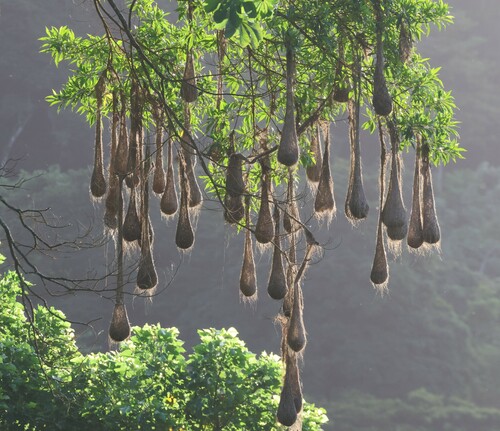 Kuiforopendola
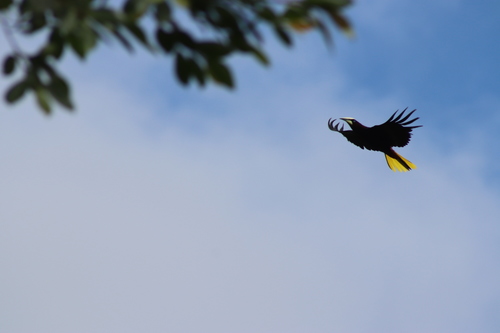 Wagleroropendola
Kort gezegd
Het meest betrouwbare veldkenmerk om Kuiforopendola van Wagleroropendola te scheiden, is de kleur en omvang van het hoofd en de onderdelen: Kuiforopendola is voornamelijk glanzend zwart met alleen een kastanjebruine staart en onderstaart, terwijl Wagleroropendola een rijke kastanjebruine kop, keel en bovenborst heeft die contrasteert met een zwartachtige romp. Beide soorten hebben opvallende gele staarten (met zwarte centrale veren), maar alleen Wagleroropendola toont een donkere kastanjebruine staart en bovenstaartdekkveren, en meer kastanjebruin op de flanken en onderstaart. Structurele verschillen zijn ook nuttig: Kuif is veel groter en langer in het algemeen, met een meer prominente kuif bij mannetjes. Beide hebben grote, bleke snavels en blauwe iris, maar de kleur en vorm van de snavel zijn subtiel verschillend. Juvenielen van beide zijn doffer en bruiner, maar het kleurcontrast van het hoofd blijft een belangrijke aanwijzing. Vocalisaties verschillen sterk, waarbij Kuif complexe, ratelende liederen geeft en Wagleroropendola korte, knallende en crashende noten produceert.
Herkenningstips
- Kleur van hoofd en bovenborst: Wagleroropendola van alle leeftijden en geslachten toont een rijke kastanjebruine (of bruinachtige bij juvenielen/vrouwen) kop, keel en bovenborst, scherp contrasterend met de zwartachtige romp. Kuiforopendola is voornamelijk glanzend zwart (of bruinachtig bij vrouwen/juvenielen) zonder kastanjebruin op het hoofd of de borst—alleen op de staart en onderstaart.
- Staart en onderstaart: Beide soorten hebben kastanjebruine staarten en onderstaartdekkveren, maar Wagleroropendola heeft ook kastanjebruin op de flanken en buik, terwijl Kuif zwart van kleur is met kastanjebruin beperkt tot de staart en onderstaart.
- Staartpatroon: Beide hebben gele staarten met zwarte centrale veren, maar Wagleroropendola toont zwarte randen op de buitenste staartveren, en juvenielen kunnen wat geel op het voorhoofd hebben. Dit is subtiel en het beste van dichtbij te zien.
- Kuif: Mannelijke Kuiforopendola heeft een lange, harige kuif op de nek, zichtbaar wanneer hij zit of zich toont. Wagleroropendola mannetjes hebben alleen een lichte kuif, en vrouwen/juvenielen van beide soorten hebben weinig of geen kuif.
- Kleur en vorm van de snavel: Beide hebben grote, bleke snavels met een gezwollen casque. De snavel van Kuif is ivoor tot lichtgeel, terwijl die van Wagleroropendola ivoor is met een blauwachtige of groenachtige tint, soms met een grijze punt. Dit is subtiel en niet altijd betrouwbaar op afstand.
- Iris kleur: Beide soorten hebben blauwe iris als volwassenen, maar juvenielen hebben bruinachtige ogen. Dit is geen sterk veldkenmerk voor scheiding.
- Grootte en structuur: Kuiforopendola is veel groter en zwaarder (vooral mannetjes), met een langere staart en een algehele meer imposante uitstraling. Wagleroropendola is kleiner en lijkt slanker, maar nog steeds langvleugelig in de vlucht. Als ze samen worden gezien, is het grootteverschil duidelijk.
- Vluchtuiterlijk: Wagleroropendola lijkt vooral langvleugelig in de vlucht, maar beide soorten hebben lange staarten en vleugels. Er is geen onderscheidend bovenvleugelpatroon beschreven voor beide soorten in juveniele of volwassen verenkleed, dus vertrouw op de lichaamskleur en structuur.
- Juveniel verenkleed: Juveniele Wagleroropendola is doffer maar toont nog steeds een bruinachtige kastanjebruine kop en bovenborst, terwijl juvenile Kuiforopendola over het algemeen dof bruinachtig zwart is zonder een contrasterend hoofd. Beide hebben bruinachtige snavels en ogen als juvenielen.
- Vocalisaties: Kuiforopendola geeft complexe, ratelende, gorgelende liederen met vloeibare hoots, vaak terwijl hij zich toont met vleugelklappen. Wagleroropendola geeft korte, knallende en crashende noten, met roepen zoals 'waku-waku' en 'whaaakka', en luidruchtige vleugelklappen in de vlucht. Als je het lied hoort, is identificatie eenvoudig.
- Habitat en verspreiding: In Midden-Amerika (Mexico tot Panama) wordt alleen Wagleroropendola verwacht. In het noorden van Zuid-Amerika (Colombia, Ecuador) kunnen beide voorkomen; Kuif is wijdverspreid in laagland Zuid-Amerika, terwijl Wagleroropendola de enige oropendola is in het grootste deel van Midden-Amerika.
- Geslachtsverschillen: Vrouwen van beide soorten zijn doffer en bruiner, met minder glans en een verminderde kuif. Het kleurcontrast van het hoofd blijft een belangrijk kenmerk voor Wagleroropendola, zelfs bij vrouwen.
- Tonen gedrag: Mannelijke Kuiforopendola tonen door te buigen, de staart op te tillen en met vleugels te klappen terwijl ze zingen; Wagleroropendola mannetjes tonen met verwarde veren en rechte houdingen. Gedragscontext kan helpen als het wordt waargenomen.
- Valstrikken: Vertrouw niet alleen op de gele staart, bleke snavel of blauwe iris—deze worden door beide soorten gedeeld. Focus op de kleur van het hoofd, grootte en algehele structuur.
- Kolomgrootte: Grote nestkolonies (meer dan 40 nesten) zijn typischer voor Kuiforopendola, vooral in Trinidad, maar dit is geen betrouwbaar veldkenmerk elders.
Grootte
Kuiforopendola is aanzienlijk groter en zwaarder dan Wagleroropendola. Mannelijke Kuif gemiddeld 47 cm (19 in) in lengte en 285 g (10 oz), terwijl vrouwen 37 cm (15 in) en 160 g (5.6 oz) zijn. In tegenstelling hiermee gemiddeld mannelijke Wagleroropendola 35 cm (14 in) en 214 g (7.5 oz), met vrouwen op 28 cm (11 in) en 113 g (4.0 oz) [wikipedia][wikidata]. Dit grootteverschil is duidelijk in het veld, vooral wanneer beide soorten samen worden gezien. Kuiforopendola lijkt zwaarder en langer van staart, terwijl Wagleroropendola compacter en slanker lijkt, hoewel nog steeds langvleugelig.
Verenkleed
Juvenielen van beide soorten zijn doffer dan volwassenen, met bruinachtige tinten en minder glans, maar het belangrijkste verschil is dat juvenielen van Wagleroropendola al een bruinachtige kastanjebruine kop en bovenborst tonen, terwijl juvenielen van Kuiforopendola over het algemeen donker bruinachtig zwart zijn zonder een contrasterend hoofd. In alle verenkleden is Kuiforopendola voornamelijk glanzend zwart (of bruinachtig bij vrouwen/juvenielen) met een kastanjebruine staart, bovenstaart en onderstaart, en een zwarte centrale staart met gele buitenveren. Wagleroropendola heeft altijd een rijke kastanjebruine kop, keel en bovenborst, met de rest van het lichaam zwartachtig en de staart, bovenstaart en onderstaart ook kastanjebruin, plus kastanjebruin op de achterflanken. De gele staart is vergelijkbaar bij beide, maar Wagleroropendola heeft zwarte randen op de buitenste staartveren, en soms verspreide gele veren op het voorhoofd bij juvenielen. Beide geslachten van beide soorten hebben een grote, bleke snavel met een gezwollen casque en blauwe iris, maar de snavel van Kuif is ivoor tot lichtgeel, terwijl die van Wagleroropendola ivoor is met een blauwachtige of groenachtige tint. Mannen van beide hebben een kuif, maar deze is langer en duidelijker bij Kuiforopendola; vrouwen en juvenielen hebben een minimale of afwezig kuif.
Gedrag
Beide soorten zijn koloniale nesters, vaak in groepen te zien. Mannelijke Kuiforopendola tonen door te buigen, de staart op te tillen en met vleugels te klappen terwijl ze zingen, en worden vaker gezien in grote kolonies (vooral in Trinidad). Mannelijke Wagleroropendola tonen ook met verwarde veren en rechte houdingen. In de vlucht lijkt Wagleroropendola vooral langvleugelig. Beide soorten hangen hun geweven nesten aan boomtakken, maar kolonies van Kuiforopendola kunnen erg groot zijn (meer dan 40 nesten in Trinidad).
Habitat
Kuiforopendola is wijdverspreid in Zuid-Amerika (behalve Chili en Uruguay), reikt tot Panama, Costa Rica en Trinidad en Tobago, en is de meest voorkomende oropendola in een groot deel van zijn verspreidingsgebied. Wagleroropendola wordt gevonden van Zuid-Mexico door Midden-Amerika (behalve El Salvador) en in Colombia en Ecuador. Waar hun verspreidingsgebieden overlappen (Panama, Costa Rica, Colombia, Ecuador), kan habitat helpen maar is niet altijd diagnostisch. Beide geven de voorkeur aan open bos, bosranden en gebieden met hoge bomen voor het nestelen, maar Kuif komt vaker voor in laagland Zuid-Amerika, terwijl Wagleroropendola de enige oropendola is in het grootste deel van Midden-Amerika.
Geluid
Mannelijke Kuiforopendola geven een complex lied dat begint met lage vloeibare noten, opbouwend naar een ratelend crescendo, en eindigend met een trillende, hootende frase, vaak vergezeld van vleugelklappen. Het lied is variabel en omvat staccato fluiten en vloeibare gorgels. In tegenstelling hiermee is het lied van Wagleroropendola kort en variabel, met lage knallende geluiden gevolgd door harde, crashende geluiden (vergeleken met een machete die vegetatie snijdt). Veelvoorkomende roepen zijn een vloeibare, laagtonige 'waku-waku' en een krassende, elektrische 'whaaakka'. De vleugels van mannetjes zijn luidruchtig in de vlucht. Het verschil in liedstructuur en kwaliteit is opvallend als beide worden gehoord.