

Crested Oropendola vs Chestnut-headed Oropendola
Psarocolius decumanus contro Psarocolius wagleri
Fai un quiz con Crested Oropendola e Chestnut-headed Oropendola
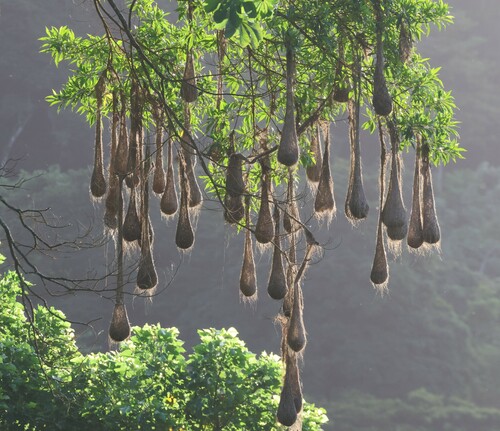 Crested Oropendola
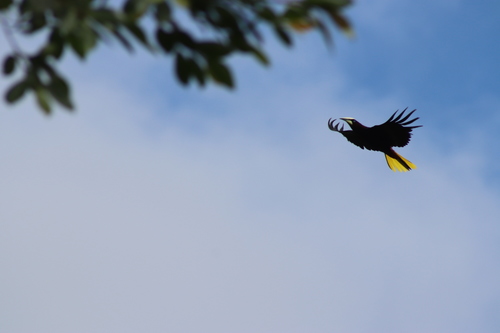 Chestnut-headed Oropendola
In breve
Il segno distintivo più affidabile per separare la Crested Oropendola dalla Chestnut-headed Oropendola è il colore e l'estensione della testa e delle parti inferiori: la Crested Oropendola è per lo più nera lucida con solo un dorso e una coda di castagna, mentre la Chestnut-headed Oropendola ha una testa, una gola e un petto superiore di un ricco castano che contrastano con un corpo nerastro. Entrambe le specie hanno code gialle sorprendenti (con piume centrali nere), ma solo la Chestnut-headed mostra un dorso castano scuro e copritail, e più castano sui fianchi e sulla coda. Anche le differenze strutturali sono utili: la Crested è molto più grande e lunga nel complesso, con una cresta più prominente nei maschi. Entrambe hanno becchi grandi e chiari e iridi blu, ma il colore e la forma del becco sono leggermente diversi. I giovani di entrambe sono più opachi e marroni, ma il contrasto del colore della testa rimane un indizio chiave. Le vocalizzazioni differiscono notevolmente, con la Crested che emette canti complessi e rattling e la Chestnut-headed che produce note brevi, scoppiettanti e fragorose.
Consigli di identificazione
- Colore della testa e del petto superiore: La Chestnut-headed Oropendola di tutte le età e sessi mostra una testa, una gola e un petto superiore di un ricco castano (o marrone nei giovani/femmine), che contrastano nettamente con il corpo nerastro. La Crested Oropendola è per lo più nera lucida (o marrone nelle femmine/giovani) senza castano sulla testa o sul petto—solo sul dorso e sulla coda.
- Dorso e coda: Entrambe le specie hanno dorso e copritail castani, ma la Chestnut-headed ha anche castano sui fianchi e sul ventre, mentre la Crested ha un corpo nero con castano limitato al dorso e alla coda.
- Schema della coda: Entrambe hanno code gialle con piume centrali nere, ma la Chestnut-headed mostra bordi neri sulle piume della coda più esterne, e i giovani possono avere un po' di giallo sulla fronte. Questo è sottile e meglio visibile da vicino.
- Cresta: Il maschio della Crested Oropendola ha una lunga cresta ispida sulla nuca, visibile quando è posato o in mostra. I maschi della Chestnut-headed hanno solo una leggera cresta, e le femmine/giovani di entrambe le specie hanno poca o nessuna cresta.
- Colore e forma del becco: Entrambe hanno becchi grandi e chiari con un casco gonfio. Il becco della Crested è avorio a giallo pallido, mentre quello della Chestnut-headed è avorio con una sfumatura blu o verdognola, a volte con una punta grigia. Questo è sottile e non sempre affidabile a distanza.
- Colore dell'iride: Entrambe le specie hanno iridi blu da adulte, ma i giovani hanno occhi marroni. Questo non è un segno distintivo forte per la separazione.
- Dimensioni e struttura: La Crested Oropendola è molto più grande e robusta (soprattutto i maschi), con una coda più lunga e un aspetto complessivo più imponente. La Chestnut-headed è più piccola e appare più snella, ma ha ancora ali lunghe in volo. Se viste insieme, la differenza di dimensioni è ovvia.
- Aspetto in volo: La Chestnut-headed Oropendola appare particolarmente lunga in volo, ma entrambe le specie hanno code e ali lunghe. Non è descritto alcun schema distintivo dell'ala superiore per entrambe le specie in piumaggio giovanile o adulto, quindi fare affidamento sul colore del corpo e sulla struttura.
- Piumaggio giovanile: La giovane Chestnut-headed Oropendola è più opaca ma mostra ancora una testa e un petto superiore castano, mentre la giovane Crested Oropendola è complessivamente di un marrone scuro senza una testa contrastante. Entrambe hanno becchi e occhi marroni da giovani.
- Vocalizzazioni: La Crested Oropendola emette canti complessi, rattling e gorgoglianti con hoots liquidi, spesso mentre si esibisce con il battito delle ali. La Chestnut-headed Oropendola emette note brevi, scoppiettanti e fragorose, con richiami come 'waku-waku' e 'whaaakka', e battiti d'ali rumorosi in volo. Se senti il canto, l'identificazione è semplice.
- Habitat e distribuzione: In America Centrale (Messico a Panama), ci si aspetta solo la Chestnut-headed Oropendola. Nel nord della Sud America (Colombia, Ecuador), entrambe possono verificarsi; la Crested è più diffusa nella Sud America delle pianure, mentre la Chestnut-headed è l'unica oropendola nella maggior parte dell'America Centrale.
- Differenze sessuali: Le femmine di entrambe le specie sono più opache e marroni, con meno lucentezza e una cresta ridotta. Il contrasto del colore della testa rimane un segno chiave per la Chestnut-headed, anche nelle femmine.
- Comportamento di esibizione: I maschi della Crested Oropendola si esibiscono inchinandosi, sollevando la coda e battendo le ali mentre cantano; i maschi della Chestnut-headed si esibiscono con piume arruffate e posture erette. Il contesto comportamentale può aiutare se osservato.
- Trappole: Non fare affidamento solo sulla coda gialla, sul becco chiaro o sull'iride blu—questi sono condivisi da entrambe le specie. Concentrati sul colore della testa, sulla dimensione e sulla struttura complessiva.
- Dimensione della colonia: Grandi colonie di nidificazione (oltre 40 nidi) sono più tipiche della Crested Oropendola, soprattutto a Trinidad, ma questo non è un segno distintivo affidabile altrove.
Taglia
La Crested Oropendola è sostanzialmente più grande e pesante della Chestnut-headed Oropendola. I maschi della Crested misurano in media 47 cm (19 in) di lunghezza e 285 g (10 oz), mentre le femmine sono 37 cm (15 in) e 160 g (5.6 oz). Al contrario, i maschi della Chestnut-headed Oropendola misurano in media 35 cm (14 in) e 214 g (7.5 oz), con le femmine a 28 cm (11 in) e 113 g (4.0 oz) [wikipedia][wikidata]. Questo divario di dimensioni è ovvio sul campo, soprattutto quando entrambe le specie sono viste insieme. La Crested Oropendola appare più robusta e con una coda più lunga, mentre la Chestnut-headed appare più compatta e snella, anche se ha ancora ali lunghe.
Piumaggio
I giovani di entrambe le specie sono più opachi degli adulti, con toni marroni e meno lucentezza, ma la differenza chiave è che i giovani della Chestnut-headed Oropendola mostrano già una testa e un petto superiore castano, mentre i giovani della Crested Oropendola sono complessivamente di un marrone scuro senza una testa contrastante. In tutti i piumaggi, la Crested Oropendola è per lo più nera lucida (o marrone nelle femmine/giovani) con un dorso, una coda superiore e una coda di castagna, e una coda centrale nera con piume esterne gialle. La Chestnut-headed Oropendola ha sempre una testa, una gola e un petto superiore di un ricco castano, con il resto del corpo nerastro e il dorso, la coda superiore e la coda anch'essi castani, più castano sui fianchi posteriori. La coda gialla è simile in entrambe, ma la Chestnut-headed ha bordi neri sulle piume della coda più esterne, e a volte piume gialle sparse sulla fronte nei giovani. Entrambi i sessi di entrambe le specie hanno un grande becco chiaro con un casco gonfio e un'iride blu, ma il becco della Crested è avorio a giallo pallido, mentre quello della Chestnut-headed è avorio con una sfumatura blu o verdognola. I maschi di entrambe hanno una cresta, ma è più lunga e più evidente nella Crested Oropendola; le femmine e i giovani hanno una cresta minima o assente.
Comportamento
Entrambe le specie sono nidi coloniali, spesso viste in gruppi. I maschi della Crested Oropendola si esibiscono inchinandosi, sollevando la coda e battendo le ali mentre cantano, e sono più propensi a essere visti in grandi colonie (soprattutto a Trinidad). I maschi della Chestnut-headed Oropendola si esibiscono anche con piume arruffate e posture erette. In volo, la Chestnut-headed Oropendola appare particolarmente lunga in volo. Entrambe le specie appendono i loro nidi intrecciati dai rami degli alberi, ma le colonie della Crested Oropendola possono essere molto grandi (oltre 40 nidi a Trinidad).
Habitat
La Crested Oropendola è diffusa in Sud America (eccetto Cile e Uruguay), raggiungendo Panama, Costa Rica e Trinidad e Tobago, ed è l'oropendola più comune in gran parte del suo areale. La Chestnut-headed Oropendola si trova dal sud del Messico attraverso l'America Centrale (eccetto El Salvador) e in Colombia e Ecuador. Dove i loro areali si sovrappongono (Panama, Costa Rica, Colombia, Ecuador), l'habitat può aiutare ma non è sempre diagnostico. Entrambe preferiscono boschi aperti, bordi forestali e aree con alberi alti per nidificare, ma la Crested è più probabile nelle pianure della Sud America, mentre la Chestnut-headed è l'unica oropendola nella maggior parte dell'America Centrale.
Voce
I maschi della Crested Oropendola emettono un canto complesso che inizia con note liquide basse, costruendo un crescendo rattling e terminando con una frase tremolante e hooting, spesso accompagnata da battiti d'ali. Il canto è variabile e include flauti staccati e gorgoglii liquidi. Al contrario, il canto della Chestnut-headed Oropendola è breve e variabile, con suoni scoppiettanti bassi seguiti da rumori aspri e fragorosi (paragonati a un machete che taglia la vegetazione). Le chiamate comuni includono un 'waku-waku' liquido e a bassa tonalità e un 'whaaakka' graffiante ed elettrico. Le ali dei maschi sono rumorose in volo. La differenza nella struttura e nella qualità del canto è sorprendente se entrambi vengono ascoltati.
Crested Oropendola · Chestnut-headed Oropendola · I miei uccelli difficili