

Kuifsjakohoen vs Zwarte goean
Penelope purpurascens versus Chamaepetes unicolor
Speel een quiz met Kuifsjakohoen en Zwarte goean
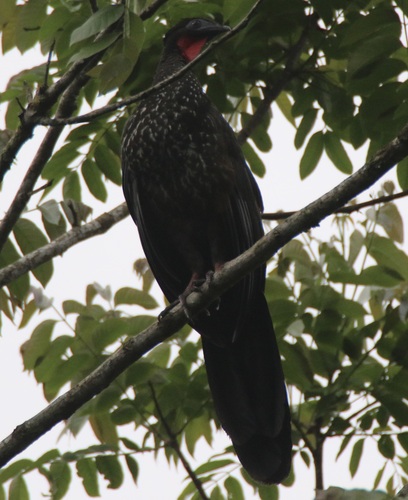 Kuifsjakohoen
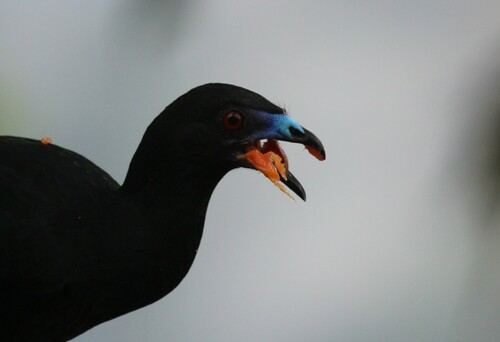 Zwarte goean
Kort gezegd
Het meest betrouwbare veldkenmerk om de Kuifsjakohoen van de Zwarte goean te onderscheiden is de algehele kleur van het verenkleed en de huid van het gezicht: Kuifsjakohoen is overwegend dof olijfbruin met witomzoomde borst- en buikveren en een kleine rode krop, terwijl Zwarte goean uniform zwart is met opvallende blauwe gezichtshuid en geen krop. Juveniele Kuifsjakohoens vertonen een roestkleurige wash op de vleugels en staart, in tegenstelling tot de bruiner onderdelen van juvenile Zwarte goean. De structuur helpt ook: Kuifsjakohoen is veel groter en heeft een langere staart, met een meer kalkoenachtige uitstraling. Beide soorten kunnen in silhouet verwarrend zijn, maar aandacht voor de kleur van de gezichtshuid, de kleur van de poten en de aanwezigheid of afwezigheid van een krop zal de identificatie bevestigen.
Herkenningstips
- Verenkleur: Kuifsjakohoen is dof olijfbruin met witomzoomde borst- en buikveren en kastanjebruine onderdelen; Zwarte goean is uniform zwart en glanzend zonder wit of kastanjebruin. Dit is de snelste controle bij goed licht.
- Gezichtshuid: Kuifsjakohoen heeft leigrijze blote huid op het gezicht en een kleine rode krop op de keel; Zwarte goean heeft heldere blauwe gezichtshuid rond het oog en geen krop. Het blauwe gezicht is uniek voor Zwarte goean in deze regio.
- Poten kleur: Beide hebben roodachtige poten, maar de poten van Zwarte goean zijn roze-rood, terwijl die van Kuifsjakohoen meer solide rood zijn. Niet altijd zichtbaar, maar kan helpen bij dichtbij bekijken.
- Juveniel verenkleed: Juveniele Kuifsjakohoen vertoont een roestkleurige wash op de vleugels en staart en is gemêleerd met zwartachtig bruin; juvenile Zwarte goean is doffer dan volwassenen, met bruiner onderdelen maar blijft uniform donker. Als je roestkleurige tonen in de vleugels/staart van een jonge vogel ziet, is het Kuifsjakohoen.
- Grootte en vorm: Kuifsjakohoen is veel groter en heeft een langere staart, met een meer kalkoenachtige structuur en beweging. Zwarte goean is kleiner, compacter, en minder langwerpig in de staart.
- Staartlengte: De staart van Kuifsjakohoen is proportioneel langer en breder, vooral merkbaar in de vlucht of wanneer hij zit met de staart uitgespreid.
- Krop: Alleen Kuifsjakohoen heeft een kleine rode krop op de keel. Als je een hangende rode krop ziet, is het geen Zwarte goean.
- Iris kleur: Beide hebben rode ogen, dus dit is niet nuttig voor scheiding.
- Vocalisaties: Kuifsjakohoen is veel luider, met honkende, schreeuwende, en 'stoomfluit'-roepen. Zwarte goean is stiller, met fluitende, lage 'ro-rooo', en een kenmerkende vleugel-ratel bij zonsopgang/ondergang. Luister naar het verschil als de vogel roept.
- Geografisch bereik: Buiten Costa Rica en Panama komt alleen Kuifsjakohoen voor. In Costa Rica en westelijk Panama zijn beide mogelijk, dus vertrouw op verenkleed en gezichtshuid.
- Habitat: Zwarte goean komt waarschijnlijker voor op hogere hoogtes in Costa Rica/Panama, terwijl Kuifsjakohoen wijdverspreider is en ook op lagere hoogtes kan worden gevonden.
- Geslachten: Beide soorten zijn seksueel monomorf in verenkleed, dus geslacht is niet nuttig voor veldidentificatie.
- Vlucht silhouet: Beide kunnen vergelijkbaar lijken in de vlucht, maar de langere staart en het stevigere lichaam van Kuifsjakohoen zijn aanwijzingen. Zwarte goean lijkt compacter en uniform.
- Valkuilen: Slecht licht kan Kuifsjakohoen donkerder en uniformer laten lijken, maar de witomzoomde buik en kastanjebruine tonen moeten nog steeds zichtbaar zijn van dichtbij. Zwarte goean toont nooit wit of kastanjebruin, zelfs niet bij juvenielen.
- Subspecies variatie: Sommige subspecies van Kuifsjakohoen zijn roestkleuriger, maar benaderen nooit het uniforme zwart van Zwarte goean. Controleer altijd op witomzoomde veren en krop.
Grootte
Kuifsjakohoen is aanzienlijk groter, met een lengte van 76–91,5 cm en een gewicht van 1,6–2,4 kg, met een lange, brede staart en robuuste poten. Zwarte goean is kleiner met 62–69 cm en ongeveer 1,1 kg. In het veld lijkt Kuifsjakohoen bulker en langer, terwijl Zwarte goean compacter en minder imposant is. Het verschil in staartlengte is vooral merkbaar wanneer ze zitten of in de vlucht.
Verenkleed
- Juvenielen: Juveniele Kuifsjakohoens zijn gemêleerd met zwartachtig bruin en hebben een roestbruin wash op de vleugel- en staartveren, wat niet te zien is bij Zwarte goean. Juveniele Zwarte goean zijn doffer dan volwassenen, met bruiner onderdelen en minder glans, maar blijven uniform donker zonder roestkleurige tonen.
- Volwassenen: Volwassen Kuifsjakohoen is overwegend dof olijfbruin met een vage groenachtige of paarse iridescentie, witomzoomde borst- en buikveren, kastanjebruine buik en crissum, en een kleine rode krop op de keel. De gezichtshuid is leigrijs, en de iris is rood. Volwassen Zwarte goean is volledig zwart met een glanzende glans, heldere blauwe gezichtshuid rond een rood oog, en roze-rode poten en voeten. Er is geen krop. De uniformiteit van het verenkleed van Zwarte goean, vooral het gebrek aan wit of kastanjebruin, is een belangrijk verschil.
Gedrag
Beide soorten zijn boombewonend en vaak te zien in bomen, maar de grotere omvang en langere staart van Kuifsjakohoen geven het een zwaardere, kalkoenachtige beweging, vooral wanneer het langs takken loopt of tussen bomen glijdt. Zwarte goean, kleiner en compacter, kan er wendbaarder en minder opvallend uitzien. Beide kunnen schuw zijn en zich terugtrekken in dichte begroeiing wanneer ze verstoord worden.
Habitat
Kuifsjakohoen heeft een veel breder bereik, gevonden van centraal Mexico door Midden-Amerika en in delen van Noord-Zuid-Amerika, terwijl Zwarte goean beperkt is tot Costa Rica en Panama. In gebieden van overlap (Costa Rica, westelijk Panama) komen beide voor in vochtige bossen, maar Zwarte goean wordt vaker op hogere hoogtes aangetroffen. Als je het buiten Costa Rica of Panama ziet, is het bijna zeker Kuifsjakohoen.
Geluid
Kuifsjakohoen is opmerkelijk luid en gevarieerd, met krachtige 'stoomfluit'-roepen, honkende 'quonk'-noten, en een verscheidenheid aan kreten en schreeuwen. De alarmroepen zijn vooral luidruchtig. Zwarte goean is stiller, met fluitende roepen in het broedseizoen, een lage 'ro-rooo' of 'kowr' wanneer verstoord, en een scherpe, knetterende vleugel-ratel bij zonsopgang en -ondergang. Als je een luide, honkende koor hoort, vermoed dan Kuifsjakohoen; als de roep lager, zachter is, of een vleugel-ratel bevat, overweeg dan Zwarte goean.