

Musduif vs Dwergduif
Columbina passerina versus Columbina minuta
Speel een quiz met Musduif en Dwergduif
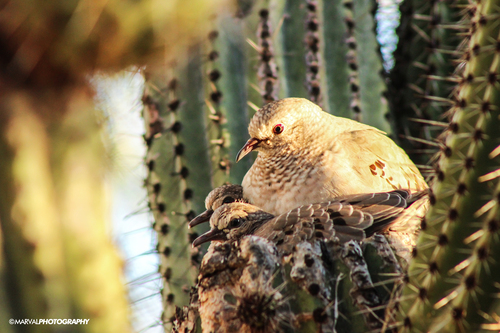 Musduif
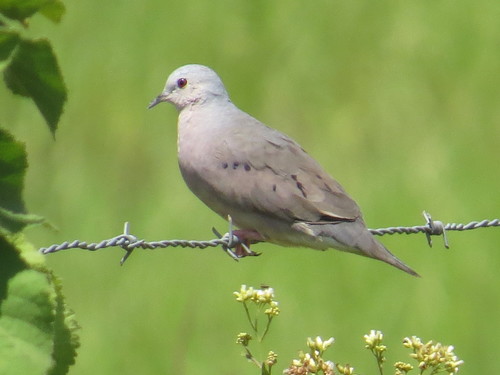 Dwergduif
Kort gezegd
Het meest betrouwbare veldkenmerk om de Musduif van de Dwergduif te scheiden, is de aanwezigheid of afwezigheid van schubachtige (geschubde) veren op het hoofd en de bovenborst: de Musduif toont altijd een duidelijk geschubd patroon, terwijl de Dwergduif dit mist en een gladde borst heeft. In de vlucht flitst de Musduif kastanjebruin langs de primair en vleugelranden, zichtbaar bij zowel zittende als vliegende vogels, terwijl de Dwergduif voornamelijk roestkleurig op de ondervleugel toont en lichtere vleugels heeft met donkere paarse vlekken. Beide soorten zijn kleine, op de grond levende duiven, maar de Musduif is iets groter en talrijker in de VS en het Caribisch gebied. Zorgvuldige aandacht voor de textuur van de veren op het hoofd en de borst, evenals de vleugelkleur in de vlucht, is essentieel om verwarring te voorkomen, vooral bij jonge vogels.
Herkenningstips
- Controleer op geschubde veren op hoofd en bovenborst: Als je een geschubde of schubachtige textuur ziet, is het de Musduif. Als het hoofd en de borst glad en onopvallend zijn, is het de Dwergduif. Dit is het meest betrouwbare kenmerk voor alle leeftijden en geslachten.
- Zoek naar kastanjebruin in de vleugels tijdens de vlucht: De Musduif flitst kastanjebruin langs de primair en vleugelranden wanneer hij vliegt of zich uitstrekt. De Dwergduif mist dit, en toont in plaats daarvan voornamelijk roestkleurig op de ondervleugel en lichtere bovenvleugels met donkere paarse vlekken. Dit is het beste te zien in goed licht of wanneer de vogel wordt geschrokken en opvliegt.
- Snavelkleur: De Musduif heeft een gele snavel met een zwarte punt; de Dwergduif heeft een effen grijze snavel. Dit is subtiel, maar kan helpen op korte afstand.
- Gezichtskleur en oog: De Musduif heeft roze veren rond de snavel; de Dwergduif heeft roodachtige ogen en roze poten, die zichtbaar kunnen zijn op korte afstand.
- Staartlengte: De Musduif heeft een zeer korte staart die overeenkomt met de rug; de staart van de Dwergduif wordt niet als kenmerkend beschreven, dus de staartlengte is slechts een zwakke aanwijzing.
- Geslachtsverschillen: Mannelijke Musduiven hebben een leisteengrijze kroon en een roze-grijze buik; vrouwtjes zijn grijzer en gelijkmatiger van kleur. De Dwergduif vertoont alleen subtiele geslachtsverschillen, dus vertrouw hier niet op tenzij je zeer vertrouwd bent met beide.
- Algemene kleur en patroon: De Musduif is bruin boven met zwarte vlekken op de vleugels; de Dwergduif is donkergrijs tot bruin met lichtere vleugels en donkere paarse vlekken, maar heeft nooit het geschubde hoofd en de borst.
- Vluchtstijl: Beide zijn klein en snel, maar als je kastanjebruin in de vleugels ziet, is het de Musduif. Als de vleugels lichter lijken met roestkleurig eronder, overweeg dan de Dwergduif.
- Stem: Als je zachte, oplopende kreten hoort, is het de Musduif. Het ontbreken van vocalisatie is niet diagnostisch voor de Dwergduif.
- Habitat en overvloed: In de VS en het Caribisch gebied is de Musduif waarschijnlijker en talrijker. De Dwergduif is zeldzaam of afwezig in deze gebieden.
- Grootte: Beide zijn klein, maar de Musduif is iets groter en robuuster; de Dwergduif is marginaal kleiner en lichter, maar dit is zelden nuttig in het veld.
- Vermijd verwarring met andere Columbina: Beide kunnen verward worden met de Steenduif (C. talpacoti), maar die soort is doffer en mist de roodachtige of kastanjebruine tinten.
- Jongere verwarring: Zelfs jonge Musduiven vertonen enige schubvorming op het hoofd en de borst, dus dit kenmerk is betrouwbaar voor alle leeftijden.
- Verlichting en afstand: Van een afstand of in slecht licht kunnen beide eenvoudig en bruinachtig lijken; probeer altijd een goed zicht te krijgen op de textuur van het hoofd en de bovenborst.
- Subspeciesvariatie: Sommige subspecies van de Musduif zijn lichter of donkerder, maar behouden allemaal het geschubde hoofd en de borst. De Dwergduif blijft gedurende zijn verspreidingsgebied glad-borstig.
Grootte
De Musduif is iets groter, met een lengte van 15–18 cm en een gewicht van 26–40 g, terwijl de Dwergduif 14,5–16 cm lang is en 24–42 g weegt. Het verschil is subtiel en niet altijd betrouwbaar in het veld, maar de Musduif is over het algemeen de kleinste duif in de VS, terwijl de Dwergduif slechts marginaal kleiner of vergelijkbaar in massa is. Beide zijn merkbaar klein en compact in vergelijking met andere duiven.
Verenkleed
- Jong/Onvolwassen/Geen broed: Het meest diagnostische verschil is de verenstructuur op het hoofd en de bovenborst. De Musduif (alle leeftijden en geslachten) toont hier een duidelijke geschubde uitstraling, waarbij elke veer lichter is omrand, wat een schubachtig effect creëert. De Dwergduif toont nooit deze schubvorming en verschijnt altijd glad-borstig en eenvoudig van hoofd, zelfs bij jonge vogels.
- Volwassen vluchtpatroon: In de vlucht onthult de Musduif kastanjebruine primair en vleugelranden, een kenmerk dat niet aanwezig is bij de Dwergduif. In plaats daarvan toont de Dwergduif voornamelijk roestkleurige ondervleugels en lichtere bovenvleugels met donkere paarse vlekken. De staart van de Musduif is zeer kort en komt qua kleur overeen met de rug, terwijl de staartkleur niet als kenmerkend wordt benadrukt bij de Dwergduif.
- Seksueel dimorfisme: Beide soorten vertonen subtiele verschillen tussen geslachten, maar mannelijke Musduiven hebben een leisteengrijze kroon en een roze-grijze buik, terwijl vrouwtjes grijzer en gelijkmatiger van toon zijn. De geslachten van de Dwergduif zijn vergelijkbaar, met alleen subtiele verschillen.
- Snavel- en gezichtskleur: De Musduif heeft een gele snavel met een zwarte punt en roze veren rond de snavel, terwijl de Dwergduif een grijze snavel, roze poten en roodachtige ogen heeft.
Gedrag
Beide soorten zijn op de grond levende vogels en brengen het grootste deel van hun tijd door met foerageren op de grond, maar de Musduif staat bekend om zijn bijzonder aardse gedrag. Beide kunnen goed vliegen wanneer ze worden opgeschrikt, maar hun vluchtstijl wordt niet als diagnostisch tussen de twee beschreven. Beide worden meestal alleen of in kleine groepen gezien.
Habitat
De Musduif is wijdverspreid in het zuiden van de Verenigde Staten, Midden-Amerika, het Caribisch gebied en het noorden van Zuid-Amerika, en is de kleinste duif in de VS. De Dwergduif overlapt in sommige delen van Midden- en Zuid-Amerika, maar is minder talrijk in de VS en het Caribisch gebied. Beide soorten geven de voorkeur aan open, grasachtige of schraal gebied, maar de Musduif is waarschijnlijker in verstoorde of semi-urbane habitats in de VS.
Geluid
De Musduif geeft een reeks zachte, oplopende kreten, vaak herhaald en kenmerkend. Er is geen vocalisatie beschreven voor de Dwergduif in de gegeven notities, dus de stem is alleen nuttig om de Musduif te bevestigen als deze wordt gehoord.