

Roestflankzanger vs Blauwe zwartkeelzanger
Setophaga pensylvanica versus Setophaga caerulescens
Speel een quiz met Roestflankzanger en Blauwe zwartkeelzanger
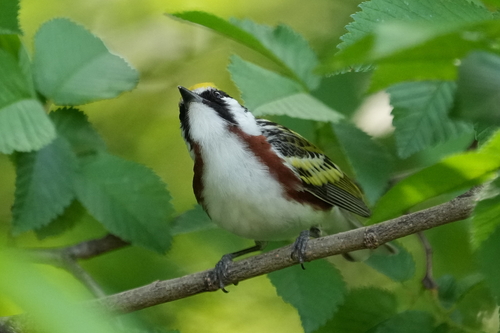 Roestflankzanger
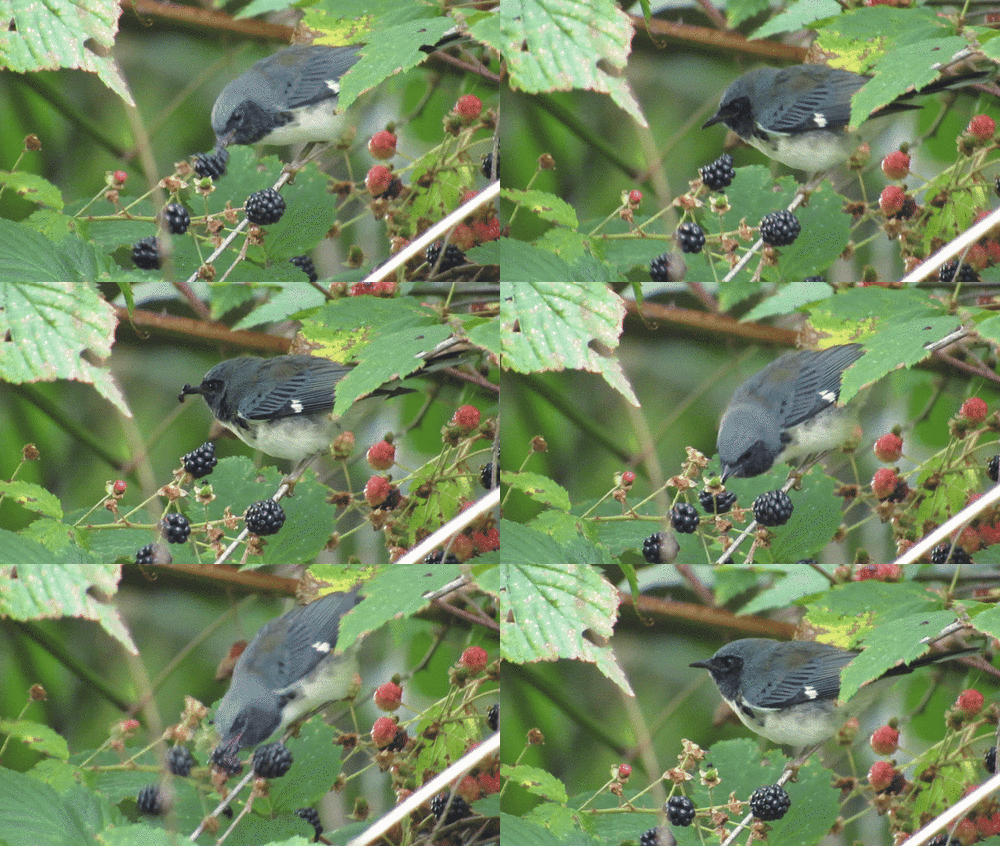 Blauwe zwartkeelzanger
Kort gezegd
Juvenile and female Chestnut-sided Warblers always show two clear white wing bars, while Black-throated Blue Warblers of all ages have a single small white wing patch (not a bar) that can be hard to see. Adult male Chestnut-sided Warblers are striking with a yellow crown and chestnut flanks, while male Black-throated Blue Warblers have a solid black throat and blue upperparts. Females and immatures are trickier: Chestnut-sided females are grayish with yellow-green crowns and always have wing bars; Black-throated Blue females are olive-brown, lack wing bars, and may show a small white spot at the base of the primaries. In flight or perched, focus first on the wing pattern and overall color tones. Both species overlap in much of eastern North America, but their preferred habitats differ.
Herkenningstips
- Count the wing bars: Chestnut-sided Warbler of any age or sex shows two distinct white wing bars; Black-throated Blue Warbler never has true wing bars, only a single small white patch at the base of the primaries (sometimes hidden).
- Look for the yellow-green crown: Chestnut-sided Warbler (especially non-breeding, females, and immatures) shows a yellow-green crown, absent in Black-throated Blue.
- Check for chestnut flanks: Adult male Chestnut-sided Warbler in breeding plumage has bold chestnut streaks along the flanks—never shown by Black-throated Blue.
- Solid black throat and face: Only adult male Black-throated Blue Warbler has a solid black throat and face with deep blue upperparts. Chestnut-sided never has this combination.
- Female and immature confusion: Female Chestnut-sided is grayish with wing bars and yellow-green crown; female Black-throated Blue is olive-brown above, light yellow below, lacks wing bars, and may have a small white wing spot.
- Juvenile marks: Juvenile Chestnut-sided Warbler has two wing bars and a yellowish crown; juvenile Black-throated Blue is brown with a creamy supercilium, brownish spots below, and no wing bars.
- White wing patch vs. bars: The Black-throated Blue's white wing spot is small and at the base of the primaries, not a bar across the coverts; this is a key mark in all ages and sexes.
- Face pattern: Chestnut-sided Warbler has a white face with a black eyestripe (especially in males); Black-throated Blue male has a solid black face, female has brown cheek patches.
- Underpart color: Chestnut-sided Warbler is always white below (with or without chestnut), while female Black-throated Blue is light yellowish below.
- Habitat context: Chestnut-sided Warbler is more likely in brushy, regenerating, or edge habitats; Black-throated Blue prefers mature forests with dense understory.
- Seasonal changes: Chestnut-sided Warbler retains wing bars and yellow-green crown in non-breeding plumage; Black-throated Blue becomes drabber but still lacks wing bars.
- Size and structure: Both are similar in size and structure; do not rely on this for separation.
- Vocalizations: If you hear a buzzy 'zee-zee-zeeee' song, suspect Black-throated Blue, but Chestnut-sided's song is not described here.
- Bill and jizz: Both have thin, pointed bills typical of warblers; no reliable difference in bill shape or length.
- Pitfalls: Immature and female Black-throated Blue Warblers are often mistaken for other dull warblers, but the lack of wing bars and presence of a small white wing spot are key. Chestnut-sided Warbler always shows two wing bars, even in drab plumages.
Grootte
Both species are similar in size and mass, with Chestnut-sided Warbler measuring 10–14 cm in length and weighing 8–13.1 g, and Black-throated Blue Warbler about 13 cm and 8.4–12.4 g. Wingspans overlap (Chestnut-sided: 16–21 cm; Black-throated Blue: 19–20 cm). In the field, size is not a reliable separator.
Verenkleed
- Juveniles and immatures: Chestnut-sided Warbler juveniles and non-breeding birds of both sexes have two strong white wing bars and a yellow-green crown, with plain pale underparts and a white eye-ring. Black-throated Blue Warbler juveniles are brown above with a creamy supercilium and brownish spots on the underparts, lacking wing bars but sometimes showing a small white wing patch at the base of the primaries.
- Adult males (breeding): Chestnut-sided: white underparts with bold chestnut flanks, white face, black eyestripe, yellow crown, and two white wing bars. Black-throated Blue: white underparts, solid black throat and face, deep blue upperparts, and a single small white wing patch (not a bar).
- Adult females: Chestnut-sided: grayish with yellow-green crown, always two white wing bars, little to no chestnut on flanks, weak head pattern. Black-throated Blue: olive-brown above, light yellow below, gray crown, brown cheek patches, no wing bars, sometimes a small white spot at wing base.
- Non-breeding: Chestnut-sided Warbler retains wing bars and yellow-green crown; Black-throated Blue becomes drabber but still lacks wing bars, with the wing patch sometimes visible.
Gedrag
Both species are active foragers in the midstory and understory, often moving quickly through foliage. No strong behavioral differences are noted in the sources that would reliably separate them in the field.
Habitat
Chestnut-sided Warbler prefers shrubby second-growth, regenerating clearcuts, and edges, often in young or disturbed forests. Black-throated Blue Warbler is more typical of mature deciduous or mixed forests with dense understory, especially in the interior. While ranges overlap, context can help: Chestnut-sided is more likely in brushy, open, or regenerating areas; Black-throated Blue in older, denser woods.
Geluid
Black-throated Blue Warbler gives a buzzy 'zee-zee-zeeee' song with an upward inflection and a flat 'ctuk' call. Chestnut-sided Warbler's song and call are not described in the provided notes, so voice is not a reliable separator here.
Roestflankzanger · Blauwe zwartkeelzanger · Mijn lastige vogels