
Carolaparotia vs Huonparotia
Parotia carolae versus Parotia wahnesi
Speel een quiz met Carolaparotia en Huonparotia
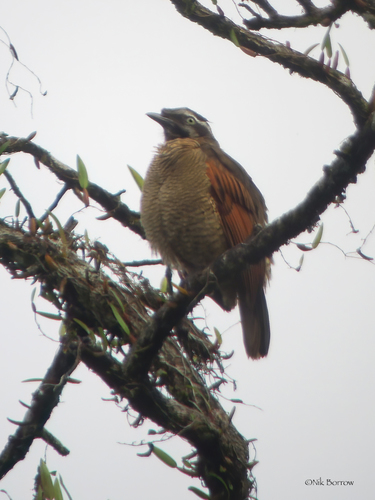 Carolaparotia
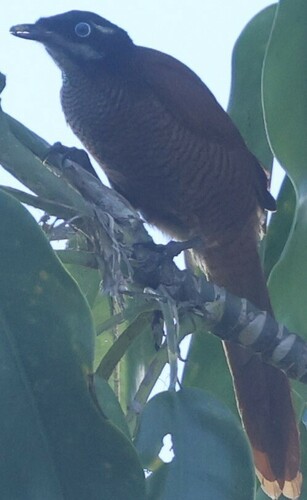 Huonparotia
Kort gezegd
Het meest betrouwbare veldkenmerk tussen Carolaparotia en Huonparotia is de algehele grootte en staartlengte: Huonparotia is veel groter en heeft een merkbaar langere, wigvormige staart, terwijl Carolaparotia compacter is met een kortere staart. Mannetjes van beide soorten tonen iriserende borstschilden en drie draadachtige koppluimen achter elk oog, maar de mannetjes van Carolaparotia zijn kleiner, met een diepzwarte kop en uitgebreidere koperachtige en magenta iriserende kleuren, terwijl de mannetjes van Huonparotia robuuster zijn met een geelgroen borstschild en minder versierde kopveren. Vrouwtjes verschillen in kop- en onderlichaamspatroon: Vrouwtjes van Carolaparotia hebben een bruinachtige kop met een lichte supercilium en gebandeerde onderdelen, terwijl vrouwtjes van Huonparotia rijker bruin zijn met een zwartachtige kop en geen sterke banden hebben. Beide soorten bewonen de bergbossen van Nieuw-Guinea, maar hun verspreidingsgebieden overlappen niet. Onvolwassen en vrouwelijke vogels zullen waarschijnlijk verwarring veroorzaken, dus richt je op grootte, staartlengte en kop-/onderlichaamspatroon voor scheiding.
Herkenningstips
- Grootte en Staartlengte: Huonparotia is veel groter en heeft een langere staart (ongeveer 43 cm) dan Carolaparotia (tot 26 cm). Dit is vaak de snelste veld aanwijzing, vooral wanneer ze zitten of in de vlucht worden gezien. Geldt voor alle leeftijden en geslachten.
- Staartvorm: Huonparotia heeft een lange, wigvormige staart, terwijl de staart van Carolaparotia korter en minder wigvormig is. Vrouwelijke Carolaparotia heeft een relatief langere staart dan het mannetje, maar is nog steeds niet zo lang of wigvormig als die van Huonparotia.
- Mannelijke Kopversiering: Beide mannetjes hebben drie draadachtige occipitale pluimen achter elk oog, maar die van Carolaparotia zijn relatief korter met kleine spatelvormige punten, terwijl die van Huonparotia langer en prominenter zijn. Let op de frontale kuif bij Carolaparotia, die afwezig of minder ontwikkeld is bij Huonparotia.
- Mannelijk Borstschild: Mannetjes van Carolaparotia hebben een zeer iriserend borstschild dat bronzen geelgroen, magenta of roze kan lijken, vaak met zichtbare diepzwarte veerbases. Het borstschild van Huonparotia is iriserend geelgroen maar minder variabel in kleur.
- Mannelijk Gezichtspatroon: Mannetjes van Carolaparotia tonen een koperachtige gouden oogring en een smalle iriserende nuchale balk, met diepzwarte verenkleed op het hoofd en gezicht. Mannetjes van Huonparotia hebben koperachtig-bronzen neuspluimveren maar missen de sterke oogring en nuchale balk.
- Mannelijke Flankpluimen: Mannetjes van Carolaparotia hebben uitgebreide, katoenwitte, naar binnen gebogen flankpluimen, die opvallender zijn dan bij Huonparotia.
- Vrouwelijk Hoofdpunt: Vrouwelijke Carolaparotia hebben een bruinachtige tot grijs-bruin hoofd met een brede lichte supercilium en lichte snorstrepen. Vrouwelijke Huonparotia hebben een rijker bruin lichaam met een zwartachtige kop en missen de sterke supercilium en lichte gezichtsstrepen.
- Vrouwelijke Onderdelen: Vrouwelijke Carolaparotia tonen buff onderdelen met sterke zwartachtige-brown banden, terwijl vrouwelijke Huonparotia meer uniform bruin zijn zonder sterke banden.
- Iris Kleur: Vrouwelijke Carolaparotia en onvolwassen vogels kunnen een lichte grijze, crème of gele iris hebben (mogelijk leeftijdsgebonden), terwijl de iris kleur van Huonparotia niet als onderscheidend wordt beschreven.
- Plumage van Onvolwassenen: Onvolwassen mannelijke Carolaparotia zijn als vrouwtjes maar met een lichte grijze iris en een patchy verwerving van volwassen mannelijke kenmerken. Gebruik grootte en staartlengte als primaire aanwijzingen voor onvolwassen vogels.
- Habitat en Verspreiding: Als je in het Huon-schiereiland of de Adelbert-bergen bent, is Huonparotia de enige verwachte parotia; elders in centraal Nieuw-Guinea, verwacht Carolaparotia. Dit is een sterke scheiding wanneer de locatie bekend is.
- Vlucht Jizz: Huonparotia lijkt robuuster en langerstaart in de vlucht, terwijl Carolaparotia compacter is. Dit is subtiel maar kan helpen bij verre of korte uitzichten.
- Snavel- en Pootkleur: Carolaparotia heeft een zwarte snavel en zwartachtige-grijze poten; de snavel- en pootkleur van Huonparotia is niet onderscheidend in het veld.
- Paringsgedrag: Beide soorten voeren uitgebreide grondshows uit, maar als ze worden gezien, is de robuustere, langerstaart danser Huonparotia.
- Bij Twijfel: Voor ambigu of verre vogels, prioriteer grootte, staartlengte/-vorm, en vrouwelijke/onvolwassen kop- en onderlichaamspatroon voor de beste scheiding.
Grootte
Huonparotia is aanzienlijk groter (ongeveer 43 cm lang) dan Carolaparotia (tot 26 cm lang) [wikipedia]. Dit grootteverschil is vooral duidelijk in het veld wanneer beide soorten worden gezien terwijl ze zitten of in de vlucht. Huonparotia heeft ook een veel langere, wigvormige staart, terwijl Carolaparotia compacter is met een relatief kortere staart. Vrouwelijke Carolaparotia is kleiner dan het mannetje en heeft een langere staart in verhouding tot haar lichaam, maar benadert nog steeds niet de algehele grootte of staartlengte van Huonparotia. Snavelgrootte is geen sterke scheiding in het veld.
Verenkleed
-
Jong/Onvolwassen: Jongere Carolaparotia is onbeschreven, maar onvolwassen mannetjes lijken op volwassen vrouwtjes met een lichte grijze iris, en verwerven geleidelijk volwassen mannelijke kenmerken. Subvolwassen mannetjes zijn patchy, met enkele volwassen mannelijke veren op een vrouwelijke lichaam. De jong/onvolwassen plumage van Huonparotia is niet beschreven, maar volgt waarschijnlijk een vergelijkbaar patroon van vrouwelijke plumage voordat ze volwassen mannelijke kenmerken verwerven.
-
Volwassen Mannelijk: Mannetjes van Carolaparotia zijn diepzwart met een koperachtig-bronzen glans, een korte rechtopstaande frontale kuif, drie draadachtige occipitale pluimen achter elk oog (met kleine spatelvormige punten), en een zeer iriserend borstschild dat bronzen geelgroen, magenta of roze kan tonen. Het gezicht is gemarkeerd door een koperachtige gouden oogring en een smalle iriserende nuchale balk. Flankpluimen zijn katoenwit en sterk naar binnen gebogen. Mannetjes van Huonparotia zijn groter, met een iriserend geelgroen borstschild, verlengde zwarte pluimen, drie rechtopstaande spatel hoofddraden achter elk oog, koperachtig-bronzen neuspluimveren, en een lange, wigvormige staart. De algehele indruk is robuuster en minder compact dan die van Carolaparotia.
-
Volwassen Vrouwelijk: Vrouwelijke Carolaparotia zijn bruinachtig tot grijs-bruin op de kop met een brede lichte supercilium, vuilwitte snor- en subsnorstrepen, en buff onderdelen met zwartachtige-brown banden. Vrouwelijke Huonparotia zijn rijker bruin over het algemeen, met een zwartachtige kop en missen de sterke lichte supercilium of banden op de onderdelen die te zien zijn bij Carolaparotia. De staart is langer en meer wigvormig bij vrouwelijke Huonparotia.
Gedrag
Beide soorten zijn polygame en voeren uitgebreide paringsrituelen uit op de bosbodem, waarbij mannetjes dansen en hun iriserende borstschilden en koppluimen tonen. De paringsdans van Huonparotia wordt beschreven als spectaculair, maar verder is er weinig bekend over de verschillen in foerageren of algemeen gedrag tussen de twee. Beide voeden zich voornamelijk met fruit en geleedpotigen. In het veld kan Carolaparotia compacter en actiever lijken, terwijl Huonparotia robuuster is en mogelijk meer doordacht in beweging lijkt, maar dit is subtiel en geen primair veldkenmerk.
Habitat
Carolaparotia bewoont de mid-bergbossen van centraal Nieuw-Guinea, terwijl Huonparotia beperkt is tot de bergbossen van het Huon-schiereiland en de Adelbert-bergen in het noordoosten van Papua Nieuw-Guinea [wikipedia]. Hun verspreidingsgebieden overlappen niet, dus een precieze locatie kan een sterke aanwijzing zijn. Beide soorten worden aangetroffen in vergelijkbare bossoorten (mid-montaan tot montaan), maar als je in de Huon- of Adelbert-gebieden bent, is Huonparotia de verwachte soort; elders in centraal Nieuw-Guinea, zoek naar Carolaparotia.