
Salomonsspoorkoekoek vs Australische koël
Centropus milo versus Eudynamys orientalis
Speel een quiz met Salomonsspoorkoekoek en Australische koël
 Salomonsspoorkoekoek
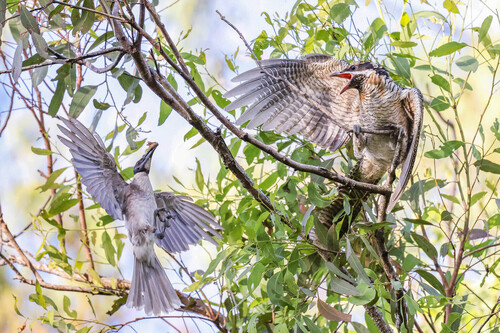 Australische koël
Kort gezegd
Het meest betrouwbare veldkenmerk tussen Salomonsspoorkoekoek en Australische koël is het opvallende buffkleurige hoofd en de onderdelen van de volwassen Salomonsspoorkoekoek, wat nooit voorkomt bij de Australische koël van welke leeftijd of geslacht dan ook. Juveniele Salomonsspoorkoekoeken zijn ook onderscheidend, met een zware vlekken- en streeppatroon in bruin, terwijl juvenile en vrouwelijke Australische koels bruin zijn aan de bovenkant met witte vlekken en gestreepte of gebandeerde onderdelen, maar de bufftinten en sterke streping van de koekoek missen. Structureel is de Salomonsspoorkoekoek een veel zwaardere, robuustere vogel met een enorme snavel en korte vleugels, in contrast met de slanker, langer staart en gestroomlijnde Australische koël. Als je een grote, zware koekoek met een buff hoofd en onderdelen ziet, is het de Salomonsspoorkoekoek; een slanker, zwarte of bruine vogel met rode ogen is de Australische koël.
Herkenningstips
- Buff hoofd en onderdelen (volwassen Salomonsspoorkoekoek): Alleen de Salomonsspoorkoekoek toont een buffkleurig hoofd, bovenrug en onderdelen. De Australische koël toont dit nooit, ongeacht leeftijd of geslacht.
- Glanzend zwarte vleugels en staart (volwassen Salomonsspoorkoekoek): Contrasteert met het buff lichaam; mannelijke Australische koels zijn helemaal zwart, maar zonder het tweekleurige effect.
- Juveniele verenkleed: Juveniele Salomonsspoorkoekoek is bruin met zwarte vlekken en roodbruin, gebandeerde vleugels en staart. Juveniele Australische koël is bruin boven met witte vlekken en crèmekleurige onderdelen met fijne donkere strepen—nooit zo zwaar gebandeerd of gevlekt als de koekoek.
- Vrouwelijk verenkleed: Vrouwelijke Australische koël is bruin boven met witte vlekken en crèmekleurige onderdelen met zwarte strepen. Vrouwelijke Salomonsspoorkoekoeken lijken op mannetjes (buff en zwart), nooit gevlekt of gestreept onder.
- Snavelstructuur: De Salomonsspoorkoekoek heeft een enorme, zware snavel (donkergrijs bij volwassenen, bicolored bij juvenielen). De snavel van de Australische koël is slanker en minder robuust.
- Lichaamsstructuur: De Salomonsspoorkoekoek is robuuster, met een zwaar lichaam en korte vleugels. De Australische koël is slanker en langer, met een langere staart en vleugels.
- Vluchtstijl: De koekoek vliegt in korte, zware, moeizame uitbarstingen, vaak laag bij de grond. De koël vliegt meer direct en snel, meestal hoger in de boomtop.
- Oogkleur: Volwassen Salomonsspoorkoekoek en Australische koël hebben beide rode ogen. Juveniele koekoek heeft bruin-grijze ogen; juvenile koël heeft donkere ogen.
- Snavelkleur (juvenielen): Juveniele Salomonsspoorkoekoek heeft een bicolored snavel (bruin boven, bleek hoorn onder); koël juvenielen hebben een lichtere, maar niet bicolored, snavel.
- Habitat: De Salomonsspoorkoekoek is beperkt tot de bossen van de centrale Salomonseilanden; de Australische koël is wijdverspreid in Australazië en Zuidoost-Azië, in een verscheidenheid aan bosachtige habitats.
- Vocalisatie: Aanhoudende, luide, repetitieve roepen duiden op de Australische koël. De Salomonsspoorkoekoek is veel stiller.
- Staartpatroon: De staart van de koël is lang en lijkt vaak gegradueerd; de staart van de koekoek is breed en minder langgerekt.
- Gedrag: De koekoek is waarschijnlijker te zien terwijl hij door dichte ondergroei of lage takken klautert; de koël is meer boombewonend en zelden op de grond te zien.
- Relatieve grootte: Als de vogel uitzonderlijk groot en zwaar lijkt voor een koekoek, is het waarschijnlijk de Salomonsspoorkoekoek.
- Lokale context: Als je buiten de Salomonseilanden bent, is de kans op de Salomonsspoorkoekoek uiterst onwaarschijnlijk.
Grootte
De Salomonsspoorkoekoek is aanzienlijk groter en zwaarder dan de Australische koël. Hij meet 60–69 cm in lengte en weegt ongeveer 769 g, waardoor hij mogelijk de grootste koekoeksoort is [wikipedia]. De Australische koël is groot voor een koekoek, maar is slanker en lichter, met een meer langgerekt lichaam en staart. De bulk, zware snavel en korte vleugels van de koekoek zijn zelfs van een afstand duidelijk, terwijl de koël slanker en langer lijkt, vooral in de vlucht.
Verenkleed
- Juvenielen: Juveniele Salomonsspoorkoekoek is bruin, gevlekt met zwart, en heeft roodbruine vleugels en staart met zwarte streping. De iris is bruin-grijs en de snavel is bicolored (bruin boven, bleek hoorn onder). In tegenstelling tot de juvenile Australische koël lijkt deze op het vrouwtje: bruin boven met witte vlekken, crèmekleurige onderdelen met donkere strepen of banden, en donkere ogen. Geen bufftinten of zware streping zoals bij de koekoek.
- Volwassen mannetjes: Volwassen Salomonsspoorkoekoek heeft een buff hoofd, bovenrug en onderdelen, met glanzend zwarte vleugels, onderrug en staart. Volwassen mannelijke Australische koels zijn helemaal zwart met blauw-groene glans en rode ogen—nooit buff of tweekleurig.
- Volwassen vrouwtjes: Vrouwelijke Australische koël is bruin boven met witte vlekken en crèmekleurige onderdelen met fijne zwarte strepen, zonder de buffkleurige verbranding van de koekoek. Vrouwelijke Salomonsspoorkoekoeken lijken op mannetjes (buff en zwart).
- Iris kleur: Volwassen Salomonsspoorkoekoek heeft rode ogen; juveniele heeft bruin-grijze. Volwassen Australische koels (beide geslachten) hebben rode ogen; juvenielen hebben donkere ogen.
- Snavelkleur: Volwassen Salomonsspoorkoekoek heeft donkergrijze snavels; juvenielen hebben bicolored snavels. De Australische koël heeft een donkere snavel bij mannetjes, lichter bij vrouwtjes en juvenielen.
Gedrag
De Salomonsspoorkoekoek is een schuwe, grond- of laag-vegetatie bewoner, die zwaar en vaak onhandig door dichte bosondergroei beweegt. Hij is geen sterke vlieger en neigt naar korte, zware vluchten. De Australische koël is meer boombewonend en behendig, vaak gezien terwijl hij tussen bomen vliegt of hoog in de boomtop zit. Koels zijn broedparasieten, zelden op de grond te zien, en worden waarschijnlijker opgemerkt door hun roepen of snelle, directe vluchten.
Habitat
De Salomonsspoorkoekoek is endemisch in de centrale Salomonseilanden, te vinden in tropische vochtige laagland- en bergbossen, zowel primaire als secundaire groei [wikipedia]. Het is strikt een bosvogel. De Australische koël is wijdverspreid in Australazië en Zuidoost-Azië, te vinden in een verscheidenheid aan bosachtige habitats, waaronder bossen, plantages en zelfs stedelijke parken. Als je in de centrale bossen van de Salomonseilanden bent, is de Salomonsspoorkoekoek waarschijnlijk; elders, vooral in open of stedelijke gebieden, is de Australische koël waarschijnlijker.
Geluid
De Australische koël is beroemd om zijn luide, repetitieve roepen, vooral tijdens het broedseizoen, vaak dag en nacht te horen. De stem van de Salomonsspoorkoekoek is niet beschreven in de verstrekte notities, maar koekoeken in het algemeen zijn minder vocaal en produceren niet de kenmerkende, ver dragende roepen van de koël. Als de vogel aanhoudend en luid roept, vooral met stijgende of repetitieve noten, is het vrijwel zeker de Australische koël.
Salomonsspoorkoekoek · Australische koël · Mijn lastige vogels