
Cucal Milo vs Koel Oriental
Centropus milo frente a Eudynamys orientalis
Juega un quiz con Cucal Milo y Koel Oriental
 Cucal Milo
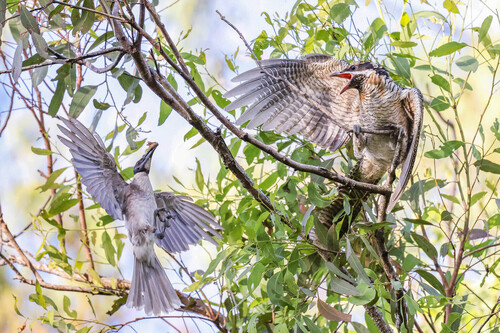 Koel Oriental
En breve
La marca de campo más confiable entre el Cucal Milo y el Koel Oriental es la cabeza y las partes inferiores de color canela del Cucal Milo en los adultos, que nunca ocurre en el Koel Oriental de ninguna edad o sexo. Los Cucales Milo juveniles también son distintivos, siendo pesadamente moteados y con barras marrones, mientras que los Koels Orientales juveniles y hembras son marrones por encima con manchas blancas y partes inferiores rayadas o con barras, pero carecen de los tonos canela y las fuertes barras del Cucal. Estructuralmente, el Cucal Milo es un ave mucho más pesada y robusta con un pico masivo y alas cortas, en contraste con el más delgado, de cola más larga y más aerodinámico Koel Oriental. Si ves un gran cucú de cuerpo pesado con una cabeza y partes inferiores canela, es el Cucal Milo; un ave más delgada, negra o marrón con ojos rojos es el Koel Oriental.
Consejos de identificación
- Cabeza y partes inferiores canela (Cucal Milo adulto): Solo el Cucal Milo muestra una cabeza de color canela, parte superior de la espalda y partes inferiores. El Koel Oriental nunca muestra esto, independientemente de la edad o el sexo.
- Alas y cola negras brillantes (Cucal Milo adulto): Contrasta con el cuerpo canela; los machos del Koel Oriental son completamente negros, pero sin el efecto bicolor.
- Plumaje juvenil: El Cucal Milo juvenil es marrón con moteado negro y alas y cola barradas de marrón rojizo. El Koel Oriental juvenil es marrón por encima con manchas blancas y partes inferiores crema con finas rayas oscuras—nunca tan barrado o moteado como el Cucal.
- Plumaje femenino: La hembra del Koel Oriental es marrón por encima con manchas blancas y partes inferiores crema con rayas negras. Las hembras del Cucal Milo se parecen a los machos (canela y negro), nunca tienen manchas o rayas por debajo.
- Estructura del pico: El Cucal Milo tiene un pico masivo y pesado (gris oscuro en adultos, bicolor en juveniles). El pico del Koel Oriental es más delgado y menos robusto.
- Estructura del cuerpo: El Cucal Milo es más robusto, con un cuerpo pesado y alas cortas. El Koel Oriental es más esbelto y alargado, con una cola y alas más largas.
- Estilo de vuelo: El Cucal vuela en cortos y pesados impulsos, a menudo bajo al suelo. El Koel vuela de manera más directa y rápida, generalmente más alto en el dosel.
- Color de los ojos: Tanto el Cucal Milo adulto como el Koel Oriental tienen ojos rojos. El Cucal juvenil tiene ojos marrón-gris; el Koel juvenil tiene ojos oscuros.
- Color del pico (juveniles): El Cucal Milo juvenil tiene un pico bicolor (marrón por encima, cuerno pálido por debajo); los juveniles de Koel tienen un pico más pálido, pero no bicolor.
- Hábitat: El Cucal Milo está restringido a los bosques centrales de las Islas Salomón; el Koel Oriental está ampliamente distribuido en Australasia y el sudeste asiático, en una variedad de hábitats boscosos.
- Vocalización: Llamadas persistentes, fuertes y repetitivas indican el Koel Oriental. El Cucal Milo es mucho más silencioso.
- Patrón de la cola: La cola del Koel es larga y a menudo parece graduada; la cola del Cucal es ancha y menos alargada.
- Comportamiento: Es más probable que se vea al Cucal trepando a través de la densa maleza o ramas bajas; el Koel es más arbóreo y rara vez se ve en el suelo.
- Tamaño relativo: Si el ave parece excepcionalmente grande y pesada para un cucú, es probable que sea el Cucal Milo.
- Contexto local: Si estás fuera de las Islas Salomón, es extremadamente improbable que veas el Cucal Milo.
Tamaño
El Cucal Milo es significativamente más grande y pesado que el Koel Oriental. Mide entre 60 y 69 cm de longitud y pesa alrededor de 769 g, lo que lo convierte posiblemente en la especie de cucú más grande [wikipedia]. El Koel Oriental es grande para un cucú, pero es más delgado y ligero, con un cuerpo y cola más alargados. La robustez del Cucal, su pico pesado y sus alas cortas son obvios incluso a distancia, mientras que el Koel parece más elegante y alargado, especialmente en vuelo.
Plumaje
- Juveniles: El Cucal Milo juvenil es marrón, moteado con negro, y tiene alas y cola de marrón rojizo con barras negras. El iris es marrón-gris y el pico es bicolor (marrón por encima, cuerno pálido por debajo). En contraste, el Koel Oriental juvenil se asemeja a la hembra: marrón por encima con manchas blancas, partes inferiores crema con rayas o barras oscuras, y ojos oscuros. Sin tonos canela ni fuertes barras como en el Cucal.
- Machos adultos: Los adultos del Cucal Milo tienen una cabeza canela, parte superior de la espalda y partes inferiores, con alas, parte inferior de la espalda y cola negras brillantes. Los machos adultos del Koel Oriental son completamente negros con brillo azul-verde y ojos rojos—nunca canela o bicolor.
- Hembras adultas: La hembra del Koel Oriental es marrón por encima con manchas blancas y partes inferiores crema con finas rayas negras, careciendo de la coloración canela del Cucal. Las hembras del Cucal Milo se parecen a los machos (canela y negro).
- Color del iris: El Cucal Milo adulto tiene ojos rojos; el juvenil tiene marrón-gris. Los adultos del Koel Oriental (ambos sexos) tienen ojos rojos; los juveniles tienen ojos oscuros.
- Color del pico: Los adultos del Cucal Milo tienen picos gris oscuros; los juveniles tienen picos bicolores. El Koel Oriental tiene un pico oscuro en los machos, más pálido en hembras y juveniles.
Comportamiento
El Cucal Milo es un habitante de suelo o vegetación baja, moviéndose pesadamente y a menudo torpemente a través de la densa maleza del bosque. No es un buen volador y tiende a moverse en vuelos cortos y pesados. El Koel Oriental es más arbóreo y ágil, a menudo visto volando entre los árboles o posándose alto en el dosel. Los Koels son parásitos de cría, rara vez se ven en el suelo, y es más probable que se les note por sus llamadas o vuelos rápidos y directos.
Hábitat
El Cucal Milo es endémico de las Islas Salomón centrales, encontrado en bosques tropicales húmedos de tierras bajas y montañas, tanto de crecimiento primario como secundario [wikipedia]. Es estrictamente un ave de bosque. El Koel Oriental está ampliamente distribuido en Australasia y el sudeste asiático, encontrado en una variedad de hábitats boscosos, incluyendo bosques, plantaciones e incluso parques urbanos. Si estás en los bosques centrales de las Islas Salomón, es probable que veas el Cucal Milo; en otros lugares, especialmente en áreas abiertas o urbanas, es más probable que veas el Koel Oriental.
Voz
El Koel Oriental es famoso por sus llamadas fuertes y repetitivas, especialmente durante la temporada de cría, a menudo escuchadas día y noche. La voz del Cucal Milo no se describe en las notas proporcionadas, pero los cucales en general son menos vocales y no producen las distintivas y resonantes llamadas del Koel. Si el ave está llamando de manera persistente y fuerte, especialmente con notas ascendentes o repetitivas, es casi seguro que es el Koel Oriental.