

Blauwborst vs Kleine vliegenvanger
Luscinia svecica versus Ficedula parva
Speel een quiz met Blauwborst en Kleine vliegenvanger
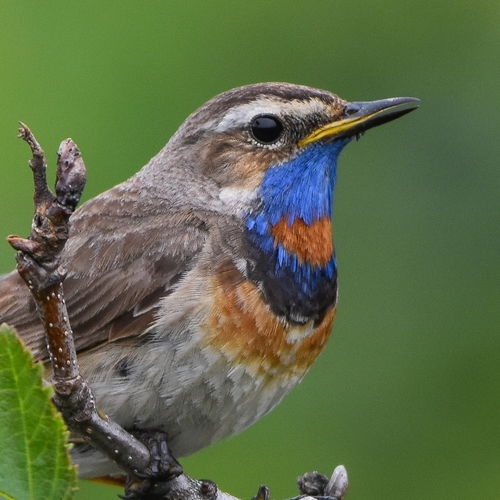 Blauwborst
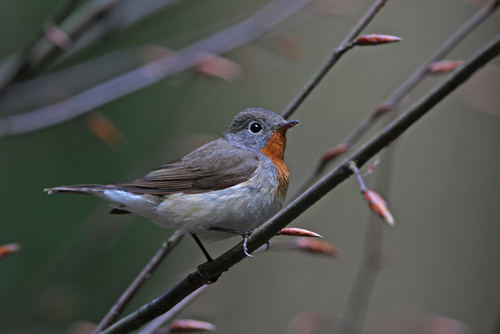 Kleine vliegenvanger
Kort gezegd
Het meest betrouwbare veldkenmerk tussen Blauwborst en Kleine vliegenvanger is de aanwezigheid van een gedurfde blauwe keelvlek (vaak met een centrale rode of witte stip) bij volwassen mannelijke Blauwborsten in de lente en vroege zomer, versus de oranje keelvlek bij volwassen mannelijke Kleine vliegenvangers. Vrouwtjes en onvolwassen vogels van beide soorten kunnen verwarrend eenvoudig zijn, maar de Kleine vliegenvanger toont altijd een kenmerkende witte oogring en een contrasterend zwart-wit staartpatroon, terwijl de Blauwborst deze kenmerken mist. Juveniele en eerste-winter vogels van beide soorten zijn saai, maar het staartpatroon en de oogring van de vliegenvanger blijven nuttig. Structuur en gedrag verschillen ook: Blauwborst is iets groter en robuuster, vaak gezien op of nabij de grond in dichte, vochtige vegetatie, terwijl de Kleine vliegenvanger verfijnder is, met een rechtere houding en frequente staartbewegingen in bosachtige omgevingen.
Herkenningstips
- Keel kleur (volwassen mannetjes, lente/zomer): Blauwborst toont een heldere blauwe keel met een centrale rode of witte stip (afhankelijk van de ondersoort), onderbroken door een zwarte en roestkleurige band; Kleine vliegenvanger heeft een duidelijke oranje keelvlek, nooit blauw. Dit is het meest betrouwbare kenmerk bij broedende mannetjes.
- Staartpatroon (alle leeftijden, alle seizoenen): Kleine vliegenvanger heeft altijd een zwarte staart met witte bases op de buitenste staartveren, zichtbaar als een zwart-wit patroon wanneer de staart wordt uitgespreid of bewogen. De staart van de Blauwborst is eenvoudig bruin met een roestkleurige basis en donkere eindband, zonder het scherpe zwart-wit contrast.
- Witte oogring (alle leeftijden, alle seizoenen): Kleine vliegenvanger toont altijd een merkbare witte oogring, zelfs bij juvenielen en vrouwtjes. Blauwborst mist een sterke oogring.
- Snavelstructuur: Kleine vliegenvanger heeft een fijne, puntige, zwarte snavel met een bleke roze basis, typisch voor luchtinsecteneters. De snavel van de Blauwborst is iets zwaarder en mist de uitgebreide roze basis.
- Algemene structuur: Blauwborst is iets groter en robuuster, met een langere staart en zwaarder lichaam. Kleine vliegenvanger is verfijnder en heeft een rechtere houding.
- Gedrag: Blauwborst is vaak op of nabij de grond, bewegend door dichte, vochtige vegetatie; Kleine vliegenvanger zit hoger, beweegt zijn staart omhoog, en maakt korte sprongetjes voor insecten.
- Habitat: Blauwborst geeft de voorkeur aan vochtige, struikachtige of rietachtige gebieden; Kleine vliegenvanger wordt gevonden in open bossen, parken, en soms tuinen, zelden in dichte, vochtige habitats.
- Verwarring bij juvenielen/eerste-winter: Beide soorten kunnen eenvoudig bruin zijn boven en bleek onder, maar alleen de vliegenvanger toont de witte oogring en het zwart-wit staartpatroon op alle leeftijden.
- Verwarring bij vrouwtjes: Vrouwtje Blauwborst is eenvoudig met een crèmekleurige keel en soms een donkere halve maan; vrouwtje Kleine vliegenvanger is ook eenvoudig maar heeft altijd de witte oogring en het staartpatroon.
- Vluchtzicht: In de vlucht, let op de zwart-witte staart van de vliegenvanger; Blauwborst mist dit en toont een meer uniforme staart met een roestkleurige basis.
- Zang: Als hij zingt, geeft de Kleine vliegenvanger een zoete, gefloten zang met een rattelend geluid; de zang van de Blauwborst wordt hier niet beschreven, dus gebruik met voorzichtigheid.
- Seizoensveranderingen: De blauwe keel van de Blauwborst kan worden verborgen door bleke veertips na de zomervogelruil, waardoor het minder opvallend is in de herfst en winter; de oranje keel van de Kleine vliegenvanger is alleen aanwezig bij volwassen mannetjes tijdens de broedtijd.
- Variatie in ondersoorten: Blauwborst ondersoorten verschillen in kleur en aanwezigheid van de keelvlek (rood, wit of afwezig), maar allemaal hebben ze blauwe kelen bij mannetjes; Kleine vliegenvanger toont nooit blauw.
- Voedingsstijl: Blauwborst huppelt en schuilt laag, vaak in dekking; Kleine vliegenvanger is actiever, beweegt zijn staart en maakt sprongetjes voor insecten.
- Context: Als gezien in dichte, vochtige, rietachtige habitat, is de kans groter dat het een Blauwborst is; in open bossen of parken, vooral met staartbewegingen en witte oogring, vermoed een Kleine vliegenvanger.
Grootte
Both species are small passerines, but Blauwborst is slightly larger and bulkier than Kleine vliegenvanger. The flycatcher is described as only slightly larger than a Eurasian Wren, with a noticeably daintier build and finer bill. Blauwborst appears more robust overall, with a slightly longer tail and heavier structure. These differences are subtle in the field but may help when birds are seen side by side. [wikipedia]
Verenkleed
-
Juvenile/First-winter: Juvenile Bluethroats are freckled and spotted dark brown above and below for a few weeks after fledging, then moult into a first-winter plumage resembling adult females: plain, with a cream throat and breast and a dark crescent, lacking strong color. Juvenile and immature Red-breasted Flycatchers are similarly plain brown above and pale below, but always show a clear white eyering and a black-and-white tail pattern (white at the base of the outer tail feathers, rest black), which is visible both perched and in flight. These tail and eyering marks are present in all ages and sexes of Kleine vliegenvanger, but never in Blauwborst.
-
Adult males (breeding): Blauwborst males in spring/summer have a bright blue throat, often with a central red or white spot, bordered below by a black and then a rufous or chestnut band. The blue is brightest just before and during the breeding season, and can be partly obscured by pale feather tips after the summer moult. Kleine vliegenvanger males have a muted brown back, grey head, white underparts, and a clear orange throat patch, never blue.
-
Females/Non-breeding: Female Bluethroats and first-winter birds are plain with a cream throat and breast, sometimes with a faint dark crescent, and lack the blue or orange throat. Female and immature Red-breasted Flycatchers are similar in overall color but always have the white eyering and black-and-white tail pattern.
-
Flight/upperwing: No distinctive upperwing panels or patterns are described for either species; tail pattern is the main flight mark for Kleine vliegenvanger.
Gedrag
Blauwborst wordt typisch laag bij de grond gezien, vaak schuilend in dichte, vochtige vegetatie zoals struikachtige moerassen of natte berkenbossen, en kan worden gezien terwijl hij op de grond huppelt of zijn staart beweegt. Kleine vliegenvanger is meer arboreaal, vaak zittend op gemiddelde hoogte in open bossen, terwijl hij zijn staart omhoog beweegt en zijn vleugeltips naar beneden houdt, en maakt korte sprongetjes om insecten te vangen. De vliegenvanger inspecteert ook bladeren en stammen op een soortgelijke manier als een zangvogel en is waarschijnlijker te zien in de boomtoppen of op kale takken. Blauwborst is minder luchtig en meer terrestrisch in zijn voedingsstijl.
Habitat
Blauwborst broedt in vochtige, struikachtige omgevingen zoals berkenbossen, struikachtige moerassen en rietvelden, vaak nabij water en in dichte dekking. Kleine vliegenvanger geeft de voorkeur aan open bossen, vooral met volwassen bomen, en is minder gebonden aan vochtige habitats. Tijdens de migratie kan de Kleine vliegenvanger voorkomen in parken en tuinen, maar wordt zelden gevonden in de dichte, vochtige habitats die de Blauwborst verkiest. Habitat kan een sterke aanwijzing zijn, vooral in het broedseizoen.
Geluid
Kleine vliegenvanger heeft een zang van verdragende, repetitieve, zoete fluittonen, vaak voorafgegaan door stille 'zit' of 'tsi-it' noten en gevolgd door een dalende reeks; zijn roep is een korte, rattelende 'zrrrt.' De zang en roepen van de Blauwborst worden niet beschreven in de verstrekte notities, dus vocalisatie is alleen diagnostisch voor de Kleine vliegenvanger wanneer hij zingt. In de winter is de vliegenvanger meestal stil, maar kan een 'chip-chip-chr-rrr' roep geven. Gebruik de stem met voorzichtigheid, tenzij de vliegenvanger aan het zingen is.