

Japanse meeuw vs Lewisspecht
Larus crassirostris versus Melanerpes lewis
Speel een quiz met Japanse meeuw en Lewisspecht
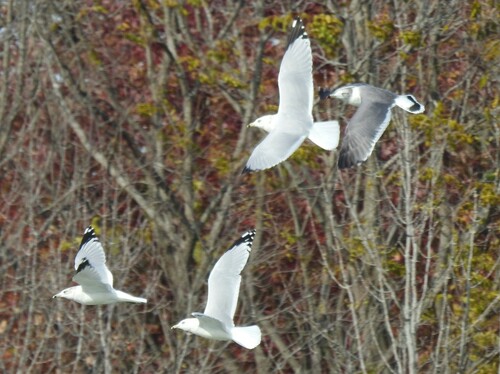 Japanse meeuw
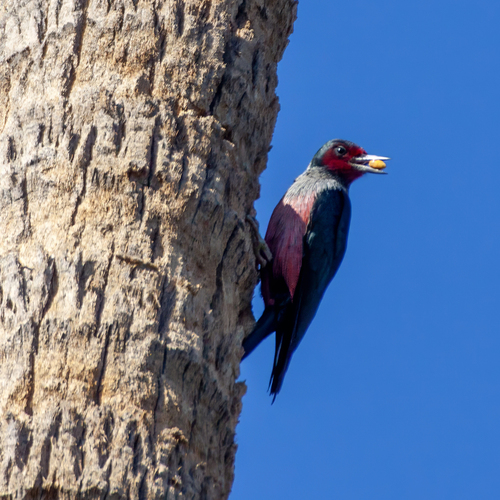 Lewisspecht
Kort gezegd
De meest betrouwbare manier om Japanse meeuw van Lewisspecht te scheiden, is op basis van de algehele structuur en vliegstijl: Japanse meeuw is een grote, langvleugelige zeevogel met een zwarte staart en gele poten, terwijl Lewisspecht een stevige, breedvleugelige specht is met een donker groenachtig-zwarte rug, een rode kop en een roze buik. In de vlucht toont Japanse meeuw typische meeuwproporties en vlucht, terwijl Lewisspecht met langzame, kraaiachtige vleugels vliegt en vaak rechtop op blootgestelde takken zit. Zelfs onvolwassen meeuwen tonen nooit de unieke kleurcombinatie of vliegstijl van de specht. Als je een vogel met een rode kop en een roze buik ziet, is het Lewisspecht; als je een grote, bleke meeuw met een zwarte staart en gele poten ziet, is het Japanse meeuw.
Herkenningstips
- Vliegstijl: Japanse meeuw zweeft en glijdt met lange, smalle vleugels die typisch zijn voor meeuwen; Lewisspecht vliegt met langzame, constante, kraaiachtige vleugelslagen en brede vleugels. Als de vlucht je aan een kraai doet denken, is het de specht.
- Staartkleur: Volwassen Japanse meeuw heeft een zwarte staart, zichtbaar zowel zittend als in de vlucht; Lewisspecht heeft een zwarte stuit maar geen duidelijk zwarte staartpunt.
- Poten kleur: Japanse meeuw heeft gele poten als volwassene; de poten van Lewisspecht zijn donker en niet gemakkelijk te zien, maar nooit geel.
- Snavel: De meeuw heeft een dikke, gele snavel met een rode en zwarte vlek aan de punt; de specht heeft een rechte, beitelachtige snavel, donker van kleur, nooit met gekleurde vlekken.
- Verenkleur: Lewisspecht is onmiskenbaar met zijn donker groenachtig-zwarte rug en vleugels, rode kop, grijze kraag en roze buik. Japanse meeuw is lichtgrijs en wit zonder rood of roze op de kop of buik.
- Grootte: Japanse meeuw is veel groter en robuuster dan Lewisspecht. Als de vogel eruitziet als een kraai of kleiner, is het geen meeuw.
- Zitgedrag: Lewisspecht zit vaak rechtop op blootgestelde takken of takken; Japanse meeuw zit zelden op bomen en wordt meestal gezien terwijl hij op de grond, rotsen of drijvend op water staat.
- Habitat: Als je aan een kust, haven of eiland bent, verwacht dan Japanse meeuw; als je in open dennenbossen of verspreide bomen in het binnenland bent, verwacht dan Lewisspecht.
- Stem: Luister naar het katachtige 'mew' van de meeuw versus de harde, spechtachtige roep van Lewisspecht.
- Vleugelvorm: In de vlucht zijn de vleugels van de meeuw lang en smal; die van de specht zijn breed en rond.
- Groepsgrootte: Japanse meeuw wordt vaak aangetroffen in grote, luidruchtige groepen; Lewisspecht is meestal solitair of in kleine groepen.
- Voedingsgedrag: De meeuw volgt vaak boten en zoekt naar voedsel; de specht vangt insecten in de lucht en slaat noten op in bomen.
- Gezichtspatroon: Alleen Lewisspecht heeft een rode kop en grijze kraag; het gezicht van de meeuw is eenvoudig en bleek.
- Leeftijdsverwarring: Zelfs onvolwassen Japanse meeuwen tonen nooit het kleurpatroon of de structuur van de specht; geen leeftijd of seizoen produceert een nauwe overeenkomst.
- Context: Als je een vogel met een rode kop en een roze buik in een boom ziet, is het Lewisspecht. Als je een grote, bleke meeuw met een zwarte staart en gele poten op een kustlijn ziet, is het Japanse meeuw.
Grootte
Japanse meeuw is veel groter en zwaarder dan Lewisspecht. De meeuw weegt gemiddeld ongeveer 556,5 g en is 46 cm (18,1 in) lang, met een spanwijdte van 126–128 cm (49,6–50,4 in). In tegenstelling tot dat is Lewisspecht slechts 88–139 g, 26–28 cm (10,2–11 in) lang, en heeft een spanwijdte van 49–52 cm (19,3–20,5 in). Zelfs van een afstand zijn de grootte en lange vleugels van de meeuw duidelijk in vergelijking met de meer compacte, breedvleugelige uitstraling van de specht.
Verenkleed
Er is geen overlap in veren tussen deze twee soorten op enige leeftijd. Japanse meeuw, zelfs als juvenile, is een typische bleke meeuw met een zwarte staart en gele poten in de volwassenheid; het duurt vier jaar om de volledige volwassen verenkleed te bereiken, maar verwerft nooit de donker groenachtig-zwarte, rode en roze kleuren van Lewisspecht. Lewisspecht van alle leeftijden toont een unieke combinatie van een donker groenachtig-zwarte rug en vleugels, een rode kop, grijze kraag en roze buik, die nooit door enige meeuw wordt geëvenaard. In de vlucht zijn de vleugels van de specht breed en donker, terwijl die van de meeuw lang, smal en bleek zijn met een zwarte staart. Geen leeftijd of seizoen produceert verwarring in vleugelpatroon of kleur.
Gedrag
Japanse meeuw is een koloniale, zeer sociale zeevogel die vaak wordt gezien terwijl hij zweeft, glijdt of schepen en vissersvloten volgt, en zelden rechtop op bomen wordt aangetroffen. Het verzamelt vaak in grote groepen en is comfortabel in de buurt van water. Lewisspecht daarentegen is een solitaire of losjes sociale specht die rechtop zit op blootgestelde takken of takken, vaak naar buiten springend om insecten in de lucht te vangen. Zijn vlucht is langzaam en kraaiachtig, met brede, ronde vleugels, en hij landt zelden, zo niet nooit, op de grond of het water.
Habitat
Japanse meeuw is strikt kustgebonden of wordt aangetroffen nabij grote waterlichamen in Oost-Azië, vaak gezien langs kusten, eilanden en havens. Lewisspecht is een vogel van open dennenbossen en verspreide bomen in het westen van Noord-Amerika, zelden, zo niet nooit, in de buurt van water of in kustgebieden. Als je in het binnenland bent in open bos, is de kans veel groter dat je Lewisspecht ziet; als je aan een kust of eiland bent, verwacht dan Japanse meeuw.
Geluid
Japanse meeuw heeft een kenmerkende katachtige 'mew' roep, die uniek is onder meeuwen en aanleiding geeft tot zijn Japanse en Koreaanse namen. Lewisspecht heeft een harde, gevarieerde roep, maar niets dat lijkt op het 'mew' geluid van de meeuw. Als je een 'mew', katachtige roep hoort, is het de meeuw; als je een harde, spechtachtige kletspraat hoort, is het Lewisspecht.