

Indische gans vs Sneeuwgans
Anser indicus versus Anser caerulescens
Speel een quiz met Indische gans en Sneeuwgans
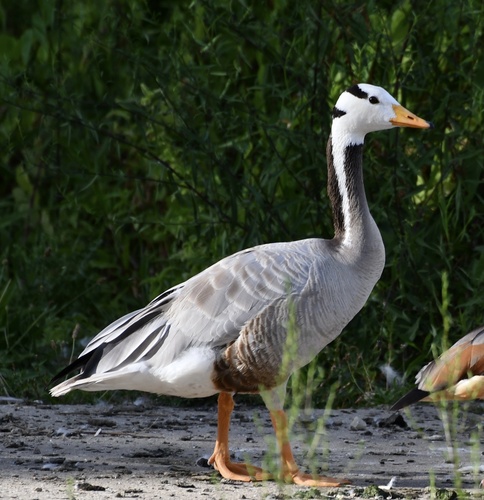 Indische gans
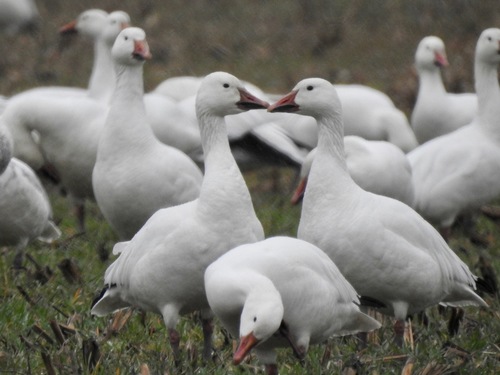 Sneeuwgans
Kort gezegd
De meest betrouwbare manier om Indische gans van Sneeuwgans te scheiden is op basis van het verenkleed: Indische gans toont altijd twee gedurfde zwarte strepen over het bleke grijs-witte hoofd, terwijl Sneeuwgans (in witte morf) een eenvoudig wit hoofd heeft, en blauwe morfen zijn nooit gestreept. Onvolwassen Sneeuwganzen kunnen dof grijsachtig zijn, maar ze tonen nooit de duidelijke hoofdstrepen van Indische gans. In de vlucht toont Sneeuwgans (witte morf) zwarte vleugeltips die contrasteren met anders witte vleugels, terwijl Indische gans bleke bovenvleugels heeft zonder sterke zwarte primaire veren. Structureel is Sneeuwgans iets zwaarder en steviger, met een kortere roze snavel en een uitgesproken 'grijnspatch', in tegenstelling tot de langere, slanker snavel van de Indische gans. Habitat en context zijn ook nuttig: Indische gans is een Oude Wereldsoort van hoge hoogtes in Azië, terwijl Sneeuwgans Noord-Amerikaans is, vaak in enorme groepen.
Herkenningstips
- Hoofdpatroon is de sleutel: Indische gans toont altijd twee gedurfde zwarte strepen over een wit hoofd, zichtbaar op alle leeftijden. Sneeuwgans (beide morfen, alle leeftijden) toont nooit hoofdstrepen.
- Snavel kleur en vorm: Sneeuwgans heeft een roze snavel met een kenmerkende zwarte 'grijnspatch' (de snijkant van de snavel), terwijl Indische gans een slanker, oranje-geel snavel heeft zonder grijnspatch.
- Pootkleur: Beide hebben roze of rode poten, maar dit is niet diagnostisch tussen de twee.
- Verenkleed morfen: Sneeuwgans komt in twee morfen: wit (volledig wit met zwarte vleugeltips) en blauw (blauw-grijze lichaam met wit hoofd). Indische gans is altijd lichtgrijs met een wit gezicht en zwarte hoofdstrepen.
- Jongere verwarring: Onvolwassen Sneeuwganzen (vooral blauwe morfen) zijn grijsachtig, maar tonen nooit hoofdstrepen. Onvolwassen Indische ganzen tonen al de beginfase van de hoofdstrepen. Als je een gestreept hoofd ziet, is het een Indische gans.
- Vluchtpatroon: In de vlucht toont Sneeuwgans (witte morf) opvallende zwarte primaire veren die contrasteren met witte vleugels. Indische gans heeft lichtgrijze vleugels zonder sterke zwarte vleugeltips; de hoofdstrepen kunnen zichtbaar zijn in de vlucht.
- Lichaamsstructuur: Sneeuwgans is iets steviger en heeft een kortere nek, vooral in de grotere 'Greater' ondersoorten. Indische gans is slanker en langer, vooral in de nek en snavel.
- Vocalisatie: Sneeuwgans is veel luidruchtiger, met harde honkende roepen, vooral in groepen. Indische gans is stiller en minder ruw.
- Habitat en verspreiding: Indische gans is een Oude Wereldsoort, gevonden in Azië; Sneeuwgans is strikt Noord-Amerikaans in het wild. Als ze buiten deze gebieden worden gezien, overweeg dan de mogelijkheid van ontsnappingen of dwaalgedrag, maar ga uit van de verwachte soort.
- Groepsgrootte: Sneeuwgans komt vaak voor in enorme, dichte groepen, soms in de duizenden. Indische gans groepen zijn meestal kleiner, hoewel ze nog steeds sociaal zijn.
- Snavel 'grijnspatch': De zwarte 'grijnspatch' is een sterk kenmerk voor Sneeuwgans, afwezig bij Indische gans.
- Hoofdverkleuring: Sneeuwgans kan roestige verkleuring op het hoofd vertonen door voeding, maar dit is diffuus en vormt nooit strepen.
- Staart- en vleugelvorm: Niet sterk diagnostisch tussen deze twee, maar Sneeuwgans kan in de vlucht iets korter staart en bredere vleugels lijken.
- Geslacht en seizoen: Er is weinig seksueel dimorfisme in beide soorten; alle veldkenmerken hierboven zijn van toepassing op beide geslachten en alle seizoenen.
- Bij twijfel: Als je een gans met een wit hoofd en twee zwarte strepen ziet, is het een Indische gans. Als het hoofd eenvoudig wit is (of blauw-grijs in blauwe morfen) en de snavel een zwarte grijnspatch heeft, is het een Sneeuwgans.
Grootte
Sneeuwgans is gemiddeld iets zwaarder (2630 g vs. 2367,5 g voor Indische gans [wikidata]), maar dit verschil is subtiel in het veld. Beide zijn middelgrote tot grote ganzen, maar Sneeuwgans kan bulker en compacter lijken, vooral in de grotere 'Greater' ondersoorten. Indische gans is iets langer en slanker, vooral in de nek en snavel. De grootte-overlap is aanzienlijk, dus alleen de grootte is niet diagnostisch.
Verenkleed
- Jongere/onvolwassen contrast: Onvolwassen Sneeuwganzen (vooral blauwe morfen) zijn dof of leisteengrijs met weinig tot geen wit op het hoofd, de nek of de buik, en tonen nooit hoofdstrepen. Onvolwassen Indische ganzen tonen al de beginfase van de kenmerkende zwarte hoofdstrepen, zelfs als ze minder scherp zijn dan volwassenen.
- Volwassen contrast: Indische gans heeft een lichtgrijs lichaam, een wit gezicht en twee gedurfde zwarte strepen over de achterkant van het hoofd. Sneeuwgans (witte morf) is puur wit met zwarte vleugeltips, zonder hoofdmarkeringen. Blauwe morf Sneeuwganzen zijn voornamelijk blauw-grijs met een wit hoofd, maar opnieuw, zonder strepen. Beide morfen hebben roze snavels en poten, maar Sneeuwgans toont een zwarte 'grijnspatch' op de snavel, afwezig bij Indische gans.
- Vlucht: Sneeuwgans (witte morf) toont een opvallend zwart-wit patroon in de vlucht: zwarte primaire veren die contrasteren met witte secundaire veren en deksels. Indische gans heeft bleke bovenvleugels zonder sterke zwarte vleugeltips, en de hoofdstrepen blijven zichtbaar in de vlucht.
Gedrag
Indische gans is beroemd om zijn hoogtes migrerende vluchten over de Himalaya, vaak vliegend in de nacht of vroege ochtend om gebruik te maken van dichtere, koudere lucht. Sneeuwgans migreert in enorme, luidruchtige groepen door Noord-Amerika, vaak voeden in landbouwvelden. Beide soorten grazen in open habitats en kunnen in grote groepen worden gezien, maar Sneeuwgans groepen zijn doorgaans veel groter en ruwere. Indische gans heeft de neiging om meer gereserveerd en minder vocaal te zijn in vergelijking.
Habitat
Indische gans broedt bij hooggelegen meren in Centraal-Azië en overwintert in Zuid-Azië, vaak in gecultiveerde velden. Sneeuwgans is inheems in Noord-Amerika, broedend in de Arctische toendra en overwinterend in zuidelijke velden en wetlands. Indische gans wordt nooit van nature in Noord-Amerika aangetroffen, en Sneeuwgans is niet inheems in Azië. Daarom is geografische context een sterke aanwijzing: wilde Indische gans in Noord-Amerika of Sneeuwgans in Azië is extreem onwaarschijnlijk buiten ontsnappingen.
Geluid
Sneeuwgans is zeer vocaal, met luide, honkende roepen die van een mijl afstand te horen zijn, vooral in de vlucht. Indische gans is over het algemeen stiller en minder ruw. De stem is een nuttige aanwijzing in grote groepen, maar minder bij dichtbij of met alleenstaande vogels.