

Motmot

インドガン 対 ハクガン

Anser indicus 対 Anser caerulescens

インドガンとハクガンのクイズ
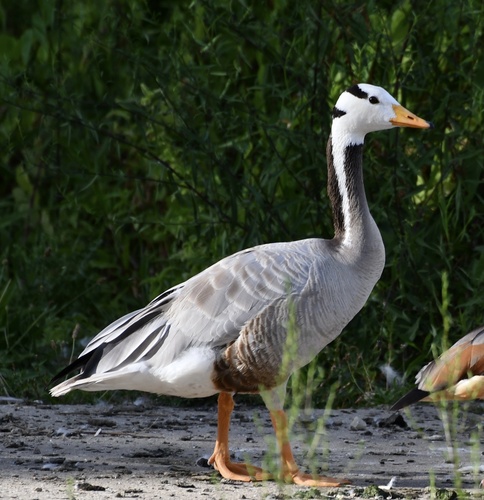
インドガン (Anser indicus) インドガン
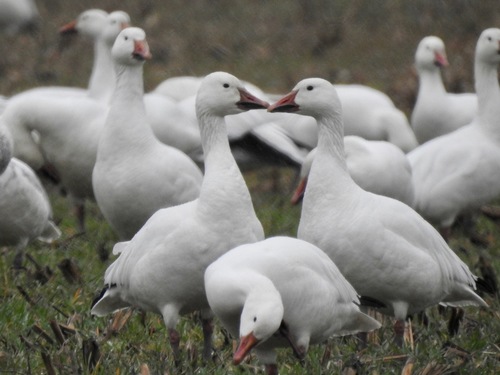
ハクガン (Anser caerulescens) ハクガン

メディア

読み込み中…

要点

インドガンとハクガンを区別する最も信頼できる方法は羽毛によるものです:インドガンは常に淡い灰白色の頭に2本の太い黒いバーを示しますが、ハクガン(白色型)は無地の白い頭を持ち、青色型は決してバーがありません。未成熟のハクガンは全体的に地味な灰色をしていますが、インドガンの特徴的な頭のバーは決して示しません。飛行中、ハクガン(白色型)はそれ以外は白い翼と対照的な黒い翼先を示しますが、インドガンは強い黒い一次羽がない淡い上翼を持っています。構造的には、ハクガンは少し重くてがっしりしており、短いピンク色のくちばしと目立つ「グリンパッチ」を持っていますが、インドガンのくちばしはより長く、細身です。生息地と文脈も役立ちます:インドガンは高地アジアの旧世界の種であり、ハクガンは北アメリカの種で、しばしば巨大な群れで見られます。

識別のコツ

  1. 頭のパターンが鍵です: インドガンは常に白い頭に2本の太い黒いバーを示し、すべての年齢で見えます。ハクガン(両方の型、すべての年齢)は頭のバーを示しません。
  2. くちばしの色と形: ハクガンは特徴的な黒い「グリンパッチ」(くちばしの切断面)を持つピンク色のくちばしを持っていますが、インドガンはグリンパッチのないより細いオレンジ色のくちばしを持っています。
  3. 脚の色: 両方ともピンク色または赤みがかった脚を持っていますが、これは両者を区別するものではありません。
  4. 羽毛の型: ハクガンは2つの型があります:白色(黒い翼先を持つ全白)と青色(白い頭を持つ青灰色の体)。インドガンは常に白い顔と黒い頭のバーを持つ淡い灰色です。
  5. 幼鳥の混乱: 未成熟のハクガン(特に青色型)は灰色ですが、決して頭のバーを示しません。未成熟のインドガンはすでに頭のバーの始まりを示しています。バーのある頭を見たら、それはインドガンです。
  6. 飛行パターン: 飛行中、ハクガン(白色型)は白い翼と対照的な目立つ黒い一次羽を示します。インドガンは強い黒い翼先のない淡い灰色の翼を持ち、頭のバーは飛行中に見えることがあります。
  7. 体の構造: ハクガンは少しがっしりしていて首が短いですが、特に大きな「グレーター」亜種では顕著です。インドガンはより細身で長く、特に首とくちばしにおいてそうです。
  8. 鳴き声: ハクガンは非常に騒がしく、特に群れの中で大きなホーンのような鳴き声を持っています。インドガンは比較的静かで、騒がしくありません。
  9. 生息地と範囲: インドガンはアジアに見られる旧世界の種であり、ハクガンは野生では北アメリカに厳密に存在します。これらの範囲外で見られた場合、逃げ出したり迷子になった可能性を考慮してくださいが、期待される種に戻ります。
  10. 群れのサイズ: ハクガンはしばしば巨大で密な群れで見られ、時には数千羽に達します。インドガンの群れは通常小さいですが、依然として社交的です。
  11. くちばしの「グリンパッチ」: 黒い「グリンパッチ」はハクガンの強い特徴であり、インドガンにはありません。
  12. 頭の染み: ハクガンは餌を食べることで頭に錆びた染みを示すことがありますが、これは広がっており、決してバーを形成しません。
  13. 尾と翼の形: これら2種の間で強く診断的ではありませんが、ハクガンは飛行中に少し短い尾と広い翼に見えることがあります。
  14. 性別と季節: どちらの種にも性的二形性はほとんどありません;上記のすべてのフィールドマークは両性およびすべての季節に適用されます。
  15. 疑わしい場合: 白い頭と2本の黒いバーを持つガンを見たら、それはインドガンです。頭が無地の白(または青色型では青灰色)で、くちばしに黒いグリンパッチがある場合、それはハクガンです。

大きさ

ハクガンは平均してわずかに重いです(2630 g対2367.5 gのインドガン [wikidata])が、この違いは現場では微妙です。両者は中型から大型のガンですが、ハクガンは特に大きな「グレーター」亜種ではよりがっしりしていてコンパクトに見えることがあります。インドガンは首とくちばしにおいてわずかに細長く、スレンダーです。サイズの重複はかなりあるため、サイズだけでは診断的ではありません。

羽色

行動

インドガンはヒマラヤの高高度移動飛行で有名で、しばしば夜間や早朝に飛行して、より密で冷たい空気を利用します。ハクガンは北アメリカを横断して巨大で騒がしい群れで移動し、しばしば農業地帯で餌を食べます。両種は開けた生息地で草を食べ、大きな群れで見られますが、ハクガンの群れは通常はるかに大きく、騒がしいです。インドガンは比較的控えめで、声も少ない傾向があります。

生息環境

インドガンは中央アジアの高地湖で繁殖し、南アジアで冬を越し、しばしば耕作された田畑に見られます。ハクガンは北アメリカに自生し、北極ツンドラで繁殖し、南部の田畑や湿地で冬を越します。インドガンは北アメリカでは自然に見られず、ハクガンはアジアには自生していません。したがって、地理的文脈は強い手がかりです:北アメリカの野生のインドガンやアジアのハクガンは、逃げ出した場合を除いて非常にあり得ません。

声

ハクガンは非常に声が大きく、特に飛行中には1マイル先から聞こえる大きなホーンのような鳴き声を持っています。インドガンは一般的に静かで、騒がしくありません。声は大きな群れの中で有用な手がかりですが、近距離や単独の鳥ではあまり役立ちません。

より良い説明を送る

比較と同じ項目を使ってください。文章はすぐに公開されます。

The most reliable way to separate Bar-headed Goose from Snow Goose is by plumage: Bar-headed Goose always shows two bold black bars across the pale grayish-white head, while Snow Goose (in white morph) has a plain white head, and blue morphs are never barred. Immature Snow Geese can be drab grayish overall, but they never show the distinct head bars of Bar-headed Goose. In flight, Snow Goose (white morph) shows black wingtips contrasting with otherwise white wings, while Bar-headed Goose has pale upperwings with no strong black primaries. Structurally, Snow Goose is a bit heavier and stockier, with a stubbier pink bill and a pronounced 'grin patch', unlike the Bar-headed's longer, more slender bill. Habitat and context are also helpful: Bar-headed Goose is an Old World species of high-altitude Asia, while Snow Goose is North American, often in huge flocks.

  1. Head pattern is key: Bar-headed Goose always shows two bold black bars across a white head, visible at all ages. Snow Goose (both morphs, all ages) never shows head bars.
  2. Bill color and shape: Snow Goose has a pink bill with a distinctive black 'grin patch' (the cutting edge of the bill), while Bar-headed Goose has a more slender, orange-yellow bill without a grin patch.
  3. Leg color: Both have pinkish or reddish legs, but this is not diagnostic between the two.
  4. Plumage morphs: Snow Goose comes in two morphs: white (all white with black wingtips) and blue (bluish-gray body with white head). Bar-headed Goose is always pale gray with a white face and black head bars.
  5. Juvenile confusion: Immature Snow Geese (especially blue morphs) are grayish, but never show head bars. Immature Bar-headed Geese already show the beginnings of the head bars. If you see a barred head, it's a Bar-headed Goose.
  6. Flight pattern: In flight, Snow Goose (white morph) shows striking black primaries contrasting with white wings. Bar-headed Goose has pale gray wings with no strong black wingtips; the head bars can be visible in flight.
  7. Body structure: Snow Goose is a bit stockier and shorter-necked, especially in the larger 'Greater' subspecies. Bar-headed Goose is more slender and elongated, particularly in the neck and bill.
  8. Vocalization: Snow Goose is much noisier, with loud honking calls, especially in flocks. Bar-headed Goose is quieter and less raucous.
  9. Habitat and range: Bar-headed Goose is an Old World species, found in Asia; Snow Goose is strictly North American in the wild. If seen outside these ranges, consider the possibility of escapes or vagrancy, but default to the expected species.
  10. Flock size: Snow Goose often occurs in massive, dense flocks, sometimes numbering in the thousands. Bar-headed Goose flocks are usually smaller, though still social.
  11. Bill 'grin patch': The black 'grin patch' is a strong mark for Snow Goose, absent in Bar-headed Goose.
  12. Head staining: Snow Goose can show rusty staining on the head from feeding, but this is diffuse and never forms bars.
  13. Tail and wing shape: Not strongly diagnostic between these two, but Snow Goose may appear a bit shorter-tailed and broader-winged in flight.
  14. Sex and season: There is little sexual dimorphism in either species; all field marks above apply to both sexes and all seasons.
  15. When in doubt: If you see a goose with a white head and two black bars, it's a Bar-headed Goose. If the head is plain white (or blue-gray in blue morphs) and the bill has a black grin patch, it's a Snow Goose.

Snow Goose is slightly heavier on average (2630 g vs. 2367.5 g for Bar-headed Goose [wikidata]), but this difference is subtle in the field. Both are medium-large geese, but Snow Goose can appear bulkier and more compact, especially in the larger 'Greater' subspecies. Bar-headed Goose is a touch more elongated and slender, especially in the neck and bill. Size overlap is considerable, so size alone is not diagnostic.

  • Juvenile/immature contrast: Immature Snow Geese (especially blue morphs) are drab or slate-gray with little to no white on the head, neck, or belly, and never show head bars. Immature Bar-headed Geese already show the beginnings of the characteristic black head bars, even if less crisp than adults.
  • Adult contrast: Bar-headed Goose has a pale gray body, white face, and two bold black bars across the back of the head. Snow Goose (white morph) is pure white with black wingtips, lacking any head markings. Blue morph Snow Geese are mostly bluish-gray with a white head, but again, no bars. Both morphs have pink bills and legs, but Snow Goose shows a black 'grin patch' on the bill, absent in Bar-headed Goose.
  • Flight: Snow Goose (white morph) shows a striking black-and-white pattern in flight: black primaries contrasting with white secondaries and coverts. Bar-headed Goose has pale upperwings with no strong black wingtips, and the head bars remain visible in flight.

Bar-headed Goose is famous for its high-altitude migratory flights over the Himalayas, often flying at night or early morning to exploit denser, colder air. Snow Goose migrates in huge, noisy flocks across North America, often feeding in agricultural fields. Both species graze in open habitats and can be seen in large groups, but Snow Goose flocks are typically much larger and more raucous. Bar-headed Goose tends to be more reserved and less vocal in comparison.

Bar-headed Goose breeds at high-altitude lakes in Central Asia and winters in South Asia, often in cultivated fields. Snow Goose is native to North America, breeding in Arctic tundra and wintering in southern fields and wetlands. Bar-headed Goose is never naturally found in North America, and Snow Goose is not native to Asia. Thus, geographic context is a strong clue: wild Bar-headed Goose in North America or Snow Goose in Asia is extremely unlikely outside of escapes.

Snow Goose is very vocal, with loud, honking calls that can be heard from a mile away, especially in flight. Bar-headed Goose is generally quieter and less raucous. Voice is a useful clue in large flocks, but less so at close range or with lone birds.

変更を破棄しますか?

保存していない編集があります。今離れると失われます。

インドガン · ハクガン · 苦手な鳥