

Bandstaartoropendola vs Roodstuitbuidelspreeuw
Cacicus latirostris versus Cacicus haemorrhous
Speel een quiz met Bandstaartoropendola en Roodstuitbuidelspreeuw
 Bandstaartoropendola
 Roodstuitbuidelspreeuw
Kort gezegd
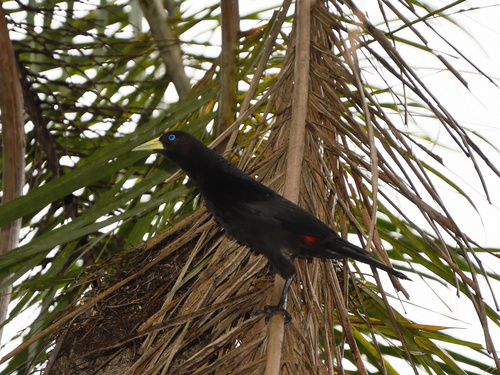
Het meest betrouwbare veldkenmerk om Bandstaartoropendola van Roodstuitbuidelspreeuw te scheiden is het staartpatroon: Bandstaartoropendola heeft een opvallend gebande staart met gele buitenveren die zwart zijn getipt, terwijl Roodstuitbuidelspreeuw een volledig zwarte staart en een helderrode stuit heeft. Beide zijn overwegend zwarte vogels met bleke snavels en blauwe irissen, maar de kastanjebruine kroon/nape en gele staart van de Bandstaartoropendola zijn uniek. Roodstuitbuidelspreeuw mist elke gele kleur in de staart en toont in plaats daarvan een levendig rode onderrug en stuit. Deze verschillen zijn zichtbaar bij zowel zittende als vliegende vogels en zijn aanwezig in alle leeftijdsgroepen. Structuur en grootte zijn vergelijkbaar, maar de Bandstaartoropendola is iets groter en heeft een langere staart. Habitat kan ook helpen: Bandstaartoropendola is een zeldzame várzea-specialist in het westen van Amazonia, terwijl Roodstuitbuidelspreeuw wijdverspreid is in laaglandbossen in heel Zuid-Amerika.
Herkenningstips
- Staartpatroon is het beste veldkenmerk: Bandstaartoropendola heeft een staart met zwarte centrale veren en gele buitenveren die zwart zijn getipt, wat een gebande uitstraling creëert; de staart van Roodstuitbuidelspreeuw is volledig zwart zonder geel op enige leeftijd.
- Stuitkleur: Roodstuitbuidelspreeuw toont altijd een helderrode onderrug en stuit, vooral duidelijk in de vlucht of wanneer de staart is uitgespreid; Bandstaartoropendola heeft een zwarte stuit, nooit rood.
- Kroon- en nape-kleur: Bandstaartoropendola heeft een kastanjebruine kroon, nape en bovenrug, wat contrasteert met het zwarte lichaam; Roodstuitbuidelspreeuw is glanzend zwart over het hoofd en de rug, zonder kastanjebruin.
- Snavelkleur: Beide soorten hebben ivoren snavels, maar de snavel van de Bandstaartoropendola kan een doffe punt of bovenkaak vertonen, terwijl die van de Roodstuitbuidelspreeuw schoon ivoor is. Dit is subtiel en niet altijd zichtbaar in het veld.
- Iris-kleur: Mannetjes van beide soorten hebben bleke blauwe irissen, maar vrouwtjes zijn doffer (bruinachtig blauw bij Roodstuitbuidelspreeuw). Dit is geen sterke scheiding, maar kan helpen bij close-ups.
- Geslacht/leeftijdsverschillen: Beide soorten zijn seksueel monomorf in verenkleed, met doffer zwarte vrouwtjes. Juvenielen lijken op volwassen vrouwtjes, maar behouden de diagnostische staart- en stuitpatronen.
- Grootte en structuur: Bandstaartoropendola is iets groter en heeft een langere staart, maar de overlap is aanzienlijk; gebruik dit alleen als ondersteunend kenmerk.
- Habitat en verspreiding: Bandstaartoropendola is beperkt tot de westelijke Amazoniaanse várzea en is zeldzaam; Roodstuitbuidelspreeuw is wijdverspreid in laaglandbossen in heel Zuid-Amerika. Als gezien buiten de westelijke Amazon, is het bijna zeker Roodstuitbuidelspreeuw.
- Voedingsgedrag: Beide foerageren in groepen onder het bladerdak en kunnen zich bij gemengde groepen voegen, dus gedrag is geen sterke scheiding.
- Vluchtzicht: In de vlucht zijn de gele staartbanden van de Bandstaartoropendola en het ontbreken van een rode stuit duidelijk; Roodstuitbuidelspreeuw toont een rode stuit en een volledig zwarte staart.
- Zittende zicht: Zoek naar de kastanjebruine kroon/nape (Bandstaartoropendola) versus het volledig zwarte hoofd (Roodstuitbuidelspreeuw), en controleer de staart en stuit op kleur.
- Vocalisaties: Bandstaartoropendola geeft een twangende 'ka'CHAWWW' of 'CHOOO' zang en rijke, schorre roepen; de stem van Roodstuitbuidelspreeuw is niet gedetailleerd in de aantekeningen, dus vertrouw hier niet op.
- Nestplaatsing: Beide soorten bouwen hangende nesten, maar dit is geen veldkenmerk tenzij kolonies worden waargenomen en de soorten bekend zijn.
- Verenglans: Roodstuitbuidelspreeuw wordt beschreven als glanzend zwart, Bandstaartoropendola als fluweelachtig zwart met een blauwachtige glans op de vleugels; dit is subtiel en niet betrouwbaar op afstand.
- Snaveldikte (ondersoorten): Sommige ondersoorten van Roodstuitbuidelspreeuw hebben dikkere of dunnere snavels, maar dit is geen praktisch veldkenmerk voor de meeste waarnemers.
Grootte
Bandstaartoropendola is de grotere van de twee, met mannetjes die gemiddeld ongeveer 33 cm in lengte en 96,5 g in massa zijn, en vrouwtjes ongeveer 24,5 cm en 75 g. Mannetjes van Roodstuitbuidelspreeuw zijn kleiner met 29 cm en 96,5 g, en vrouwtjes zijn 25 cm en 62–74 g. Het verschil in lengte is meer uitgesproken dan in massa, en Bandstaartoropendola lijkt langerstaartiger en iets robuuster, maar de overlap is aanzienlijk en grootte alleen is niet betrouwbaar voor veldscheiding.
Verenkleed
- Juveniel/Onvolwassen/Volwassen (alle leeftijden): Het meest diagnostische verschil zit in de staart en stuit. Bandstaartoropendola heeft zwarte centrale staartveren, maar de rest van de staart is geel met zwarte tips, wat een gedurfde gebande uitstraling creëert; de stuit is zwart. Roodstuitbuidelspreeuw heeft een volledig zwarte staart en een helderrode onderrug en stuit, zonder geel in de staart. Beide soorten zijn verder overwegend zwart, maar Bandstaartoropendola toont een kastanjebruine kroon, nape en bovenrug, terwijl Roodstuitbuidelspreeuw glanzend zwart is over het hoofd en de rug, behalve voor de rode stuit. Beide hebben bleke blauwe irissen (mannetjes; vrouwtjes doffer) en ivoren snavels, hoewel de snavel van de Bandstaartoropendola een doffe punt of bovenkaak kan hebben. Juvenielen van beide lijken op doffer vrouwtjes, maar de staart- en stuitpatronen blijven diagnostisch.
Gedrag
Beide soorten foerageren in groepen, vaak onder het bladerdak, en zijn sociaal. Bandstaartoropendola kan zich in grote aantallen bij gemengde soorten groepen voegen, terwijl Roodstuitbuidelspreeuw ook sociaal en koloniaal is. Beide bouwen hangende nesten, maar Bandstaartoropendola kan solitair of in kleine kolonies nestelen, terwijl Roodstuitbuidelspreeuw typischer koloniaal is. Gedrag is geen sterke scheiding in het veld.
Habitat
Bandstaartoropendola is een specialist van várzea (seizoensgebonden overstromings) bossen langs rivieren en eilanden in het verre westen van het Amazonebekken (Brazilië, Colombia, Ecuador, Peru), en is over het algemeen zeldzaam tot ongewoon. Roodstuitbuidelspreeuw is veel wijdverspreider, te vinden in laaglandbossen in het grootste deel van Zuid-Amerika (behalve Chili), inclusief zowel overstromings- als terra firme-bossen. Als gezien buiten de westelijke Amazoniaanse várzea, is het zeer onwaarschijnlijk dat het Bandstaartoropendola is.
Geluid
Bandstaartoropendola geeft een kort, twangend 'ka'CHAWWW' of 'CHOOO' lied, gemengd met hogere roestige piepjes, en roepen die rijk, schor zijn met 'g'luck', 'rhaw' en 'chaw' noten. De stem van Roodstuitbuidelspreeuw is niet beschreven in de verstrekte aantekeningen, dus vocalisaties zijn geen betrouwbare scheiding op basis van de huidige informatie.
Bandstaartoropendola · Roodstuitbuidelspreeuw · Mijn lastige vogels