

Motmot

オビオオオツリスドリ 対 コシアカツリスドリ

Cacicus latirostris 対 Cacicus haemorrhous

オビオオオツリスドリとコシアカツリスドリのクイズ

オビオオオツリスドリ (Cacicus latirostris) オビオオオツリスドリ
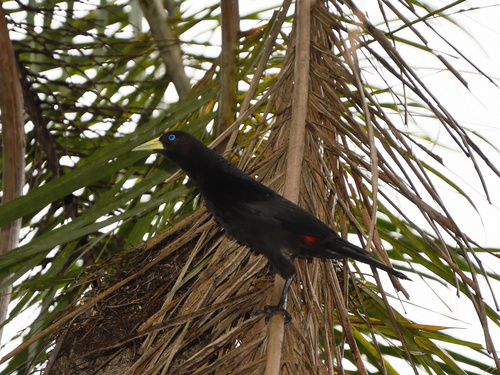
コシアカツリスドリ (Cacicus haemorrhous) コシアカツリスドリ

メディア

読み込み中…

要点

バンドテールカシケとコシアカツリスドリを区別する最も信頼できるフィールドマークは尾のパターンです:バンドテールは黒い先端の黄色い外羽を持つ目立つ帯状の尾を示し、一方コシアカツリスドリは全体が黒い尾と明るい赤い腰を持っています。両者は主に黒い鳥で、淡いくちばしと青い虹彩を持っていますが、バンドテールの栗色の冠/うなじと黄色い尾は独特です。コシアカツリスドリは尾に黄色がなく、代わりに鮮やかな赤い下背部と腰を見せます。これらの違いは、止まっている鳥と飛んでいる鳥の両方で見ることができ、すべての年齢層に存在します。構造とサイズは似ていますが、バンドテールはわずかに大きく、尾が長いです。生息地も役立ちます:バンドテールは西アマゾニアの稀なバルゼア専門種であり、コシアカツリスドリは南アメリカの低地森林に広く分布しています。

識別のコツ

  1. 尾のパターンが最も良いフィールドマークです: バンドテールカシケは黒い中央羽と黒い先端の黄色い外羽を持つ尾を持ち、帯状の外観を作り出します;コシアカツリスドリの尾は全て黒で、年齢に関係なく黄色はありません。
  2. 腰の色: コシアカツリスドリは常に明るい赤い下背部と腰を示し、特に飛行中や尾が広がっているときに明らかです;バンドテールカシケは黒い腰を持ち、決して赤くありません。
  3. 冠とうなじの色: バンドテールカシケは栗色の冠、うなじ、上背を持ち、黒い体と対照的です;コシアカツリスドリは頭と背中全体が光沢のある黒で、栗色はありません。
  4. くちばしの色: 両種は象牙色のくちばしを持っていますが、バンドテールのくちばしは薄暗い先端や上顎を示すことがありますが、コシアカツリスドリのくちばしは清潔な象牙色です。これは微妙で、フィールドでは常に見えるわけではありません。
  5. 虹彩の色: 両種のオスは淡い青い虹彩を持っていますが、メスはより鈍い(コシアカツリスドリでは茶色がかった青)です。これは強い区別要因ではありませんが、近くでの観察に役立つかもしれません。
  6. 性別/年齢の違い: 両種は羽毛において性別的に単形であり、メスは鈍い黒です。幼鳥は成鳥のメスに似ていますが、診断的な尾と腰のパターンを保持しています。
  7. サイズと構造: バンドテールはわずかに大きく、尾が長いですが、重なりはかなりあります;サポートマークとしてのみ使用してください。
  8. 生息地と範囲: バンドテールは西アマゾニアのバルゼアに制限されており、稀です;コシアカツリスドリは南アメリカの低地森林に広く分布しています。西アマゾンの外で見られた場合、ほぼ確実にコシアカツリスドリです。
  9. 採餌行動: 両者はキャノピーの下で群れで採餌し、混合フロックに参加することがありますので、行動は強い区別要因ではありません。
  10. 飛行中の視点: 飛行中、バンドテールの黄色い尾の帯と赤い腰の欠如は明らかです;コシアカツリスドリは赤い腰と全黒の尾を見せます。
  11. 止まっている視点: 栗色の冠/うなじ(バンドテール)と全黒の頭(コシアカツリスドリ)を探し、尾と腰の色を確認してください。
  12. 鳴き声: バンドテールは「ka'CHAWWW」または「CHOOO」という短い、弦楽器のような歌と豊かで喉の深い呼び声を出します;コシアカツリスドリの声は詳細がメモに記載されていないため、これに頼らないでください。
  13. 巣の配置: 両種は吊り下げ式の巣を作りますが、これはコロニーが観察され、種が知られている場合を除いてフィールドマークではありません。
  14. 羽毛の光沢: コシアカツリスドリは光沢のある黒として記述され、バンドテールは翼に青みがかった光沢のあるビロードのような黒として記述されています;これは微妙で、遠くからは信頼できません。
  15. くちばしの太さ(亜種): 一部のコシアカツリスドリの亜種は、より太いまたは薄いくちばしを持っていますが、これはほとんどの観察者にとって実用的なフィールドマークではありません。

大きさ

バンドテールカシケは2種の中で大きく、オスは平均して約33 cmの長さと96.5 gの質量を持ち、メスは約24.5 cmと75 gです。コシアカツリスドリのオスは29 cmと96.5 gで小さく、メスは25 cmと62–74 gです。長さの違いは質量よりも顕著で、バンドテールは尾が長く、わずかにがっしりとした印象を与えますが、重なりはかなりあり、サイズだけではフィールドでの区別は信頼できません。

羽色

行動

両種は群れで採餌し、しばしばキャノピーの下で社会的です。バンドテールカシケは多くの数で混合種のフロックに参加することがありますが、コシアカツリスドリも群れであり、コロニーを形成します。両者は吊り下げ式の巣を作りますが、バンドテールは孤立して巣を作ることもありますが、コシアカツリスドリはより典型的にコロニーを形成します。行動はフィールドでの強い区別要因ではありません。

生息環境

バンドテールカシケは、ブラジル、コロンビア、エクアドル、ペルーの西アマゾン盆地の川や島に沿ったバルゼア(季節的に洪水が発生する)森林の専門種であり、一般的に稀または珍しいです。コシアカツリスドリははるかに広く分布しており、南アメリカのほとんどの低地森林(チリを除く)に見られ、洪水が発生する森林とテラフィルム森林の両方を含みます。西アマゾンのバルゼアの外で見られた場合、バンドテールは非常に可能性が低いです。

声

バンドテールカシケは短い、弦楽器のような「ka'CHAWWW」または「CHOOO」という歌を出し、高いさびしい音と豊かで喉の深い「g'luck」、「rhaw」、「chaw」の呼び声を混ぜます。コシアカツリスドリの声は提供されたメモには記載されていないため、鳴き声は現在の情報に基づいて信頼できる区別要因ではありません。

より良い説明を送る

比較と同じ項目を使ってください。文章はすぐに公開されます。

The most reliable field mark to separate Band-tailed Cacique from Red-rumped Cacique is the tail pattern: Band-tailed shows a strikingly banded tail with yellow outer feathers tipped black, while Red-rumped has an all-black tail and a bright red rump. Both are mostly black birds with pale bills and blue irises, but the Band-tailed's chestnut crown/nape and yellow tail are unique. Red-rumped Cacique lacks any yellow in the tail and instead flashes a vivid red lower back and rump. These differences are visible in both perched and flying birds, and are present in all age classes. Structure and size are similar, but the Band-tailed is slightly larger and longer-tailed. Habitat can also help: Band-tailed is a scarce várzea specialist in western Amazonia, while Red-rumped is widespread in lowland forests across South America.

  1. Tail pattern is the single best field mark: Band-tailed Cacique has a tail with black central feathers and yellow outer feathers tipped black, creating a banded look; Red-rumped Cacique's tail is entirely black with no yellow at any age.
  2. Rump color: Red-rumped Cacique always shows a bright red lower back and rump, especially obvious in flight or when the tail is spread; Band-tailed Cacique has a black rump, never red.
  3. Crown and nape color: Band-tailed Cacique has a chestnut crown, nape, and upper back, which contrasts with the black body; Red-rumped Cacique is glossy black throughout the head and back, lacking any chestnut.
  4. Bill color: Both species have ivory bills, but Band-tailed's may show a dusky tip or maxilla, while Red-rumped's is clean ivory. This is subtle and not always visible in the field.
  5. Iris color: Males of both species have pale blue irises, but females are duller (brownish blue in Red-rumped). This is not a strong separator but may help with close views.
  6. Sex/age differences: Both species are sexually monomorphic in plumage, with females duller black. Juveniles resemble adult females but retain the diagnostic tail and rump patterns.
  7. Size and structure: Band-tailed is slightly larger and longer-tailed, but overlap is considerable; use only as a supporting mark.
  8. Habitat and range: Band-tailed is restricted to western Amazonian várzea and is rare; Red-rumped is widespread in lowland forests across South America. If seen outside the western Amazon, it is almost certainly Red-rumped.
  9. Foraging behavior: Both forage in groups below the canopy and may join mixed flocks, so behavior is not a strong separator.
  10. Flight views: In flight, Band-tailed's yellow tail bands and lack of red rump are obvious; Red-rumped flashes a red rump and all-black tail.
  11. Perched views: Look for the chestnut crown/nape (Band-tailed) versus all-black head (Red-rumped), and check the tail and rump for color.
  12. Vocalizations: Band-tailed gives a twanging 'ka'CHAWWW' or 'CHOOO' song and rich, throaty calls; Red-rumped's voice is not detailed in the notes, so do not rely on this.
  13. Nest placement: Both species build suspended nests, but this is not a field mark unless colonies are observed and species are known.
  14. Plumage gloss: Red-rumped is described as glossy black, Band-tailed as velvety black with a bluish gloss on the wings; this is subtle and not reliable at distance.
  15. Bill thickness (subspecies): Some Red-rumped subspecies have thicker or thinner bills, but this is not a practical field mark for most observers.

Band-tailed Cacique is the larger of the two, with males averaging about 33 cm in length and 96.5 g in mass, and females about 24.5 cm and 75 g. Red-rumped Cacique males are smaller at 29 cm and 96.5 g, and females are 25 cm and 62–74 g. The difference in length is more marked than in mass, and Band-tailed appears longer-tailed and slightly bulkier, but overlap is considerable and size alone is not reliable for field separation.

  • Juvenile/Immature/Adult (all ages): The most diagnostic difference is in the tail and rump. Band-tailed Cacique has black central tail feathers, but the rest of the tail is yellow with black tips, creating a bold banded effect; the rump is black. Red-rumped Cacique has an all-black tail and a bright red lower back and rump, with no yellow in the tail. Both species are otherwise mostly black, but Band-tailed shows a chestnut crown, nape, and upper back, while Red-rumped is glossy black throughout except for the red rump. Both have pale blue irises (males; females duller) and ivory bills, though Band-tailed's bill may have a dusky tip or maxilla. Juveniles of both resemble duller females, but the tail and rump patterns remain diagnostic.

Both species forage in groups, often below the canopy, and are social. Band-tailed Cacique may join mixed-species flocks in large numbers, while Red-rumped Cacique is also gregarious and colonial. Both build suspended nests, but Band-tailed may nest solitarily or in small colonies, while Red-rumped is more typically colonial. Behavior is not a strong separator in the field.

Band-tailed Cacique is a specialist of várzea (seasonally flooded) forests along rivers and islands in the far western Amazon Basin (Brazil, Colombia, Ecuador, Peru), and is generally rare to uncommon. Red-rumped Cacique is far more widespread, found in lowland forests throughout most of South America (except Chile), including both flooded and terra firme forests. If seen outside the western Amazonian várzea, Band-tailed is very unlikely.

Band-tailed Cacique gives a short, twanging 'ka'CHAWWW' or 'CHOOO' song, mixed with higher rusty squeaks, and calls that are rich, throaty 'g'luck', 'rhaw', and 'chaw' notes. Red-rumped Cacique's voice is not described in the provided notes, so vocalizations are not a reliable separator based on current information.

変更を破棄しますか?

保存していない編集があります。今離れると失われます。

オビオオオツリスドリ · コシアカツリスドリ · 苦手な鳥