

Bairds strandloper vs Kleinste strandloper
Calidris bairdii versus Calidris minutilla
Speel een quiz met Bairds strandloper en Kleinste strandloper
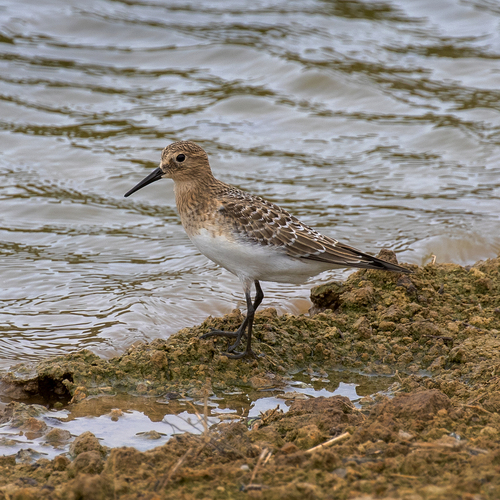 Bairds strandloper
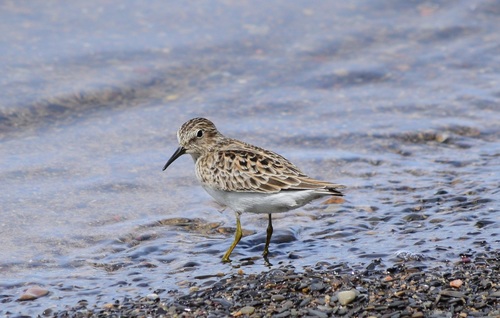 Kleinste strandloper
Kort gezegd
Het meest betrouwbare veldkenmerk om Bairds strandloper van Kleinste strandloper te scheiden, is de kleur van de poten: Bairds heeft zwarte poten, terwijl Kleinste gele-groene poten heeft, zichtbaar zelfs op afstand. Voor vogels op de grond toont Bairds zeer lange vleugels die ver voorbij de staart uitsteken, een kenmerk dat niet door Kleinste wordt geëvenaard. Juveniele Kleinste strandlopers zijn helderder en roestkleuriger boven, met witte mantelstrepen, terwijl Bairds juvenielen doffer en meer uniform zijn. Beide soorten zijn klein, maar Kleinste is de kleinste kustvogel van Noord-Amerika, en Bairds lijkt iets langer en slanker. Beide kunnen lastig zijn in gemengde 'peep'-groepen, maar aandacht voor structuur en potenkleur zal meestal verwarring oplossen.
Herkenningstips
- De kleur van de poten is het meest consistente veldkenmerk: Bairds strandloper heeft altijd zwarte poten; Kleinste strandloper heeft altijd gele-groene poten. Dit is zichtbaar zelfs op afstand of bij slecht licht, maar pas op voor modderige poten bij Kleinste, die donker kunnen lijken.
- Vleugelprojectie voorbij de staart: Op de grond steken Bairds vleugels ver voorbij de staart uit, wat een lange, slanke uitstraling geeft. Kleinste's vleugels zijn korter en steken niet voorbij de staart uit. Dit geldt voor alle leeftijden en is vooral nuttig in zijaanzichten.
- Juveniele bovenzijde: Juveniele Kleinste strandlopers zijn helderder, met roestkleurige tonen en gedurfde witte mantelstrepen. Juveniele Bairds zijn doffer, meer uniform bruin boven, zonder sterke roestkleurige of witte strepen.
- Algemene structuur: Bairds lijkt langer, slanker en meer verlengd, vooral in de vleugels en staart. Kleinste is compact, met een korte nek en een ronde lichaamsbouw.
- Snavelvorm: Beide hebben korte, dunne, donkere snavels, maar Bairds kan iets langer en rechter lijken; Kleinste's kan fijner en iets gebogen aan de punt lijken, maar dit is subtiel en variabel.
- Borstmuster: Bairds heeft een lichtbruine borst met fijne strepen, die overgaat in de witte buik. Kleinste's borstrepen zijn vaak meer geconcentreerd aan de zijkanten, met een schoner wit midden.
- Supercilium en kroon: Kleinste strandloper toont een lichte lijn boven het oog (supercilium) en een donkere kroon, vooral in broedkleed. Bairds hoofdpatroon is eenvoudiger en minder contrasterend.
- Romp en bovenstaart: Bairds heeft een donkere rompplek, maar dit is niet zo duidelijk als bij Bonapartes strandloper en is zelden een primair veldkenmerk voor deze twee soorten.
- Potenkleur in de modder: Als de poten van Kleinste strandloper modderig zijn, kunnen ze donker lijken—controleer altijd op enige hint van gele-groen.
- Vlucht jizz: Beide soorten hebben een snelle, lage vlucht met snelle vleugelslagen, maar Bairds kan langer-vleugelig en meer puntig in de vlucht lijken.
- Habitatvoorkeur: Als je een peep ziet in een zeer modderige, begroeide rand, is Kleinste waarschijnlijker; Bairds geeft misschien de voorkeur aan drogere, meer open vlaktes, maar dit is niet diagnostisch.
- Grootte in gemengde groepen: Kleinste is de kleinste peep; als één vogel iets groter en langer lijkt tussen de Kleinste, overweeg dan Bairds.
- Seizoensgebonden verwarring: Beide soorten kunnen bleker en grijzer lijken in de winter, maar potenkleur en vleugelprojectie blijven betrouwbaar.
- Geslacht en leeftijd: Geen sterke seksuele dimorfie; alle bovenstaande veldkenmerken zijn van toepassing op beide seksen. Juveniele kenmerken zijn het nuttigst in de late zomer en vroege herfst.
- Pas op voor andere peeps: Beide kunnen verward worden met Semipalmated en Alaskastrandlopers; controleer altijd eerst de potenkleur en vleugelprojectie.
Grootte
Kleinste strandloper is de kleinste kustvogel in Noord-Amerika, met een lengte van 13–15 cm en een gewicht van 19–30 g [wikipedia]. Bairds strandloper is vergelijkbaar in grootte, maar iets langer en slanker in het algemeen (precisie metingen niet verstrekt in de notities, maar beide vallen in het 'kleine peep'-bereik). In het veld kan Bairds meer verlengd lijken, vooral door zijn lange vleugels en staartprojectie, terwijl Kleinste meer compact en met een korte nek lijkt.
Verenkleed
- Juveniele/onvolwassen vogels: Juveniele Kleinste strandlopers zijn duidelijk gepatterniseerd boven, met heldere roestkleurige tonen en gedurfde witte mantelstrepen. Bairds juvenielen zijn meer uniform donkerbruin boven met minder contrast en missen de heldere roestkleurige en witte strepen.
- Potenkleur (alle leeftijden): Bairds heeft altijd zwarte poten; Kleinste toont altijd gele-groene poten, een belangrijk veldkenmerk.
- Volwassen broed: Beide zijn bruin boven en wit onder, maar Bairds heeft een lichtere, gestreepte kop en borst, en een donkere rompplek. Kleinste heeft een licht supercilium en een donkere kroon.
- Winterpluimage: Beide worden grijzer boven, maar Bairds blijft langer-vleugelig en zwart-been, terwijl Kleinste gele-groene poten en een compactere uitstraling behoudt.
- Vleugelprojectie (alle leeftijden): Bairds vleugels steken ver voorbij de staart uit wanneer ze zitten; Kleinste's doen dat niet.
Gedrag
Beide soorten foerageren op modderige vlaktes en kusten, pikken aan het oppervlak of boren naar voedsel. Kleinste strandloper kan meer gehurkt en opzettelijk lijken, vaak voeden in nattere, modderigere gebieden. Bairds kan rechtop lijken, met een slanker, meer verlengd postuur door zijn lange vleugels en staart. Groepsgedrag is vergelijkbaar, maar Bairds kan meer mengen met andere langeafstandsmigrerende strandlopers.
Habitat
Beide soorten gebruiken vergelijkbare habitats tijdens migratie—modderige vlaktes, kusten, en de randen van vijvers of meren. Kleinste strandloper broedt in de Noord-Amerikaanse toendra en moerassen, terwijl Bairds verder naar het noorden en westen broedt. Tijdens de migratie kan Kleinste strandloper waarschijnlijker zijn in modderigere, begroeide randen, terwijl Bairds kan worden gevonden in meer open, drogere vlaktes, maar er is veel overlap.
Bairds strandloper · Kleinste strandloper · Mijn lastige vogels