

Annakolibrie vs Breedstaartkolibrie
Calypte anna versus Selasphorus platycercus
Speel een quiz met Annakolibrie en Breedstaartkolibrie
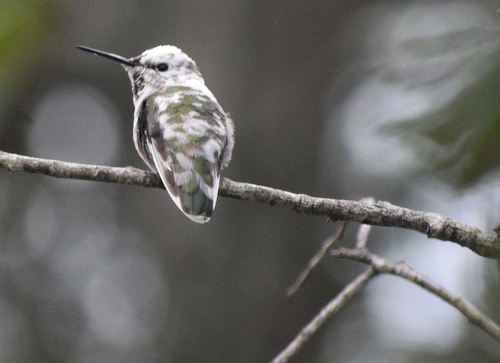 Annakolibrie
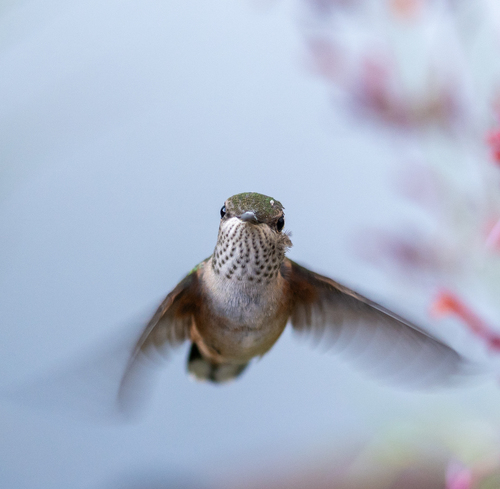 Breedstaartkolibrie
Kort gezegd
The most reliable field mark between Anna's and Broad-tailed Hummingbird is the head and throat coloration in adult males: Anna's is the only North American hummer with a fully iridescent reddish-pink crown and gorget, while Broad-tailed males have a rose-red gorget but a green crown. Females and immatures are trickier, but Anna's shows a plainer face and lacks the Broad-tailed's white eye ring and cinnamon flanks. In flight, Broad-tailed males produce a distinctive mechanical wing trill, absent in Anna's. Both species have green backs, but subtle differences in tail shape, face pattern, and vocalizations can help clinch the ID, especially outside the breeding season or with non-adult males.
Herkenningstips
- Adult male Anna's has a fully iridescent reddish-pink crown and gorget—the only North American hummer with this combination. If you see a red crown, it's Anna's.
- Adult male Broad-tailed has a rose-red gorget but a green crown—never a red crown. If the crown is green and only the throat is rosy, think Broad-tailed.
- Females/immatures: Anna's has a plain grayish face and throat, sometimes with a few red spots, and lacks strong facial markings.
- Females/immatures: Broad-tailed shows a distinct white eye ring and cinnamon-washed flanks, with spotted cheeks—look for these subtle color patches on the sides and face.
- Tail shape: Both have rounded tails, but Broad-tailed's tail projects beyond the wingtips when perched, and is often more obviously rounded and black-tipped; Anna's tail is dark, slightly forked in males, rounded in females, with white tips on outer feathers.
- In flight, Broad-tailed males produce a mechanical wing trill—a rapid, insect-like buzz audible at a distance, especially during display flights. Anna's lacks this trill entirely.
- Anna's males produce an explosive squeak with their tail at the bottom of display dives, not a trill. This is brief and only heard during display.
- Anna's males sing a thin, metallic song from perches—unique among northern hummers. Broad-tailed does not sing, but gives sharp "cheet" calls.
- Bill shape is similar in both: long, straight, and slender—not a useful field mark for separation.
- Back color is iridescent green in both species; do not rely on this for ID.
- Habitat context can help: Anna's is common in coastal gardens and urban parks, Broad-tailed in mountain meadows and high-elevation forests.
- Season and location matter: Anna's is resident or wintering along the Pacific coast, while Broad-tailed is present in highland areas, especially in summer.
- Size is not reliable: Anna's is slightly heavier, Broad-tailed a bit longer-winged, but these differences are subtle and overlap.
- Juvenile/immature upperwing pattern is not distinctive in either species—focus on face and flank coloration instead.
- If you see a hummingbird with a plain face, no eye ring, and only a few red spots on the throat, especially in a coastal lowland setting, Anna's is likely. If you see a white eye ring, cinnamon flanks, and hear a mechanical wing trill in a mountain meadow, Broad-tailed is your bird.
Grootte
Anna's Hummingbird is slightly heavier (body mass ~4.3 g) than Broad-tailed (~3.6 g), but both are very close in length (Anna's: 9.9–10.9 cm; Broad-tailed: ~10 cm). Broad-tailed has a marginally longer wingspan (13.3 cm vs. Anna's 12 cm), but this is subtle and not usually diagnostic in the field. Size alone is unreliable for separation.
Verenkleed
For adult males, Anna's Hummingbird stands out with a unique iridescent reddish-pink crown and gorget, while Broad-tailed males have a rose-red gorget but retain a green crown. Females and immatures of both species have green backs, but Anna's females/juveniles show a plain grayish face and throat, sometimes with a few red spots, and a rounded tail with white tips on the outer feathers. Broad-tailed females/immatures have a more distinct white eye ring, cinnamon-washed flanks, and spotted cheeks. The tail of Broad-tailed is rounded and projects beyond the wingtips when perched. No age-specific upperwing pattern is described for either species, so focus on head, face, and flank coloration for non-adult males.
Gedrag
Anna's males perform dramatic aerial dives with an explosive tail-generated squeak at the bottom, while Broad-tailed males display with a mechanical wing trill audible at a distance. Both species hover and feed in similar ways, but Broad-tailed's wing trill is a key behavioral clue during flight displays. Anna's males are also unique among northern hummers in singing a thin, squeaky song from perches.
Habitat
Anna's Hummingbird is most often found in open woodlands, shrubby areas, gardens, and urban parks along the Pacific coast, from British Columbia to Arizona. Broad-tailed Hummingbird prefers highland habitats—mountain meadows, open forests, and montane clearings—across the western US and into Mexico and Guatemala. Overlap is possible in some western states, but Anna's is more coastal and lowland, while Broad-tailed is more montane.
Geluid
Anna's Hummingbird males sing a thin, squeaky, metallic song from perches, and produce an explosive squeak with their tail feathers during display dives. Broad-tailed Hummingbird's call is a sharp repeated "cheet", but the most distinctive sound is the male's mechanical wing trill (produced by the 9th and 10th primaries) during flight and display, which Anna's lacks. Listen for this trilling buzz in flight for Broad-tailed, especially in breeding season.