

Motmot

キンカチョウ 対 オナガカエデチョウ

Taeniopygia guttata 対 Estrilda astrild

キンカチョウとオナガカエデチョウのクイズ
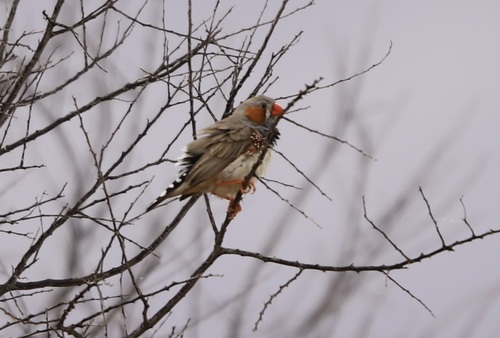
キンカチョウ (Taeniopygia guttata) キンカチョウ
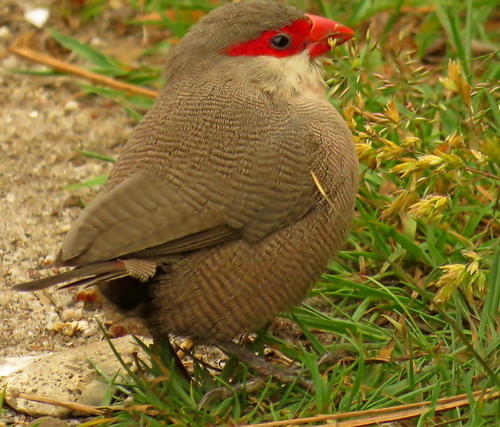
オナガカエデチョウ (Estrilda astrild) オナガカエデチョウ

メディア

読み込み中…

要点

ゼブラフィンチとオナガカエデチョウを区別する最も信頼できるフィールドマークは、くちばしと顔のパターンです:成鳥のオナガカエデチョウは明るい赤いくちばしと太い赤いアイストライプを持っていますが、ゼブラフィンチはどちらも欠いています。幼鳥のオナガカエデチョウは黒いくちばしと鈍い羽毛を持っていますが、まだかすかなアイストライプを示します。一方、ゼブラフィンチの幼鳥はより均一に地味です。すべての羽毛において、オナガカエデチョウはスリムで尾が長く、より控えめで細かく縞模様のある茶色の体とピンク色または赤色の腹部ストライプ(変動あり)を持っています。ゼブラフィンチはずんぐりしていて、より円錐形のくちばしを持ち、赤い顔のマークがありません。これらの違いは、止まっているときも飛んでいるときも見えますが、特に近距離または良い光の下で明確です。

識別のコツ

  1. Bill color (all ages): 成鳥のオナガカエデチョウは明るい赤いくちばしを持っています;幼鳥は黒いくちばしを持っています。ゼブラフィンチは赤または黒のくちばしを決して示しません—成鳥はオレンジ色の円錐形のくちばしを持ち(オスはより明るい)、幼鳥はより淡いですが、やはり赤や黒ではありません。
  2. Eye-stripe (all ages): オナガカエデチョウ(成鳥とほとんどの幼鳥)は目を通る太いまたはかすかな赤いストライプを示します。ゼブラフィンチはすべての年齢でアイストライプを欠いています。
  3. Face pattern: オナガカエデチョウの顔は赤いアイストライプと淡い頬/喉でマークされていますが、ゼブラフィンチの顔は地味で、赤や強い顔のマークが欠けています。
  4. Belly stripe: オナガカエデチョウはしばしば腹部の中心にピンク色または赤色のストライプを示します(亜種や性別によって変動あり)、ゼブラフィンチには決して存在しません。
  5. Body barring: オナガカエデチョウは全体に細かく茶色がかった灰色の縞模様があり、微妙で鱗状の外観を持っています。ゼブラフィンチはより地味で、細かい縞模様が欠けています。
  6. Tail and rump: オナガカエデチョウは長く、段階的な尾と茶色の尻を持っています;ゼブラフィンチの尾は短く、段階的ではありません。
  7. Juvenile confusion: 幼鳥のオナガカエデチョウは鈍く、黒いくちばしとかすかなアイストライプを持っています;ゼブラフィンチの幼鳥は地味で、両方の特徴が欠けています。もし小さくて地味なフィンチを見て、黒いくちばしとかすかなアイストライプがあれば、それは幼鳥のオナガカエデチョウです。
  8. Sex differences: メスのオナガカエデチョウはオスよりも淡く、腹部の赤が少ないですが、やはり赤いくちばしとアイストライプを示します。ゼブラフィンチのメスはオスよりも地味ですが、いかなる年齢でもオナガカエデチョウの赤い顔の特徴を発達させることはありません。
  9. Flight style: オナガカエデチョウは長い尾を持つ弾むような波状の飛行を示します;ゼブラフィンチは飛行中により直接的でコンパクトです。
  10. Group behavior: オナガカエデチョウはしばしば密集した協調的な群れで見られます;ゼブラフィンチの群れはより緩やかで散らばっています。
  11. Habitat context: レッサー・スンダ諸島ではゼブラフィンチが地元の種です;サハラ以南のアフリカや導入された地域では、オナガカエデチョウがより可能性が高く、特に湿った草地や都市公園で見られます。
  12. Vocalizations: オナガカエデチョウの高音の飛行コールと厳しい鼻音の歌を群れから聞いてください。ゼブラフィンチのオスは個別に歌い、その歌は学習され、変動します。
  13. Size and shape: オナガカエデチョウはやや重く、長く、スリムで、尾が長いです;ゼブラフィンチはより丸く、コンパクトです。
  14. Perched jizz: オナガカエデチョウはよりスリムで繊細に見えます;ゼブラフィンチはずんぐりしていて頑丈に見えます。
  15. When in doubt: くちばしの色とアイストライプに焦点を当ててください—これらはすべての年齢と季節で最も信頼できるマークです。

大きさ

両種は小型のエストリルディドフィンチですが、オナガカエデチョウは平均してやや重い(体重8.2g [wikidata])で、より長くスリムに見えます。ゼブラフィンチはよりコンパクトでずんぐりしており、相対的に短い尾を持っています。フィールドでは、違いは微妙ですが、両者が並んでいるときに見えます:ゼブラフィンチはより丸く、頑丈に見え、オナガカエデチョウはよりスリムで繊細な外観を持っています。

羽色

行動

両種は社交的で、しばしば群れで見られますが、オナガカエデチョウはより密集した、協調的なグループで動く傾向があり、しばしば開けた場所で草の種を食べているのが見られます。ゼブラフィンチも群れを作りますが、より散らばっているように見え、乾燥したより開けた生息地に関連付けられることが多いです。飛行中、オナガカエデチョウはより波状で弾むような飛行を示し、ゼブラフィンチはより直接的でコンパクトに見えます。

生息環境

ゼブラフィンチ(Taeniopygia guttata)はレッサー・スンダ諸島に自生していますが、オナガカエデチョウ(Estrilda astrild)はサハラ以南のアフリカに自生していますが、多くの温暖な地域、島々、ヨーロッパやアメリカの一部に広く導入されています。重複する地域では、オナガカエデチョウは湿った草地や都市公園で見られる可能性が高く、ゼブラフィンチは乾燥した開けた国を好みます。しかし、両者は種子が豊富な草が豊かな生息地で見られることがあります。

声

オスのゼブラフィンチだけが歌い、それぞれが若い頃に学んだ個別の歌を持っています。オナガカエデチョウはさまざまなツイッターやブザー音、特徴的な高音の飛行コール、そして最後に下降するシンプルで厳しい鼻音の歌を持っています。フィールドでは、オナガカエデチョウのコールは群れから聞かれる可能性が高いですが、ゼブラフィンチの声はより個別的で、大きなグループで聞かれる可能性は低いです。

より良い説明を送る

比較と同じ項目を使ってください。文章はすぐに公開されます。

The most reliable field mark to separate Zebra Finch from Common Waxbill is the bill and face pattern: adult Common Waxbills have a bright red bill and a bold red eye-stripe, while Zebra Finches lack both. Juvenile Common Waxbills have a black bill and duller plumage, but still show a faint eye-stripe, whereas Zebra Finch juveniles are more uniformly plain. In all plumages, Common Waxbill is slimmer and longer-tailed, with a more subdued, finely barred brownish body and a pinkish or reddish belly stripe (variable). Zebra Finches are chunkier, with a more conical bill, and lack the red facial marks. These differences are visible both perched and in flight, but are especially clear at close range or with good light.

  1. Bill color (all ages): Adult Common Waxbill has a bright red bill; juveniles have a black bill. Zebra Finch never shows a red or black bill—adults have an orange, conical bill (males brighter), and juveniles are paler but still not red or black.
  2. Eye-stripe (all ages): Common Waxbill (adult and most juveniles) shows a bold or faint red stripe through the eye. Zebra Finch lacks any eye-stripe at all ages.
  3. Face pattern: Common Waxbill's face is marked by the red eye-stripe and pale cheeks/throat, while Zebra Finch's face is plain, lacking any red or strong facial markings.
  4. Belly stripe: Common Waxbill often shows a pinkish or reddish stripe down the center of the belly (variable by subspecies and sex), never present in Zebra Finch.
  5. Body barring: Common Waxbill is finely barred brownish-grey all over, with a subtle, scaly appearance. Zebra Finch is plainer, lacking the fine barring.
  6. Tail and rump: Common Waxbill has a long, graduated tail and a brown rump; Zebra Finch's tail is shorter and less graduated.
  7. Juvenile confusion: Juvenile Common Waxbill is dull with a black bill and faint eye-stripe; Zebra Finch juveniles are plain and lack both features. If you see a small, plain finch with a black bill and faint eye-stripe, it's a juvenile Common Waxbill.
  8. Sex differences: Female Common Waxbill is paler with less red on the belly but still shows the red bill and eye-stripe. Zebra Finch females are plainer than males but never develop red facial features.
  9. Flight style: Common Waxbill shows a bouncy, undulating flight with a longer tail; Zebra Finch is more direct and compact in flight.
  10. Group behavior: Common Waxbill is often in tight, coordinated flocks; Zebra Finch flocks are looser and more scattered.
  11. Habitat context: In the Lesser Sundas, Zebra Finch is the local species; in sub-Saharan Africa and introduced regions, Common Waxbill is more likely, especially in wetter grasslands and urban parks.
  12. Vocalizations: Listen for the Common Waxbill's high-pitched flight call and harsh, nasal song from flocks. Zebra Finch males sing individually, and their song is learned and variable.
  13. Size and shape: Common Waxbill is slightly heavier, longer, and slimmer with a longer tail; Zebra Finch is rounder and more compact.
  14. Perched jizz: Common Waxbill looks sleeker and more delicate; Zebra Finch appears stubby and robust.
  15. When in doubt: Focus on bill color and eye-stripe—these are the most reliable marks at all ages and seasons.

Both species are small estrildid finches, but Common Waxbill is slightly heavier on average (body mass 8.2 g [wikidata]) and appears longer and slimmer due to its more elongated tail and body shape. Zebra Finch is more compact and stubby, with a relatively shorter tail. In the field, the difference is subtle but can be seen when both are side by side: Zebra Finch looks rounder and more robust, while Common Waxbill has a sleeker, more delicate appearance.

  • Juveniles: Common Waxbill juveniles are duller than adults, with little or no red on the belly, faint dark barring, and a black bill. They still often show a faint red eye-stripe, which Zebra Finch never shows. Zebra Finch juveniles are plain, lacking both the red bill and eye-stripe, and are generally more uniformly colored.
  • Adults: Common Waxbill adults have a bright red bill, a bold red stripe through the eye, grey-brown finely barred plumage, a pinkish flush to the underparts, and a reddish belly stripe (variable by subspecies). Zebra Finch adults lack any red on the face or bill, and have a more conical, orange bill (males brighter), with no eye-stripe or belly stripe. The overall pattern is much plainer and less barred than Common Waxbill.
  • Sex differences: Female Common Waxbills are paler than males, with less red on the belly, but still show the red bill and eye-stripe. Zebra Finch females are also plainer than males but do not acquire the red facial features of Common Waxbill at any age.

Both species are social and often seen in flocks, but Common Waxbill tends to move in tighter, more coordinated groups and is often seen feeding on grass seeds in open areas. Zebra Finch is also gregarious but may appear more scattered and is often associated with drier, more open habitats. In flight, Common Waxbill shows a more undulating, bouncy flight with a longer tail, while Zebra Finch appears more direct and compact.

Zebra Finch (Taeniopygia guttata) is native to the Lesser Sundas, while Common Waxbill (Estrilda astrild) is native to sub-Saharan Africa but has been widely introduced to many warm regions, including islands and parts of Europe and the Americas. In areas of overlap, Common Waxbill is more likely in wetter grasslands and urban parks, while Zebra Finch prefers drier, open country. However, both can be found in grass-rich habitats where seeds are abundant.

Only male Zebra Finches sing, and each has an individual song learned in youth. Common Waxbill has a variety of twittering and buzzing calls, a distinctive high-pitched flight call, and a simple, harsh, nasal song that descends at the end. In the field, the Common Waxbill's calls are more likely to be heard from flocks, while Zebra Finch vocalizations are more individual and less likely to be heard in large groups.

変更を破棄しますか?

保存していない編集があります。今離れると失われます。

キンカチョウ · オナガカエデチョウ · 苦手な鳥