

Diamante mandarino vs Common Waxbill
Taeniopygia guttata contro Estrilda astrild
Fai un quiz con Diamante mandarino e Common Waxbill
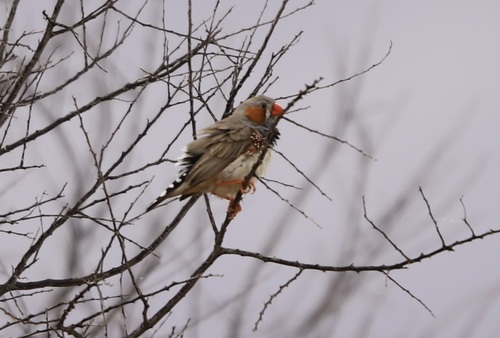 Diamante mandarino
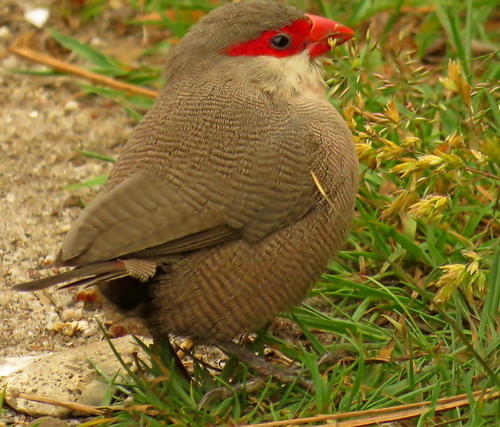 Common Waxbill
In breve
Il segno distintivo più affidabile per separare il Diamante mandarino dal Common Waxbill è il becco e il motivo del viso: i Common Waxbill adulti hanno un becco rosso brillante e una marcatura rossa audace attorno all'occhio, mentre i Diamanti mandarini non presentano nessuno dei due. I Common Waxbill juvenili hanno un becco nero e un piumaggio più opaco, ma mostrano ancora una leggera marcatura attorno all'occhio, mentre i giovani Diamanti mandarini sono più uniformemente semplici. In tutte le livree, il Common Waxbill è più snello e ha una coda più lunga, con un corpo marrone chiaro finemente barrato e una striscia ventrale rosa o rossa (variabile). I Diamanti mandarini sono più robusti, con un becco più conico, e mancano delle marcature facciali rosse. Queste differenze sono visibili sia in perching che in volo, ma sono particolarmente chiare a distanza ravvicinata o con buona luce.
Consigli di identificazione
- Colore del becco (tutte le età): Il Common Waxbill adulto ha un becco rosso brillante; i juvenili hanno un becco nero. Il Diamante mandarino non mostra mai un becco rosso o nero: gli adulti hanno un becco arancione e conico (maschi più brillanti), e i juvenili sono più chiari ma non sono mai rossi o neri.
- Striscia attorno all'occhio (tutte le età): Il Common Waxbill (adulto e la maggior parte dei juvenili) mostra una striscia rossa audace o leggera attorno all'occhio. Il Diamante mandarino non ha alcuna striscia attorno all'occhio a tutte le età.
- Motivo del viso: Il viso del Common Waxbill è contrassegnato dalla striscia rossa attorno all'occhio e dalle guance/collo chiari, mentre il viso del Diamante mandarino è semplice, privo di marcature facciali rosse o forti.
- Striscia ventrale: Il Common Waxbill mostra spesso una striscia rosa o rossa lungo il centro della pancia (variabile per sottospecie e sesso), mai presente nel Diamante mandarino.
- Barratura del corpo: Il Common Waxbill è finemente barrato di grigio-marrone ovunque, con un aspetto sottile e squamoso. Il Diamante mandarino è più semplice, privo della fine barratura.
- Coda e groppa: Il Common Waxbill ha una coda lunga e graduata e una groppa marrone; la coda del Diamante mandarino è più corta e meno graduata.
- Confusione giovanile: Il giovanile del Common Waxbill è opaco con un becco nero e una leggera striscia attorno all'occhio; i juvenili del Diamante mandarino sono semplici e privi di entrambe le caratteristiche. Se vedi un piccolo fringillide semplice con un becco nero e una leggera striscia attorno all'occhio, è un Common Waxbill giovanile.
- Differenze sessuali: La femmina del Common Waxbill è più chiara con meno rosso sulla pancia ma mostra ancora il becco rosso e la striscia attorno all'occhio. Le femmine del Diamante mandarino sono più semplici dei maschi ma non sviluppano mai caratteristiche facciali rosse.
- Stile di volo: Il Common Waxbill mostra un volo rimbalzante e ondulato con una coda più lunga; il Diamante mandarino è più diretto e compatto in volo.
- Comportamento di gruppo: Il Common Waxbill è spesso in stormi stretti e coordinati; i stormi di Diamanti mandarini sono più sciolti e più dispersi.
- Contesto dell'habitat: Nelle Piccole Isole della Sonda, il Diamante mandarino è la specie locale; nell'Africa sub-sahariana e nelle regioni introdotte, il Common Waxbill è più probabile, specialmente nelle praterie umide e nei parchi urbani.
- Vocalizzazioni: Ascolta il richiamo acuto di volo del Common Waxbill e il canto aspro e nasale proveniente dagli stormi. I maschi del Diamante mandarino cantano individualmente, e il loro canto è appreso e variabile.
- Dimensione e forma: Il Common Waxbill è leggermente più pesante, più lungo e più snello con una coda più lunga; il Diamante mandarino è più rotondo e più compatto.
- Aspetto in perching: Il Common Waxbill appare più elegante e delicato; il Diamante mandarino appare tozzo e robusto.
- Quando hai dubbi: Concentrati sul colore del becco e sulla striscia attorno all'occhio: questi sono i segni più affidabili a tutte le età e stagioni.
Taglia
Entrambe le specie sono piccoli fringillidi estrildidi, ma il Common Waxbill è leggermente più pesante in media (massa corporea 8,2 g [wikidata]) e appare più lungo e snello a causa della sua coda e forma del corpo più allungate. Il Diamante mandarino è più compatto e tozzo, con una coda relativamente più corta. Sul campo, la differenza è sottile ma può essere vista quando entrambi sono affiancati: il Diamante mandarino appare più rotondo e robusto, mentre il Common Waxbill ha un aspetto più elegante e delicato.
Piumaggio
- Giovanili: I giovanili del Common Waxbill sono più opachi degli adulti, con poco o nessun rosso sulla pancia, una leggera barratura scura e un becco nero. Mostrano ancora spesso una leggera striscia rossa attorno all'occhio, che il Diamante mandarino non mostra mai. I giovanili del Diamante mandarino sono semplici, privi sia del becco rosso che della striscia attorno all'occhio, e sono generalmente più uniformemente colorati.
- Adulti: Gli adulti del Common Waxbill hanno un becco rosso brillante, una striscia rossa audace attorno all'occhio, un piumaggio grigio-marrone finemente barrato, un riflesso rosa nelle parti inferiori e una striscia ventrale rossa (variabile per sottospecie). Gli adulti del Diamante mandarino non hanno alcun rosso sul viso o sul becco, e hanno un becco più conico e arancione (maschi più brillanti), senza striscia attorno all'occhio o striscia ventrale. Il motivo complessivo è molto più semplice e meno barrato rispetto al Common Waxbill.
- Differenze sessuali: Le femmine del Common Waxbill sono più chiare dei maschi, con meno rosso sulla pancia, ma mostrano ancora il becco rosso e la striscia attorno all'occhio. Le femmine del Diamante mandarino sono anche più semplici dei maschi ma non acquisiscono mai le caratteristiche facciali rosse del Common Waxbill a nessuna età.
Comportamento
Entrambe le specie sono sociali e spesso viste in stormi, ma il Common Waxbill tende a muoversi in gruppi più stretti e coordinati ed è spesso visto nutrirsi di semi d'erba in aree aperte. Il Diamante mandarino è anche gregario ma può apparire più disperso ed è spesso associato a habitat più secchi e aperti. In volo, il Common Waxbill mostra un volo più ondulato e rimbalzante con una coda più lunga, mentre il Diamante mandarino appare più diretto e compatto.
Habitat
Il Diamante mandarino (Taeniopygia guttata) è nativo delle Piccole Isole della Sonda, mentre il Common Waxbill (Estrilda astrild) è nativo dell'Africa sub-sahariana ma è stato ampiamente introdotto in molte regioni calde, comprese isole e parti d'Europa e delle Americhe. Nelle aree di sovrapposizione, il Common Waxbill è più probabile nelle praterie umide e nei parchi urbani, mentre il Diamante mandarino preferisce paesi più secchi e aperti. Tuttavia, entrambi possono essere trovati in habitat ricchi di erba dove i semi sono abbondanti.
Voce
Solo i maschi del Diamante mandarino cantano, e ciascuno ha un canto individuale appreso in gioventù. Il Common Waxbill ha una varietà di richiami cinguettanti e ronzanti, un richiamo di volo distintivo ad alta frequenza e un canto semplice, aspro e nasale che discende alla fine. Sul campo, i richiami del Common Waxbill sono più probabili da essere uditi dagli stormi, mentre le vocalizzazioni del Diamante mandarino sono più individuali e meno probabili da essere udite in grandi gruppi.
Diamante mandarino · Common Waxbill · I miei uccelli difficili