

Motmot

オウゴンチョウ 対 ボルチモアムクドリモドキ

Euplectes afer 対 Icterus galbula

オウゴンチョウとボルチモアムクドリモドキのクイズ
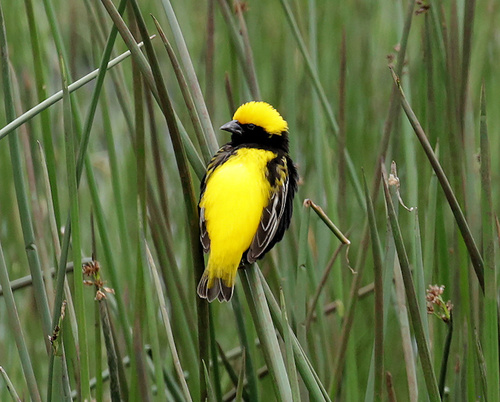
オウゴンチョウ (Euplectes afer) オウゴンチョウ
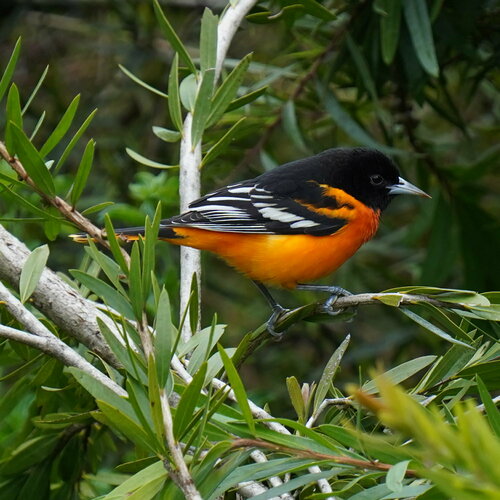
ボルチモアムクドリモドキ (Icterus galbula) ボルチモアムクドリモドキ

メディア

読み込み中…

要点

イエロークラウンビショップとボルチモアムクドリモドキを区別する最も信頼できるフィールドマークは、繁殖期のオスビショップに見られる明るい黄色の冠と黒い腹部の存在であり、ボルチモアムクドリモドキには決して見られません。しかし、未熟なビショップと雌は茶色で縞模様があり、遠くから見ると若いオリオールや雌と簡単に混同されます。ボルチモアムクドリモドキははるかに大きく、長く尖ったくちばしと、成鳥のオスに特有のオレンジと黒の羽毛を持ち、年齢や性別に関係なく常に白い翼帯を示しますが、ビショップにはこれがありません。小さなスズメサイズの鳥を見かけ、短い円錐形のくちばしと翼帯がない場合、それはビショップです。大きなロビンサイズの鳥で尖ったくちばしと明確な白い翼帯がある場合、それはオリオールです。

識別のコツ

  1. 白い翼帯: ボルチモアムクドリモドキはすべての年齢と性別で暗い翼に目立つ白い翼帯を持っていますが、イエロークラウンビショップには決してありません。これは、飛行中または休息中の非繁殖および未熟な鳥を区別するための最も信頼できるマークです。
  2. くちばしの形: オリオールは長く尖った、わずかに下向きのくちばしを持っていますが、ビショップは短くて太い円錐形のくちばしを持っています。これは双眼鏡でも遠くから見えることができます。
  3. サイズ: オリオールはロビンサイズ(17–22 cm、約34 g)ですが、ビショップはスズメサイズ(9.5–10.5 cm、約15 g)です。可能な限り近くの鳥をスケールとして使用してください。
  4. 繁殖期のオスビショップ: 明るい黄色の冠、額、後頭部、黒い腹部と襟を探してください。オリオールはこのパターンを示しません。
  5. 成鳥のオリオール: 深いオレンジの腹部、黒い頭と背中、そして白い翼帯を持っています。黄色の冠や固体の黒い腹部は決して示しません。
  6. 雌/未熟なビショップ: 上面は淡い茶色で縞模様があり、淡い眉、オフホワイトの腹部に細い縞模様があり、地味な茶色の翼を持っています。オレンジや白の翼帯はありません。
  7. 雌/未熟なオリオール: 上面は黄褐色で、下面は鈍いオレンジ黄色で、常に白い翼帯があります。遠くから見るとビショップと混同されることがありますが、翼帯が鍵です。
  8. 飛行中の翼のパターン: オリオールは白い翼帯とより大きく、より細長いシルエットを示しますが、ビショップは平坦な茶色の翼とコンパクトなスズメのような形を示します。
  9. 尾: オリオールはより長く、より段階的な尾を持っていますが、ビショップは短くて四角い尾を持っています。
  10. 生息地: オリオールは通常木の中や餌場にいますが、ビショップは草原、畑、または湿地の端にいて、しばしば低い位置や地面にいます。
  11. 行動: オリオールは木の中で餌を探し、時には逆さまになったり果物を探ったりしますが、ビショップは低い位置や地面で餌を探し、繁殖期以外はしばしば群れを成します。
  12. 鳴き声: オリオールは明確で笛のような歌を歌いますが、ビショップはそうではありません。メロディックでフルートのような歌を聞いたら、それはオリオールです。
  13. 季節の変化: オスビショップは繁殖期にのみ黄色の冠と黒い腹部を示し、それ以外の時期は雌に似ており、他の縞模様の茶色の鳥と簡単に混同されます。
  14. 落とし穴: 非繁殖のビショップと雌/未熟なオリオールは遠くから見ると似ていることがありますが、翼帯とくちばしの形を確認してください。光の加減でオリオールのオレンジが黄色っぽく見えることがありますが、翼帯は目立ちます。
  15. 文脈: 草原や畑で小さな縞模様の鳥を見かけたらビショップを考え、木の上や餌場で大きなオレンジや黒の鳥を見かけたらほぼ確実にオリオールです。

大きさ

ボルチモアムクドリモドキはかなり大きく、全長17–22 cm、平均約34 gです[wikipedia][wikidata]。対照的に、イエロークラウンビショップは9.5–10.5 cm、14.5–15 gとかなり小さいです[wikidata][wikipedia]。オリオールはより頑丈で細長い体を持ち、尾が長く、目立って長く尖ったくちばしを持っていますが、ビショップはコンパクトで、典型的な織り鳥の短い円錐形のくちばしを持っています。

羽色

行動

ボルチモアムクドリモドキは、木の中で餌を探している姿がよく見られ、時には逆さまになったり、尖ったくちばしで果物や花を探ったりします。彼らはより樹上性で、果物や蜜のために餌場を訪れることがあります。イエロークラウンビショップは通常、草原や雑草の生えた畑に見られ、しばしば低い植物の中や地面にいて、繁殖期以外はよりスズメのような群れ行動を示します。オスビショップは繁殖期に目立ってディスプレイすることがありますが、それ以外はその習性はより秘密主義的で陸生です。

生息環境

イエロークラウンビショップは、特に水の近くの開けた草原、湿地の端、農地を好み、成熟した木にはめったに見られません[wikipedia]。ボルチモアムクドリモドキは、開けた森林、公園、庭の鳥で、しばしば落葉樹の高い位置にいて、大きな日陰の木がある郊外の地域で一般的です。彼らの生息地は、非常に乱されたりエッジのある地域を除いて、ほとんど重ならず、文脈が役立ちます:背の高い草の中の小さな縞模様の鳥はおそらくビショップであり、木の上の明るいオリオールは間違いなくオリオールです。

声

ボルチモアムクドリモドキは、ペアの繰り返し音符を持つ明確な笛のような歌と、さまざまなおしゃべりの呼び声を持ち、時には飛行中にフラッタードラム音を含むことがあります[wikipedia]。イエロークラウンビショップの鳴き声は詳細に記述されていませんが、織り鳥として、オリオールの豊かで笛のような歌を生み出すことは考えにくいです。強くメロディックな笛の音を聞いたら、それはほぼ確実にオリオールです。

より良い説明を送る

比較と同じ項目を使ってください。文章はすぐに公開されます。

The most reliable field mark to separate Yellow-crowned Bishop from Baltimore Oriole is the presence of a bright yellow crown and black underparts in breeding male bishops, which Baltimore Orioles never show. Immature and female bishops, however, are brown and streaky, easily confused with young or female orioles at a distance. Baltimore Orioles are much larger, with a longer, more pointed bill and a distinctive orange-and-black plumage in adult males, plus always show white wingbars regardless of age or sex—these are absent in bishops. If you see a small, sparrow-sized bird with a short, conical bill and no wingbars, it's a bishop; a larger, robin-sized bird with a pointed bill and clear white wingbars is an oriole.

  1. White wingbars: Baltimore Orioles of all ages and sexes have prominent white wingbars on dark wings; Yellow-crowned Bishops never do. This is the single most reliable mark for separating non-breeding and immature birds in flight or at rest.
  2. Bill shape: Orioles have a long, pointed, slightly downcurved bill; bishops have a short, thick, conical bill. This is visible even at a distance with binoculars.
  3. Size: Orioles are robin-sized (17–22 cm, ~34 g); bishops are sparrow-sized (9.5–10.5 cm, ~15 g). Use nearby birds for scale when possible.
  4. Breeding male bishop: Look for a brilliant yellow crown, forehead, and nape, with black underparts and collar. Orioles never show this pattern.
  5. Adult male oriole: Deep orange underparts, black head and back, and white wingbars. Never shows a yellow crown or solid black belly.
  6. Female/immature bishop: Pale brown above with streaks, pale eyebrow, off-white underparts with fine streaks, and plain brown wings. No orange or white wingbars.
  7. Female/immature oriole: Yellow-brown above, dull orange-yellow below, always with white wingbars. May be confused with bishop at a distance, but wingbars are key.
  8. Wing pattern in flight: Orioles flash white wingbars and a larger, more elongated silhouette; bishops show plain brown wings and a compact, sparrow-like shape.
  9. Tail: Orioles have a longer, more graduated tail; bishops have a short, square tail.
  10. Habitat: Orioles are usually in trees or at feeders; bishops are in grasslands, fields, or marsh edges, often low or on the ground.
  11. Behavior: Orioles forage in trees, sometimes hanging or probing fruit; bishops feed low or on the ground, often in flocks outside breeding season.
  12. Vocalizations: Orioles sing clear, whistled songs; bishops do not. If you hear a melodious, flute-like song, it's an oriole.
  13. Seasonal change: Male bishops only show the yellow crown and black underparts in breeding season; outside this, they resemble females and are easily confused with other streaky brown birds.
  14. Pitfalls: Non-breeding bishops and female/immature orioles can look similar from a distance, but check for wingbars and bill shape. Lighting can make oriole orange look yellowish, but the wingbars remain visible.
  15. Context: If you see a small, streaky bird in a grassland or field, think bishop; a larger, orange or black bird in a treetop or at a feeder is almost certainly an oriole.

Baltimore Oriole is substantially larger, measuring 17–22 cm in length and averaging about 34 g in weight [wikipedia][wikidata]. In contrast, Yellow-crowned Bishop is much smaller at 9.5–10.5 cm and 14.5–15 g [wikidata][wikipedia]. The oriole has a more robust, elongated body, a longer tail, and a noticeably longer, pointed bill, while the bishop is compact with a short, conical bill typical of weavers.

  • Juvenile and female bishops are pale brown above with darker streaking, a pale eyebrow, and off-white underparts with fine streaks on breast and flanks. Their wings and tail are plain brown, lacking any wingbars or strong patterning. Non-breeding males look similar to females.
  • Juvenile and female Baltimore Orioles are yellow-brown above with darker wings and dull orange-yellow below. Crucially, all ages and sexes of oriole show white wingbars on dark wings, which are never present in bishops.
  • Breeding male bishop is unmistakable: brilliant yellow crown, forehead, hindcrown, rump, and back; black lower face, throat, breast, belly, and a wide black collar on the nape. Wings and tail are brown.
  • Adult male oriole is deep orange on underparts, shoulder, and rump, with the rest of the plumage black and always with white wingbars. No yellow crown or solid black underparts.
  • In flight, the oriole's white wingbars and larger size are obvious; bishops show plain brown wings with no contrasting marks.

Baltimore Orioles are often seen foraging in trees, sometimes hanging upside down or probing fruit and flowers with their pointed bills. They are more arboreal and may visit feeders for fruit or nectar. Yellow-crowned Bishops are typically found in grasslands or weedy fields, often low in vegetation or on the ground, and exhibit more sparrow-like, flocking behavior outside the breeding season. Male bishops may display conspicuously during breeding, but otherwise their habits are more secretive and terrestrial.

Yellow-crowned Bishop prefers open grasslands, marsh edges, and agricultural fields, especially near water, and is rarely found in mature trees [wikipedia]. Baltimore Oriole is a bird of open woodlands, parks, and gardens, often high in deciduous trees, and is common in suburban areas with large shade trees. Their habitats rarely overlap except in highly disturbed or edge areas, and context can help: a small, streaky bird in tall grass is likely a bishop, while a bright orange oriole in a treetop is unmistakable.

Baltimore Oriole has a clear, whistled song with paired, repeated notes, and a variety of chattering calls, sometimes including a flutter-drum sound in flight [wikipedia]. Yellow-crowned Bishop's vocalizations are not described in detail in the notes, but as a weaver, it is unlikely to produce the oriole's rich, whistled song. If you hear a strong, melodious whistle, it's almost certainly an oriole.

変更を破棄しますか?

保存していない編集があります。今離れると失われます。

オウゴンチョウ · ボルチモアムクドリモドキ · 苦手な鳥