

Obispo Coronigualdo vs Turpial de Baltimore
Euplectes afer frente a Icterus galbula
Juega un quiz con Obispo Coronigualdo y Turpial de Baltimore
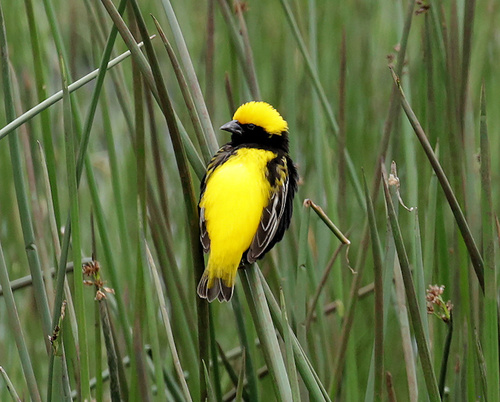 Obispo Coronigualdo
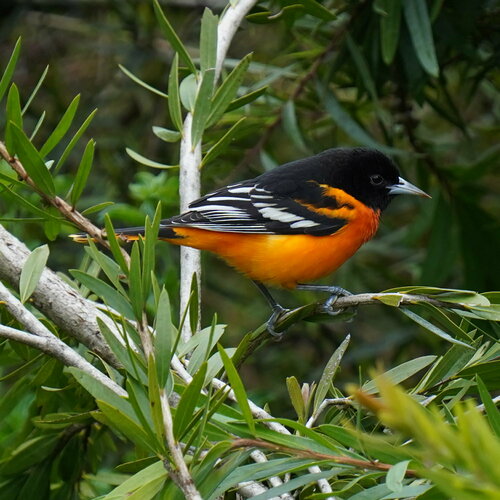 Turpial de Baltimore
En breve
La marca de campo más confiable para separar al Obispo Coronigualdo del Turpial de Baltimore es la presencia de una brillante corona amarilla y partes inferiores negras en los obispos machos en época de cría, que los Turpiales de Baltimore nunca muestran. Sin embargo, los obispos inmaduros y hembras son marrones y estriados, fácilmente confundibles con turpiales jóvenes o hembras a distancia. Los Turpiales de Baltimore son mucho más grandes, con un pico más largo y puntiagudo y un plumaje distintivo naranja y negro en machos adultos, además de mostrar siempre barras alares blancas independientemente de la edad o el sexo; estas están ausentes en los obispos. Si ves un pájaro pequeño del tamaño de un gorrión con un pico corto y cónico y sin barras alares, es un obispo; un pájaro más grande del tamaño de un mirlo con un pico puntiagudo y barras alares blancas claras es un turpial.
Consejos de identificación
- Barras alares blancas: Los Turpiales de Baltimore de todas las edades y sexos tienen barras alares blancas prominentes en alas oscuras; los Obispos Coronigualdos nunca las tienen. Esta es la marca más confiable para separar aves no reproductivas e inmaduras en vuelo o en reposo.
- Forma del pico: Los turpiales tienen un pico largo, puntiagudo y ligeramente curvado hacia abajo; los obispos tienen un pico corto, grueso y cónico. Esto es visible incluso a distancia con binoculares.
- Tamaño: Los turpiales son del tamaño de un mirlo (17–22 cm, ~34 g); los obispos son del tamaño de un gorrión (9.5–10.5 cm, ~15 g). Usa aves cercanas como referencia de escala cuando sea posible.
- Obispo macho en época de cría: Busca una brillante corona amarilla, frente y nuca, con partes inferiores y collar negros. Los turpiales nunca muestran este patrón.
- Turpial macho adulto: Partes inferiores de un naranja profundo, cabeza y espalda negras, y barras alares blancas. Nunca muestra una corona amarilla o un vientre negro sólido.
- Obispo hembra/inmaduro: Marrón pálido por encima con estrías, ceja pálida, partes inferiores blanco sucio con finas estrías, y alas marrones simples. Sin barras alares naranjas o blancas.
- Turpial hembra/inmaduro: Marrón amarillento por encima, naranja amarillento apagado por debajo, siempre con barras alares blancas. Puede confundirse con un obispo a distancia, pero las barras alares son clave.
- Patrón de alas en vuelo: Los turpiales muestran barras alares blancas y una silueta más grande y alargada; los obispos muestran alas marrones simples y una forma compacta, similar a un gorrión.
- Cola: Los turpiales tienen una cola más larga y graduada; los obispos tienen una cola corta y cuadrada.
- Hábitat: Los turpiales suelen estar en árboles o en comederos; los obispos están en praderas, campos o bordes de pantanos, a menudo bajos o en el suelo.
- Comportamiento: Los turpiales forrajean en árboles, a veces colgando o sondeando frutas; los obispos se alimentan bajos o en el suelo, a menudo en bandadas fuera de la temporada de cría.
- Vocalizaciones: Los turpiales cantan canciones claras y silbadas; los obispos no. Si escuchas una canción melodiosa, similar a una flauta, es un turpial.
- Cambio estacional: Los obispos machos solo muestran la corona amarilla y las partes inferiores negras en la temporada de cría; fuera de esto, se parecen a las hembras y son fácilmente confundidos con otras aves marrones estriadas.
- Trampas: Los obispos no reproductivos y los turpiales hembras/inmaduros pueden parecer similares a distancia, pero verifica las barras alares y la forma del pico. La iluminación puede hacer que el naranja del turpial parezca amarillento, pero las barras alares siguen siendo visibles.
- Contexto: Si ves un pájaro pequeño y estriado en una pradera o campo, piensa en un obispo; un pájaro más grande, naranja o negro en la copa de un árbol o en un comedero es casi seguramente un turpial.
Tamaño
El Turpial de Baltimore es sustancialmente más grande, midiendo 17–22 cm de longitud y promediando alrededor de 34 g de peso [wikipedia][wikidata]. En contraste, el Obispo Coronigualdo es mucho más pequeño, midiendo 9.5–10.5 cm y 14.5–15 g [wikidata][wikipedia]. El turpial tiene un cuerpo más robusto y alargado, una cola más larga y un pico notablemente más largo y puntiagudo, mientras que el obispo es compacto con un pico corto y cónico típico de los tejedores.
Plumaje
- Obispos juveniles y hembras son marrones pálidos por encima con estrías más oscuras, una ceja pálida y partes inferiores blanco sucio con finas estrías en el pecho y los flancos. Sus alas y cola son marrones simples, careciendo de cualquier barra alar o patrón fuerte. Los machos no reproductivos se parecen a las hembras.
- Turpiales juveniles y hembras de Baltimore son marrón amarillento por encima con alas más oscuras y un naranja amarillento apagado por debajo. Crucialmente, todas las edades y sexos de turpial muestran barras alares blancas en alas oscuras, que nunca están presentes en los obispos.
- Obispo macho en época de cría es inconfundible: brillante corona amarilla, frente, coronilla, rabadilla y espalda; cara inferior negra, garganta, pecho, vientre y un amplio collar negro en la nuca. Alas y cola son marrones.
- Turpial macho adulto es de un naranja profundo en partes inferiores, hombro y rabadilla, con el resto del plumaje negro y siempre con barras alares blancas. Sin corona amarilla o partes inferiores negras sólidas.
- En vuelo, las barras alares blancas del turpial y su mayor tamaño son obvios; los obispos muestran alas marrones simples sin marcas contrastantes.
Comportamiento
Los Turpiales de Baltimore a menudo se ven forrajeando en árboles, a veces colgando boca abajo o sondeando frutas y flores con sus picos puntiagudos. Son más arbóreos y pueden visitar comederos para frutas o néctar. Los Obispos Coronigualdos se encuentran típicamente en praderas o campos de maleza, a menudo bajos en la vegetación o en el suelo, y exhiben un comportamiento más similar a los gorriones, formando bandadas fuera de la temporada de cría. Los obispos machos pueden exhibirse de manera conspicua durante la cría, pero de lo contrario sus hábitos son más secretos y terrestres.
Hábitat
El Obispo Coronigualdo prefiere praderas abiertas, bordes de pantanos y campos agrícolas, especialmente cerca del agua, y rara vez se encuentra en árboles maduros [wikipedia]. El Turpial de Baltimore es un pájaro de bosques abiertos, parques y jardines, a menudo alto en árboles de hoja caduca, y es común en áreas suburbanas con grandes árboles de sombra. Sus hábitats rara vez se superponen, excepto en áreas altamente perturbadas o de borde, y el contexto puede ayudar: un pájaro pequeño y estriado en hierba alta es probablemente un obispo, mientras que un turpial brillante naranja en la copa de un árbol es inconfundible.
Voz
El Turpial de Baltimore tiene una canción clara y silbada con notas emparejadas y repetidas, y una variedad de llamadas charlatanas, a veces incluyendo un sonido de tambor en vuelo [wikipedia]. Las vocalizaciones del Obispo Coronigualdo no se describen en detalle en las notas, pero como tejedor, es poco probable que produzca la rica canción silbada del turpial. Si escuchas un silbido fuerte y melodioso, es casi seguramente un turpial.
Obispo Coronigualdo · Turpial de Baltimore · Mis aves difíciles