

シマアオジ 対 シベリアアオジ
Emberiza aureola 対 Emberiza spodocephala
シマアオジとシベリアアオジのクイズ
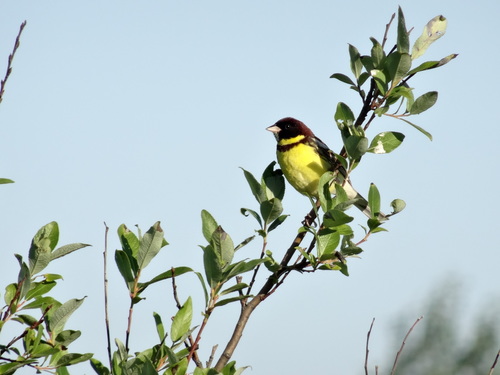 シマアオジ
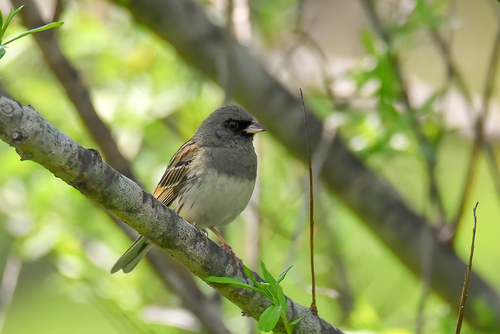 シベリアアオジ
要点
The most reliable field mark between Yellow-breasted Bunting and Black-faced Bunting is the male's head and underpart pattern in breeding plumage: Yellow-breasted Bunting males show a striking black face and throat bar with bright white underparts and bold black flank streaks, while Black-faced Bunting males have a dark grey head with yellow-green and black around the bill and eye, and yellowish-white underparts with finer streaks. Females and juveniles of both species are streaky and much duller, but Yellow-breasted Bunting tends to be stockier and shows a more contrasting, buffy or yellowish underpart color, while Black-faced Bunting is generally more olive and less contrasting. Both are similar in size, but Yellow-breasted Bunting is slightly stockier. In non-breeding or immature plumages, careful attention to face pattern, underpart color, and flank streaking is needed, as both can appear quite similar and are easily confused, especially in flight or at a distance.
識別のコツ
- Breeding male head pattern: Yellow-breasted Bunting males have a black face and throat bar, while Black-faced Bunting males have a dark grey head with yellow-green and black around the bill and eye. This is the single most reliable mark in spring/summer.
- Underpart color and contrast (all ages): Yellow-breasted Bunting, even in females and juveniles, tends to have a buff or yellowish wash to the underparts and face, with a more contrasting look. Black-faced Bunting is generally colder, with creamy yellow underparts and a less contrasting, olive-grey face.
- Flank streaking: Yellow-breasted Bunting males have bold black flank streaks on white underparts; Black-faced Bunting has fine dark brown streaks on yellowish-white underparts. In females and juveniles, both are streaky, but Yellow-breasted Bunting's streaks are often heavier and more contrasting.
- Face pattern (females/immatures): Female Yellow-breasted Bunting shows a whitish face with dark crown, eye, and cheek stripes, while Black-faced Bunting females and young have olive-grey cheeks and a weak creamy supercilium. Look for the crispness and placement of these marks.
- Bill color: Both species have a pink bill, but Yellow-breasted Bunting is noted for a pink lower mandible, which may be more obvious in good light.
- Upperparts: Both are brown and streaked above, but Black-faced Bunting is described as heavily streaked except for the rump, which is plain brown. This rump contrast may help in close views.
- Structure: Yellow-breasted Bunting is stockier and bulkier, with a more robust appearance, especially when perched. Black-faced Bunting is more dunnock-like and may appear slimmer.
- Overall color tone: Yellow-breasted Bunting is warmer and more golden or buff, especially in juveniles and females. Black-faced Bunting is colder, more olive or greyish.
- Supercilium: Black-faced Bunting females and immatures have a weak, creamy white supercilium; Yellow-breasted Bunting's face is more patterned with dark stripes and a paler background, but not a strong supercilium.
- Flight views: There are no distinctive upperwing or tail patterns described for either species, so rely on overall color and jizz in flight. Yellow-breasted Bunting may look bulkier and show more contrast below.
- Habitat and context: Both can occur in similar habitats, so do not rely on location alone for identification.
- Voice: No vocal differences are described in the notes, so do not use song or call for separation here.
- Seasonal variation: In non-breeding or immature plumages, both species are duller and more streaky, making separation difficult. Focus on face pattern and underpart color for best results.
- Pitfalls: Females and juveniles of both species are easily confused due to similar streaky brown patterns. Careful study of face pattern and underpart color is essential. Avoid over-relying on habitat or behavior, as these are not diagnostic.
- When in doubt: If the bird shows a strong black face and throat bar (male in breeding plumage), it is Yellow-breasted Bunting. If the head is dark grey with yellow-green and black around the bill and eye, it is Black-faced Bunting. For streaky brown birds, look for the warmer, buffier tones and more contrasting face of Yellow-breasted Bunting versus the colder, olive-grey and weakly marked face of Black-faced Bunting.
大きさ
Both species are similar in length, with Yellow-breasted Bunting at 14–16 cm and Black-faced Bunting about 16 cm. Yellow-breasted Bunting is described as large and rather stocky for a bunting, while Black-faced Bunting is compared to Reed Bunting in size and has a more dunnock-like impression but with a bunting's bill. Weight for Yellow-breasted Bunting is 17–26 g; no weight is given for Black-faced Bunting, but they are likely close. Overall, Yellow-breasted Bunting may appear slightly bulkier, especially when perched.
羽色
-
Juveniles and Females: Both are heavily streaked brown above and streaked below, but Yellow-breasted Bunting juveniles and females have a buff or yellowish background to the underparts and face, with a whitish face marked by dark crown, eye, and cheek stripes. Black-faced Bunting females and young are more olive-grey on the cheeks, with a weak creamy white supercilium, and the underparts are creamy yellow with heavy dark brown streaks. The overall effect is that Yellow-breasted Bunting is warmer and more contrasting, while Black-faced Bunting is colder and more subdued.
-
Adult Breeding Males: Yellow-breasted Bunting males are unmistakable with a black face and throat bar, bright white underparts with bold black flank streaks, brown upperparts, and a pink lower mandible. Black-faced Bunting males have a dark grey head (not black), yellow-green and black between the bill and eye, brown and heavily streaked upperparts except for the rump, and yellowish-white underparts with fine dark brown flank streaks. The head and underpart contrast is much stronger in Yellow-breasted Bunting.
-
Upperwing/Flight: No distinctive upperwing or flight pattern is described for either species in the sources, so separation in flight relies on overall color impression and structure rather than specific wing markings.
行動
Both species are terrestrial feeders and often forage on the ground. Black-faced Bunting is noted for giving a dunnock-like impression in its feeding habits and posture, but with a bunting's bill. Yellow-breasted Bunting is described as stocky, which may be apparent in a more robust, upright posture. No specific flight or flocking behaviors are given that reliably separate the two.
生息環境
Both species are found across the Palearctic and occupy similar habitats, often in brushy or reedy areas near water. There are no habitat distinctions in the provided notes that are diagnostic for field identification between these two species.