

Motmot

キバシオナガガモ 対 アンデスコガモ

Anas georgica 対 Anas andium

キバシオナガガモとアンデスコガモのクイズ

キバシオナガガモ (Anas georgica) キバシオナガガモ
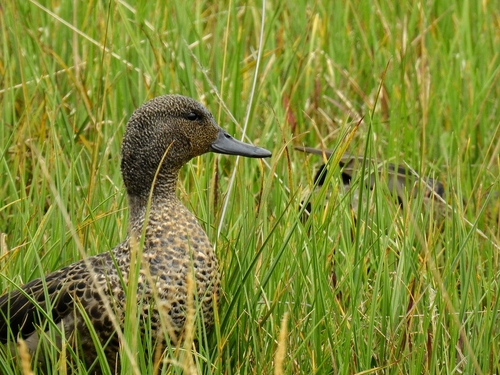
アンデスコガモ (Anas andium) アンデスコガモ

メディア

読み込み中…

要点

イエロービルド・ピンタイルとアンデスコガモを区別する最も信頼できるフィールドマークは、くちばしの色とパターンです:イエロービルド・ピンタイルは、黒い先端と中央に明確な黒いストライプを持つ明るい黄色のくちばしを示しますが、アンデスコガモはこの組み合わせを欠いています。さらに、イエロービルド・ピンタイルは明らかに大きく、尾が長く、尖った尾とより細長い体形を持っていますが、アンデスコガモは小さく、よりコンパクトです。飛行中または静止中、イエロービルド・ピンタイルの上翼は灰褐色で、黒っぽい緑色の二次羽がありますが、アンデスコガモはこれらの特定のコントラストを欠いています。両種は高地のアンデス湿地に生息することがありますが、アンデスコガモは北アンデスに制限されており、イエロービルド・ピンタイルは南アメリカ全体に広い範囲を持っています。群れのサイズと社会的行動も役立ちます:ピンタイルはコガモよりも大きな群れを形成する可能性が低いです。

識別のコツ

  1. くちばしの色とパターン:イエロービルド・ピンタイルは、黒い先端と中央に目立つ黒いストライプを持つ明るい黄色のくちばしを持っています。アンデスコガモはこのパターンを欠いており、そのくちばしは決して明るくなく、明確にマークされていません。これは、年齢や季節に関係なく最も信頼できるマークです。
  2. サイズと構造:ピンタイルははるかに大きく、長い首を持ち、明らかに尖った尾があります。アンデスコガモはコンパクトで、尾が短く、全体的に小さいです。一緒に見たとき、違いは明らかですが、単独で見ると、伸びたシルエットとずんぐりしたシルエットを探してください。
  3. 尾の形:ピンタイルの尾は褐色で尖っており、特に飛行中や泳いでいるときに体を超えてよく伸びています。アンデスコガモの尾は短く、あまり尖っていません。
  4. 上翼のパターン:イエロービルド・ピンタイルは、黒っぽい緑色の二次羽を持つ灰褐色の上翼を示します。いくつかのカモほど大胆ではありませんが、このコントラストはアンデスコガモには欠けており、黒っぽい緑色の二次羽のパネルがありません。
  5. 体の羽毛:ピンタイルは体全体にさまざまなサイズの黒い斑点があるバフブラウンで、頭と首は茶色です。アンデスコガモはより均一で、強い斑点やコントラストを欠いています。
  6. 群れのサイズと行動:ピンタイルは大きな群れで見られる可能性が低く、しばしば単独または小さなグループでいます。アンデスコガモはより多くの数で集まることがあります。小さなカモの大きくて密な群れを見た場合、アンデスコガモの可能性が高いです。
  7. 範囲と生息地:アンデスコガモは北アンデスの高地湿地(コロンビア、ベネズエラ、エクアドル)に制限されています。イエロービルド・ピンタイルは、低地や南アメリカの南部を含むはるかに広範囲に分布しています。場所が役立つことがありますが、アンデスでの重複に注意してください。
  8. 飛行プロファイル:飛行中、ピンタイルは長い首と尾を持つ細長い外観を示し、アンデスコガモはコンパクトで素早く羽ばたきます。ピンタイルの後ろに尖った尾が見えるのを注意してください。
  9. 性別と年齢:どちらの種にも強い性的二形や年齢特有のマークは記載されていないため、すべての個体に対して構造とくちばしのパターンに依存してください。
  10. 他の種との混同:ピンタイルは時々イエロービルド・コガモ(アンデスコガモではない)と混同されますが、黄色のくちばしに黒いマークと大きなサイズが両方のコガモからそれを区別します。
  11. マークが失敗したとき:光が悪い場合や遠くから見ると、サイズやくちばしの色を判断するのが難しいことがあります。くちばしと尾の側面を見て、群れの行動や生息地に注意してください。
  12. 羽毛の落とし穴:両種は一般的に褐色ですが、ピンタイルだけがバフブラウンと黒い斑点、黄色と黒のくちばしの組み合わせを示します。全体的な褐色の色合いにのみ依存しないでください。
  13. 季節的変化:どちらの種にも主要な季節的羽毛の変化は記載されておらず、マークは年間を通じて信頼できます。
  14. 声:利用可能なメモには診断的な声の違いは記載されていないため、分離のために呼び声に依存しないでください。
  15. 要約チェック:もし、黄色のくちばしに黒いマークのある大きくて長い尾のカモを見たら、それはイエロービルド・ピンタイルです。もしカモが小さく、コンパクトで、黄色のくちばしがなければ、それはアンデスコガモです。

大きさ

イエロービルド・ピンタイルは、アンデスコガモよりも明らかに大きく、体が長いです。ピンタイルはより細長く尖った尾と大きく長い首を持ち、水上でも飛行中でも伸びた外観を与えます。アンデスコガモははるかに小さく、真のコガモに典型的なコンパクトで短い尾のシルエットを持っています。このサイズの違いは、両者が一緒に見られると明らかですが、単独または遠くから見ると判断が難しいことがあります。

羽色

どちらの種にも年齢特有の上翼パターンは記載されていませんが、成鳥と幼鳥は全体的な色合いと翼の詳細によって区別できます。イエロービルド・ピンタイルは褐色の尖った尾、灰褐色の上翼、黒っぽい緑色の二次羽を持っています。体はバフブラウンで黒い斑点があり、頭と首は茶色です。くちばしは黄色で、黒い先端と黒い中央のストライプがあります—これは二者の中でユニークです。対照的に、アンデスコガモは黄色のくちばしを欠き、より均一でコンパクトな外観を持ち、黒っぽい緑色の二次羽や尖った尾についての言及はありません。幼鳥や未成熟の特有のマークは詳細に記載されていないため、すべての年齢に対して全体的な構造とくちばしのパターンに依存してください。

行動

イエロービルド・ピンタイルは、あまり社交的でなく、大きな群れを形成せず、アンデスコガモは特に適した生息地でグループで見られることがあります。飛行中、ピンタイルは長い尾と首のためにより細長く流線型のプロファイルを示し、アンデスコガモはよりコンパクトで素早く羽ばたきます。両種は水面をつつきますが、ピンタイルの行動はしばしばより孤独で、小さなグループで行動します。

生息環境

両種はアンデス湿地に生息していますが、その範囲と生息地の好みは異なります。アンデスコガモはコロンビア、ベネズエラ、エクアドルの高地の湖や湿地に制限されています。イエロービルド・ピンタイルはより広範囲に分布し、高地の湖から低地の川や南アメリカの海岸まで見られ、フォークランド諸島や南ジョージア島も含まれます。北アンデスの外にいる場合、アンデスコガモは見られない可能性が高いです。

より良い説明を送る

比較と同じ項目を使ってください。文章はすぐに公開されます。

The most reliable field mark to separate Yellow-billed Pintail from Andean Teal is bill color and pattern: Yellow-billed Pintail shows a bright yellow bill with a black tip and a distinct black stripe down the center, while Andean Teal lacks this combination. In addition, Yellow-billed Pintail is distinctly larger and longer-tailed, with a pointed tail and a more elongated body shape, whereas Andean Teal is smaller and more compact. In flight or at rest, Yellow-billed Pintail's upperwing is grayish-brown with blackish-green secondaries, while Andean Teal lacks these specific contrasts. Both species can occur in high Andean wetlands, but Andean Teal is restricted to the northern Andes, while Yellow-billed Pintail has a broader South American range. Flock size and social behavior can also help: pintail is less likely to form large groups than the teal.

  1. Bill color and pattern: Yellow-billed Pintail has a bright yellow bill with a black tip and a prominent black stripe down the center. Andean Teal lacks this pattern—its bill is never as bright or as distinctly marked. This is the single most reliable mark at any age or season.
  2. Size and structure: Pintail is much larger and longer-necked, with a noticeably pointed tail. Andean Teal is compact, short-tailed, and smaller overall. When seen together, the difference is obvious; alone, look for the stretched vs. squat silhouette.
  3. Tail shape: The pintail's tail is brownish and pointed, extending well beyond the body, especially in flight or when swimming. Andean Teal's tail is shorter and less pointed.
  4. Upperwing pattern: Yellow-billed Pintail shows a grayish-brown upperwing with blackish-green secondaries. While not as bold as in some ducks, this contrast is absent in Andean Teal, which lacks the blackish-green secondary panel.
  5. Body plumage: Pintail is buff-brown with black spots of varying size over the body, and a brown head and neck. Andean Teal is more uniform and lacks the strong spotting and contrast.
  6. Group size and behavior: Pintail is less likely to be seen in large flocks, often alone or in small groups. Andean Teal may gather in larger numbers. If you see a large, tight group of small ducks, Andean Teal is more likely.
  7. Range and habitat: Andean Teal is restricted to high-elevation wetlands in the northern Andes (Colombia, Venezuela, Ecuador). Yellow-billed Pintail is much more widespread, including lowlands and southern South America. Location can help, but beware of overlap in the Andes.
  8. Flight profile: In flight, pintail appears elongated with a long neck and tail, while Andean Teal is compact and quick-flapping. Watch for the pointed tail trailing behind the pintail.
  9. Sex and age: No strong sexual dimorphism or age-specific marks are described for either species, so rely on structure and bill pattern for all individuals.
  10. Confusion with other species: Pintail is sometimes confused with yellow-billed teal (not Andean Teal), but the yellow bill with black markings and larger size separate it from both teals.
  11. When marks fail: In poor light or at great distance, size and bill color may be hard to judge. Try to get a side view of the bill and tail, and note flocking behavior and habitat.
  12. Plumage pitfalls: Both species are generally brownish, but only pintail shows the combination of buff-brown with black spots and a yellow-black bill. Avoid relying solely on overall brown coloration.
  13. Seasonal variation: No major seasonal plumage changes are described for either species; marks are reliable year-round.
  14. Voice: No diagnostic vocal differences are described in the available notes; do not rely on calls for separation.
  15. Summary check: If you see a large, long-tailed duck with a yellow bill marked black, it's a Yellow-billed Pintail. If the duck is small, compact, and lacks a yellow bill, it's an Andean Teal.

Yellow-billed Pintail is noticeably larger and longer-bodied than Andean Teal. The pintail has a more elongated, pointed tail and a bigger, longer neck, giving it a stretched appearance both on water and in flight. Andean Teal is much smaller, with a compact, short-tailed silhouette typical of true teals. This size difference is obvious when both are seen together, but can be harder to judge alone or at a distance.

No age-specific upperwing patterns are described for either species, but adults and immatures can be separated by overall coloration and wing details. Yellow-billed Pintail has a brownish, pointed tail, grayish-brown upperwing, and blackish-green secondaries. Its body is buff-brown with black spots, and the head and neck are brown. The bill is yellow with a black tip and a black central stripe—this is unique among the two. Andean Teal, by contrast, lacks the yellow bill and has a more uniform, compact appearance, with no mention of the blackish-green secondaries or pointed tail. Juvenile and immature-specific marks are not detailed, so rely on overall structure and bill pattern for all ages.

Yellow-billed Pintail tends to be less social, not forming large flocks, while Andean Teal may be seen in groups, especially in suitable habitat. In flight, pintail shows a more elongated, streamlined profile due to its longer tail and neck, while Andean Teal appears more compact and quick-flapping. Both species dabble, but the pintail's behavior is often more solitary or in small parties.

Both species occur in Andean wetlands, but their ranges and habitat preferences differ. Andean Teal is restricted to highland lakes and marshes in Colombia, Venezuela, and Ecuador. Yellow-billed Pintail is more widespread, found from high-elevation lakes to lowland rivers and coasts across much of South America, including the Falklands and South Georgia. If you are outside the northern Andes, Andean Teal is unlikely.

変更を破棄しますか?

保存していない編集があります。今離れると失われます。

キバシオナガガモ · アンデスコガモ · 苦手な鳥