

Yellow-billed Pintail vs Andean Teal
Anas georgica contro Anas andium
Fai un quiz con Yellow-billed Pintail e Andean Teal
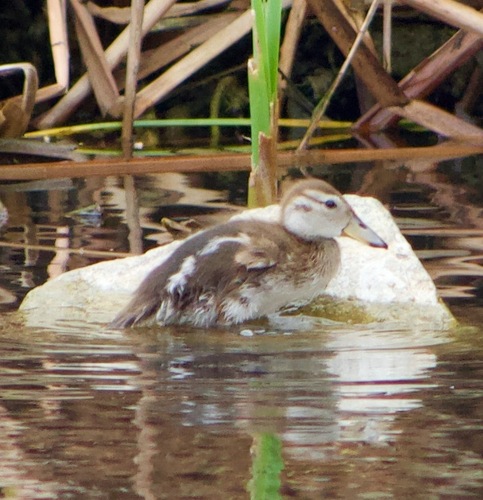 Yellow-billed Pintail
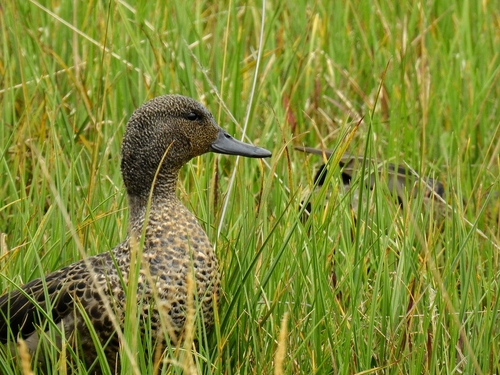 Andean Teal
In breve
Il segno di campo più affidabile per separare il Yellow-billed Pintail dall'Andean Teal è il colore e il motivo del becco: il Yellow-billed Pintail mostra un becco giallo brillante con una punta nera e una distintiva striscia nera al centro, mentre l'Andean Teal manca di questa combinazione. Inoltre, il Yellow-billed Pintail è nettamente più grande e ha una coda più lunga, con una coda appuntita e una forma del corpo più allungata, mentre l'Andean Teal è più piccolo e più compatto. In volo o a riposo, l'ala superiore del Yellow-billed Pintail è grigio-marrone con secondarie verde scuro, mentre l'Andean Teal non presenta questi contrasti specifici. Entrambe le specie possono trovarsi in umidi andini ad alta quota, ma l'Andean Teal è limitato alle Ande settentrionali, mentre il Yellow-billed Pintail ha un'area di distribuzione più ampia in Sud America. Anche la dimensione del gruppo e il comportamento sociale possono aiutare: il pintail è meno propenso a formare grandi gruppi rispetto all'alzavola.
Consigli di identificazione
- Colore e motivo del becco: Il Yellow-billed Pintail ha un becco giallo brillante con una punta nera e una prominente striscia nera al centro. L'Andean Teal manca di questo motivo: il suo becco non è mai così brillante o distintamente marcato. Questo è il segno più affidabile a qualsiasi età o stagione.
- Dimensione e struttura: Il pintail è molto più grande e ha un collo più lungo, con una coda nettamente appuntita. L'Andean Teal è compatto, con una coda corta e più piccolo nel complesso. Quando sono visti insieme, la differenza è ovvia; da solo, cerca il profilo allungato rispetto a quello tozzo.
- Forma della coda: La coda del pintail è marrone e appuntita, estendendosi ben oltre il corpo, specialmente in volo o quando nuota. La coda dell'Andean Teal è più corta e meno appuntita.
- Motivo dell'ala superiore: Il Yellow-billed Pintail mostra un'ala superiore grigio-marrone con secondarie verde scuro. Anche se non è così audace come in alcuni anatre, questo contrasto è assente nell'Andean Teal, che manca del pannello secondario verde scuro.
- Piumaggio del corpo: Il pintail è marrone chiaro con macchie nere di varie dimensioni sul corpo, e una testa e un collo marroni. L'Andean Teal è più uniforme e manca delle forti macchie e contrasti.
- Dimensione del gruppo e comportamento: Il pintail è meno probabile che venga visto in grandi gruppi, spesso da solo o in piccoli gruppi. L'Andean Teal può riunirsi in numeri maggiori. Se vedi un grande gruppo compatto di piccole anatre, è più probabile che sia un Andean Teal.
- Distribuzione e habitat: L'Andean Teal è limitato agli umidi ad alta quota nelle Ande settentrionali (Colombia, Venezuela, Ecuador). Il Yellow-billed Pintail è molto più diffuso, inclusi le pianure e il sud del Sud America. La posizione può aiutare, ma fai attenzione alla sovrapposizione nelle Ande.
- Profilo di volo: In volo, il pintail appare allungato con un collo e una coda lunghi, mentre l'Andean Teal è compatto e ha un battito veloce. Fai attenzione alla coda appuntita che segue il pintail.
- Sesso e età: Non sono descritti forti dimorfismi sessuali o segni specifici per età per nessuna delle due specie, quindi fai affidamento sulla struttura e sul motivo del becco per tutti gli individui.
- Confusione con altre specie: Il pintail è talvolta confuso con l'alzavola marezzata (non l'Andean Teal), ma il becco giallo con marcature nere e la dimensione maggiore lo separano da entrambe le alzavole.
- Quando i segni falliscono: In scarsa illuminazione o a grande distanza, la dimensione e il colore del becco possono essere difficili da giudicare. Cerca di ottenere una vista laterale del becco e della coda, e nota il comportamento di gruppo e l'habitat.
- Trappole del piumaggio: Entrambe le specie sono generalmente marroni, ma solo il pintail mostra la combinazione di marrone chiaro con macchie nere e un becco giallo-nero. Evita di fare affidamento esclusivamente sulla colorazione marrone complessiva.
- Variazione stagionale: Non sono descritti cambiamenti significativi nel piumaggio stagionale per nessuna delle due specie; i segni sono affidabili tutto l'anno.
- Voce: Non sono descritte differenze vocali diagnostiche nelle note disponibili; non fare affidamento sui richiami per la separazione.
- Controllo del riassunto: Se vedi un'anatra grande e dalla coda lunga con un becco giallo marcato di nero, è un Yellow-billed Pintail. Se l'anatra è piccola, compatta e priva di un becco giallo, è un Andean Teal.
Taglia
Il Yellow-billed Pintail è nettamente più grande e ha un corpo più lungo rispetto all'Andean Teal. Il pintail ha una coda più allungata e appuntita e un collo più grande e lungo, conferendogli un aspetto allungato sia in acqua che in volo. L'Andean Teal è molto più piccolo, con un profilo compatto e una coda corta tipica delle vere alzavole. Questa differenza di dimensione è ovvia quando entrambi sono visti insieme, ma può essere più difficile da giudicare da soli o a distanza.
Piumaggio
Non sono descritti motivi specifici per l'ala superiore per età per nessuna delle due specie, ma gli adulti e gli immaturi possono essere separati in base alla colorazione generale e ai dettagli delle ali. Il Yellow-billed Pintail ha una coda marrone appuntita, un'ala superiore grigio-marrone e secondarie verde scuro. Il suo corpo è marrone chiaro con macchie nere, e la testa e il collo sono marroni. Il becco è giallo con una punta nera e una striscia centrale nera: questo è unico tra i due. L'Andean Teal, al contrario, manca del becco giallo e ha un aspetto più uniforme e compatto, senza menzione delle secondarie verde scuro o della coda appuntita. Non sono dettagliati segni specifici per i giovanili e gli immaturi, quindi fai affidamento sulla struttura generale e sul motivo del becco per tutte le età.
Comportamento
Il Yellow-billed Pintail tende a essere meno sociale, non formando grandi stormi, mentre l'Andean Teal può essere visto in gruppi, specialmente in habitat adatti. In volo, il pintail mostra un profilo più allungato e aerodinamico a causa della sua coda e collo più lunghi, mentre l'Andean Teal appare più compatto e ha un battito veloce. Entrambe le specie si nutrono in superficie, ma il comportamento del pintail è spesso più solitario o in piccole compagnie.
Habitat
Entrambe le specie si trovano negli umidi andini, ma le loro aree di distribuzione e preferenze di habitat differiscono. L'Andean Teal è limitato a laghi e paludi di alta montagna in Colombia, Venezuela ed Ecuador. Il Yellow-billed Pintail è più diffuso, trovato da laghi ad alta quota a fiumi e coste di pianura in gran parte del Sud America, comprese le Falkland e la Georgia del Sud. Se ti trovi al di fuori delle Ande settentrionali, è improbabile che tu veda un Andean Teal.
Yellow-billed Pintail · Andean Teal · I miei uccelli difficili