

Motmot

モリムシクイ 対 キマユムシクイ

Phylloscopus sibilatrix 対 Phylloscopus inornatus

モリムシクイとキマユムシクイのクイズ
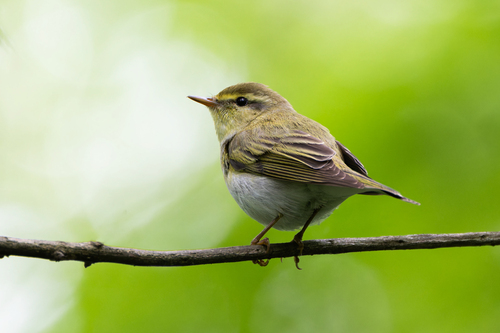
モリムシクイ (Phylloscopus sibilatrix) モリムシクイ
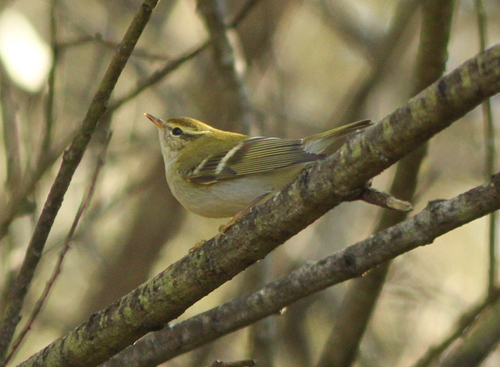
キマユムシクイ (Phylloscopus inornatus) キマユムシクイ

メディア

読み込み中…

要点

モリムシクイとキマユムシクイを区別する最も信頼できる方法は、全体的な構造と翼の模様によるものです:モリムシクイは大きく、翼が長く、キマユムシクイの大胆な二重翼帯と強い黄色の眉斑がありません。どの羽色でも、モリムシクイは明るいレモン色の喉と胸を持ち、よりクリーンで均一な外観を示しますが、キマユムシクイは常に二つの淡い翼帯と強い黄色の眉があります。飛んでいる時や止まっている時、モリムシクイの長い一次羽の突出と広い尾は、よりコンパクトで短い尾を持ち、活発なキマユムシクイに対して際立っています。声と生息地も役立ちますが、羽色と構造が通常は決定的です。

識別のコツ

  1. 二重翼帯:キマユムシクイは常に二つの淡い翼帯を持っています(大羽と中羽の覆いに);モリムシクイはどの年齢でも翼帯を示しません。これはどの角度から見ても最も信頼できる特徴です。
  2. 眉斑:キマユムシクイは目の後ろまで伸びる強い長い黄白色の眉斑を持っています;モリムシクイの眉斑は黄色ですが、あまりはっきりしておらず、顔とのコントラストが少ないです。
  3. 三次羽の縁:両者とも淡い三次羽の縁を持っていますが、キマユムシクイのものは黄色の縁取りがあり、より目立ちます。一方、モリムシクイのものは淡く、コントラストが少ないです。
  4. 顔の模様:キマユムシクイは淡い冠の縞模様を示すことがあります(常に見えるわけではありません)、これが模様のある外観を加えます。モリムシクイの冠は無地の緑色です。
  5. 腹部:モリムシクイは明るいレモンイエローの喉と上胸を示し、下は白に変わります;キマユムシクイは下が白で、喉や胸にほとんど黄色がありません。
  6. 上面:両者とも上面は緑がかっていますが、モリムシクイはより明るく、クリーンな緑色で、キマユムシクイはより鈍く、オリーブ色に見えることがあります。
  7. サイズと形:モリムシクイは大きく、翼が長く、尾が広いです;キマユムシクイは小さく、よりコンパクトで、短い尾を持っています。これは特に飛んでいる時や並んでいる時に目立ちます。
  8. 一次羽の突出:モリムシクイは明らかに長い一次羽の突出を持ち(翼先が三次羽を大きく超えています)、長い翼の外観を与えます;キマユムシクイの翼は短く、丸みを帯びています。
  9. 尾の形:モリムシクイの尾は体の長さに対して広く、短いです;キマユムシクイの尾は狭く、より四角いです。
  10. 行動:キマユムシクイはより落ち着きがなく、葉の間を素早く動き回ります;モリムシクイはより慎重で、露出した止まり木から歌うことがあります。
  11. 声:モリムシクイの歌は金属的なトリルまたは下降する音階の音です;その呼び声は柔らかい単音です。キマユムシクイの呼び声は鋭く、大きな「ツィーウィスト」で、モリムシクイとは非常に異なります。
  12. 生息地と季節:ヨーロッパでは、モリムシクイは成熟した森林で夏に繁殖します;キマユムシクイは稀な秋の渡り鳥または冬の訪問者で、しばしば小さな森、公園、または庭に見られます。
  13. 落とし穴:薄暗い場所でモリムシクイの黄色い胸を翼帯と混同しないでください。常にキマユムシクイの二重翼帯を探してください。これはモリムシクイには決して存在しません。
  14. 年齢と換羽:キマユムシクイのすべての年齢層は翼帯を示します;モリムシクイは決して示しません、幼鳥や未成熟のものでも。
  15. 直接比較:両者を一緒に見ると、モリムシクイは大きく、翼が長く、はるかに無地の翼を持って際立ち、キマユムシクイは小さく、より模様があり、より活発に見えます。

大きさ

モリムシクイは明らかに大きく、重い(約10g、11–12.5 cm)で、より小さく、軽いキマユムシクイ(4–9g、9.5–11 cm)と比較されます。モリムシクイはまた、翼が長く、ずっしりとした外観を持ち、尾が広いですが、キマユムシクイはより小柄でコンパクトです。これらの違いは、直接比較や経験でしばしば見られますが、単独で見ると微妙な場合があります。

羽色

行動

キマユムシクイはほぼ常に動いており、葉の間を素早く動き回り、ほとんど静止しないため、そのフィールドマークを見つけるのが難しいことがあります。モリムシクイも活発ですが、より慎重に動く傾向があり、しばしば露出した止まり木から歌うために立ち止まります。飛んでいる時、モリムシクイの長い翼と広い尾は、より優雅で滑空するような外観を与え、キマユムシクイはより速く、よりひらひらとした印象を与えます。

生息環境

モリムシクイは北部および温帯ヨーロッパの成熟した、しばしば落葉樹の森林で繁殖し、大規模な森林を好みます。キマユムシクイははるかに東(東パレアクティック)で繁殖し、西ヨーロッパでは秋の定期的な渡り鳥または冬の訪問者であり、しばしば公園、庭、小さな林を含むより広範な森林生息地で見られます。ヨーロッパでは、秋にキマユムシクイを見つけることは注目に値し、しばしば成熟していない森林や都市部でも見られますが、モリムシクイはより広範な森林で夏に繁殖します。

声

モリムシクイには二つの特徴的な歌のタイプがあります:高音で加速する金属的なトリルと一連の下降する音階の音(ピュー・ピュー・ピュー)。その接触呼び声は柔らかい単音です。キマユムシクイの歌は高音の笛のメドレーですが、ヨーロッパではその大きな二音節の「ツィーウィスト」呼び声によってより頻繁に検出され、これはモリムシクイの音よりもはるかに鋭く、刺さるようです。呼び声はかなり異なり、よく聞こえれば診断的です。

より良い説明を送る

比較と同じ項目を使ってください。文章はすぐに公開されます。

The most reliable way to separate Wood Warbler from Yellow-browed Warbler is by overall structure and wing pattern: Wood Warbler is larger, longer-winged, and lacks the bold double wing bars and strong yellow supercilium of Yellow-browed. In any plumage, Wood Warbler shows a cleaner, more uniform look with a bright lemon throat and breast, while Yellow-browed always has two pale wing bars and a strong yellow eyebrow. In flight or perched, Wood Warbler’s longer primary projection and broader tail stand out against the more compact, short-tailed, and active Yellow-browed. Voice and habitat can help, but plumage and structure are usually decisive.

  1. Double wing bars: Yellow-browed Warbler always has two pale wing bars (on greater and median coverts); Wood Warbler never shows wing bars at any age. This is the single most reliable mark in any view.
  2. Supercilium (eyebrow): Yellow-browed has a strong, long yellowish-white supercilium extending well behind the eye; Wood Warbler’s supercilium is yellow but less sharply defined and does not contrast as much with the face.
  3. Tertial edges: Both have pale tertial edges, but Yellow-browed’s are yellow-margined and more obvious, while Wood Warbler’s are paler and less contrasting.
  4. Face pattern: Yellow-browed may show a faint pale crown stripe (not always visible), adding to its patterned look. Wood Warbler’s crown is plain green.
  5. Underparts: Wood Warbler shows a bright lemon-yellow throat and upper breast, fading to white below; Yellow-browed is white below with little or no yellow on the throat or breast.
  6. Upperparts: Both are greenish above, but Wood Warbler is a brighter, cleaner green, while Yellow-browed can appear duller and more olive.
  7. Size and shape: Wood Warbler is larger, longer-winged, and broader-tailed; Yellow-browed is smaller, more compact, and short-tailed. This is especially noticeable in flight or side-by-side.
  8. Primary projection: Wood Warbler has a noticeably long primary projection (wing tips extending well beyond tertials), giving a long-winged look; Yellow-browed’s wings are shorter and rounder.
  9. Tail shape: Wood Warbler’s tail is broader and shorter relative to its body length; Yellow-browed’s is narrower and more squared-off.
  10. Behavior: Yellow-browed is more restless, flicking and moving rapidly through foliage; Wood Warbler is more deliberate and may sing from exposed perches.
  11. Voice: Wood Warbler’s song is a metallic trill or descending piping notes; its call is a soft, single note. Yellow-browed’s call is a sharp, loud 'tseeweest'—very different from Wood Warbler.
  12. Habitat and season: In Europe, Wood Warbler is a summer breeder in mature woodland; Yellow-browed is a scarce autumn migrant or winter visitor, often in smaller woods, parks, or gardens.
  13. Pitfalls: Do not confuse Wood Warbler’s yellow breast for a wing bar in poor light. Always look for the double wing bars on Yellow-browed, which are never present on Wood Warbler.
  14. Age and molt: All age classes of Yellow-browed show wing bars; Wood Warbler never does, even in juveniles or immatures.
  15. Direct comparison: If you see both together, Wood Warbler will stand out as larger, longer-winged, and much plainer-winged, while Yellow-browed will look smaller, more patterned, and more active.

Wood Warbler is distinctly larger and heavier (about 10g, 11–12.5 cm long) compared to the smaller, lighter Yellow-browed Warbler (4–9g, 9.5–11 cm). Wood Warbler also appears longer-winged and bulkier, with a broader tail, while Yellow-browed is more petite and compact. These differences are often visible in direct comparison or with experience, but can be subtle if seen alone.

  • Juvenile/immature and adult Yellow-browed Warbler always show two distinct pale wing bars (on median and greater coverts), a strong yellow supercilium, and yellow edges to the tertials. Some may show a faint pale crown stripe. The underparts are white, and the upperparts are greenish. These wing bars are present year-round and are a key feature at all ages.
  • Wood Warbler (all ages) lacks wing bars entirely, instead showing a clean, unmarked wing with pale tertial edges. The face is plainer, but the supercilium is yellow and less sharply defined than in Yellow-browed. The throat and upper breast are washed bright lemon-yellow, fading to white on the belly and flanks, and the upperparts are green. The overall look is much cleaner and less patterned than Yellow-browed.
  • In flight, Wood Warbler's wings look longer and more pointed, with no wing bars, while Yellow-browed’s shorter wings show the double wing bars clearly.

Yellow-browed Warbler is almost constantly in motion, flicking through foliage and rarely sitting still, which can make its field marks harder to see. Wood Warbler is also active but tends to move more deliberately, often pausing to sing from exposed perches. In flight, Wood Warbler’s longer wings and broader tail give it a more graceful, gliding look, while Yellow-browed appears quicker and more fluttery.

Wood Warbler breeds in mature, often deciduous woodland across northern and temperate Europe, favoring large tracts of forest. Yellow-browed Warbler breeds much further east (east Palearctic) and is a regular autumn migrant or winter visitor in western Europe, often found in a wider range of wooded habitats, including parks, gardens, and smaller woodlots. In Europe, finding a Yellow-browed Warbler in autumn is notable and often in less mature woodland or even urban settings, while Wood Warbler is a summer breeder in more extensive woods.

Wood Warbler has two distinctive song types: a high-pitched, accelerating metallic trill and a series of descending piping notes (piüü-piüü-piüü). Its contact call is a soft, single piping note. Yellow-browed Warbler’s song is a high-pitched medley of whistles, but in Europe it is more often detected by its loud, disyllabic 'tseeweest' call, which is much sharper and more piercing than any Wood Warbler note. The calls are quite different and can be diagnostic if heard well.

変更を破棄しますか?

保存していない編集があります。今離れると失われます。

モリムシクイ · キマユムシクイ · 苦手な鳥