

Motmot

アシナガウミツバメ 対 カオジロウミツバメ

Oceanites oceanicus 対 Pelagodroma marina

アシナガウミツバメとカオジロウミツバメのクイズ
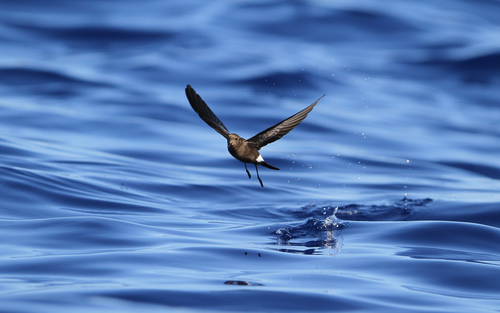
アシナガウミツバメ (Oceanites oceanicus) アシナガウミツバメ
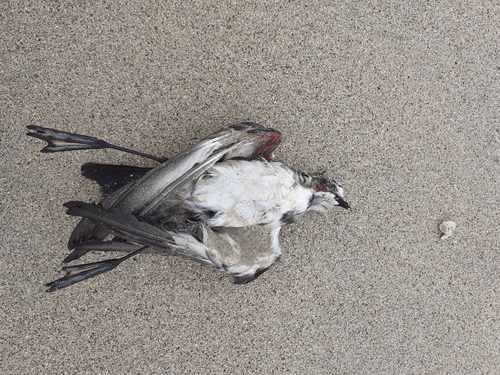
カオジロウミツバメ (Pelagodroma marina) カオジロウミツバメ

メディア

読み込み中…

要点

ウィルソンウミツバメとカオジロウミツバメの最も信頼できるフィールドマークは、ウィルソンウミツバメには決して見られないカオジロウミツバメの際立った白い顔と腹部です。飛行中、ウィルソンウミツバメは上面が均一に暗褐色で白い尾羽を持ち、カオジロウミツバメは淡い灰褐色の背中と黒いアイマスクを持つ特徴的な白い顔をしています。カオジロウミツバメの幼鳥は、上面により広範囲な淡い縁取りを示すことがありますが、常に白い顔を保ちます。両種は水面を叩くように飛びますが、カオジロウミツバメはほぼ常に独特の跳ねるような動きで行います。構造と行動も異なります:カオジロウミツバメは脚が長く見え、亜種によっては四角いまたは分岐した尾を示すことが多いのに対し、ウィルソンウミツバメは四角い尾を持ち、尾を超えて足がわずかに突き出ています。

識別のコツ

  1. 白い顔と腹部(すべての年齢): カオジロウミツバメだけが黒いアイマスクと白い腹部を持つ明るい白い顔を示します。ウィルソンウミツバメは常に暗い顔と暗い腹部です。
  2. 上翼の模様(すべての年齢): ウィルソンウミツバメは上面が均一に暗褐色で白い尾羽と側面を持ち、カオジロウミツバメは亜種によっては白または淡い灰色の尾羽を持つことがあります。
  3. 尾の形: ウィルソンウミツバメは四角い尾を持ち、カオジロウミツバメは亜種や年齢によって四角いまたは分岐した尾を示すことがあります(幼鳥は浅い分岐を持つことがあります)。
  4. 足の突き出し: ウィルソンウミツバメでは、飛行中に足が尾を超えて突き出しますが、カオジロウミツバメではこの突き出しはあまり明らかではなく、脚が長いですが同じ突き出しを示しません。
  5. 飛行スタイル: カオジロウミツバメは硬い翼で水面を跳ねたり「スキップ」したりしながら頻繁に叩き、しばしば左右に揺れます。ウィルソンウミツバメはより直接的で滑空するような飛行をし、叩きもあまり誇張されていません。
  6. 腹部の色: カオジロウミツバメは常に白い腹部を持ち、ウィルソンウミツバメは白い尾羽と側面を除いて常に暗い腹部を持ちます。
  7. 顔の模様: 白い顔に黒いアイマスクはカオジロウミツバメに特有で、ウィルソンウミツバメは無地の暗い顔を持ちます。
  8. 尾羽の色: 両種とも白い尾羽を示すことがありますが、カオジロウミツバメではこれが純白または淡い灰色であることがあり、ウィルソンウミツバメでは常に白く、暗い背中と鋭く対比します。
  9. 脚の色: ウィルソンウミツバメの繁殖前の鳥は、足の間に黒い斑点のある黄色い水かきがあり(フィールドではめったに見られません)、カオジロウミツバメは暗い脛、足、爪を持ちます。
  10. くちばし: 両種とも暗いくちばしを持ち、くちばしの形は双眼鏡での視認性が高くありません。
  11. サイズ: カオジロウミツバメはわずかに大きく重いですが、これは微妙でフィールドでは信頼できません。
  12. 幼鳥のマーク: 幼鳥のカオジロウミツバメは上面により広範囲な淡い縁取りを示すことがありますが、白い顔と腹部は明らかです。ウィルソンウミツバメの幼鳥は成鳥に似ています。
  13. 鳴き声: 海上では信頼できる分離はできません。ウィルソンウミツバメは柔らかいピーピー音を出すことがありますが、これはめったに聞かれず、診断的ではありません。
  14. 文脈: 両種は外洋性であり、一緒に見られることがあるため、場所だけに頼らないでください。
  15. 落とし穴: ウィルソンウミツバメの拡散した淡い上翼の覆羽の帯を、ヨーロッパウミツバメの白い下翼の裏地と混同しないでください。ここではどちらの種もそのマークを示しません。カオジロウミツバメの白い顔と腹部、ウィルソンウミツバメの全体が暗い顔を常に確認してください。

大きさ

カオジロウミツバメはウィルソンウミツバメよりもわずかに大きく重いです:体重は40 g対34 g [wikidata]、長さは19–21 cm対16–18.5 cm [wikipedia]です。翼幅もカオジロウミツバメの方がわずかに大きく(41–44 cm)ウィルソンウミツバメ(38–42 cm)と比較されます。フィールドでは、この違いは微妙で、姿勢や飛行スタイルによって隠されることが多いため、サイズだけでは診断的ではありません。

羽色

行動

両種は水面を叩くように飛ぶが、カオジロウミツバメはほぼ継続的に行い、長い脚を使って独特の左右に揺れる振り子のような動きで水面を跳ねたり「スキップ」したりします。ウィルソンウミツバメも叩きますが、より直接的で滑空するような飛行をし、跳ねる動きはあまり誇張されていません。カオジロウミツバメは動的な滑空をあまり行わず、ウィルソンウミツバメはより頻繁に滑空することがあります。カオジロウミツバメはしばしば翼を硬く伸ばし、時には一方の脚を下げながら餌場間を移動します。両種とも群れを成し、船を追うことがありますが、カオジロウミツバメの飛行スタイルはより独特で診断的です。

生息環境

両種は外洋性であり、陸から遠く離れた場所で見られ、しばしば生産的な海洋水域と関連しています。ウィルソンウミツバメは世界で最も豊富な海鳥の一つで、南半球の広い範囲に分布し、夏には北半球にも広がります。カオジロウミツバメも同様に広い範囲を持ちますが、特にオーストラリア南部、ニュージーランド、アトランティックおよびインド洋の島々で一般的です。生息地の重複は一部の地域で可能ですが、文脈は両者の間で診断的であることは稀です。

声

ウィルソンウミツバメは餌を食べているときに柔らかいピーピー音を出しますが、鳴き声は海上ではめったに聞かれず、カオジロウミツバメとの信頼できるフィールド分離にはなりません。カオジロウミツバメの鳴き声は、利用可能なメモには特徴的とは記述されていません。

より良い説明を送る

比較と同じ項目を使ってください。文章はすぐに公開されます。

The most reliable field mark between Wilson's Storm-Petrel and White-faced Storm-Petrel is the striking white face and underparts of the White-faced, which are never shown by Wilson's. In flight, Wilson's is uniformly dark brown above with a white rump, while White-faced has a pale grey-brown back and a distinctive white face with a black eye mask. Juveniles of White-faced Storm-Petrel may show more extensive pale fringes above, but always keep the white face. Both species patter on the water, but White-faced does so almost constantly and with a unique, bouncing gait. Structure and behavior also differ: White-faced appears longer-legged and often shows a square or forked tail depending on subspecies, while Wilson's has a square-ended tail and feet that just project beyond it.

  1. White face and underparts (all ages): Only White-faced Storm-Petrel shows a bright white face with a black eye mask and white underparts. Wilson's is always dark-faced and dark below.
  2. Upperwing pattern (all ages): Wilson's Storm-Petrel is uniformly dark brown above with a white rump and flanks; White-faced is paler grey-brown above, sometimes with a white or pale grey rump depending on subspecies.
  3. Tail shape: Wilson's has a square-ended tail; White-faced can show a square or forked tail depending on subspecies and age (juveniles may have a shallower fork).
  4. Feet projection: In Wilson's, the feet project just beyond the tail in flight; this is less obvious in White-faced, which has longer legs but does not show the same projection.
  5. Flight style: White-faced Storm-Petrel bounces or 'skips' across the water with stiff wings and frequent pattering, often swinging side-to-side. Wilson's has a more direct, gliding flight and less exaggerated pattering.
  6. Underparts color: White-faced is always white below; Wilson's is always dark below except for the white rump and flanks.
  7. Face pattern: The black eye mask on a white face is unique to White-faced; Wilson's has a plain dark face.
  8. Rump color: Both can show a white rump, but in White-faced this may be pure white or pale grey depending on subspecies, while in Wilson's it is always white and sharply contrasts with the dark back.
  9. Leg color: Wilson's pre-breeding birds have yellow webbing with black spots between the toes (rarely visible in the field); White-faced has dark tarsi, toes, and claws.
  10. Bill: Both have dark bills; bill shape is not a strong field mark in binocular views.
  11. Size: White-faced is slightly larger and heavier, but this is subtle and unreliable in the field.
  12. Juvenile marks: Juvenile White-faced may show more extensive pale fringes above, but the white face and underparts remain obvious; Wilson's juveniles are similar to adults.
  13. Vocalizations: Not reliably separable at sea; Wilson's may give a soft peeping, but this is rarely heard and not diagnostic.
  14. Context: Both species are pelagic and may occur together, so do not rely on location alone.
  15. Pitfalls: Do not confuse the diffuse pale upperwing covert bar of Wilson's for the white underwing lining of European Storm-Petrel; neither species here shows that mark. Always check for the white face and underparts for White-faced, and the all-dark face for Wilson's.

White-faced Storm-Petrel is slightly larger and heavier than Wilson's Storm-Petrel: 40 g vs 34 g in body mass [wikidata], and 19–21 cm length vs 16–18.5 cm for Wilson's [wikipedia]. The wingspan is also marginally greater in White-faced (41–44 cm) compared to Wilson's (38–42 cm). In the field, this difference is subtle and often masked by posture and flight style, so size alone is rarely diagnostic.

  • Juveniles and immatures: White-faced Storm-Petrel juveniles resemble adults but may have larger pale fringes and tips to upperparts feathers, and a shallower tail fork (in New Zealand subspecies). The white face and underparts remain obvious at all ages. Wilson's Storm-Petrel is uniformly dark brown above with a white rump and flanks at all ages; it lacks any white on the face or underparts. Wilson's may show a diffuse pale band along the upperwing coverts but never the white underwing lining of European Storm-Petrel (not relevant here).

  • Adults: White-faced Storm-Petrel always shows a white face with a black eye mask, white underparts, and a pale grey-brown back and rump (with some subspecific variation: some have a white rump, others pale grey). The tail can be square or forked depending on subspecies. Wilson's Storm-Petrel is dark brown overall with a white rump and flanks, square-ended tail, and no white on the face or underparts. The feet of Wilson's project just beyond the tail in flight, and pre-breeding birds show yellow webbing with black spots between the toes (rarely visible in the field).

Both species use pattering flight over the water, but White-faced Storm-Petrel does so almost continuously, using its long legs to bounce or 'skip' across the surface in a distinctive, side-to-side, pendulum-like motion. Wilson's Storm-Petrel also patters but with a more direct, gliding flight and less exaggerated bouncing. White-faced rarely uses dynamic soaring, while Wilson's may glide more frequently. White-faced often holds its wings stiff and extended, sometimes with one leg lowered, while moving between feeding spots. Both are gregarious and may follow ships, but the flight style of White-faced is more unique and diagnostic.

Both species are pelagic and can be seen far from land, often in association with productive oceanic waters. Wilson's Storm-Petrel is one of the most abundant seabirds globally and is widespread in southern oceans, extending into the northern hemisphere in summer. White-faced Storm-Petrel has a similarly broad range but is especially common around southern Australia, New Zealand, and islands in the Atlantic and Indian Oceans. Habitat overlap is possible in some regions, but context is rarely diagnostic between the two.

Wilson's Storm-Petrel gives a soft peeping noise while feeding, but vocalizations are rarely heard at sea and are not a reliable field separation from White-faced Storm-Petrel, whose calls are not described as distinctive in the available notes.

変更を破棄しますか?

保存していない編集があります。今離れると失われます。

アシナガウミツバメ · カオジロウミツバメ · 苦手な鳥