

Motmot

ワタハラハチドリ 対 ムラサキボウシハチドリ

Chalybura buffonii 対 Goldmania violiceps

ワタハラハチドリとムラサキボウシハチドリのクイズ
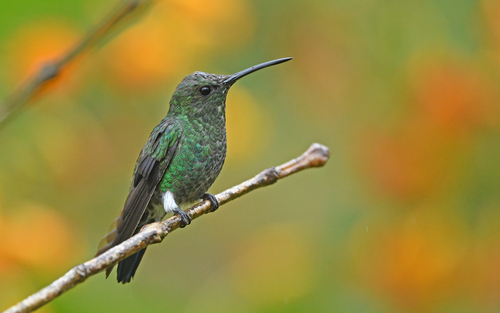
ワタハラハチドリ (Chalybura buffonii) ワタハラハチドリ
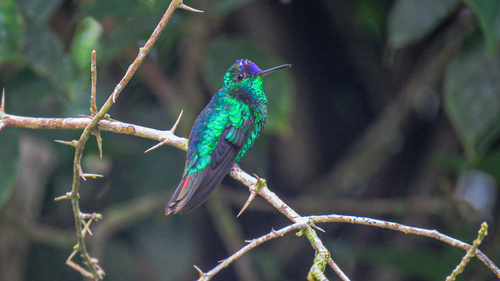
ムラサキボウシハチドリ (Goldmania violiceps) ムラサキボウシハチドリ

メディア

読み込み中…

要点

ホワイトベントプルメレテールとムラサキボウシハチドリの最も信頼できるフィールドマークは、オスのムラサキボウシハチドリに見られる太い紫青の冠の存在であり、プルメレテールには決して見られません。すべての羽色において、プルメレテールはより大きく、ずんぐりしており、暗い金属的な緑の体と特徴的な長い白い尾羽(ベント)パッチを持っています。一方、ムラサキボウシは小さく、白で縁取られたまたは先端が白いマルーンの尾を持っています。メスのムラサキボウシは斑点のある喉と白い先端のあるマルーンの尾を示し、プルメレテールのより均一な灰色の腹部と白いベントと対照的です。くちばしの色と尾の構造も役立ちます:プルメレテールは黒いくちばしを持ち(ピンクがかった基部を持つものもありますが)、ムラサキボウシは常に下顎にピンクの基部を示します。これらの違いは、止まっている時と飛んでいる時の両方で見ることができますが、特に冠と尾のパターンは遠くからでも役立ちます。

識別のコツ

  1. オスのムラサキボウシハチドリは常に鮮やかな紫青の冠を示します—これを見たら、診断的であり、年齢や性別に関係なくプルメレテールを除外します。
  2. ホワイトベントプルメレテールには決して色付きの冠がありません; オスは青銅色の色合いがありますが、明確なパッチはなく、メスは上面が地味です。
  3. 尾の色とパターンはすべての年齢で重要です: ムラサキボウシは広い白い縁または先端のあるマルーンの尾を持ち(わずかに分岐しています)、プルメレテールは青黒い尾を持ち、青銅の光沢があり、メスでは外羽の先端が鈍い灰色です。
  4. 白いベント/尾羽の覆い羽: プルメレテールの両性は長く目立つ白いベントパッチを示し、特に止まっている時やホバリングしている時に明らかです—ムラサキボウシはこれを決して示しません。
  5. くちばしの色: プルメレテールは通常、全体が黒いくちばしを持っています(亜種intermediaはピンクがかった基部を示すことがありますが)、ムラサキボウシは常に下顎にピンクの基部を持っています; 鳥があなたの方を向いているか、餌を食べているかを確認してください。
  6. サイズと構造: プルメレテールはより大きく、ずんぐりしており、より重い体格と長いくちばしを持っています; ムラサキボウシは明らかに小さく、より繊細です。
  7. メスの腹部: ムラサキボウシのメスは下が白っぽく、灰色の喉の斑点と緑の斑点があります; プルメレテールのメスは下が灰色で、側面に緑の斑点がありますが、明確な喉の斑点はありません。
  8. 尾の形: ムラサキボウシの尾はわずかに分岐しています; プルメレテールの尾はより四角く、オスでは中央の羽が青銅の光沢があります。
  9. 尾羽の覆い羽: プルメレテールのオスは銅色の青銅の尾羽の覆い羽を持ち、尾の上に赤褐色または青銅のパッチとして見えることがあります—ムラサキボウシにはこれがありません。
  10. プルメレテールの亜種の変異: 一部の亜種(例:caeruleogaster)は青い胸と青緑の腹を示しますが、ムラサキボウシの紫の冠とマルーンの尾は依然として欠けています。
  11. 生息地と範囲: パナマまたはNWコロンビアにいる場合、両方が可能ですが、ムラサキボウシははるかに稀で局所的です; 他の地域では、プルメレテールがはるかに可能性が高いです。
  12. 幼鳥/未成熟の鳥: どちらの種にも特定の上翼または飛行マークは記載されていないため、尾、ベント、頭のパターンに依存してください。
  13. 止まっている時と飛んでいる時: プルメレテールの白いベントは、鳥がホバリングしている時や尾をわずかに扇いでいる時に最も明らかです; ムラサキボウシの尾のパターンは、飛行中または鳥が尾を扇いでいる時に最もよく見えます。
  14. 餌場で: プルメレテールはサイズのために優位に立つかもしれません; ムラサキボウシが存在する場合、より小さく、より繊細に見えます。
  15. 疑問がある場合: 冠の色、尾のパターン、ベントパッチの組み合わせに焦点を当ててください—これらの3つを組み合わせることで、フィールドでのすべての年齢と性別を区別できます。

大きさ

ホワイトベントプルメレテールは明らかに大きく、長さは10.5〜12 cm、通常オスは6〜7.3 g(メスは最大7.9 g)ですが、ムラサキボウシハチドリは小さく、長さは8.5〜9.5 cm、成鳥は約3.9 gです。このサイズの違いは、直接比較したり、餌場で見たりすると明らかです。プルメレテールはずんぐりしており、くちばしが長いように見えます。

羽色

どちらの種にも年齢特有の上翼または飛行パターンのマークは記載されていません。代わりに、頭、尾、ベントエリアに焦点を当ててください。成鳥のオスのムラサキボウシハチドリは、目を引く虹色の紫青の冠を持っている点でユニークであり、プルメレテールのどの年齢や性別にも存在しません。ムラサキボウシのオスの残りは金属的な緑で、マルーンのわずかに分岐した尾は白で広く縁取られています。メスは緑の上面、灰白色の腹部に灰色の喉の斑点と緑の側面の斑点があり、白い先端のあるマルーンの尾を持っています。ホワイトベントプルメレテールのオスは暗い金属的な緑で、青銅の冠と銅色の尾羽の覆い羽、青みがかった上胸、明るい金属的な緑の下胸、長く目立つ白い尾羽(ベント)パッチを持っています。メスは上面が淡い緑で、下が灰色で側面に緑の斑点があり、オスに似た尾を持っていますが、外羽の先端は鈍い灰色です。プルメレテールの亜種の変異は腹部と尾の色に影響を与えることがありますが、白いベントと紫の冠の欠如は一貫しています。幼鳥/未成熟特有のマークはどちらの種にも記載されていません。

行動

両種は行動において典型的なハチドリですが、より大きなプルメレテールは飛行中や餌場でより頑丈で繊細でないように見えるかもしれません。ムラサキボウシは小さくて軽いため、より敏捷で優雅に見えるかもしれません。情報源には特に目立った行動の違いは記載されていません。

生息環境

ホワイトベントプルメレテールはコロンビア、エクアドル、パナマ、ペルー、ベネズエラ全体に広い範囲で見られますが、ムラサキボウシハチドリはパナマと北西コロンビアにより制限されています。パナマとNWコロンビアでは重複が可能ですが、ムラサキボウシははるかに局所的で近危急種であるため、ほとんどの地域では見られにくいです。両方は低地から丘陵の森林に生息していますが、文脈と地域の豊富さが役立ちます:プルメレテールは一般的により広範囲に分布しています。

より良い説明を送る

比較と同じ項目を使ってください。文章はすぐに公開されます。

The most reliable field mark between White-vented Plumeleteer and Violet-capped Hummingbird is the presence of a bold violet-blue crown on the male Violet-capped Hummingbird, which is never shown by the Plumeleteer. In all plumages, the Plumeleteer is larger and bulkier, with a dark metallic green body and a distinctive long white undertail (vent) patch, while the Violet-capped is smaller, with a maroon tail edged or tipped white. Female Violet-capped shows a spotted throat and maroon tail with white tips, contrasting with the Plumeleteer's more uniform grayish underparts and white vent. Bill color and tail structure also help: Plumeleteer has a black bill (except some with pinkish base), while Violet-capped always shows a pink base to the mandible. These differences are visible both perched and in flight, but the crown and tail pattern are especially helpful at a distance.

  1. Male Violet-capped Hummingbird always shows a brilliant violet-blue crown—if you see this, it is diagnostic and rules out Plumeleteer of any age or sex.
  2. White-vented Plumeleteer never has a colored crown; males have a bronzy tinge but not a distinct patch, and females are plain above.
  3. Tail color and pattern are key at all ages: Violet-capped has a maroon tail with broad white edges or tips (slightly forked), while Plumeleteer has a blue-black tail with a bronze gloss and, in females, dull gray tips on outer feathers.
  4. White vent/undertail coverts: Plumeleteer of both sexes shows a long, conspicuous white vent patch, especially obvious when perched or hovering—Violet-capped never shows this.
  5. Bill color: Plumeleteer usually has an all-black bill (except subspecies intermedia, which may show a pinkish base), while Violet-capped always has a pink base to the mandible; check closely if the bird is facing you or feeding.
  6. Size and structure: Plumeleteer is larger and bulkier, with a heavier build and longer bill; Violet-capped is noticeably smaller and more delicate.
  7. Female underparts: Violet-capped female is whitish below with gray throat spots and green spots on the sides; Plumeleteer female is gray below with green speckling on the sides but lacks the distinct throat spotting.
  8. Tail shape: Violet-capped's tail is slightly forked; Plumeleteer's tail is more squared off, with central feathers bronze-glossed in males.
  9. Uppertail coverts: Plumeleteer males have coppery-bronze uppertail coverts, which may show as a rufous or bronze patch above the tail—Violet-capped lacks this.
  10. Subspecies variation in Plumeleteer: Some subspecies (e.g., caeruleogaster) show a blue breast and bluish-green belly, but still lack the violet crown and maroon tail of Violet-capped.
  11. Habitat and range: If in Panama or NW Colombia, both are possible, but Violet-capped is much rarer and more localized; elsewhere, Plumeleteer is far more likely.
  12. Juvenile/immature birds: No specific upperwing or flight marks are described for either species, so rely on tail, vent, and head pattern.
  13. Perched vs. in-flight: The white vent of Plumeleteer is often most obvious when the bird is hovering or perched with the tail slightly fanned; Violet-capped's tail pattern is best seen in flight or when the bird fans its tail.
  14. At feeders: Plumeleteer may dominate due to size; Violet-capped, if present, will appear smaller and more delicate.
  15. If in doubt: Focus on the combination of crown color, tail pattern, and vent patch—these three together will separate all ages and sexes in the field.

White-vented Plumeleteer is noticeably larger, at 10.5–12 cm in length and typically 6–7.3 g for males (females up to 7.9 g), while Violet-capped Hummingbird is smaller, at 8.5–9.5 cm and around 3.9 g for adults. This size difference is often obvious in direct comparison or when seen at feeders, with Plumeleteer appearing bulkier and longer-billed.

No age-specific upperwing or flight pattern marks are described for either species. Instead, focus on head, tail, and vent area. Adult male Violet-capped Hummingbird is unique in having a striking iridescent violet-blue crown, which is never present in Plumeleteer of any age or sex. The rest of the Violet-capped male is metallic green with a maroon, slightly forked tail edged broadly in white. Females have green upperparts, whitish underparts with gray throat spots and green side spots, and a maroon tail with white tips. White-vented Plumeleteer males are dark metallic green with a bronzy crown and coppery uppertail coverts, a bluish upper breast, bright metallic green lower breast, and a long, conspicuous white undertail (vent) patch. Females are paler green above, gray below with green speckles on the side, and a tail similar to the male but with dull gray tips on the outer feathers. Subspecies variation in Plumeleteer can affect underpart and tail color, but the white vent and lack of a violet crown are consistent. Juvenile/immature-specific marks are not described for either species.

Both species are typical hummingbirds in behavior, but the larger Plumeleteer may appear more robust and less delicate in flight and at feeders. The Violet-capped, being smaller and lighter, may seem more agile or dainty. No distinctive behavioral differences are noted in the sources.

White-vented Plumeleteer is found in a broader range across Colombia, Ecuador, Panama, Peru, and Venezuela, while Violet-capped Hummingbird is more restricted to Panama and far northwestern Colombia. Overlap is possible in Panama and NW Colombia, but Violet-capped is much more localized and Near Threatened, so is less likely in most areas. Both occur in lowland to foothill forests, but context and local abundance can help: Plumeleteer is generally more widespread.

変更を破棄しますか?

保存していない編集があります。今離れると失われます。

ワタハラハチドリ · ムラサキボウシハチドリ · 苦手な鳥