

Motmot

ハリオアマツバメ 対 アマツバメ

Hirundapus caudacutus 対 Apus pacificus

ハリオアマツバメとアマツバメのクイズ
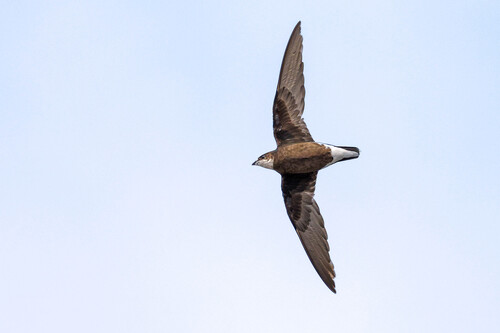
ハリオアマツバメ (Hirundapus caudacutus) ハリオアマツバメ
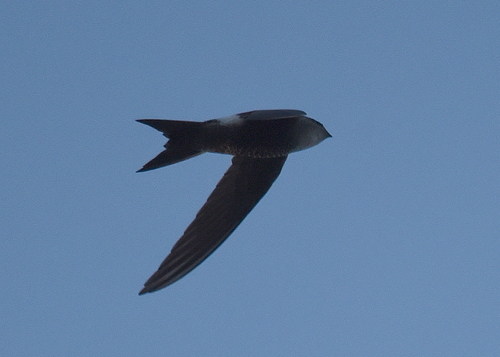
アマツバメ (Apus pacificus) アマツバメ

メディア

読み込み中…

要点

ホワイトスロートニードルテイルとアマツバメを区別する最も信頼できる方法は、全体の構造と羽毛によるものです:ニードルテイルは非常に頑丈でバレル型の胸を持ち、特徴的な白い喉と尾の基部から側面にかけての大胆な白い斑点がありますが、アマツバメはスリムで、翼が長く、白い尾羽帯を示しますが、ニードルテイルの白い喉はありません。飛行中、ニードルテイルの尾は棘状で分岐しておらず、アマツバメの深く分岐した尾と対照的です。幼鳥のアマツバメは翼に淡い縁取りを示すことがありますが、アマツバメのどの年齢もニードルテイルの独特な白い側面の斑点を示すことはありません。両種は空中にいますが、ニードルテイルの力強く、直接的な飛行とずんぐりしたシルエットは、より優雅で鎌のような翼を持つアマツバメとは異なります。

識別のコツ

  1. 白い喉と白い側面の斑点(ニードルテイルのみ): ニードルテイルは常に大胆な白い喉と尾の基部から側面にかけての大きな白い斑点を示します—アマツバメには決して存在せず、暗い喉と側面に白はありません。
  2. 白い尾羽帯(アマツバメのみ): アマツバメは明確な白い尾羽帯を示します(いくつかの亜種では狭い)、飛行中および下から見える。ニードルテイルはこの特徴を完全に欠いています。
  3. 尾の形状: ニードルテイルは先端に明らかな棘のある四角い尾を持ち(「ニードルテイル」という名前の由来)、決して分岐していません。アマツバメは深く分岐した尾を持ち、棘はありません。
  4. 体の構造: ニードルテイルは頑丈でバレル型の胸を持ち、重い体をしており、しばしば「魚雷型」と表現されます。アマツバメはスリムで、相対的に大きな頭、長い翼、より流線型の外観を持っています。
  5. 飛行スタイル: ニードルテイルの飛行は速く、直接的で力強く、急速な翼の打撃と少ない滑空を伴います。アマツバメはより浮遊感があり、しばしば滑空し、より柔軟で鎌のような翼を示します。
  6. 上面の色: ニードルテイルは上面が灰褐色ですが、アマツバメは上面が黒っぽく、頭がより灰色です。
  7. 下面: ニードルテイルは主に暗いですが、白い喉と側面の斑点を除いています。アマツバメは下面が黒っぽいですが、近くで見ると淡い羽毛の縁取りから鱗状の外観が見えることがあります、特に幼鳥では。
  8. 幼鳥のアマツバメ: 翼の羽毛に淡い縁取りを示しますが、喉や側面に白は決してありません。幼鳥のニードルテイルは成鳥のように見えます。
  9. くちばしと脚: 両種は小さなくちばしと非常に短い脚を持ち、通常はフィールドでは見えません。
  10. 止まり姿勢: 滅多に見られませんが、ニードルテイルは巣以外では止まることを非常に嫌がります;アマツバメはワイヤーや崖に止まることがあります。
  11. サイズの印象: ニードルテイルはアマツバメよりもはるかに大きく重いです;これは一緒に見たり、他のアマツバメと比較したりすると特に明らかです。
  12. 尾の棘(ニードルテイル): 尾が広がっているときにニードルテイルの棘のある尾の先端を探してください。
  13. 白い喉の斑点(ニードルテイル): 遠くからでも、鳥がバンクしたり回転したりするときに白い喉が目立つことがあります。
  14. 白い尾羽帯(アマツバメ): 上または後ろから見るのが最適です;大きなアマツバメにこの特徴がない場合はニードルテイルを示します。
  15. 迷子の文脈: 両者はヨーロッパでは珍しいですが、アマツバメはより定期的に迷子として記録されています;文脈は役立つかもしれませんが、診断的ではありません。

大きさ

ホワイトスロートニードルテイルはかなり大きく重いです:約20 cmの長さで、110–120 gの重さを持ち、明らかにバレル型の体をしています。アマツバメは小さく、はるかに軽いです:17–18 cmの長さで、翼幅は43–54 cm、重さは約43–45 gです。ニードルテイルのサイズと体重は、特に飛行中の直接比較で明らかです。

羽色

幼鳥のアマツバメは翼の羽毛に淡い縁取りを示すことがあり、下から見るとわずかに鱗状の外観を持ちますが、これは微妙で、ホワイトスロートニードルテイルに見られる大胆な白い斑点を決して生じません。ニードルテイルのすべての年齢は白い喉と尾の基部から側面にかけての大きく目立つ白い斑点を示します—これらはアマツバメには決して存在しません。すべての年齢のアマツバメは白い尾羽帯を持ち(いくつかの亜種では狭い)おおむね黒っぽい体を持ち、灰色の頭と羽毛の縁取りによる鱗状の下面を持っています。ニードルテイルの上面は灰褐色で、黒ではなく、白い尾羽帯を欠いています。ニードルテイルの尾は棘状で四角く、分岐しておらず、アマツバメの尾は深く分岐しており、棘がありません。両種の性別は似ています。

行動

両種はほぼ常に飛行中に見られ、巣以外ではめったに止まりません。しかし、ホワイトスロートニードルテイルは特にその力強く、直接的で速い飛行で知られており、しばしば弾丸のように表現され、急速で目的のある翼の打撃と少ない滑空を伴います。アマツバメも強力な飛行者ですが、より優雅に見え、長い鎌のような翼とより浮遊感のある滑空飛行を持っています。ニードルテイルは地面に着陸することはほとんどなく、アマツバメは繁殖地の近くでワイヤーや崖に止まっているのが時々見られます。

生息環境

両者は空中の昆虫食であり、採餌中に広範囲の生息地で見ることができます。ホワイトスロートニードルテイルは中央アジアと南シベリアで繁殖し、崖や空洞の木に巣を作り、東南アジアとオーストラリアで冬を越します。アマツバメは東アジアで繁殖し、北の冬のために東南アジアとオーストラリアに移動します。両者はヨーロッパでは珍しい迷子ですが、アマツバメは西パレアルクティックでより定期的に記録されています。生息地は通常フィールドで診断的ではありませんが、文脈は迷子の助けになるかもしれません。

より良い説明を送る

比較と同じ項目を使ってください。文章はすぐに公開されます。

The most reliable way to separate White-throated Needletail from Pacific Swift is by overall structure and plumage: the Needletail is much more robust and barrel-chested, with a distinctive white throat and a bold white patch from the tail base onto the flanks, while the Pacific Swift is slimmer, longer-winged, and shows a white rump band but lacks the Needletail’s white throat. In flight, the Needletail’s tail is spined and not forked, contrasting with the Pacific Swift’s deeply forked tail. Juvenile Pacific Swifts may show pale fringes on the wings, but no age of Pacific Swift ever shows the Needletail’s unique white flank patch. Both species are aerial, but the Needletail’s powerful, direct flight and chunky silhouette are unlike the more graceful, scythe-winged Pacific Swift.

  1. White throat and white flank patch (Needletail only): The Needletail always shows a bold white throat and a large white patch from the tail base onto the flanks—never present in Pacific Swift, which has a dark throat and no white on the flanks.
  2. White rump band (Pacific Swift only): Pacific Swift shows a clear white rump band (narrower in some subspecies), visible in flight and from below. Needletail lacks this feature entirely.
  3. Tail shape: Needletail has a squared-off tail with obvious spines at the tip (giving the 'needle-tailed' name), never forked. Pacific Swift has a deeply forked tail, with no spines.
  4. Body structure: Needletail is robust, barrel-chested, and heavy-bodied, often described as 'torpedo-shaped.' Pacific Swift is slimmer, with a proportionally larger head, longer wings, and a more streamlined look.
  5. Flight style: Needletail’s flight is fast, direct, and powerful, with rapid wingbeats and little gliding. Pacific Swift is more buoyant, often gliding and showing more flexible, scythe-shaped wings.
  6. Upperparts color: Needletail is greyish-brown above, while Pacific Swift is blackish above with a greyer head.
  7. Underparts: Needletail is mostly dark below except for the white throat and flank patch. Pacific Swift is blackish below, but close views may reveal a scaly look from pale feather fringes, especially in juveniles.
  8. Juvenile Pacific Swift: Shows pale fringes on wing feathers, but never any white on the throat or flanks. Juvenile Needletail looks like adult.
  9. Bill and legs: Both species have small bills and very short legs, not usually visible in the field.
  10. Perched posture: Rarely seen, but Needletail is extremely reluctant to perch except at nest; Pacific Swift may perch on wires or cliffs.
  11. Size impression: Needletail is much larger and heavier than Pacific Swift; this is especially obvious if seen together or with other swifts for scale.
  12. Tail spines (Needletail): Look for the spined tail tip in Needletail, especially when the tail is spread.
  13. White throat patch (Needletail): Even at distance, the white throat can be a giveaway when the bird banks or turns.
  14. White rump band (Pacific Swift): Best seen from above or behind; absence of this in a large swift points to Needletail.
  15. Vagrancy context: Both are rare in Europe, but Pacific Swift is a more regular vagrant; context may help but is not diagnostic.

White-throated Needletail is substantially larger and heavier: about 20 cm long and weighing 110–120 g, with a notably barrel-shaped body. Pacific Swift is smaller and much lighter: 17–18 cm long, with a wingspan of 43–54 cm, and weighs about 43–45 g. The Needletail’s size and bulk are obvious in direct comparison, especially in flight.

Juvenile Pacific Swifts can show pale fringes on the wing feathers, giving a slightly scaly look from below, but this is subtle and never produces the bold white patches seen on White-throated Needletail. All ages of Needletail show a white throat and a large, conspicuous white patch extending from the tail base onto the flanks—these are never present in Pacific Swift. Pacific Swift of all ages has a white rump band (narrower in some subspecies) and a generally blackish body with a greyer head and scaly underparts due to feather fringes. The Needletail’s upperparts are greyish-brown, not black, and it lacks the white rump band. The Needletail’s tail is spined and squared off, not forked, while Pacific Swift’s tail is deeply forked and lacks spines. Sexes are similar in both species.

Both species are almost always seen in flight, rarely perching except at the nest. However, White-throated Needletail is especially known for its powerful, direct, and fast flight, often described as bullet-like, with rapid, purposeful wingbeats and little gliding. Pacific Swift, while also a strong flier, appears more graceful, with longer, scythe-shaped wings and a more buoyant, gliding flight. Needletails rarely, if ever, land on the ground, while Pacific Swifts may sometimes be seen perched on wires or cliffs near breeding sites.

Both are aerial insectivores and can be seen over a wide range of habitats while foraging. White-throated Needletail breeds in Central Asia and southern Siberia, nesting in cliffs or hollow trees, and winters in Southeast Asia and Australia. Pacific Swift breeds in eastern Asia and migrates to Southeast Asia and Australia for the northern winter. Both are rare vagrants to Europe, but Pacific Swift is more regularly recorded in the Western Palearctic. Habitat is not typically diagnostic in the field, but context may help with vagrancy.

変更を破棄しますか?

保存していない編集があります。今離れると失われます。

ハリオアマツバメ · アマツバメ · 苦手な鳥