

White-throated Needletail vs Pacific Swift
Hirundapus caudacutus contro Apus pacificus
Fai un quiz con White-throated Needletail e Pacific Swift
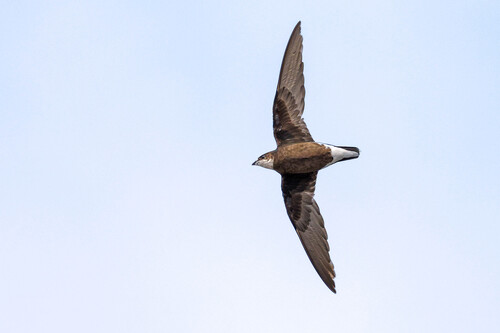 White-throated Needletail
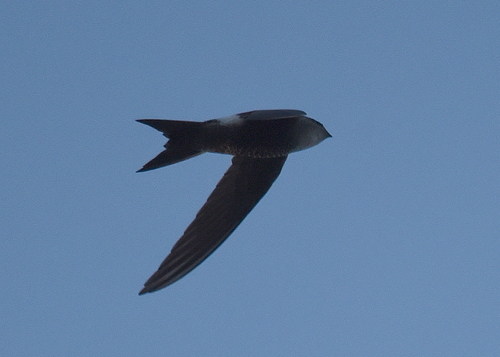 Pacific Swift
In breve
Il modo più affidabile per separare il White-throated Needletail dal Pacific Swift è attraverso la struttura generale e il piumaggio: il Needletail è molto più robusto e ha un torace a botte, con una distintiva gola bianca e una grande macchia bianca che va dalla base della coda fino ai fianchi, mentre il Pacific Swift è più snello, con ali più lunghe, e mostra una banda bianca sulla coda ma manca della gola bianca del Needletail. In volo, la coda del Needletail è spinosa e non forked, in contrasto con la coda profondamente forked del Pacific Swift. I giovani Pacific Swifts possono mostrare bordi chiari sulle ali, ma nessuna età di Pacific Swift mostra mai la macchia bianca unica sui fianchi del Needletail. Entrambe le specie sono aeree, ma il volo potente e diretto del Needletail e la sua silhouette robusta sono diverse dal Pacific Swift, che è più aggraziato e ha ali a falce.
Consigli di identificazione
- Gola bianca e macchia bianca sui fianchi (solo Needletail): Il Needletail mostra sempre una gola bianca audace e una grande macchia bianca dalla base della coda fino ai fianchi—mai presente nel Pacific Swift, che ha una gola scura e nessun bianco sui fianchi.
- Banda bianca sulla coda (solo Pacific Swift): Il Pacific Swift mostra una chiara banda bianca sulla coda (più stretta in alcune sottospecie), visibile in volo e dal basso. Il Needletail manca completamente di questa caratteristica.
- Forma della coda: Il Needletail ha una coda quadrata con spine evidenti alla punta (che danno il nome 'needle-tailed'), mai forked. Il Pacific Swift ha una coda profondamente forked, senza spine.
- Struttura del corpo: Il Needletail è robusto, ha un torace a botte e un corpo pesante, spesso descritto come 'a forma di torpedo.' Il Pacific Swift è più snello, con una testa proporzionalmente più grande, ali più lunghe e un aspetto più aerodinamico.
- Stile di volo: Il volo del Needletail è veloce, diretto e potente, con battiti d'ali rapidi e poco planare. Il Pacific Swift è più galleggiante, spesso planando e mostrando ali più flessibili a forma di falce.
- Colore delle parti superiori: Il Needletail è marrone-grigiastro sopra, mentre il Pacific Swift è nerastro sopra con una testa più grigia.
- Parti inferiori: Il Needletail è per lo più scuro sotto, tranne che per la gola bianca e la macchia sui fianchi. Il Pacific Swift è nerastro sotto, ma viste ravvicinate possono rivelare un aspetto squamoso a causa dei bordi chiari delle piume, specialmente nei giovani.
- Giovane Pacific Swift: Mostra bordi chiari sulle piume delle ali, ma mai bianco sulla gola o sui fianchi. Il giovane Needletail assomiglia all'adulto.
- Becco e zampe: Entrambe le specie hanno becchi piccoli e zampe molto corte, di solito non visibili sul campo.
- Postura in perching: Raramente visto, ma il Needletail è estremamente riluttante a posarsi tranne che nel nido; il Pacific Swift può posarsi su fili o scogli.
- Impressione di dimensione: Il Needletail è molto più grande e pesante del Pacific Swift; questo è particolarmente evidente se visti insieme o con altri swift per scala.
- Spine della coda (Needletail): Cerca la punta della coda spinosa nel Needletail, specialmente quando la coda è aperta.
- Macchia bianca sulla gola (Needletail): Anche a distanza, la gola bianca può essere un indizio quando l'uccello si inclina o gira.
- Banda bianca sulla coda (Pacific Swift): Migliore vista dall'alto o da dietro; l'assenza di questa in un grande swift indica il Needletail.
- Contesto di vagabondaggio: Entrambi sono rari in Europa, ma il Pacific Swift è un vagabondo più regolare; il contesto può aiutare ma non è diagnostico.
Taglia
Il White-throated Needletail è sostanzialmente più grande e pesante: circa 20 cm di lunghezza e pesa 110–120 g, con un corpo notevolmente a forma di botte. Il Pacific Swift è più piccolo e molto più leggero: 17–18 cm di lunghezza, con un'apertura alare di 43–54 cm, e pesa circa 43–45 g. La dimensione e il volume del Needletail sono evidenti in un confronto diretto, specialmente in volo.
Piumaggio
I giovani Pacific Swifts possono mostrare bordi chiari sulle piume delle ali, dando un aspetto leggermente squamoso dal basso, ma questo è sottile e non produce mai le audaci macchie bianche viste sul White-throated Needletail. Tutte le età del Needletail mostrano una gola bianca e una grande macchia bianca e conspicua che si estende dalla base della coda fino ai fianchi—queste non sono mai presenti nel Pacific Swift. Il Pacific Swift di tutte le età ha una banda bianca sulla coda (più stretta in alcune sottospecie) e un corpo generalmente nerastro con una testa più grigia e parti inferiori squamose a causa dei bordi delle piume. Le parti superiori del Needletail sono marrone-grigiastro, non nere, e manca della banda bianca sulla coda. La coda del Needletail è spinosa e quadrata, non forked, mentre la coda del Pacific Swift è profondamente forked e manca di spine. I sessi sono simili in entrambe le specie.
Comportamento
Entrambe le specie sono quasi sempre viste in volo, raramente posandosi tranne che nel nido. Tuttavia, il White-throated Needletail è particolarmente noto per il suo volo potente, diretto e veloce, spesso descritto come simile a un proiettile, con battiti d'ali rapidi e mirati e poco planare. Il Pacific Swift, pur essendo anche un forte volatore, appare più aggraziato, con ali più lunghe a forma di falce e un volo più galleggiante e planante. I Needletail raramente, se mai, atterrano a terra, mentre i Pacific Swifts possono a volte essere visti posati su fili o scogli vicino ai siti di nidificazione.
Habitat
Entrambi sono insetivori aerei e possono essere visti su un'ampia gamma di habitat mentre cercano cibo. Il White-throated Needletail nidifica in Asia Centrale e nella Siberia meridionale, nidificando in scogliere o alberi cavi, e sverna nel Sud-est asiatico e in Australia. Il Pacific Swift nidifica nell'Asia orientale e migra nel Sud-est asiatico e in Australia per l'inverno settentrionale. Entrambi sono vagabondi rari in Europa, ma il Pacific Swift è registrato più regolarmente nel Paleartico occidentale. L'habitat non è tipicamente diagnostico sul campo, ma il contesto può aiutare con il vagabondaggio.
White-throated Needletail · Pacific Swift · I miei uccelli difficili