

Motmot

コシジロウズラシギ 対 アメリカヒバリシギ

Calidris fuscicollis 対 Calidris minutilla

コシジロウズラシギとアメリカヒバリシギのクイズ
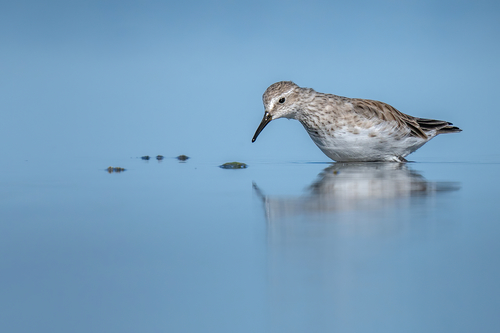
コシジロウズラシギ (Calidris fuscicollis) コシジロウズラシギ
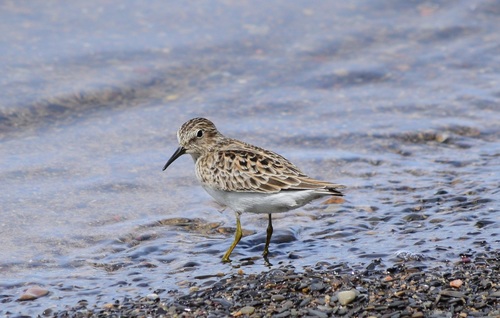
アメリカヒバリシギ (Calidris minutilla) アメリカヒバリシギ

メディア

読み込み中…

要点

コシジロウズラシギをアメリカヒバリシギから分ける最も信頼できる方法は、飛んでいるときのコシジロウズラシギの大胆な白い尻を見つけることです。これはアメリカヒバリシギには見られません。地上では、コシジロウズラシギは翼が長く、脚が暗いのに対し、アメリカヒバリシギは小さく、黄色がかった脚と短くて細いくちばしを持っています。両種の幼鳥は混乱を招くことがありますが、コシジロウズラシギの幼鳥は背中に特徴的な白い「V」を示し、翼の覆羽によりコントラストがあります。一方、アメリカヒバリシギの幼鳥は上面が明るく、赤褐色のトーンと白い背中のストライプがあります。両種は小さな「ピープ」ですが、コシジロウズラシギは明らかに大きく、がっしりとしています。脚の色、翼の突出、尻の模様に注意を払うことが重要で、特に混合群れでは特に重要です。

識別のコツ

  1. 飛行中の白い尻: コシジロウズラシギだけが飛行中に明るい白い尻と上尾覆羽を示します。アメリカヒバリシギは地味な茶色の尻を持っています。これはすべての年齢と季節において最も信頼できるフィールドマークです。
  2. 脚の色: コシジロウズラシギは黒または非常に暗い脚を持ち、アメリカヒバリシギは黄色がかった緑色の脚を持っています。これは鳥が立っているときや歩いているときに見えますが、アメリカヒバリシギの泥で汚れた脚には注意が必要です。
  3. くちばしの構造: コシジロウズラシギのくちばしは中程度の長さで細く、暗いです。アメリカヒバリシギのくちばしは短く、細く、やはり暗いです。くちばしの長さは直接比較で最もよく判断できます。
  4. 翼の突出: コシジロウズラシギは止まっているときに尾を超えて非常に長い翼を持っています。アメリカヒバリシギの翼は短く、尾の先にほとんど届かないか、ちょうど出会います。これは特に鳥が休んでいるときや羽繕いをしているときに役立ちます。
  5. サイズと印象: コシジロウズラシギはアメリカヒバリシギよりも明らかに大きく、体が長く、がっしりとしています。アメリカヒバリシギは最小の「ピープ」で、コンパクトで短い首に見えます。
  6. 幼鳥の上面: 幼鳥のコシジロウズラシギは背中に白い「V」を示し、翼の覆羽によりコントラストがあります。幼鳥のアメリカヒバリシギは上面が明るく、赤褐色のトーンと白い背中のストライプを持ち、白い「V」はありません。
  7. 胸の模様: 両種は縞模様の胸を示すことがありますが、コシジロウズラシギはしばしばより細かく、側面にまで広がる縞模様を持っています。アメリカヒバリシギの縞模様は通常、上胸に限られています。
  8. 眉斑: 両種は淡い眉斑を持っていますが、コシジロウズラシギのものは通常、より広く、特に冬には白くなります。アメリカヒバリシギのものは細く、コントラストが少ないです。
  9. 冠と顔: コシジロウズラシギは繁殖羽で茶色がかった冠と顔を持ち、顔は淡いです。アメリカヒバリシギは暗い冠と目の上に明るいラインを持っています。
  10. 脚の長さと姿勢: コシジロウズラシギは脚が長く見え、より直立して立っています。アメリカヒバリシギは地面に近く、しばしばしゃがんでいます。
  11. 生息地の文脈: 冬に南アメリカの南部で見られた場合、ほぼ確実にコシジロウズラシギです。アメリカヒバリシギはその南まで冬を越すことは稀です。北アメリカでは、両種が一緒に見られることがありますので、構造的および羽毛のマークに頼ってください。
  12. 群れの構成: コシジロウズラシギはしばしば他の中型の海岸鳥と関連しています。アメリカヒバリシギは純粋な「ピープ」群れで見られる可能性が高いです。
  13. 冬の羽毛: 両種は上面が灰色がかりますが、コシジロウズラシギは全体的に暗く、コントラストが強く、白い眉斑と暗い冠/目のラインを持っています。アメリカヒバリシギは上面が単調な灰色です。
  14. 声: 提供されたメモからは診断できません。
  15. 落とし穴: 泥はアメリカヒバリシギの脚の色を隠すことがあります。幼鳥のコシジロウズラシギは上面が明るく見えることがありますが、飛行中の白い尻と休んでいるときの長い翼を常に確認してください。

大きさ

コシジロウズラシギはアメリカヒバリシギよりも明らかに大きく、重いです。コシジロウズラシギは平均約42.75gで、長さは15〜18cm、翼幅は36〜38cmです [wikidata, wikipedia]。一方、アメリカヒバリシギは北アメリカで最小の海岸鳥で、19〜30g、長さは13〜15cm、翼幅は27〜28cmです [wikidata, wikipedia]。フィールドでは、コシジロウズラシギは体が長く、翼が長く見え、アメリカヒバリシギはコンパクトで優雅に見えます。

羽色

幼鳥と未成熟の羽毛はしばしば混乱の原因となります:

行動

両種は泥干潟や湿った地面で無脊椎動物をついばんで餌を探します。コシジロウズラシギはしばしばより慎重で脚が長く見え、時にはアメリカヒバリシギよりも深く水に浸かることがあります。アメリカヒバリシギは素早く動く傾向があり、水辺や乾いた泥の上でついばんでいるのが見られることが多いです。飛行中、コシジロウズラシギの長い翼と白い尻が目立ち、アメリカヒバリシギはコンパクトに見え、尻に白い部分がありません。

生息環境

両種は北アメリカの北部で繁殖し、しばしば水の近くのツンドラや湿地帯に生息しています。移動中や冬には、両種は泥干潟、海岸線、湿った草地を利用します。コシジロウズラシギはより極端な長距離移動者で、南(パタゴニア、南アメリカ)で冬を越しますが、アメリカヒバリシギは南部アメリカから北部南アメリカで冬を越します。北アメリカでは、両種が移動中に一緒に見られることがありますが、コシジロウズラシギは一般的に稀で、他の「ピープ」の群れに見られる可能性が高いです。

より良い説明を送る

比較と同じ項目を使ってください。文章はすぐに公開されます。

The most reliable way to separate White-rumped Sandpiper from Least Sandpiper is by spotting the bold white rump of White-rumped in flight—a feature Least Sandpiper never shows. On the ground, White-rumped is longer-winged and darker-legged, while Least is smaller, with yellowish legs and a shorter, finer bill. Juveniles of both can be confusing, but White-rumped juveniles show a distinctive white 'V' on the back and more contrast in the wing coverts, while Least juveniles are brighter above with rufous tones and white mantle stripes. Both species are small 'peeps', but White-rumped is noticeably larger and bulkier. Careful attention to leg color, wing projection, and rump pattern is key, especially in mixed flocks.

  1. White rump in flight: Only White-rumped Sandpiper shows a bright white rump and uppertail coverts in flight. Least Sandpiper has a plain brown rump. This is the single most reliable field mark for all ages and seasons.
  2. Leg color: White-rumped has black or very dark legs; Least Sandpiper has yellow-green legs. This is visible when birds are standing or walking, but beware mud-stained legs in Least.
  3. Bill structure: White-rumped's bill is medium-length, thin, and dark; Least's bill is shorter, finer, and also dark. Bill length is best judged in direct comparison.
  4. Wing projection: White-rumped has very long wings that extend well beyond the tail when perched; Least's wings are short and barely reach or just meet the tail tip. This is especially helpful when birds are resting or preening.
  5. Size and jizz: White-rumped is noticeably larger, longer-bodied, and bulkier than Least, which is the smallest 'peep' and appears compact and short-necked.
  6. Juvenile upperparts: Juvenile White-rumped shows a white 'V' on the back and more contrast in the wing coverts, with black bases and brown/white edges. Juvenile Least is brighter above with rufous tones and white mantle stripes, lacking the white 'V'.
  7. Breast pattern: Both can show streaked breasts, but White-rumped often has finer, more extensive streaking onto the flanks; Least's streaking is usually limited to the upper breast.
  8. Supercilium (eyebrow): Both have a pale supercilium, but White-rumped's is usually broader and whiter, especially in winter. Least's is thinner and less contrasting.
  9. Crown and face: White-rumped has a brownish crown and face in breeding plumage, with a pale face; Least has a darker crown and a light line above the eye.
  10. Leg length and stance: White-rumped appears longer-legged and stands more upright; Least is lower to the ground and often crouched.
  11. Habitat context: If seen in southern South America in winter, it's almost certainly White-rumped; Least rarely winters that far south. In North America, both can occur together, so rely on structural and plumage marks.
  12. Flock composition: White-rumped often associates with other medium-sized shorebirds; Least is more likely to be found in pure 'peep' flocks.
  13. Winter plumage: Both become greyer above, but White-rumped remains darker and more contrasting, with a white supercilium and dark crown/eyeline. Least is plainer grey above.
  14. Voice: Not diagnostic from the provided notes.
  15. Pitfalls: Mud can obscure leg color in Least Sandpiper. Juvenile White-rumped can look bright above, but always check for the white rump in flight and longer wings at rest.

White-rumped Sandpiper is significantly larger and heavier than Least Sandpiper. White-rumped averages about 42.75 g in mass and measures 15–18 cm in length with a 36–38 cm wingspan [wikidata, wikipedia], while Least Sandpiper is the smallest North American shorebird at 19–30 g, 13–15 cm long, and a 27–28 cm wingspan [wikidata, wikipedia]. In the field, White-rumped looks longer-bodied and longer-winged, while Least appears compact and dainty.

Juvenile and immature plumages are often the source of confusion:

  • Juvenile White-rumped Sandpiper: Shows black-based feathers on the back and wing coverts, with brown edges toward the scapulars and whiter edges toward the wing coverts. The breast is finely streaked, and a white 'V' is visible on the back. Underparts and supercilium are white, crown is brownish, and face is pale. In flight, the white rump is obvious.
  • Juvenile Least Sandpiper: Brightly patterned above with rufous tones and white mantle stripes. The upperparts are more colorful and less streaked than White-rumped, lacking the white 'V' on the back. No white rump in flight.

  • Adult breeding White-rumped: Dull grey-brown above with a pale supercilium, streaked breast and flanks, and white underparts. Crown and face have a brownish tinge, and wing coverts have grey edges. Long wings extend beyond the tail. In flight, the white rump is diagnostic.

  • Adult breeding Least: Brown above with dark streaks, white below, light line above the eye, and dark crown. Legs are yellow-green, bill is short and thin. No white rump in flight.

  • Non-breeding (winter) plumages: Both become greyer above, but White-rumped remains darker overall with a white supercilium and dark crown/eyeline. Least is simply grey above with less contrast. Leg color remains a key difference (dark in White-rumped, yellowish in Least).

Both species forage on mudflats and wet ground, picking at invertebrates. White-rumped Sandpiper often appears more deliberate and longer-legged, sometimes wading deeper than Least. Least Sandpiper tends to move quickly and is more likely to be seen picking at the water's edge or on drier mud. In flight, White-rumped's longer wings and white rump are apparent, while Least appears compact and lacks any white on the rump.

Both breed in northern North America, often in tundra or boggy areas near water. On migration and in winter, both use mudflats, shorelines, and wet meadows. White-rumped is a more extreme long-distance migrant, wintering farther south (Patagonia, southern South America), while Least winters from the southern US to northern South America. In North America, both can occur together on migration, but White-rumped is generally scarcer and more likely to be found in flocks of other 'peeps'.

変更を破棄しますか?

保存していない編集があります。今離れると失われます。

コシジロウズラシギ · アメリカヒバリシギ · 苦手な鳥