

Correlimos Culiblanco vs Correlimos Menudillo
Calidris fuscicollis frente a Calidris minutilla
Juega un quiz con Correlimos Culiblanco y Correlimos Menudillo
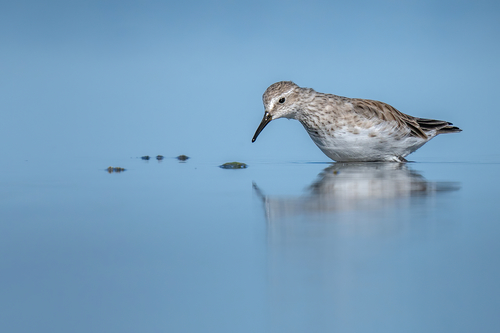 Correlimos Culiblanco
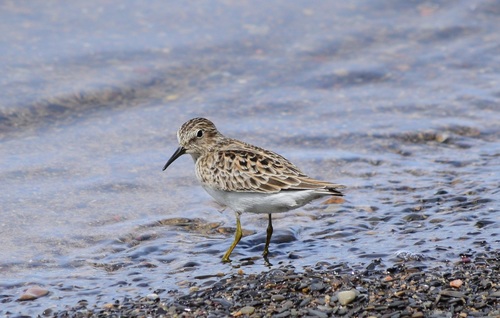 Correlimos Menudillo
En breve
La forma más confiable de separar el Correlimos Culiblanco del Correlimos Menudillo es al observar el audaz culillo blanco del Correlimos Culiblanco en vuelo, una característica que el Correlimos Menudillo nunca muestra. En el suelo, el Correlimos Culiblanco tiene alas más largas y patas más oscuras, mientras que el Correlimos Menudillo es más pequeño, con patas amarillentas y un pico más corto y delgado. Los juveniles de ambos pueden ser confusos, pero los juveniles de Correlimos Culiblanco muestran una distintiva 'V' blanca en la espalda y más contraste en las coberturas alares, mientras que los juveniles de Correlimos Menudillo son más brillantes en la parte superior con tonos rufos y franjas blancas en el manto. Ambas especies son pequeños 'peeps', pero el Correlimos Culiblanco es notablemente más grande y robusto. Prestar atención cuidadosa al color de las patas, la proyección de las alas y el patrón del culillo es clave, especialmente en bandadas mixtas.
Consejos de identificación
- Culillo blanco en vuelo: Solo el Correlimos Culiblanco muestra un culillo blanco brillante y coberturas de la cola superiores en vuelo. El Correlimos Menudillo tiene un culillo marrón simple. Esta es la marca de campo más confiable para todas las edades y estaciones.
- Color de las patas: El Correlimos Culiblanco tiene patas negras o muy oscuras; el Correlimos Menudillo tiene patas amarillo-verdosas. Esto es visible cuando los pájaros están de pie o caminando, pero cuidado con las patas manchadas de barro en el Correlimos Menudillo.
- Estructura del pico: El pico del Correlimos Culiblanco es de longitud media, delgado y oscuro; el pico del Correlimos Menudillo es más corto, más fino y también oscuro. La longitud del pico se juzga mejor en comparación directa.
- Proyección de las alas: El Correlimos Culiblanco tiene alas muy largas que se extienden más allá de la cola cuando está posado; las alas del Correlimos Menudillo son cortas y apenas alcanzan o solo tocan la punta de la cola. Esto es especialmente útil cuando los pájaros están descansando o acicalándose.
- Tamaño y apariencia: El Correlimos Culiblanco es notablemente más grande, con un cuerpo más largo y más robusto que el Correlimos Menudillo, que es el 'peep' más pequeño y parece compacto y de cuello corto.
- Partes superiores juveniles: El juvenil de Correlimos Culiblanco muestra una 'V' blanca en la espalda y más contraste en las coberturas alares, con bases negras y bordes marrones/blancos. El juvenil de Correlimos Menudillo es más brillante en la parte superior con tonos rufos y franjas blancas en el manto, careciendo de la 'V' blanca.
- Patrón del pecho: Ambos pueden mostrar pechos estriados, pero el Correlimos Culiblanco a menudo tiene estrías más finas y extensas en los flancos; las estrías del Correlimos Menudillo suelen estar limitadas a la parte superior del pecho.
- Supercilio (ceja): Ambos tienen un supercilio pálido, pero el del Correlimos Culiblanco suele ser más ancho y blanco, especialmente en invierno. El del Correlimos Menudillo es más delgado y menos contrastante.
- Cresta y cara: El Correlimos Culiblanco tiene una cresta y cara marrón en plumaje de cría, con una cara pálida; el Correlimos Menudillo tiene una cresta más oscura y una línea clara sobre el ojo.
- Longitud de las patas y postura: El Correlimos Culiblanco parece tener patas más largas y se mantiene más erguido; el Correlimos Menudillo está más cerca del suelo y a menudo se agacha.
- Contexto de hábitat: Si se ve en el sur de América del Sur en invierno, es casi seguro que es un Correlimos Culiblanco; el Correlimos Menudillo rara vez inverna tan al sur. En América del Norte, ambos pueden ocurrir juntos, así que confíe en las marcas estructurales y de plumaje.
- Composición de la bandada: El Correlimos Culiblanco a menudo se asocia con otras aves playeras de tamaño mediano; el Correlimos Menudillo es más probable que se encuentre en bandadas puras de 'peeps'.
- Plumaje invernal: Ambos se vuelven más grises en la parte superior, pero el Correlimos Culiblanco permanece más oscuro y contrastante, con un supercilio blanco y corona/línea ocular oscura. El Correlimos Menudillo es simplemente gris en la parte superior.
- Voz: No es diagnóstica según las notas proporcionadas.
- Trampas: El barro puede oscurecer el color de las patas en el Correlimos Menudillo. El juvenil de Correlimos Culiblanco puede parecer brillante en la parte superior, pero siempre verifique el culillo blanco en vuelo y las alas más largas en reposo.
Tamaño
Correlimos Culiblanco is significantly larger and heavier than Correlimos Menudillo. White-rumped averages about 42.75 g in mass and measures 15–18 cm in length with a 36–38 cm wingspan [wikidata, wikipedia], while Correlimos Menudillo is the smallest North American shorebird at 19–30 g, 13–15 cm long, and a 27–28 cm wingspan [wikidata, wikipedia]. In the field, White-rumped looks longer-bodied and longer-winged, while Least appears compact and dainty.
Plumaje
Juvenile and immature plumages are often the source of confusion:
- Juvenile Correlimos Culiblanco: Shows black-based feathers on the back and wing coverts, with brown edges toward the scapulars and whiter edges toward the wing coverts. The breast is finely streaked, and a white 'V' is visible on the back. Underparts and supercilium are white, crown is brownish, and face is pale. In flight, the white rump is obvious.
-
Juvenile Correlimos Menudillo: Brightly patterned above with rufous tones and white mantle stripes. The upperparts are more colorful and less streaked than White-rumped, lacking the white 'V' on the back. No white rump in flight.
-
Adult breeding White-rumped: Dull grey-brown above with a pale supercilium, streaked breast and flanks, and white underparts. Crown and face have a brownish tinge, and wing coverts have grey edges. Long wings extend beyond the tail. In flight, the white rump is diagnostic.
-
Adult breeding Least: Brown above with dark streaks, white below, light line above the eye, and dark crown. Legs are yellow-green, bill is short and thin. No white rump in flight.
-
Non-breeding (winter) plumages: Both become greyer above, but White-rumped remains darker overall with a white supercilium and dark crown/eyeline. Least is simply grey above with less contrast. Leg color remains a key difference (dark in White-rumped, yellowish in Least).
Comportamiento
Ambas especies forrajean en bancos de barro y terrenos húmedos, picoteando invertebrados. El Correlimos Culiblanco a menudo parece más deliberado y con patas más largas, a veces vadear más profundo que el Correlimos Menudillo. El Correlimos Menudillo tiende a moverse rápidamente y es más probable que se vea picoteando en el borde del agua o en barro más seco. En vuelo, las alas más largas y el culillo blanco del Correlimos Culiblanco son evidentes, mientras que el Correlimos Menudillo parece compacto y carece de cualquier blanco en el culillo.
Hábitat
Ambos crían en el norte de América del Norte, a menudo en tundra o áreas pantanosas cerca del agua. Durante la migración y en invierno, ambos utilizan bancos de barro, costas y praderas húmedas. El Correlimos Culiblanco es un migrante de larga distancia más extremo, invernando más al sur (Patagonia, sur de América del Sur), mientras que el Correlimos Menudillo inverna desde el sur de EE. UU. hasta el norte de América del Sur. En América del Norte, ambos pueden ocurrir juntos durante la migración, pero el Correlimos Culiblanco es generalmente más escaso y más probable que se encuentre en bandadas de otros 'peeps'.
Correlimos Culiblanco · Correlimos Menudillo · Mis aves difíciles