

Motmot

ハジロクロエリショウノガン 対 クロハラチュウノガン

Afrotis afraoides 対 Lissotis melanogaster

ハジロクロエリショウノガンとクロハラチュウノガンのクイズ
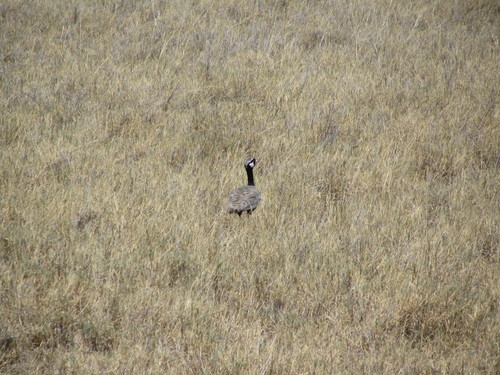
ハジロクロエリショウノガン (Afrotis afraoides) ハジロクロエリショウノガン
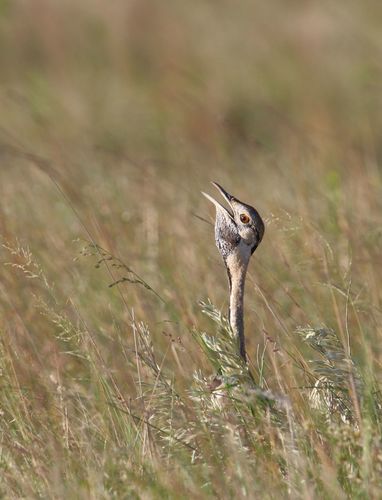
クロハラチュウノガン (Lissotis melanogaster) クロハラチュウノガン

メディア

読み込み中…

要点

この2種のショウノガンの間で最も信頼できるフィールドマークは、飛行中の一次羽の色です:ハジロクロエリショウノガン (Afrotis afraoides) は目を引く白い一次羽を示し、クロハラチュウノガン (Lissotis melanogaster) は白い上翼を持っていますが、黒い先端の飛行羽と翼の基部に茶色の三角形があります。両種のオスは黒い腹部を持っていますが、脚とくちばしの色、ならびに頭と首の模様がそれらを区別するのに役立ちます。メスはより難しいですが、脚の色と翼の模様は依然として有用です。翼の模様が隠れている場合は、生息地の文脈と脚の色に注意してください。

識別のコツ

  1. 飛行中の一次羽の色(全年齢): ハジロクロエリショウノガンは主に白い一次羽を示し、クリーンな白い翼のフラッシュを作ります。クロハラチュウノガンは白い上翼を持っていますが、基部に茶色の三角形と黒い先端の飛行羽があります—これらの暗いマークを探してハジロクロエリを除外してください。
  2. 脚の色(成鳥、止まっている時): ハジロクロエリショウノガンは明るい黄色の脚を持ち、クロハラチュウノガンの脚は鈍い黄色です。これは、鳥が歩いたり立っているときにしばしば見られます。
  3. くちばしの色(成鳥): ハジロクロエリショウノガンは赤いくちばしを持ち、クロハラチュウノガンの鈍い黄色のくちばしと対照的です。くちばしの色は遠くからは微妙ですが、近距離では診断的です。
  4. オスの頭と首の模様: ハジロクロエリショウノガンのオスは固体の黒い頭と首を持ち、クロハラチュウノガンのオスは前面に細い黒い線がある茶色の首、白い顎とロア、そして大胆な模様の頭(黒、白、茶色)を持っています。コントラストは良い光の中で特に明確です。
  5. メスの上面: メスのハジロクロエリショウノガンは、頭、首、胸、上面に黒と茶色の縞模様またはチェック模様があり、黒い腹部を持っています。メスのクロハラチュウノガンは、より単純な茶色で、暗い茶色の斑点と首と胸に細かい波状の模様があり、腹部はそれほど明確に黒くありません。
  6. 幼鳥のマーク: 幼鳥のクロハラチュウノガンは鈍く、暗く、暗い灰色の冠と翼に茶色の斑点を持っています。幼鳥のハジロクロエリショウノガンは詳細には記述されていませんが、飛行中には白い一次羽のパネルがまだ見えるはずです。
  7. 飛行中の上翼(成鳥と未熟鳥): ハジロクロエリショウノガンの上翼は主に白いですが、クロハラチュウノガンの上翼は基部に茶色の三角形と黒い先端があります。これは、鳥が飛び立つときの重要なマークです。
  8. 腹部(オス): 両方とも黒い腹部を持っていますが、ハジロクロエリショウノガンの黒は頭と首にまで及び、クロハラチュウノガンの黒は腹部と胸に制限され、茶色の首があります。
  9. 尾の模様: クロハラチュウノガンは、尾が扇状になったときに見えるかもしれない4または5本の狭い暗い茶色の帯を持つ茶色と茶色の尾を持っています。ハジロクロエリショウノガンの尾の模様は特に特徴的ではないとされています。
  10. 構造とジズ: クロハラチュウノガンは、特に警戒しているときに、長い首と細身に見えます。ハジロクロエリショウノガンは、特に立っているときに、よりコンパクトで直立しています。
  11. 生息地の文脈: 高い草の中や大雨の後に見られた場合、クロハラチュウノガンの可能性が高いです。開けた乾燥した草原や低木の中では、ハジロクロエリショウノガンの可能性が高いです。
  12. 性差: 両種とも性差を示しますが、オスの頭と首の模様は強力な区別要因です。メスはより難しいですが、縞模様(ハジロクロエリ)対斑点/波状模様(クロハラチュウノガン)が役立ちます。
  13. マークが失敗したとき: 遠距離または悪い光の中では、飛行中の翼の模様と止まっているときの脚の色に頼ってください。両方が隠れている場合は、生息地とジズが手がかりを提供するかもしれませんが、範囲の重複に注意してください。
  14. 落とし穴: 両種とも翼に白を示すことがありますが、ハジロクロエリショウノガンだけが暗い先端や三角形のないクリーンな白い一次羽を持っています。オスの腹部の色だけに頼らないでください、両方とも黒い腹部に見えることがあります。
  15. 診断的ではない: 声は情報源での区別要因として記述されていないため、現在の情報に基づいてフィールドでの区別に音声を使用しないでください。

大きさ

クロハラチュウノガンは2種の中で大きく、長さは58〜65 cmです。一方、ハジロクロエリショウノガンのサイズは情報源では指定されていませんが、一般的に小さく、ジズではよりコンパクトです。両方とも中型のショウノガンですが、クロハラチュウノガンは特に警戒しているときに長い首と細身に見えます。くちばしと脚の比率は似ていますが、色が異なります:ハジロクロエリショウノガンは明るい黄色の脚と赤いくちばしを持ち、クロハラチュウノガンは鈍い黄色の脚とくちばしを持っています。

羽色

行動

両種とも地上に生息し、開けた国を好み、しばしば意図的な歩き方をします。クロハラチュウノガンはより秘密主義的であり、大雨の後にのみ見られることが多く、高い草や耕作された畑の中にいることがあります。ハジロクロエリショウノガンは、開けた草原や低木の中で見られる可能性が高く、しばしばより直立して明るい脚の色を示します。両方とも reluctant に飛び立ちますが、ハジロクロエリショウノガンは飛行中によりコンパクトで、より細長く見えることがあります。

生息環境

ハジロクロエリショウノガンは南アフリカ全体の開けた草原と低木に広く分布しています。クロハラチュウノガンはサバンナ、高い開けた草原、耕作された畑を好み、しばしば降雨量が多い地域に生息し、大雨の後にのみ存在することがあります。彼らの範囲は南アフリカ、ジンバブエ、ボツワナの一部で重なっていますが、クロハラチュウノガンはより湿った生息地に結びついており、ハジロクロエリショウノガンが一般的な乾燥した草原からは欠けることがあります。

より良い説明を送る

比較と同じ項目を使ってください。文章はすぐに公開されます。

The most reliable field mark between these two bustards is the color of the primary feathers in flight: White-quilled Bustard (Afrotis afraoides) shows strikingly white primaries, while Black-bellied Bustard (Lissotis melanogaster) has white upperwings but with black-tipped flight feathers and a brown triangle at the wing base. Both species have black underparts in males, but leg and bill color, as well as head and neck pattern, help separate them. Females are trickier, but leg color and wing pattern remain useful. Watch for habitat context and leg color if the wing pattern is obscured.

  1. Primary feather color in flight (all ages): White-quilled Bustard shows mostly white primaries, creating a clean white wing flash. Black-bellied Bustard has white upperwings but with a brown triangle at the base and black tips to the flight feathers—look for these darker marks to rule out White-quilled.
  2. Leg color (adults, perched): White-quilled Bustard has bright yellow legs, while Black-bellied Bustard's legs are dull yellow. This is often visible when birds are walking or standing.
  3. Bill color (adults): White-quilled Bustard has a red bill, contrasting with the dull yellow bill of Black-bellied Bustard. Bill color can be subtle at distance but is diagnostic at close range.
  4. Male head and neck pattern: White-quilled Bustard males have a solid black head and neck, while Black-bellied Bustard males have a buffy brown neck with a thin black line down the front, a white chin and lores, and a boldly patterned head (black, white, buff). The contrast is especially clear in good light.
  5. Female upperparts: Female White-quilled Bustard is barred or chequered black and buff on the head, neck, breast, and upperparts, with a black belly. Female Black-bellied Bustard is plainer buff with dark brown mottling and fine wavy vermiculations on neck and breast, lacking the bold barring of White-quilled.
  6. Juvenile marks: Juvenile Black-bellied Bustard is duller and darker, with a dark grey crown and buff spots on the wing. Juvenile White-quilled Bustard is not described in detail, but the white primary panel should still be present in flight.
  7. Upperwing in flight (adults and immatures): White-quilled Bustard's upperwing is mostly white, while Black-bellied Bustard's has a brown triangle at the base and black tips. This is a key mark when birds flush.
  8. Underparts (males): Both have black underparts, but White-quilled Bustard's black extends to the head and neck, while Black-bellied Bustard's black is restricted to the belly and breast, with a buffy brown neck.
  9. Tail pattern: Black-bellied Bustard has a brown and buff tail with four or five narrow dark brown bands, which may be visible when the tail is fanned. White-quilled Bustard's tail pattern is not described as distinctive.
  10. Structure and jizz: Black-bellied Bustard appears longer-necked and lankier, especially when alert. White-quilled Bustard is more compact and upright, especially when standing.
  11. Habitat context: If seen in tall grass or after heavy rain, Black-bellied Bustard is more likely. In open, drier grassland and scrub, White-quilled Bustard is more likely.
  12. Sex differences: Both species show sexual dimorphism, but the head and neck pattern in males is a strong separator. Females are trickier, but barring (White-quilled) vs. mottling/vermiculations (Black-bellied) helps.
  13. When marks fail: At long range or in poor light, rely on wing pattern in flight and leg color when perched. If both are obscured, habitat and jizz may offer clues, but beware overlap in range.
  14. Pitfalls: Both species can show white on the wing, but only White-quilled Bustard has clean white primaries without dark tips or triangles. Do not rely solely on underpart color in males, as both can appear black-bellied.
  15. Not diagnostic: Voice is not described as a separator in the sources; do not use vocalizations for field separation based on current information.

Black-bellied Bustard is the larger of the two, measuring 58–65 cm in length, while the size of White-quilled Bustard is not specified in the sources but is generally smaller and more compact in jizz. Both are medium-sized bustards, but Black-bellied appears longer-necked and lankier, especially when alert. Bill and leg proportions are similar, but the color differs: White-quilled Bustard has bright yellow legs and a red bill, while Black-bellied Bustard has dull yellow legs and bill.

  • In flight (all ages): White-quilled Bustard shows mostly white primaries, giving a bold white flash on the wing. Black-bellied Bustard's upperwing is also white but with a brown triangle at the base and black tips to the flight feathers, so the white is less clean and more patterned.
  • Adult males: Both have black underparts, but White-quilled Bustard males are black on head, neck, and underparts, with black-and-white barring on back and wings. Black-bellied Bustard males have a buffy brown neck with a thin black line, a boldly marked head (black, white, buff), and a white chin and lores; their upperparts are tawny buff with black and brown marks.
  • Adult females: White-quilled Bustard females are barred or chequered black and buff on head, neck, breast, and upperparts, with a black belly. Black-bellied Bustard females are plainer buff with dark brown mottling and fine wavy vermiculations on neck and breast; their underparts are not as distinctly black.
  • Juveniles: Black-bellied Bustard juveniles are duller and darker, with a dark grey crown and buff spots on the wing. White-quilled Bustard juvenile plumage is not described, but the white primary panel should still be visible in flight.

Both species are ground-dwelling and favor open country, often walking with a deliberate gait. Black-bellied Bustard tends to be more secretive and is often seen only after heavy rains, sometimes in taller grass or cultivated fields. White-quilled Bustard is more likely to be seen in open grassland and scrub, often standing more upright and showing its bright leg color. Both flush reluctantly, but the White-quilled Bustard may appear more compact and less elongated in flight.

White-quilled Bustard is widespread in open grassland and scrub across Southern Africa. Black-bellied Bustard prefers savanna, tall open grassland, and cultivated fields, often in areas with higher rainfall and sometimes only present after heavy rain. Their ranges overlap in parts of Southern Africa, Zimbabwe, and Botswana, but Black-bellied Bustard is more tied to wetter habitats and can be absent from drier grasslands where White-quilled Bustard is common.

変更を破棄しますか?

保存していない編集があります。今離れると失われます。

ハジロクロエリショウノガン · クロハラチュウノガン · 苦手な鳥