

Motmot

ムナジロモリミソサザイ 対 ハイムネモリミソサザイ

Henicorhina leucosticta 対 Henicorhina leucophrys

ムナジロモリミソサザイとハイムネモリミソサザイのクイズ
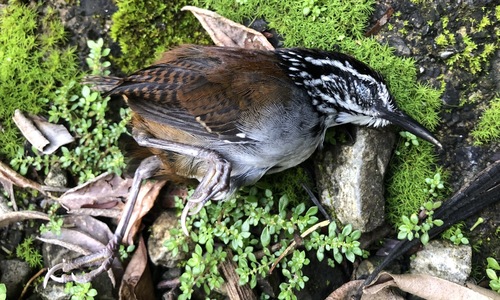
ムナジロモリミソサザイ (Henicorhina leucosticta) ムナジロモリミソサザイ
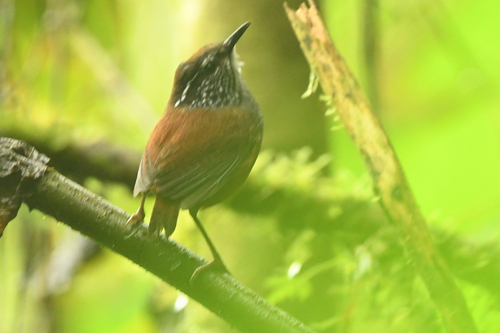
ハイムネモリミソサザイ (Henicorhina leucophrys) ハイムネモリミソサザイ

メディア

読み込み中…

要点

ホワイトブレストモリミソサザイとグレーブレストモリミソサザイを区別するための最も信頼できるフィールドマークは、腹部の色と範囲です:ホワイトブレストは鮮明な白い腹部を示し(下腹部はバフ色になる)、グレーブレストは均一に灰色の胸と腹部を持ち、あごと喉だけが淡い色です。両者は小さく、尾が短いミソサザイで、構造が似ており、範囲が重なっていますので、頭の模様と腹部の色に注意を払うことが重要です。両者の幼鳥は鈍い色合いですが、腹部のコントラストは依然として有用です。止まっている時や一瞬の視界では、スーペリキウムと胸と腹の色に焦点を当ててください。両種は似たような生息地に見られるため、視覚的な手がかりが自信を持った同定には重要です。

識別のコツ

  1. 腹部の色は最も良いフィールドマークです: ホワイトブレストモリミソサザイは鮮明な白い腹部を持ち(下腹部はバフ色に変わる)、グレーブレストモリミソサザイは胸から腹部まで灰色で、あごと喉だけが淡い色です。これは成鳥に有効で、幼鳥にもまだ役立ちますが、両者は若い時は鈍い色合いです。
  2. 頭の模様の違い: グレーブレストは長い灰白色のスーペリキウム、目の後ろに広い黒いストライプ、淡い灰色のストリークが入った黒い頬を持ち、より対照的で「マスクされた」外観を与えます。ホワイトブレストは淡いスーペリキウムと頭と首の側面に黒と白のストリーキングがありますが、効果はより微妙です。
  3. 上面の色合い: 両種は栗色の上面と縞模様の尾を持っていますが、グレーブレストの冠は鈍い黒で暗い茶色の先端を持ち、後頭部と肩は暗いオリーブ色で、ホワイトブレストのより均一な栗色の上面よりもわずかに対照的なマントルから背中への移行を作り出します。
  4. 尾と翼の縞模様: 両者は翼に黒い縞模様と非常に短い尾を示しますので、これは区別にはなりません。飛行中、どちらも独特の翼のパネルや後縁を示さないので、腹部の色に焦点を当ててください。
  5. 幼鳥の混乱: 幼鳥のホワイトブレストモリミソサザイは灰色の腹部を持ち、グレーブレストに似る可能性がありますが、後者の灰色はより広範で均一であり、ホワイトブレストの幼鳥は下腹部に白またはバフのヒントを示すことがあります。常に腹部の最も明るい部分を確認してください。
  6. スーペリキウムの長さと明瞭さ: グレーブレストのスーペリキウムは長く、より明確に定義されており、目の後ろまでよく伸びることが多いですが、ホワイトブレストのものは淡く、あまり広がりません。
  7. 顔のストリーキング: 頭と首の側面の黒と白のストリーキングはホワイトブレストでより目立ちますが、グレーブレストの黒い頬に淡い灰色のストリークが入っていると「マスクされた」ように見えることがあります。
  8. 行動の文脈: 軍隊アリの群れを追いかけるミソサザイを見た場合、グレーブレストの可能性が高いですが、独占的ではありません。両種は低い位置で採餌し、短い尾を振りながら素早く動きます。
  9. 生息地の重複: 生息地だけに頼らないでください;両種は重複する範囲内の類似の森林タイプと標高に生息します。
  10. サイズと構造: 両者はサイズと形状がほぼ同じです;全体のサイズや尾の長さを区別の基準にしないでください。
  11. 季節的および性別の違い: どちらの種にも強い季節的または性別に基づく羽毛の違いは見られません;主な違いは年齢クラス(成鳥と幼鳥)間にあります。
  12. 薄暗い光の中での落とし穴: 影のある下層では、ホワイトブレストの白い腹部が鈍く見えることがあり、グレーブレストの灰色が淡く見えることがあります。常に腹部と胸の明確で明るい視界を得るようにしてください。
  13. 混合群れ: 両者は混合種の群れに参加することがあるため、群れの構成に基づいて一つの種だけが存在すると仮定しないでください。
  14. 範囲の重複: 両者はメキシコから中央アメリカ、南アメリカにかけて生息しています;重複ゾーンでの同定には範囲だけを使用しないでください。
  15. 要約のヒント: 疑わしい場合は、腹部の色と頭の模様を優先してください—これらはすべての年齢と季節にわたって最も一貫して信頼できるフィールドマークです。

大きさ

両種はサイズと質量が非常に似ており、ホワイトブレストモリミソサザイは平均約10 cmの長さと16 gの重さを持ち、グレーブレストモリミソサザイは10 cmから11.5 cm、13.5 gから17.7 gの範囲です。フィールドでは、サイズはこれら二つの間の信頼できる区別にはなりません;両者は小さく、コンパクトなミソサザイで、短い尾と丸い体を持っています。認識される違いは、姿勢や視角によるものであり、真のサイズではありません。

羽色

両種の幼鳥と未成熟の鳥は成鳥よりも鈍い色合いですが、重要な違いは腹部にあります:幼鳥のホワイトブレストモリミソサザイは灰色の腹部を持ち、成鳥は下部が白(下腹部はバフ色になる)です。グレーブレストモリミソサザイは、成鳥であっても全体が灰色の腹部を持ち、あごと喉だけが淡い色です。すべての年齢において、腹部の白の広がりと純度を確認してください—ホワイトブレストは下部がはるかにクリーンで明るいです。両種は栗色の上面と黒い縞模様の尾を持っていますが、グレーブレストは長い灰白色のスーペリキウム、広い黒い後眼帯、淡い灰色のストリークが入った黒い頬を持ち、より複雑な頭の模様を示します。ホワイトブレストは淡いスーペリキウムと頭と首の側面に黒と白のストリーキングがありますが、効果はグレーブレストよりも控えめです。飛行中、両者は縞模様の翼と尾を示しますが、区別するための独特の翼のパネルや後縁のマークはありません。両者の幼鳥は鈍い色合いですが、腹部の色のコントラストは依然として適用されます。

行動

両種は低い位置で密な植生の中で採餌し、しばしば地面の近くにいます。グレーブレストモリミソサザイは、一部の地域で軍隊アリの群れを追いかけることで知られ、時には小さな群れで見られますが、ホワイトブレストはより頻繁に単独またはペアで見られます。両者は秘密主義で素早く動き、しばしば短い尾を振ります。行動だけでは強い区別にはなりませんが、アリの群れを追いかけている鳥を観察した場合、グレーブレストの可能性が高いです(ただし独占的ではありません)。

生息環境

生息地の重複は重要です:両種はメキシコから中央アメリカ、南アメリカにかけての湿った森林に生息しています。地域の豊富さは異なる場合がありますが、両者は水の近くや密な茂みの中の類似の下層生息地で見られることが多いです。生息地はこれら二種を区別するための信頼できるフィールドマークではありません。

より良い説明を送る

比較と同じ項目を使ってください。文章はすぐに公開されます。

The most reliable field mark for separating White-breasted and Grey-breasted Wood-Wrens is the color and extent of the underparts: White-breasted shows crisp white underparts (becoming buff on the lower belly), while Grey-breasted has a uniformly gray breast and belly with only the chin and throat paler. Both are small, short-tailed wrens with similar structure and overlapping ranges, so careful attention to head pattern and underpart color is key. Juveniles of both are duller, but the underpart contrast remains useful. In perched or fleeting views, focus on the supercilium and the color of the chest and belly. Both species can be found in similar habitats, so visual cues are crucial for confident identification.

  1. Underpart color is the single best field mark: White-breasted Wood-Wren has crisp white underparts (turning buff on the lower belly), while Grey-breasted Wood-Wren is gray from breast through belly, with only the chin and throat paler. This works for adults and is still helpful in juveniles, though both are duller when young.
  2. Head pattern differences: Grey-breasted has a long, gray-white supercilium, a wide black stripe behind the eye, and black cheeks streaked with pale gray, giving a more contrasting and 'masked' look. White-breasted has a pale supercilium and black-and-white streaking on the sides of the head and neck, but the effect is subtler.
  3. Upperpart coloration: Both species have chestnut brown upperparts and barred tails, but Grey-breasted's crown is dull black with dark brown tips, and its nape and shoulders are dark olive brown, creating a slightly more contrasting mantle-to-back transition than White-breasted's more uniformly chestnut upperparts.
  4. Tail and wing barring: Both show black barring on the wings and very short tail, so this is not a separator. In flight, neither shows unique wing panels or trailing edges, so focus on underpart color if you glimpse the belly or undertail.
  5. Juvenile confusion: Juvenile White-breasted Wood-Wren has gray underparts, potentially resembling Grey-breasted, but the latter's gray is more extensive and uniform, while White-breasted juveniles may still show a hint of white or buff on the lower belly. Always check for the brightest area on the underparts.
  6. Supercilium length and boldness: Grey-breasted's supercilium is longer and more sharply defined, often extending well behind the eye, while White-breasted's is paler and less extensive.
  7. Facial streaking: The black-and-white streaking on the sides of the head and neck is more prominent in White-breasted, but Grey-breasted's black cheeks with pale gray streaks can look more 'masked.'
  8. Behavioral context: If you see a wood-wren following an army ant swarm, Grey-breasted is more likely, but not exclusive. Both species forage low and move quickly with short tail flicks.
  9. Habitat overlap: Do not rely on habitat alone; both species occur in similar forest types and elevations within their overlapping ranges.
  10. Size and structure: Both are nearly identical in size and shape; do not use overall size or tail length as a separator.
  11. Seasonal and sex differences: No strong seasonal or sex-based plumage differences are noted for either species; the main differences are between age classes (adult vs. juvenile).
  12. Pitfalls in poor light: In shadowy understory, the white underparts of White-breasted can appear duller, and the gray of Grey-breasted can look paler. Always try to get a clear, well-lit view of the belly and chest.
  13. Mixed flocks: Both may join mixed-species flocks, so do not assume only one species is present based on flock composition.
  14. Range overlap: Both occur from Mexico through Central America and into South America; do not use range alone for identification in overlap zones.
  15. Summary tip: When in doubt, prioritize underpart color and head pattern—these are the most consistently reliable field marks across all ages and seasons.

Both species are very similar in size and mass, with White-breasted Wood-Wren averaging about 10 cm in length and 16 g in weight, and Grey-breasted Wood-Wren ranging from 10 to 11.5 cm and 13.5 to 17.7 g. In the field, size is not a reliable separator between these two; both appear as small, compact wrens with short tails and rounded bodies. Any perceived difference is likely due to posture or viewing angle rather than true size.

Juvenile and immature birds of both species are duller than adults, but the key difference is in the underparts: juvenile White-breasted Wood-Wrens have gray underparts, while adults are white below (becoming buff on the lower belly). Grey-breasted Wood-Wren, even as an adult, has gray underparts throughout, with only the chin and throat paler. For all ages, check the extent and purity of white on the underparts—White-breasted is much cleaner and brighter below. Both species have chestnut brown upperparts and black-barred tails, but Grey-breasted shows a more complex head pattern with a long gray-white supercilium, a wide black post-ocular stripe, and black cheeks streaked with pale gray. White-breasted has a pale supercilium and black-and-white streaked sides of the head and neck, but the effect is less bold than in Grey-breasted. In flight, both show barred wings and tails, but there are no unique wing panel or trailing edge marks to separate them. Juveniles of both are duller, but the underpart color contrast still applies.

Both species forage low in dense vegetation, often near the ground. Grey-breasted Wood-Wren is noted for following army ant swarms in some regions, sometimes in small groups, while White-breasted is more often seen singly or in pairs. Both are secretive and quick-moving, often flicking their short tails. Behavior alone is not a strong separator, but if you observe a bird closely following ant swarms, Grey-breasted is more likely (though not exclusive).

Habitat overlap is significant: both species occur in humid forests from Mexico through Central America and into South America. Local abundance may vary, but both can be found in similar understory habitats, often near water or in dense thickets. Habitat is not a reliable field mark for separating these two species.

変更を破棄しますか?

保存していない編集があります。今離れると失われます。

ムナジロモリミソサザイ · ハイムネモリミソサザイ · 苦手な鳥