

Motmot

コビトミソサザイ 対 ムナジロモリミソサザイ

Uropsila leucogastra 対 Henicorhina leucosticta

コビトミソサザイとムナジロモリミソサザイのクイズ
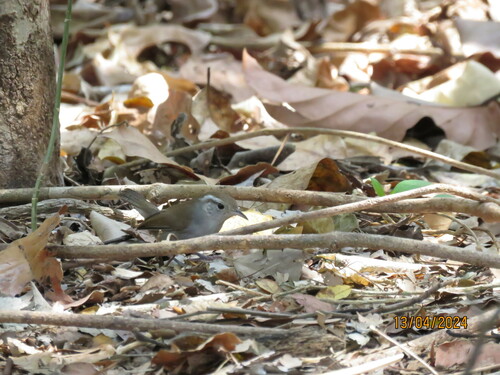
コビトミソサザイ (Uropsila leucogastra) コビトミソサザイ
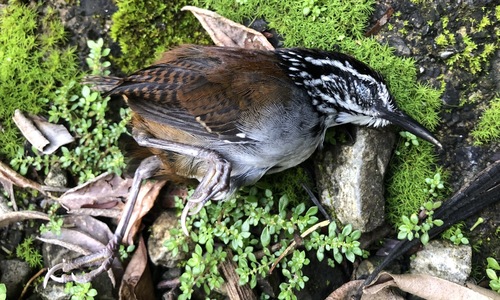
ムナジロモリミソサザイ (Henicorhina leucosticta) ムナジロモリミソサザイ

メディア

読み込み中…

要点

ホワイトベリードレンとホワイトブレストウッドレンを区別する最も信頼できるフィールドマークは、頭部と下部のパターンです:ホワイトブレストウッドレンは頭部と首の側面に大胆な黒と白のストライプを示し、下部は明るい白で、リッチな栗色の上部と鋭く対比しています。一方、ホワイトベリードレンは、グレーと白のスーパシリウム、まだらなグレーの頬、グレーからバフィーの腹を持つ、よりシンプルな顔をしています。サイズも役立ちます:ホワイトブレストウッドレンは明らかに重くてずんぐりしています。止まっているか採餌している鳥では、ウッドレンの短い尾と白い胸と栗色の背中との強い対比を探し、ホワイトベリードレンのより均一な茶色の上部とあまり明確でない腹の境界と比較します。両種ともに縞模様の尾を持っていますが、ウッドレンの尾は短く、翼と尾はより強く縞模様が入っています。

識別のコツ

  1. Head pattern: ホワイトブレストウッドレンは常に頭部と首の側面に大胆な黒と白のストライプを示し、強い淡いスーパシリウムと暗い冠を持っています。ホワイトベリードレンはグレーと白のスーパシリウムを持っていますが、大胆なストライプはなく、グレーの頬は茶色でまだらになり、中程度の茶色の冠を持っています。これはすべての年齢で最も信頼できるフィールドマークです。
  2. Underpart contrast: ウッドレンの下部は明るい白で、栗色の上部との鋭い移行がありますが、ホワイトベリードレンの下部は喉/胸がグレーがかり、脇腹と肛門がバフィーで、茶色の上部との境界があまり明確ではありません。
  3. Tail length and barring: ホワイトブレストウッドレンは非常に短い尾を持ち、黒で強く縞模様が入っており、しばしば傾いています。ホワイトベリードレンの尾は長く、多くの細い暗い縞模様があり、あまり強くマークされておらず、短くもありません。
  4. Body size and shape: ウッドレンはホワイトベリードレンのほぼ2倍の重さで、はるかに頑丈でコンパクトに見え、体が丸く、尾が短いです。ホワイトベリードレンはスリムで長い尾を持っているように見えます。
  5. Wing pattern in flight: どちらの種にも特徴的な上翼パネルや飛行マークは記載されていないため、尾の長さと縞模様、飛行中の全体的な印象に焦点を当ててください。
  6. Juvenile confusion: 若いウッドレンは下部が鈍く、グレーがかりで、ホワイトベリードレンに似ることがありますが、頭のストライプは通常まだ見えますが、あまり鮮明ではありません。ホワイトベリードレンの幼鳥は詳細には記載されていませんが、ウッドレンの頭のパターンを示すことは期待されていません。
  7. Plumage pitfalls: 両種ともに何らかの形のスーパシリウムと縞模様の尾を持っていますが、ウッドレンだけが大胆な頭のストライプと鋭い白の下部を持っています。スーパシリウムだけに頼らないでください。
  8. Habitat context: メキシコの乾燥した開放的な森林やブロメリアの茂みでは、ホワイトベリードレンを疑ってください。中央アメリカや南アメリカ全体の湿った密な森林や森林の端では、ホワイトブレストウッドレンの方が可能性が高いです。
  9. Behavior: ウッドレンはより秘密主義で、しばしばペアや家族グループで、素早く、ぎこちない跳び方をし、尾を傾けて移動します。ホワイトベリードレンはさまざまな高さで採餌する可能性が高く、混合フロックに参加することがあります。
  10. Voice: 短く、急速で、泡立つような音の連続が最後に下降するのを聞いた場合、それはホワイトベリードレンかもしれませんが、地元のレパートリーを知らない限り、声を唯一の区別要因として使用しないでください。
  11. Geographic range: ホワイトベリードレンの範囲外にいる場合(例:南アメリカ)、ほぼ確実にホワイトブレストウッドレンを見ていることになります。メキシコの西部または北東部では、ホワイトベリードレンを確認してください。
  12. Sex and season: 両種において重要な性的または季節的な羽毛の違いは記載されていないため、年間を通じて構造的および頭部/下部のパターンマークを使用してください。
  13. Mixed flocks: ホワイトベリードレンは、特にその範囲の南部で、アリの群れと混合種の群れに参加することがあります。ウッドレンはそうする可能性が低いです。
  14. Nest and breeding context: 化学フラスコのような形をした巣(漏斗の入り口を持つ楕円形のボール)をトゲのあるブロメリアやアカシアで見つけた場合、それはホワイトベリードレンのものである可能性が高いですが、これはフィールドで診断的であることは稀です。
  15. When in doubt: すべての季節と年齢で最も信頼できる区別をするために、頭のパターン(ストライプの有無)、下部のコントラスト、尾の長さ/形状に焦点を当ててください。

大きさ

ホワイトブレストウッドレンは明らかに大きくて重いです:約10 cmの長さと16 gで、ホワイトベリードレンの9.5–10 cmと8–10.5 gと比較されます [wikipedia][avonet]。これにより、ウッドレンはほぼ2倍の重さになり、フィールドでより頑丈でずんぐりした外観を与えます。この違いは、並んで見たときや体と頭の相対的なボリュームを判断するときに特に明らかです。ウッドレンの短い尾は、その丸くコンパクトな外観をさらに強調し、ホワイトベリードレンはスリムで長い尾を持っているように見えます。

羽色

行動

両種ともに密な植生で採餌しますが、ホワイトベリードレンは低い茂みや地面近くで見られる可能性が高く、時にはアリの群れに従って混合種の群れに参加することがあります。ホワイトブレストウッドレンは通常、ペアや家族グループで見られ、密な下草の中で隠れていることが多く、混合群れに参加する可能性は低いです。ウッドレンの短い尾はしばしば傾いており、素早くぎこちない跳び方をする傾向がありますが、ホワイトベリードレンはより活発で秘密主義が少ないように見えることがあります。両方とも見られるよりも聞かれることが多いです。

生息環境

ホワイトベリードレンはメキシコ、ベリーズ、グアテマラ、ホンジュラスに点在する範囲を持ち、半乾燥森林から湿った熱帯雨林までさまざまな森林タイプを占有し、特にメキシコ北東部の野生パイナップル(ブロメリア)の茂みと関連しています。ホワイトブレストウッドレンははるかに広範囲に分布し、中央メキシコから南にペルー北東部やスリナムまで広がり、特に水の近くや密な下草の中で低地や丘陵の森林に見られます。西部または北東メキシコの乾燥した開放的な森林やブロメリアの茂みにいる場合、ホワイトベリードレンの可能性が高いです。中央アメリカ全体や南アメリカに湿った密な森林がある場合、ホワイトブレストウッドレンがデフォルトです。

声

ホワイトベリードレンの歌は、6つの急速な上下の音の短い連続で、最後に下降し、その範囲の東部では泡立つように説明されています。呼び声には低い「チェック」、叱責のようなおしゃべり、硬く乾いたパリパリとした音が含まれます。ホワイトブレストウッドレンの歌と呼び声は提供されたメモには記載されていないため、現在の情報に基づいて声は信頼できる区別要因ではありません。泡立つような下降する音の連続を聞いた場合、ホワイトベリードレンを考慮してくださいが、区別のために声だけに頼らないでください。

より良い説明を送る

比較と同じ項目を使ってください。文章はすぐに公開されます。

The most reliable field mark to separate White-bellied Wren from White-breasted Wood-Wren is the head and underpart pattern: White-breasted Wood-Wren shows bold black-and-white streaking on the sides of the head and neck, and its underparts are bright white sharply contrasting with rich chestnut upperparts, while White-bellied Wren has a plainer face with a gray-white supercilium, mottled gray cheeks, and a grayish to buffy belly. Size is also helpful: White-breasted Wood-Wren is noticeably heavier and chunkier. In perched or foraging birds, look for the Wood-Wren’s short tail and strong contrast between white breast and chestnut back, versus the White-bellied Wren’s more uniform brown upperparts and less crisp belly demarcation. Both species have barred tails, but the Wood-Wren’s tail is shorter and its wings and tail are more strongly barred.

  1. Head pattern: White-breasted Wood-Wren always shows bold black-and-white streaking on the sides of the head and neck, a strong pale supercilium, and a darker crown. White-bellied Wren has a gray-white supercilium but lacks bold streaking, with gray cheeks mottled brown and a medium brown crown. This is the most reliable field mark at all ages.
  2. Underpart contrast: The Wood-Wren’s underparts are bright white with a sharp transition to chestnut upperparts, while White-bellied Wren’s underparts are grayish on the throat/chest and buffy on the flanks and vent, with a less distinct boundary from the brown upperparts.
  3. Tail length and barring: White-breasted Wood-Wren has a very short tail, strongly barred with black, often held cocked. White-bellied Wren’s tail is longer, with many thin dark bars, and is not as strongly marked or as short.
  4. Body size and shape: The Wood-Wren is nearly twice as heavy as White-bellied Wren and looks much more robust and compact, with a rounder body and shorter tail. White-bellied Wren appears slimmer and longer-tailed.
  5. Wing pattern in flight: No distinctive upperwing panels or flight marks are described for either species, so focus on tail length and barring, and overall jizz in flight.
  6. Juvenile confusion: Young Wood-Wrens are duller and grayer below, which can resemble White-bellied Wren, but the head streaking is usually still visible, though less crisp. White-bellied Wren immatures are not described in detail, but are not expected to show the Wood-Wren’s head pattern.
  7. Plumage pitfalls: Both species have some form of supercilium and barred tail, but only the Wood-Wren has the bold head streaking and sharp white underparts. Do not rely on supercilium alone.
  8. Habitat context: In dry, open woodland or Bromelia thickets in Mexico, suspect White-bellied Wren. In humid, dense forest or forest edge throughout Central and South America, White-breasted Wood-Wren is more likely.
  9. Behavior: Wood-Wren is more secretive, often in pairs or family groups, and moves with quick, jerky hops and a cocked tail. White-bellied Wren is more likely to forage at a range of heights and may join mixed flocks.
  10. Voice: If you hear a short, rapid, bubbly series of notes descending at the end, it may be White-bellied Wren, but do not use voice as the sole separator unless you know the local repertoire.
  11. Geographic range: If you are outside the range of White-bellied Wren (e.g., South America), you are almost certainly seeing White-breasted Wood-Wren. In western or northeastern Mexico, check for White-bellied Wren.
  12. Sex and season: No significant sexual or seasonal plumage differences are described for either species, so use structural and head/underpart pattern marks year-round.
  13. Mixed flocks: White-bellied Wren may join mixed-species flocks with army ants, especially in the south of its range. Wood-Wren is less likely to do so.
  14. Nest and breeding context: If you find a nest shaped like a chemical retort (oval ball with a funnel entrance) in a spiny Bromelia or Acacia, it likely belongs to White-bellied Wren, but this is rarely diagnostic in the field.
  15. When in doubt: Focus on the head pattern (streaked vs. plain), underpart contrast, and tail length/shape for the most reliable separation in all seasons and ages.

White-breasted Wood-Wren is distinctly larger and heavier: about 10 cm long and 16 g, compared to White-bellied Wren’s 9.5–10 cm and 8–10.5 g [wikipedia][avonet]. This makes the Wood-Wren nearly twice as heavy, giving it a more robust, chunky appearance in the field. The difference is especially apparent when seen side-by-side or when judging the relative bulk of the body and head. The Wood-Wren’s short tail further emphasizes its round, compact look, while White-bellied Wren appears slimmer and longer-tailed.

  • Juvenile/immature birds: Young White-breasted Wood-Wrens have duller upperparts and grayish underparts, which can reduce the contrast with White-bellied Wren, but the Wood-Wren still shows black-and-white streaking on the sides of the head and neck (albeit less crisply). White-bellied Wren immatures are not described in detail, but adults and likely immatures lack the bold head streaking of Wood-Wren.
  • Adults: White-breasted Wood-Wren has chestnut brown upperparts with a darker crown, bold pale supercilia, and black-and-white streaked sides of the head and neck. Its underparts are bright white, becoming buff on the lower belly, with strong contrast to the upperparts. Wings and very short tail are barred with black. White-bellied Wren is medium brown above with a slightly reddish rump, gray-white supercilium, gray cheeks mottled with brown, and a gray throat, chest, and upper belly, with buff flanks and vent. Its tail is longer and finely barred, but the overall look is plainer, lacking the Wood-Wren’s sharp contrasts and head streaking.
  • Wing/tail pattern in flight: Both species have barred tails, but the Wood-Wren’s tail is much shorter and more strongly barred, while White-bellied Wren’s tail is longer with thinner bars. No distinctive upperwing panels or flight marks are described for either species.

Both species forage in dense vegetation, but White-bellied Wren is more likely to be seen at a range of heights, including low in thickets or even near the ground, and sometimes joins mixed-species flocks following army ants. White-breasted Wood-Wren is typically seen in pairs or family groups, often skulking in dense undergrowth, and is less likely to join mixed flocks. The Wood-Wren’s short tail is often cocked, and it tends to move with quick, jerky hops, while White-bellied Wren may appear more active and less secretive. Both are more often heard than seen.

White-bellied Wren has a patchy range in Mexico, Belize, Guatemala, and Honduras, occupying a variety of woodland types from semi-arid forests to humid rainforests, and is especially associated with thickets of wild pineapple (Bromelia) in northeastern Mexico. White-breasted Wood-Wren is much more widespread, ranging from central Mexico south to northeastern Peru and Suriname, and is typically found in dense lowland and foothill forests, especially near water or in thick undergrowth. If you are in a dry, open woodland or Bromelia thicket in western or northeastern Mexico, White-bellied Wren is more likely; in humid, dense forest throughout Central America and into South America, White-breasted Wood-Wren is the default.

White-bellied Wren’s song is a short series of 6 rapid up-and-down notes, descending at the end, described as bubbly in the east of its range. Calls include a low 'chek', scolding chatter, and a hard, dry, cracking rattle. White-breasted Wood-Wren’s song and calls are not described in the provided notes, so voice is not a reliable separator based on current information. If you hear a bubbly, descending series of notes, consider White-bellied Wren, but do not rely solely on voice for separation.

変更を破棄しますか?

保存していない編集があります。今離れると失われます。

コビトミソサザイ · ムナジロモリミソサザイ · 苦手な鳥