

White-bellied Wren vs White-breasted Wood-Wren
Uropsila leucogastra contro Henicorhina leucosticta
Fai un quiz con White-bellied Wren e White-breasted Wood-Wren
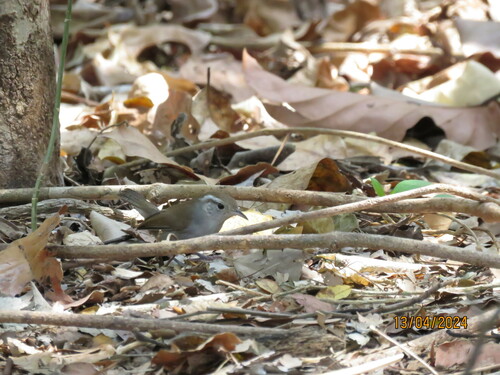 White-bellied Wren
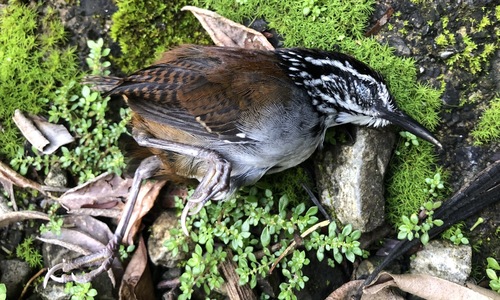 White-breasted Wood-Wren
In breve
Il segno di campo più affidabile per separare il White-bellied Wren dal White-breasted Wood-Wren è il modello della testa e delle parti inferiori: il White-breasted Wood-Wren mostra striature nere e bianche audaci sui lati della testa e del collo, e le sue parti inferiori sono di un bianco brillante che contrasta nettamente con le parti superiori di un ricco castano, mentre il White-bellied Wren ha un volto più semplice con un supercilio grigio-bianco, guance grigie macchiate e un ventre grigio a buffo. Anche la dimensione è utile: il White-breasted Wood-Wren è visibilmente più pesante e robusto. Negli uccelli in posa o in cerca di cibo, cerca la coda corta del Wood-Wren e il forte contrasto tra il petto bianco e la schiena castana, rispetto alle parti superiori marroni più uniformi del White-bellied Wren e alla demarcazione meno netta del ventre. Entrambe le specie hanno code barrate, ma la coda del Wood-Wren è più corta e le sue ali e coda sono più fortemente barrate.
Consigli di identificazione
- Head pattern: Il White-breasted Wood-Wren mostra sempre striature nere e bianche audaci sui lati della testa e del collo, un forte supercilio pallido e una corona più scura. Il White-bellied Wren ha un supercilio grigio-bianco ma manca di striature audaci, con guance grigie macchiate di marrone e una corona marrone medio. Questo è il segno di campo più affidabile a tutte le età.
- Underpart contrast: Le parti inferiori del Wood-Wren sono di un bianco brillante con una transizione netta verso le parti superiori castane, mentre le parti inferiori del White-bellied Wren sono grigiastre sulla gola/petto e buffe sui fianchi e sul vent, con un confine meno distinto rispetto alle parti superiori marroni.
- Tail length and barring: Il White-breasted Wood-Wren ha una coda molto corta, fortemente barrata di nero, spesso tenuta in posizione sollevata. La coda del White-bellied Wren è più lunga, con molte barre scure sottili, e non è così fortemente marcata o così corta.
- Body size and shape: Il Wood-Wren è quasi due volte più pesante del White-bellied Wren e appare molto più robusto e compatto, con un corpo più rotondo e una coda più corta. Il White-bellied Wren appare più snello e con una coda più lunga.
- Wing pattern in flight: Non sono descritti pannelli distintivi sulle ali superiori o segni di volo per nessuna delle due specie, quindi concentrati sulla lunghezza e sulla barratura della coda, e sull'aspetto generale in volo.
- Juvenile confusion: I giovani Wood-Wrens sono più opachi e grigi sotto, il che può assomigliare al White-bellied Wren, ma le striature sulla testa sono di solito ancora visibili, anche se meno nette. I giovani White-bellied Wren non sono descritti in dettaglio, ma non ci si aspetta che mostrino il modello della testa del Wood-Wren.
- Plumage pitfalls: Entrambe le specie hanno una forma di supercilio e una coda barrata, ma solo il Wood-Wren ha le audaci striature sulla testa e le parti inferiori bianche nette. Non fare affidamento solo sul supercilio.
- Habitat context: In boschi aperti e secchi o in cespugli di Bromelia in Messico, sospetta il White-bellied Wren. In foreste umide e dense o ai margini della foresta in tutta l'America Centrale e del Sud, è più probabile che si trovi il White-breasted Wood-Wren.
- Behavior: Il Wood-Wren è più riservato, spesso in coppie o gruppi familiari, e si muove con salti rapidi e bruschi e una coda sollevata. Il White-bellied Wren è più propenso a cercare cibo a diverse altezze e può unirsi a stormi misti.
- Voice: Se senti una breve serie di note rapide e frizzanti che scendono alla fine, potrebbe essere il White-bellied Wren, ma non usare la voce come unico separatore a meno che tu non conosca il repertorio locale.
- Geographic range: Se ti trovi al di fuori dell'areale del White-bellied Wren (ad es., Sud America), stai quasi certamente vedendo il White-breasted Wood-Wren. Nel Messico occidentale o nordorientale, controlla per il White-bellied Wren.
- Sex and season: Non sono descritte differenze significative nel piumaggio sessuale o stagionale per nessuna delle due specie, quindi usa i segni strutturali e il modello della testa/parti inferiori tutto l'anno.
- Mixed flocks: Il White-bellied Wren può unirsi a stormi misti di specie con formiche soldato, specialmente nel sud del suo areale. Il Wood-Wren è meno probabile che lo faccia.
- Nest and breeding context: Se trovi un nido a forma di retorta chimica (palla ovale con un ingresso a imbuto) in una Bromelia spinosa o in un'Acacia, probabilmente appartiene al White-bellied Wren, ma questo è raramente diagnostico sul campo.
- When in doubt: Concentrati sul modello della testa (striata vs. semplice), sul contrasto delle parti inferiori e sulla lunghezza/forma della coda per la separazione più affidabile in tutte le stagioni e età.
Taglia
Il White-breasted Wood-Wren è nettamente più grande e pesante: circa 10 cm di lunghezza e 16 g, rispetto ai 9,5–10 cm e 8–10,5 g del White-bellied Wren [wikipedia][avonet]. Questo rende il Wood-Wren quasi due volte più pesante, conferendogli un aspetto più robusto e massiccio sul campo. La differenza è particolarmente evidente quando visti fianco a fianco o quando si giudica il volume relativo del corpo e della testa. La coda corta del Wood-Wren enfatizza ulteriormente il suo aspetto rotondo e compatto, mentre il White-bellied Wren appare più snello e con una coda più lunga.
Piumaggio
- Juvenile/immature birds: I giovani White-breasted Wood-Wrens hanno parti superiori più opache e parti inferiori grigioastre, il che può ridurre il contrasto con il White-bellied Wren, ma il Wood-Wren mostra ancora striature nere e bianche sui lati della testa e del collo (sebbene meno nitide). I giovani White-bellied Wren non sono descritti in dettaglio, ma gli adulti e probabilmente i giovani mancano delle audaci striature sulla testa del Wood-Wren.
- Adults: Il White-breasted Wood-Wren ha parti superiori di un castano marrone con una corona più scura, supercili audaci e pallidi, e lati della testa e del collo striati di nero e bianco. Le sue parti inferiori sono di un bianco brillante, diventando buffe sul ventre inferiore, con un forte contrasto rispetto alle parti superiori. Le ali e la coda molto corta sono barrate di nero. Il White-bellied Wren è di un marrone medio sopra con un posteriore leggermente rossastro, supercilio grigio-bianco, guance grigie macchiate di marrone, e una gola, petto e ventre superiore grigi, con fianchi e vent buffi. La sua coda è più lunga e finemente barrata, ma l'aspetto generale è più semplice, privo dei forti contrasti e delle striature sulla testa del Wood-Wren.
- Wing/tail pattern in flight: Entrambe le specie hanno code barrate, ma la coda del Wood-Wren è molto più corta e più fortemente barrata, mentre la coda del White-bellied Wren è più lunga con barre più sottili. Non sono descritti pannelli distintivi sulle ali superiori o segni di volo per nessuna delle due specie.
Comportamento
Entrambe le specie cercano cibo in vegetazione densa, ma il White-bellied Wren è più propenso a essere visto a diverse altezze, inclusi i cespugli bassi o anche vicino al suolo, e a volte si unisce a stormi misti di specie seguendo le formiche soldato. Il White-breasted Wood-Wren è tipicamente visto in coppie o gruppi familiari, spesso nascondendosi in una fitta vegetazione, ed è meno probabile che si unisca a stormi misti. La coda corta del Wood-Wren è spesso sollevata, e tende a muoversi con salti rapidi e bruschi, mentre il White-bellied Wren può apparire più attivo e meno riservato. Entrambi sono più spesso ascoltati che visti.
Habitat
Il White-bellied Wren ha un'areale discontinuo in Messico, Belize, Guatemala e Honduras, occupando una varietà di tipi di bosco, da foreste semi-aride a foreste pluviali umide, ed è particolarmente associato a cespugli di ananas selvatico (Bromelia) nel Messico nordorientale. Il White-breasted Wood-Wren è molto più diffuso, che va dal Messico centrale a sud fino al Perù nordorientale e al Suriname, ed è tipicamente trovato in foreste dense di pianura e di collina, specialmente vicino all'acqua o in una fitta vegetazione. Se ti trovi in un bosco aperto e secco o in un cespuglio di Bromelia nel Messico occidentale o nordorientale, è più probabile che tu veda il White-bellied Wren; in foreste umide e dense in tutta l'America Centrale e fino all'America del Sud, il White-breasted Wood-Wren è la norma.
Voce
Il canto del White-bellied Wren è una breve serie di 6 note rapide che salgono e scendono, scendendo alla fine, descritto come frizzante nell'est del suo areale. I richiami includono un 'chek' basso, chiacchiere di rimprovero e un duro, secco e crepitante ronzio. Il canto e i richiami del White-breasted Wood-Wren non sono descritti nelle note fornite, quindi la voce non è un separatore affidabile basato sulle informazioni attuali. Se senti una serie di note frizzanti e discendenti, considera il White-bellied Wren, ma non fare affidamento solo sulla voce per la separazione.
White-bellied Wren · White-breasted Wood-Wren · I miei uccelli difficili