

Motmot

シロハラインコ 対 ボリビアウロコインコ

Pionites leucogaster 対 Pyrrhura devillei

シロハラインコとボリビアウロコインコのクイズ
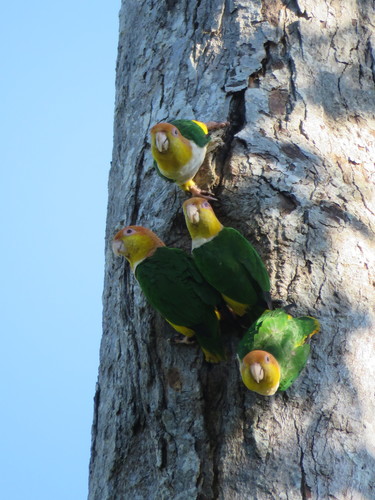
シロハラインコ (Pionites leucogaster) シロハラインコ
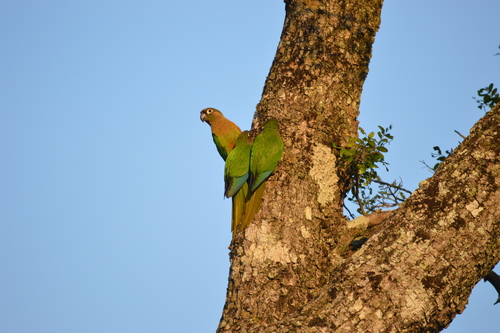
ボリビアウロコインコ (Pyrrhura devillei) ボリビアウロコインコ

メディア

読み込み中…

要点

シロハラインコとボリビアウロコインコの最も信頼できるフィールドマークは、シロハラインコの目を引く白い下胸と腹部で、黄色と緑の上面と対照的です。一方、ボリビアウロコインコは全体的に緑の羽毛で、マルーンの腹部と鱗状の茶色の縁取りのある胸を持っています。飛んでいる時や止まっている時、シロハラインコのずんぐりした短い尾の形と淡いくちばしが、ボリビアウロコインコの細身の体型、長い尾、暗いくちばしと対照的に目立ちます。未熟なシロハラインコは茶色がかった冠を示すことがありますが、ボリビアウロコインコの鱗状の胸とマルーンの腹部は欠けています。これら2種はブラジルとボリビアで分布が重なりますが、好む生息地は異なり、翼の模様や体の構造はすべての年齢で異なります。

識別のコツ

  1. 白い下胸と腹部(シロハラインコ): シロハラインコだけがきれいな白い下胸と腹部を示し、しばしば黄色の上胸と緑の太ももを持っています。ボリビアウロコインコは常にマルーンの腹部と鱗状の緑の下部を持っています。すべての年齢に適用されます。
  2. 鱗状の胸とマルーンの腹部(ボリビアウロコインコ): ボリビアウロコインコの胸は黄緑色で、茶色の羽の縁があり、鱗状の外観を与え、中央の腹部はマルーンです。シロハラインコはこの模様を示しません。
  3. 頭の色彩: シロハラインコは主に黄色の頭を持ち、オレンジの冠と後頭部(成鳥)、または未熟な個体では茶色がかった冠/後頭部を持っています。ボリビアウロコインコは茶色がかった冠と赤褐色の耳覆いを持ち、黄色がかった緑の顔を持っています—決して黄色やオレンジではありません。
  4. 尾の形と色: シロハラインコの尾は短く明るい緑(またはxanthurusでは黄色)で、ボリビアウロコインコの尾は長く、上面はオリーブグリーンで、外側の三分の一はマルーン、下は鈍い赤褐色です。飛んでいる時、ボリビアウロコインコの尾は明らかに長く、尖っています。
  5. 飛行中の翼の模様: シロハラインコは主に緑の翼を持ち、赤橙色の腋羽と暗青色の一次羽を示します。ボリビアウロコインコは緑の翼を持ち、青の一次羽、赤の手首部分、赤/黄色の下羽覆いがあります。ボリビアウロコインコだけが赤の手首部分と黄色の下羽覆いを示します。
  6. くちばしの色: シロハラインコは淡い角質のくちばしを持ち、明るいピンク色のセレを持っています。ボリビアウロコインコは暗いくちばしを持っています。これは近距離または良い光の下で目立ちます。
  7. 足と足の色: シロハラインコは明るいピンク(または一部の亜種では黒っぽい)足を持ち、ボリビアウロコインコの足の色は指定されていませんが、決して明るいピンクではありません。
  8. 体の構造: シロハラインコはずんぐりして短い尾を持ち、コンパクトでほぼ太い印象を与えます。ボリビアウロコインコは細身で長い尾を持ち、より流線型の外観です。
  9. サイズの印象: 両者は長さが似ていますが、シロハラインコは重くてがっしりしています。ボリビアウロコインコは軽くてより細長いです。
  10. 幼鳥の混同: 未熟なシロハラインコは茶色がかった冠/後頭部を持っていますが、白/黄色の下部を示し、マルーンや鱗状の模様は欠けています。ボリビアウロコインコの未熟な個体は別に記述されていませんが、常に鱗状の胸とマルーンの腹部を持っています。
  11. 生息地の文脈: 湿った密林で見られた場合、シロハラインコの可能性が高いです。乾燥した開けた森林、ギャラリー森林、または森林の端で見られた場合、ボリビアウロコインコが好まれます。
  12. 群れのサイズと行動: ボリビアウロコインコはしばしば大きくて騒がしい群れで見られますが、シロハラインコはよりペアや小さな群れで見られ、騒がしくありません。
  13. 鳴き声: 騒がしく鋭い「クリクリクリ」や厳しいおしゃべりの群れはボリビアウロコインコの典型です。シロハラインコはそのような鳴き声を出すことは少ないです。
  14. 亜種の変異(シロハラインコ): 一部のシロハラインコの亜種は黄色の尾や黒っぽい足を持っています—関連する範囲にいる場合はこれを確認してくださいが、白い腹部は診断的です。
  15. 汚れた下部(シロハラインコ): シロハラインコは時々入浴から栗色に染まった白い羽毛を示しますが、基底の白/黄色の模様は依然として目に見え、決してマルーンや鱗状ではありません。

大きさ

シロハラインコ is slightly shorter and heavier (23–25 cm, ~155 g) than ボリビアウロコインコ (25–26 cm, weight not specified but typically lighter-bodied for Pyrrhura). The parrot appears chunkier and more compact, with a noticeably short tail, while the parakeet is slimmer and has a longer, more graduated tail. Both are similar in overall length, but the parrot’s bulk and short tail are obvious in direct comparison.

羽色

行動

シロハラインコはしばしばペアや小さな群れで見られ、重く波打つような飛行で移動し、遊び心があり活発な態度を示します。ボリビアウロコインコは通常群れで見られ、飛行中はかなり騒がしいことがあり、一般的により落ち着きがなく敏捷で、迅速で直接的な飛行を持っています。両種は止まっている時は静かであることがありますが、ボリビアウロコインコはより大きくおしゃべりな群れで見られる可能性が高いです。

生息環境

シロハラインコはボリビア、ブラジル、コロンビア、ペルーの湿った低地の森林に生息し、しばしば密で手つかずの熱帯雨林内にいます。ボリビアウロコインコは主にブラジル、ボリビア、パラグアイのパンタナルとチャコ地域に見られ、落葉樹林やギャラリー森林、森林の端、低木やサバンナのエコトーンを好みます。ボリビアウロコインコは乾燥した開けたまたは移行中の森林にいる可能性が高く、シロハラインコは深く湿った森林を好みます。

声

ボリビアウロコインコは飛行中と止まっている時の両方で高音で鋭い「クリクリクリ」と呼ぶ声を出し、群れは非常に騒がしく厳しいおしゃべりをすることがあります。シロハラインコの声は資料に記載されていませんが、一般的に騒がしくなく、ボリビアウロコインコの特徴的なおしゃべりの飛行呼び声を出す可能性は低いです。

より良い説明を送る

比較と同じ項目を使ってください。文章はすぐに公開されます。

The most reliable field mark between White-bellied Parrot and Blaze-winged Parakeet is the White-bellied Parrot’s striking white lower breast and belly, contrasting with its yellow and green upperparts, versus the Blaze-winged Parakeet’s overall green plumage with a maroon belly and scaly, brown-edged breast. In flight or perched, the parrot’s chunky, short-tailed shape and pale bill stand out against the parakeet’s slimmer build, longer tail, and dark bill. Immature White-bellied Parrots may show a brownish crown, but still lack the Blaze-winged’s scaly breast and maroon belly. The two species overlap in range in Brazil and Bolivia, but their preferred habitats differ, and their wing patterns and body structure are distinct at all ages.

  1. White lower breast and belly (White-bellied Parrot): Only the parrot shows a clean white lower breast and belly, often with yellow upper breast and green thighs. The parakeet always has a maroon belly and green underparts with a scaly look. Works for all ages.
  2. Scaly breast and maroon belly (Blaze-winged Parakeet): The parakeet’s breast is yellowish green with brown feather edges, giving a scaly appearance, and the central belly is maroon. The parrot never shows this pattern.
  3. Head coloration: White-bellied Parrot has a mostly yellow head with an orange crown and nape (adults), or brownish crown/nape in immatures. Blaze-winged Parakeet has a brownish crown and reddish brown ear coverts, with a yellowish green face—never yellow or orange.
  4. Tail shape and color: The parrot’s tail is short and bright green (or yellow in xanthurus), while the parakeet’s tail is longer, olive green above with a maroon outer third and dull rufous below. In flight, the parakeet’s tail is noticeably longer and more pointed.
  5. Wing pattern in flight: White-bellied Parrot shows mostly green wings with reddish-orange axillaries and dark blue primaries; Blaze-winged Parakeet has green wings with blue primaries, a red carpal area, and red/yellow underwing coverts. Only the parakeet shows a red carpal area and yellow underwing coverts.
  6. Bill color: White-bellied Parrot has a pale horn bill with a bright pinkish cere; Blaze-winged Parakeet has a dark bill. This is visible at close range or in good light.
  7. Leg and foot color: The parrot has bright pink (or blackish in some subspecies) legs and feet, while the parakeet’s leg color is not specified but never bright pink.
  8. Body structure: The parrot is chunky and short-tailed, giving a compact, almost stubby impression. The parakeet is slimmer and longer-tailed, with a more streamlined look.
  9. Size impression: Both are similar in length, but the parrot is heavier and bulkier; the parakeet is lighter and more elongated.
  10. Juvenile confusion: Immature White-bellied Parrots have a brownish crown/nape but still show white/yellow underparts and lack any maroon or scaly pattern. Blaze-winged Parakeet immatures are not described separately but always have the scaly breast and maroon belly.
  11. Habitat context: If seen in humid, dense rainforest, White-bellied Parrot is more likely; if in drier, open woodland, gallery forest, or forest edge, Blaze-winged Parakeet is favored.
  12. Group size and behavior: Parakeets often occur in larger, noisier flocks, while parrots are more often in pairs or small groups and less raucous.
  13. Vocalizations: A noisy, shrill 'krree krree krree' or harsh chattering flock is typical of Blaze-winged Parakeet. White-bellied Parrot is less likely to be heard making such calls.
  14. Subspecies variation (parrot): Some parrot subspecies have yellow tails or blackish legs—check for these if in the relevant range, but the white belly remains diagnostic.
  15. Stained underparts (parrot): White-bellied Parrots sometimes show chestnut-stained white feathers from bathing, but the underlying white/yellow pattern is still visible and never maroon or scaly.

White-bellied Parrot is slightly shorter and heavier (23–25 cm, ~155 g) than Blaze-winged Parakeet (25–26 cm, weight not specified but typically lighter-bodied for Pyrrhura). The parrot appears chunkier and more compact, with a noticeably short tail, while the parakeet is slimmer and has a longer, more graduated tail. Both are similar in overall length, but the parrot’s bulk and short tail are obvious in direct comparison.

  • Juveniles/Immatures: Immature White-bellied Parrots resemble adults but have a brownish crown and nape; their underparts remain white and yellow, lacking any maroon or scaly pattern. Blaze-winged Parakeet immatures are not described separately, but all ages show the scaly, brown-edged breast and maroon belly.

  • Adults: White-bellied Parrot: yellow head with orange crown/nape, white lower breast and belly, yellow throat and upper breast, green upperparts, bright green rump, reddish-orange axillaries, dark blue primaries, and bright green (or yellow in some subspecies) tail. Blaze-winged Parakeet: brownish crown, reddish brown ear coverts, yellowish green face and underparts with brown-edged 'scaly' breast, maroon central belly, green upperparts, blue primaries, red carpal area, red/yellow underwing coverts, olive green tail with maroon outer third, dull rufous brown below.

  • Flight views: White-bellied Parrot shows a blocky, mostly green wing with reddish-orange axillaries and dark blue primaries; underparts flash white and yellow. Blaze-winged Parakeet’s flight shows green wings with blue primaries, red carpal area, and red/yellow underwing coverts, but no white belly.

White-bellied Parrot is often seen in pairs or small groups, moving with a heavy, undulating flight and showing a playful, active demeanor. Blaze-winged Parakeet is typically found in flocks, sometimes quite noisy in flight, and is generally more restless and agile, with a swift, direct flight. Both species may be silent when perched, but the parakeet is more likely to be seen in larger, chattering groups.

White-bellied Parrot inhabits humid lowland forests in Bolivia, Brazil, Colombia, and Peru, often within dense, undisturbed rainforest. Blaze-winged Parakeet is found mainly in the Pantanal and Chaco regions of Brazil, Bolivia, and Paraguay, favoring deciduous and gallery forests, forest edges, and ecotones with scrub and savannah. The parakeet is more likely in drier, open or transitional woodland, while the parrot prefers deep, humid forest.

Blaze-winged Parakeet gives high-pitched, shrill 'krree krree krree' calls both in flight and when perched, and flocks can be very noisy with harsh, piercing chatter. White-bellied Parrot’s voice is not described in the sources, but it is generally less raucous and less likely to produce the parakeet’s distinctive chattering flight calls.

変更を破棄しますか?

保存していない編集があります。今離れると失われます。

シロハラインコ · ボリビアウロコインコ · 苦手な鳥