

Lorito Rubio vs Cotorra de Deville
Pionites leucogaster frente a Pyrrhura devillei
Juega un quiz con Lorito Rubio y Cotorra de Deville
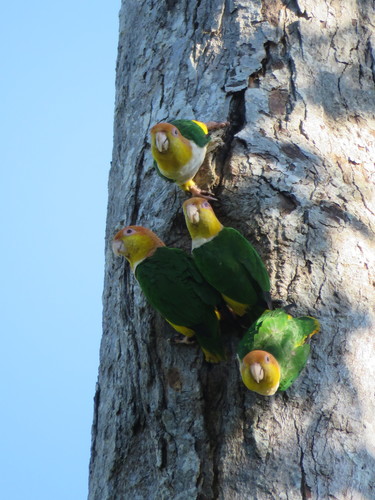 Lorito Rubio
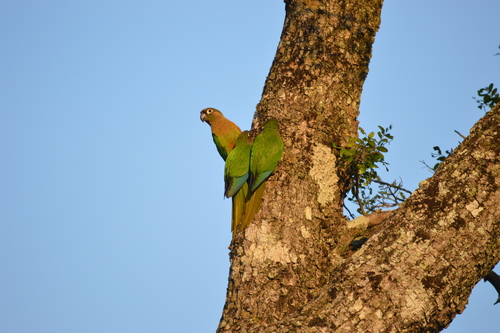 Cotorra de Deville
En breve
La marca de campo más confiable entre el Lorito Rubio y la Cotorra de Deville es el llamativo pecho inferior y vientre blancos del Lorito Rubio, que contrasta con sus partes superiores amarillas y verdes, frente al plumaje verde general de la Cotorra de Deville con un vientre marrón y un pecho escamoso con bordes marrones. En vuelo o posado, la forma robusta y de cola corta del loro y su pico pálido se destacan frente a la construcción más delgada del periquito, su cola más larga y su pico oscuro. Los Loritos Rubios inmaduros pueden mostrar una corona marrón, pero aún carecen del pecho escamoso y el vientre marrón de la Cotorra de Deville. Las dos especies se superponen en rango en Brasil y Bolivia, pero sus hábitats preferidos difieren, y sus patrones de alas y estructura corporal son distintos en todas las edades.
Consejos de identificación
- Pecho inferior y vientre blancos (Lorito Rubio): Solo el loro muestra un pecho inferior y vientre blancos limpios, a menudo con un pecho superior amarillo y muslos verdes. El periquito siempre tiene un vientre marrón y partes inferiores verdes con un aspecto escamoso. Funciona para todas las edades.
- Pecho escamoso y vientre marrón (Cotorra de Deville): El pecho del periquito es verde amarillento con bordes de plumas marrones, dando una apariencia escamosa, y el vientre central es marrón. El loro nunca muestra este patrón.
- Coloración de la cabeza: El Lorito Rubio tiene una cabeza mayormente amarilla con una corona y nuca naranjas (adultos), o corona/nuca marrón en inmaduros. La Cotorra de Deville tiene una corona marrón y cobertores de orejas marrón rojizo, con una cara verde amarillenta—nunca amarilla o naranja.
- Forma y color de la cola: La cola del loro es corta y verde brillante (o amarilla en xanthurus), mientras que la cola del periquito es más larga, verde oliva arriba con un tercio exterior marrón y pardo opaco abajo. En vuelo, la cola del periquito es notablemente más larga y puntiaguda.
- Patrón de alas en vuelo: El Lorito Rubio muestra alas mayormente verdes con axilares rojo-anaranjados y primarias azul oscuro; la Cotorra de Deville tiene alas verdes con primarias azules, un área carpiana roja y cobertores de ala rojos/amarillos. Solo el periquito muestra un área carpiana roja y cobertores de ala amarillos.
- Color del pico: El Lorito Rubio tiene un pico pálido con una cera rosada brillante; la Cotorra de Deville tiene un pico oscuro. Esto es visible a corta distancia o con buena luz.
- Color de las patas y pies: El loro tiene patas y pies de color rosa brillante (o negruzcos en algunas subespecies), mientras que el color de las patas del periquito no se especifica pero nunca es rosa brillante.
- Estructura corporal: El loro es robusto y de cola corta, dando una impresión compacta, casi rechoncha. El periquito es más delgado y de cola más larga, con un aspecto más aerodinámico.
- Impresión de tamaño: Ambos son similares en longitud, pero el loro es más pesado y voluminoso; el periquito es más ligero y más alargado.
- Confusión juvenil: Los Loritos Rubios inmaduros tienen una corona/nuca marrón pero aún muestran partes inferiores blancas/amarillas y carecen de cualquier patrón marrón o escamoso. Los inmaduros de la Cotorra de Deville no se describen por separado pero siempre tienen el pecho escamoso y el vientre marrón.
- Contexto de hábitat: Si se ve en selvas tropicales húmedas y densas, es más probable que sea un Lorito Rubio; si en bosques abiertos y secos, bosque de galería o borde de bosque, se prefiere la Cotorra de Deville.
- Tamaño del grupo y comportamiento: Los periquitos suelen ocurrir en bandadas más grandes y ruidosas, mientras que los loros se encuentran más a menudo en parejas o grupos pequeños y son menos ruidosos.
- Vocalizaciones: Un grupo ruidoso y agudo de 'krree krree krree' o charlas ásperas es típico de la Cotorra de Deville. El Lorito Rubio es menos probable que se escuche haciendo tales llamados.
- Variación de subespecies (loro): Algunas subespecies de loro tienen colas amarillas o patas negruzcas—verifique esto si está en el rango relevante, pero el vientre blanco sigue siendo diagnóstico.
- Partes inferiores manchadas (loro): Los Loritos Rubios a veces muestran plumas blancas manchadas de castaño por el baño, pero el patrón blanco/amarillo subyacente sigue siendo visible y nunca es marrón o escamoso.
Tamaño
El Lorito Rubio es ligeramente más corto y pesado (23–25 cm, ~155 g) que la Cotorra de Deville (25–26 cm, peso no especificado pero típicamente más ligera para Pyrrhura). El loro parece más robusto y compacto, con una cola notablemente corta, mientras que el periquito es más delgado y tiene una cola más larga y más graduada. Ambos son similares en longitud total, pero el volumen y la cola corta del loro son obvios en comparación directa.
Plumaje
-
Juveniles/Inmaduros: Los Loritos Rubios inmaduros se parecen a los adultos pero tienen una corona y nuca marrones; sus partes inferiores siguen siendo blancas y amarillas, careciendo de cualquier patrón marrón o escamoso. Los inmaduros de la Cotorra de Deville no se describen por separado, pero todas las edades muestran el pecho escamoso con bordes marrones y el vientre marrón.
-
Adultos: Lorito Rubio: cabeza amarilla con corona/nuca naranjas, pecho inferior y vientre blancos, garganta amarilla y pecho superior, partes superiores verdes, rabadilla verde brillante, axilares rojo-anaranjados, primarias azul oscuro y cola verde brillante (o amarilla en algunas subespecies). Cotorra de Deville: corona marrón, cobertores de orejas marrón rojizo, cara y partes inferiores verde amarillenta con pecho 'escamoso' con bordes marrones, vientre central marrón, partes superiores verdes, primarias azules, área carpiana roja, cobertores de ala rojos/amarillos, cola verde oliva con un tercio exterior marrón, pardo opaco abajo.
-
Vistas de vuelo: El Lorito Rubio muestra un ala robusta, mayormente verde con axilares rojo-anaranjados y primarias azul oscuro; las partes inferiores parpadean en blanco y amarillo. El vuelo de la Cotorra de Deville muestra alas verdes con primarias azules, área carpiana roja y cobertores de ala rojos/amarillos, pero sin vientre blanco.
Comportamiento
El Lorito Rubio se ve a menudo en parejas o grupos pequeños, moviéndose con un vuelo pesado y ondulante y mostrando un comportamiento juguetón y activo. La Cotorra de Deville se encuentra típicamente en bandadas, a veces bastante ruidosa en vuelo, y es generalmente más inquieta y ágil, con un vuelo rápido y directo. Ambas especies pueden ser silenciosas cuando están posadas, pero es más probable que el periquito se vea en grupos más grandes y parlanchines.
Hábitat
El Lorito Rubio habita en bosques húmedos de tierras bajas en Bolivia, Brasil, Colombia y Perú, a menudo dentro de selvas tropicales densas y no perturbadas. La Cotorra de Deville se encuentra principalmente en las regiones del Pantanal y Chaco de Brasil, Bolivia y Paraguay, favoreciendo bosques deciduos y de galería, bordes de bosque y ecotonos con matorrales y sabanas. El periquito es más probable que se encuentre en bosques abiertos o secos o en transición, mientras que el loro prefiere bosques profundos y húmedos.
Voz
La Cotorra de Deville emite llamados agudos y estridentes de 'krree krree krree' tanto en vuelo como cuando está posada, y los grupos pueden ser muy ruidosos con charlas ásperas y penetrantes. La voz del Lorito Rubio no se describe en las fuentes, pero generalmente es menos ruidosa y menos probable que produzca los distintivos llamados de vuelo del periquito.