

Motmot

ノドジロユミハチドリ 対 ペルーユミハチドリ

Phaethornis hispidus 対 Phaethornis koepckeae

ノドジロユミハチドリとペルーユミハチドリのクイズ
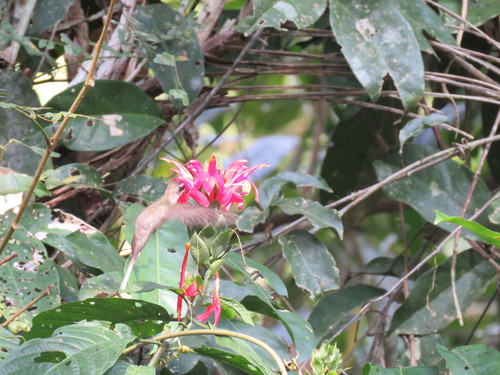
ノドジロユミハチドリ (Phaethornis hispidus) ノドジロユミハチドリ
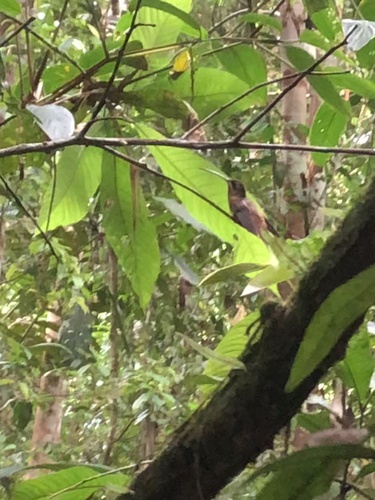
ペルーユミハチドリ (Phaethornis koepckeae) ペルーユミハチドリ

メディア

読み込み中…

要点

The most reliable field mark to separate White-bearded Hermit from Koepcke's Hermit is the bill shape: Koepcke's Hermit has a nearly straight bill, while White-bearded Hermit shows a noticeably decurved bill (especially in females). In addition, Koepcke's Hermit displays a rufous rump and rich reddish buff underparts, contrasting with the White-bearded Hermit's gray underparts and bronzy green upperparts. Both species have a black facial mask with white streaks, but Koepcke's Hermit has a paler, more rufous-tinged belly and broader rufous tail tips. Range is also a strong clue: Koepcke's Hermit is endemic to Peru, while White-bearded Hermit is widespread in northern South America.

識別のコツ

  1. Bill shape is key: Koepcke's Hermit has a nearly straight bill, while White-bearded Hermit's bill is noticeably decurved (especially in females). Use this as your first check if you get a good side view.
  2. Rump color: Koepcke's Hermit shows a rufous rump, which is absent in White-bearded Hermit (bronzy green upperparts instead). Look for this in flight or when the bird fans its tail.
  3. Underpart color: Koepcke's Hermit has a rich reddish buff belly and flanks, while White-bearded Hermit is gray below. This is visible in good light from below or when perched.
  4. Tail pattern: Koepcke's Hermit has broad buffy rufous tips to the outer tail feathers and elongated central tail feathers with white tips. White-bearded Hermit lacks these broad rufous tips and has gray-margined uppertail coverts.
  5. Facial pattern: Both have a black mask and white bordering, but Koepcke's Hermit's mask is narrower and the chin/throat are more extensively white. White-bearded Hermit has a white supercilium and malar stripe, with a central white throat stripe.
  6. Crown and nape: Koepcke's Hermit has a blackish crown with a greenish gloss and a glossy greenish bronze nape, while White-bearded Hermit is more uniformly bronzy green above.
  7. Female structure: Female White-bearded Hermits have a shorter, more decurved bill than males or than Koepcke's Hermit females. If you see a short, strongly decurved bill, suspect White-bearded.
  8. Size and jizz: Koepcke's Hermit is slightly longer and may appear more robust, but overlap is extensive; use only as a supporting clue.
  9. Range: Koepcke's Hermit is only found in Peru. If you are outside Peru, you are almost certainly seeing White-bearded Hermit. Within Peru, check local range and habitat.
  10. Vocalizations: If you hear a ringing, buzzy "b'zee b'zee b'zee" or a rising "tchwee/tchwing," you are likely hearing Koepcke's Hermit. Lack of vocalization information for White-bearded means silence is not diagnostic.
  11. Habitat context: Both species use humid lowland forest, but Koepcke's Hermit is much more localized. If in a known Koepcke's Hermit site, be extra careful with bill and rump color.
  12. No known age-specific upperwing pattern: If you are seeing a juvenile or immature, rely on bill shape and underpart/rump color, as no distinctive wing pattern differences are documented.
  13. Plumage pitfalls: Both sexes are similar in each species, so do not rely on sex for ID. Lighting can obscure the rufous tones of Koepcke's Hermit, so check multiple angles.
  14. Tail shape in flight: Koepcke's Hermit's elongated central tail feathers may be more noticeable in flight or when fanned, but this is subtle and best used as a supporting mark.
  15. When in doubt: If you cannot see the bill shape or rump color clearly, try to get a photo or wait for a vocalization to clinch the ID.

大きさ

Koepcke's Hermit is slightly larger, measuring 14–15 cm in length, compared to White-bearded Hermit at 13–14 cm. Males of both species overlap in weight (Koepcke's: 4.7–5.8 g; White-bearded: 4–6 g), but Koepcke's is at the upper end of the range and appears more robust in hand. Females of both are lighter, but the difference is minor and not easily judged in the field. Size alone is not a reliable separator, but Koepcke's may appear longer-tailed and slightly bulkier.

羽色

No specific juvenile or immature upperwing pattern differences are documented for these species, so focus is on adult and general plumage. Koepcke's Hermit stands out with a rufous rump and rich reddish buff belly and flanks, while its tail shows broad buffy rufous tips (especially on the outer feathers) and elongated central tail feathers with white tips. Its crown is blackish with a greenish gloss, and the nape and back are glossy bronze. In contrast, White-bearded Hermit has bronzy green upperparts with gray-margined uppertail coverts, a gray belly, and a white throat stripe. Both have a black facial mask bordered by white, but Koepcke's mask is narrower and the chin/throat are more extensively white. Female White-bearded Hermits have a shorter, more decurved bill, but otherwise match males in plumage.

行動

Both species are typical hermits, often seen foraging low in the understory and visiting flowers. No distinctive behavioral differences are noted in the sources that would help with field separation. Both may appear furtive and are best seen when perched or feeding at flowers.

生息環境

White-bearded Hermit is found across a broad swath of Amazonia, including Bolivia, Brazil, Colombia, Ecuador, Peru, and Venezuela, favoring humid lowland forests. Koepcke's Hermit is much more restricted, being endemic to Peru. If you are outside Peru, Koepcke's Hermit can be ruled out. Within Peru, check local range maps, as Koepcke's is much less widespread than White-bearded Hermit.

声

Koepcke's Hermit has a distinctive song: a ringing, buzzy series of short notes ("b'zee b'zee b'zee") and calls that include a ringing, rising "tchwee" or "tchwing" and a descending, accelerating series of high notes. No vocalization details are provided for White-bearded Hermit in the notes, so voice is only diagnostic if you hear Koepcke's Hermit's described song.

より良い説明を送る

比較と同じ項目を使ってください。文章はすぐに公開されます。

The most reliable field mark to separate White-bearded Hermit from Koepcke's Hermit is the bill shape: Koepcke's Hermit has a nearly straight bill, while White-bearded Hermit shows a noticeably decurved bill (especially in females). In addition, Koepcke's Hermit displays a rufous rump and rich reddish buff underparts, contrasting with the White-bearded Hermit's gray underparts and bronzy green upperparts. Both species have a black facial mask with white streaks, but Koepcke's Hermit has a paler, more rufous-tinged belly and broader rufous tail tips. Range is also a strong clue: Koepcke's Hermit is endemic to Peru, while White-bearded Hermit is widespread in northern South America.

  1. Bill shape is key: Koepcke's Hermit has a nearly straight bill, while White-bearded Hermit's bill is noticeably decurved (especially in females). Use this as your first check if you get a good side view.
  2. Rump color: Koepcke's Hermit shows a rufous rump, which is absent in White-bearded Hermit (bronzy green upperparts instead). Look for this in flight or when the bird fans its tail.
  3. Underpart color: Koepcke's Hermit has a rich reddish buff belly and flanks, while White-bearded Hermit is gray below. This is visible in good light from below or when perched.
  4. Tail pattern: Koepcke's Hermit has broad buffy rufous tips to the outer tail feathers and elongated central tail feathers with white tips. White-bearded Hermit lacks these broad rufous tips and has gray-margined uppertail coverts.
  5. Facial pattern: Both have a black mask and white bordering, but Koepcke's Hermit's mask is narrower and the chin/throat are more extensively white. White-bearded Hermit has a white supercilium and malar stripe, with a central white throat stripe.
  6. Crown and nape: Koepcke's Hermit has a blackish crown with a greenish gloss and a glossy greenish bronze nape, while White-bearded Hermit is more uniformly bronzy green above.
  7. Female structure: Female White-bearded Hermits have a shorter, more decurved bill than males or than Koepcke's Hermit females. If you see a short, strongly decurved bill, suspect White-bearded.
  8. Size and jizz: Koepcke's Hermit is slightly longer and may appear more robust, but overlap is extensive; use only as a supporting clue.
  9. Range: Koepcke's Hermit is only found in Peru. If you are outside Peru, you are almost certainly seeing White-bearded Hermit. Within Peru, check local range and habitat.
  10. Vocalizations: If you hear a ringing, buzzy "b'zee b'zee b'zee" or a rising "tchwee/tchwing," you are likely hearing Koepcke's Hermit. Lack of vocalization information for White-bearded means silence is not diagnostic.
  11. Habitat context: Both species use humid lowland forest, but Koepcke's Hermit is much more localized. If in a known Koepcke's Hermit site, be extra careful with bill and rump color.
  12. No known age-specific upperwing pattern: If you are seeing a juvenile or immature, rely on bill shape and underpart/rump color, as no distinctive wing pattern differences are documented.
  13. Plumage pitfalls: Both sexes are similar in each species, so do not rely on sex for ID. Lighting can obscure the rufous tones of Koepcke's Hermit, so check multiple angles.
  14. Tail shape in flight: Koepcke's Hermit's elongated central tail feathers may be more noticeable in flight or when fanned, but this is subtle and best used as a supporting mark.
  15. When in doubt: If you cannot see the bill shape or rump color clearly, try to get a photo or wait for a vocalization to clinch the ID.

Koepcke's Hermit is slightly larger, measuring 14–15 cm in length, compared to White-bearded Hermit at 13–14 cm. Males of both species overlap in weight (Koepcke's: 4.7–5.8 g; White-bearded: 4–6 g), but Koepcke's is at the upper end of the range and appears more robust in hand. Females of both are lighter, but the difference is minor and not easily judged in the field. Size alone is not a reliable separator, but Koepcke's may appear longer-tailed and slightly bulkier.

No specific juvenile or immature upperwing pattern differences are documented for these species, so focus is on adult and general plumage. Koepcke's Hermit stands out with a rufous rump and rich reddish buff belly and flanks, while its tail shows broad buffy rufous tips (especially on the outer feathers) and elongated central tail feathers with white tips. Its crown is blackish with a greenish gloss, and the nape and back are glossy bronze. In contrast, White-bearded Hermit has bronzy green upperparts with gray-margined uppertail coverts, a gray belly, and a white throat stripe. Both have a black facial mask bordered by white, but Koepcke's mask is narrower and the chin/throat are more extensively white. Female White-bearded Hermits have a shorter, more decurved bill, but otherwise match males in plumage.

Both species are typical hermits, often seen foraging low in the understory and visiting flowers. No distinctive behavioral differences are noted in the sources that would help with field separation. Both may appear furtive and are best seen when perched or feeding at flowers.

White-bearded Hermit is found across a broad swath of Amazonia, including Bolivia, Brazil, Colombia, Ecuador, Peru, and Venezuela, favoring humid lowland forests. Koepcke's Hermit is much more restricted, being endemic to Peru. If you are outside Peru, Koepcke's Hermit can be ruled out. Within Peru, check local range maps, as Koepcke's is much less widespread than White-bearded Hermit.

Koepcke's Hermit has a distinctive song: a ringing, buzzy series of short notes ("b'zee b'zee b'zee") and calls that include a ringing, rising "tchwee" or "tchwing" and a descending, accelerating series of high notes. No vocalization details are provided for White-bearded Hermit in the notes, so voice is only diagnostic if you hear Koepcke's Hermit's described song.

変更を破棄しますか?

保存していない編集があります。今離れると失われます。

ノドジロユミハチドリ · ペルーユミハチドリ · 苦手な鳥