

Ermitaño Barbiblanco vs Ermitaño de Koepcke
Phaethornis hispidus frente a Phaethornis koepckeae
Juega un quiz con Ermitaño Barbiblanco y Ermitaño de Koepcke
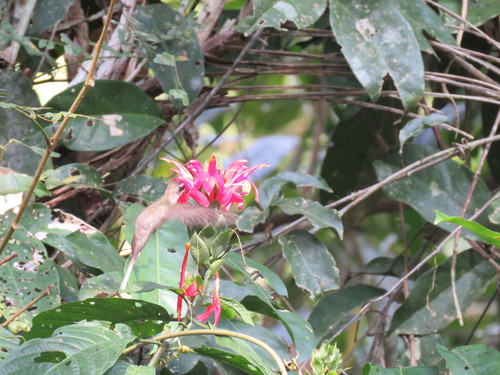 Ermitaño Barbiblanco
 Ermitaño de Koepcke
En breve
La marca de campo más confiable para separar el Ermitaño Barbiblanco del Ermitaño de Koepcke es la forma del pico: el Ermitaño de Koepcke tiene un pico casi recto, mientras que el Ermitaño Barbiblanco muestra un pico notablemente curvado (especialmente en las hembras). Además, el Ermitaño de Koepcke presenta una rabadilla rufo y partes inferiores de un rico color marrón rojizo, en contraste con las partes inferiores grises del Ermitaño Barbiblanco y las partes superiores de un verde bronceado. Ambas especies tienen una máscara facial negra con rayas blancas, pero el Ermitaño de Koepcke tiene un vientre más pálido y con un tono rufo más pronunciado y puntas de cola rufo más anchas. El rango también es una pista fuerte: el Ermitaño de Koepcke es endémico de Perú, mientras que el Ermitaño Barbiblanco se encuentra en gran parte del norte de América del Sur.
Consejos de identificación
- La forma del pico es clave: el Ermitaño de Koepcke tiene un pico casi recto, mientras que el pico del Ermitaño Barbiblanco es notablemente curvado (especialmente en las hembras). Usa esto como tu primera verificación si obtienes una buena vista lateral.
- Color de la rabadilla: el Ermitaño de Koepcke muestra una rabadilla rufo, que está ausente en el Ermitaño Barbiblanco (en su lugar, tiene partes superiores de un verde bronceado). Busca esto en vuelo o cuando el ave despliega su cola.
- Color de las partes inferiores: el Ermitaño de Koepcke tiene un vientre y flancos de un rico color marrón rojizo, mientras que el Ermitaño Barbiblanco es gris por debajo. Esto es visible con buena luz desde abajo o cuando está posado.
- Patrón de la cola: el Ermitaño de Koepcke tiene puntas rufo anchas en las plumas de la cola exterior y plumas centrales de la cola alargadas con puntas blancas. El Ermitaño Barbiblanco carece de estas puntas rufo anchas y tiene cobertores de la cola superior con márgenes grises.
- Patrón facial: ambos tienen una máscara negra y un borde blanco, pero la máscara del Ermitaño de Koepcke es más estrecha y el mentón/garganta son más extensamente blancos. El Ermitaño Barbiblanco tiene un supercilio blanco y una franja malar, con una franja central blanca en la garganta.
- Cresta y nuca: el Ermitaño de Koepcke tiene una cresta negruzca con un brillo verdoso y una nuca de un bronce verdoso brillante, mientras que el Ermitaño Barbiblanco es más uniformemente verde bronceado por encima.
- Estructura de la hembra: las hembras de Ermitaño Barbiblanco tienen un pico más corto y más curvado que los machos o que las hembras del Ermitaño de Koepcke. Si ves un pico corto y fuertemente curvado, sospecha que es un Barbiblanco.
- Tamaño y apariencia: el Ermitaño de Koepcke es ligeramente más largo y puede parecer más robusto, pero la superposición es extensa; úsalo solo como una pista de apoyo.
- Rango: el Ermitaño de Koepcke solo se encuentra en Perú. Si estás fuera de Perú, casi con seguridad estás viendo un Ermitaño Barbiblanco. Dentro de Perú, verifica el rango local y el hábitat.
- Vocalizaciones: si escuchas un "b'zee b'zee b'zee" resonante y zumbante o un "tchwee/tchwing" ascendente, es probable que estés escuchando al Ermitaño de Koepcke. La falta de información sobre vocalizaciones para el Ermitaño Barbiblanco significa que el silencio no es diagnóstico.
- Contexto del hábitat: ambas especies utilizan bosques húmedos de tierras bajas, pero el Ermitaño de Koepcke es mucho más localizado. Si estás en un sitio conocido del Ermitaño de Koepcke, ten mucho cuidado con el color del pico y la rabadilla.
- Sin patrón de ala superior específico para la edad conocido: si estás viendo un juvenil o inmaduro, confía en la forma del pico y el color de las partes inferiores/rabadilla, ya que no se documentan diferencias de patrón de ala distintivas.
- Trampas de plumaje: ambos sexos son similares en cada especie, así que no confíes en el sexo para la identificación. La iluminación puede oscurecer los tonos rufo del Ermitaño de Koepcke, así que verifica múltiples ángulos.
- Forma de la cola en vuelo: las plumas centrales alargadas del Ermitaño de Koepcke pueden ser más notables en vuelo o cuando se despliegan, pero esto es sutil y se debe usar como una marca de apoyo.
- Cuando tengas dudas: si no puedes ver claramente la forma del pico o el color de la rabadilla, intenta tomar una foto o espera a una vocalización para confirmar la identificación.
Tamaño
El Ermitaño de Koepcke es ligeramente más grande, midiendo 14–15 cm de longitud, en comparación con el Ermitaño Barbiblanco que mide 13–14 cm. Los machos de ambas especies se superponen en peso (Ermitaño de Koepcke: 4.7–5.8 g; Ermitaño Barbiblanco: 4–6 g), pero el de Koepcke está en el extremo superior del rango y parece más robusto en mano. Las hembras de ambas son más ligeras, pero la diferencia es menor y no se juzga fácilmente en el campo. El tamaño por sí solo no es un separador confiable, pero el de Koepcke puede parecer de cola más larga y ligeramente más robusto.
Plumaje
No se documentan diferencias específicas en el patrón de ala superior para juveniles o inmaduros en estas especies, por lo que el enfoque está en el plumaje adulto y general. El Ermitaño de Koepcke se destaca con una rabadilla rufo y un vientre y flancos de un rico color marrón rojizo, mientras que su cola muestra puntas rufo anchas (especialmente en las plumas exteriores) y plumas centrales de la cola alargadas con puntas blancas. Su cresta es negruzca con un brillo verdoso, y la nuca y la espalda son de un bronce brillante. En contraste, el Ermitaño Barbiblanco tiene partes superiores de un verde bronceado con cobertores de la cola superior con márgenes grises, un vientre gris y una franja blanca en la garganta. Ambos tienen una máscara facial negra bordeada de blanco, pero la máscara de Koepcke es más estrecha y el mentón/garganta son más extensamente blancos. Las hembras de Ermitaño Barbiblanco tienen un pico más corto y más curvado, pero de otro modo coinciden con los machos en plumaje.
Comportamiento
Ambas especies son típicos ermitaños, a menudo vistos forrajeando bajo en el sotobosque y visitando flores. No se observan diferencias de comportamiento distintivas en las fuentes que ayudarían con la separación en el campo. Ambas pueden parecer furtivas y se ven mejor cuando están posadas o alimentándose en flores.
Hábitat
El Ermitaño Barbiblanco se encuentra en una amplia franja de Amazonia, incluyendo Bolivia, Brasil, Colombia, Ecuador, Perú y Venezuela, favoreciendo los bosques húmedos de tierras bajas. El Ermitaño de Koepcke es mucho más restringido, siendo endémico de Perú. Si estás fuera de Perú, se puede descartar al Ermitaño de Koepcke. Dentro de Perú, verifica los mapas de rango local, ya que el de Koepcke es mucho menos extendido que el Ermitaño Barbiblanco.
Voz
El Ermitaño de Koepcke tiene una canción distintiva: una serie resonante y zumbante de notas cortas ("b'zee b'zee b'zee") y llamadas que incluyen un "tchwee" o "tchwing" resonante y ascendente y una serie descendente y acelerada de notas altas. No se proporcionan detalles de vocalización para el Ermitaño Barbiblanco en las notas, por lo que la voz solo es diagnóstica si escuchas la canción descrita del Ermitaño de Koepcke.
Ermitaño Barbiblanco · Ermitaño de Koepcke · Mis aves difíciles