

White-bearded Hermit vs Koepcke's Hermit
Phaethornis hispidus contro Phaethornis koepckeae
Fai un quiz con White-bearded Hermit e Koepcke's Hermit
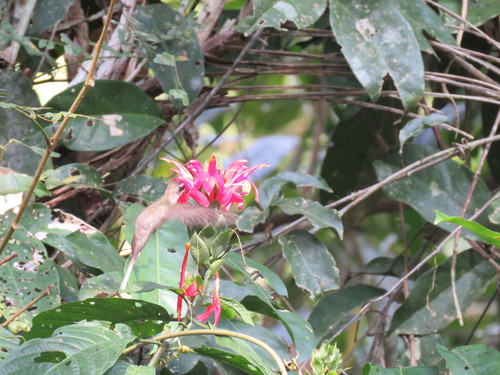 White-bearded Hermit
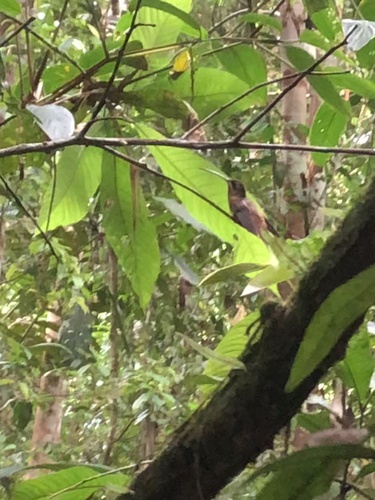 Koepcke's Hermit
In breve
Il segno di campo più affidabile per separare il White-bearded Hermit dal Koepcke's Hermit è la forma del becco: il Koepcke's Hermit ha un becco quasi dritto, mentre il White-bearded Hermit mostra un becco visibilmente ricurvo (soprattutto nelle femmine). Inoltre, il Koepcke's Hermit presenta un sopracciglio rufous e parti inferiori di un ricco buff rossastro, in contrasto con le parti inferiori grigie del White-bearded Hermit e le parti superiori verde bronzo. Entrambe le specie hanno una maschera facciale nera con striature bianche, ma il Koepcke's Hermit ha una pancia più chiara, con una sfumatura rufous e punte della coda rufous più larghe. L'areale è anche un forte indizio: il Koepcke's Hermit è endemico del Perù, mentre il White-bearded Hermit è diffuso nel nord del Sud America.
Consigli di identificazione
- La forma del becco è fondamentale: il Koepcke's Hermit ha un becco quasi dritto, mentre il becco del White-bearded Hermit è visibilmente ricurvo (soprattutto nelle femmine). Usa questo come tuo primo controllo se ottieni una buona vista laterale.
- Colore del sopracciglio: il Koepcke's Hermit mostra un sopracciglio rufous, che è assente nel White-bearded Hermit (invece ha parti superiori verde bronzo). Cerca questo in volo o quando l'uccello apre la coda.
- Colore delle parti inferiori: il Koepcke's Hermit ha una pancia e fianchi di un ricco buff rossastro, mentre il White-bearded Hermit è grigio sotto. Questo è visibile in buona luce da sotto o quando è posato.
- Schema della coda: il Koepcke's Hermit ha punte rufous larghe sulle piume della coda esterne e piume centrali della coda allungate con punte bianche. Il White-bearded Hermit non ha queste punte rufous larghe e ha copritrici della coda superiori con margini grigi.
- Schema facciale: entrambi hanno una maschera nera e un bordo bianco, ma la maschera del Koepcke's Hermit è più stretta e il mento/la gola sono più estensivamente bianchi. Il White-bearded Hermit ha un supercilium bianco e una striscia malare, con una striscia centrale bianca sulla gola.
- Corona e nuca: il Koepcke's Hermit ha una corona nerastra con un riflesso verdastro e una nuca verde bronzo lucida, mentre il White-bearded Hermit è più uniformemente verde bronzo sopra.
- Struttura femminile: le femmine di White-bearded Hermit hanno un becco più corto e più ricurvo rispetto ai maschi o alle femmine di Koepcke's Hermit. Se vedi un becco corto e fortemente ricurvo, sospetta il White-bearded.
- Dimensioni e impressione: il Koepcke's Hermit è leggermente più lungo e può apparire più robusto, ma la sovrapposizione è estesa; usalo solo come un indizio di supporto.
- Areale: il Koepcke's Hermit si trova solo in Perù. Se sei al di fuori del Perù, stai quasi certamente vedendo il White-bearded Hermit. All'interno del Perù, controlla l'areale locale e l'habitat.
- Vocalizzazioni: se senti un "b'zee b'zee b'zee" squillante e ronzante o un "tchwee/tchwing" crescente, probabilmente stai sentendo il Koepcke's Hermit. La mancanza di informazioni sulle vocalizzazioni per il White-bearded significa che il silenzio non è diagnostico.
- Contesto dell'habitat: entrambe le specie utilizzano foreste umide di pianura, ma il Koepcke's Hermit è molto più localizzato. Se sei in un sito noto per il Koepcke's Hermit, fai particolare attenzione al colore del becco e del sopracciglio.
- Nessun schema specifico per l'età noto: se stai vedendo un giovanile o un immaturo, fai affidamento sulla forma del becco e sul colore delle parti inferiori/sopracciglio, poiché non sono documentate differenze distintive nei modelli delle ali.
- Trappole del piumaggio: entrambi i sessi sono simili in ciascuna specie, quindi non fare affidamento sul sesso per l'identificazione. L'illuminazione può offuscare le tonalità rufous del Koepcke's Hermit, quindi controlla più angolazioni.
- Forma della coda in volo: le piume centrali allungate del Koepcke's Hermit possono essere più evidenti in volo o quando sono aperte, ma questo è sottile e meglio utilizzato come segno di supporto.
- Quando hai dubbi: se non riesci a vedere chiaramente la forma del becco o il colore del sopracciglio, prova a scattare una foto o aspetta una vocalizzazione per confermare l'identificazione.
Taglia
Il Koepcke's Hermit è leggermente più grande, misurando 14–15 cm di lunghezza, rispetto al White-bearded Hermit che misura 13–14 cm. I maschi di entrambe le specie sovrappongono il peso (Koepcke's: 4.7–5.8 g; White-bearded: 4–6 g), ma il Koepcke's è all'estremità superiore dell'intervallo e appare più robusto in mano. Le femmine di entrambe sono più leggere, ma la differenza è minore e non facilmente giudicabile sul campo. La dimensione da sola non è un separatore affidabile, ma il Koepcke's può apparire con una coda più lunga e leggermente più robusto.
Piumaggio
Non sono documentate differenze specifiche nei modelli delle ali superiori per giovanili o immaturi per queste specie, quindi ci si concentra sul piumaggio adulto e generale. Il Koepcke's Hermit si distingue per un sopracciglio rufous e una pancia e fianchi di un ricco buff rossastro, mentre la sua coda mostra punte rufous larghe (soprattutto sulle piume esterne) e piume centrali della coda allungate con punte bianche. La sua corona è nerastra con un riflesso verdastro, e la nuca e la schiena sono di bronzo lucido. Al contrario, il White-bearded Hermit ha parti superiori verde bronzo con copritrici della coda superiori con margini grigi, una pancia grigia e una striscia bianca sulla gola. Entrambi hanno una maschera facciale nera bordata di bianco, ma la maschera del Koepcke's è più stretta e il mento/la gola sono più estensivamente bianchi. Le femmine di White-bearded Hermit hanno un becco più corto e più ricurvo, ma altrimenti corrispondono ai maschi nel piumaggio.
Comportamento
Entrambe le specie sono tipici eremiti, spesso visti a foraggiare in basso nel sottobosco e visitare fiori. Non sono state notate differenze comportamentali distintive nelle fonti che potrebbero aiutare nella separazione sul campo. Entrambi possono apparire furtivi e sono meglio visti quando sono posati o si nutrono di fiori.
Habitat
Il White-bearded Hermit si trova in una vasta area dell'Amazzonia, inclusi Bolivia, Brasile, Colombia, Ecuador, Perù e Venezuela, preferendo foreste umide di pianura. Il Koepcke's Hermit è molto più ristretto, essendo endemico del Perù. Se sei al di fuori del Perù, il Koepcke's Hermit può essere escluso. All'interno del Perù, controlla le mappe dell'areale locale, poiché il Koepcke's è molto meno diffuso rispetto al White-bearded Hermit.
Voce
Il Koepcke's Hermit ha un canto distintivo: una serie squillante e ronzante di note brevi ("b'zee b'zee b'zee") e richiami che includono un "tchwee" o "tchwing" crescente e una serie discendente e accelerante di note alte. Non sono forniti dettagli sulle vocalizzazioni per il White-bearded Hermit nelle note, quindi la voce è diagnostica solo se senti il canto descritto del Koepcke's Hermit.
White-bearded Hermit · Koepcke's Hermit · I miei uccelli difficili