

Motmot

ヨーロッパチュウヒ 対 ヒメハイイロチュウヒ

Circus aeruginosus 対 Circus pygargus

ヨーロッパチュウヒとヒメハイイロチュウヒのクイズ
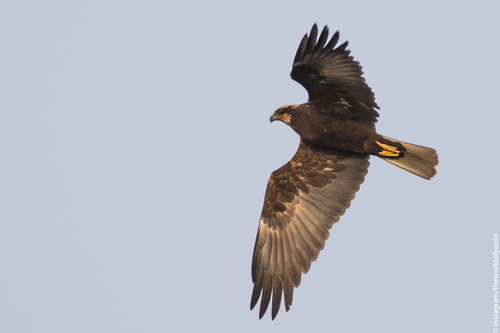
ヨーロッパチュウヒ (Circus aeruginosus) ヨーロッパチュウヒ
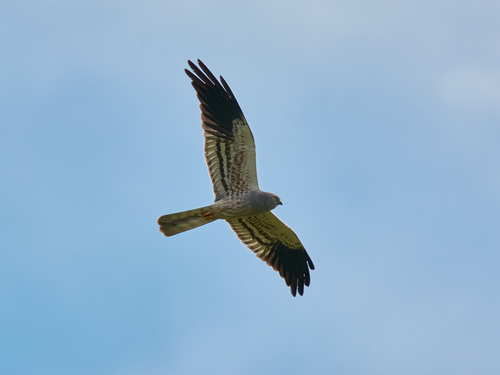
ヒメハイイロチュウヒ (Circus pygargus) ヒメハイイロチュウヒ

メディア

読み込み中…

要点

西ヨーロッパチュウヒとヒメハイイロチュウヒを区別する最も信頼できるフィールドマークは、全体的な構造と飛行スタイルです:西ヨーロッパチュウヒは、より大きく、翼が広く、重く、浮力の少ない飛行を持ち、ヒメハイイロチュウヒは、より細身で、長く、狭く、尖った翼を持ち、より優雅で、アジサシのような飛行をします。成鳥のオスは羽毛によって区別しやすいですが、メスと幼鳥は難しい場合があります—西ヨーロッパチュウヒの淡い頭と肩(特にメス)と、ヒメハイイロチュウヒのより均一な茶色を見分け、ヒメハイイロチュウヒの幼鳥は斑点のない赤褐色の腹部を持つことに注意してください。飛行中は、西ヨーロッパチュウヒの三色のオスの翼と淡い襟の欠如を確認してください(これはウスハイイロチュウヒに特有ですが、これらの2種には存在しません)。サイズと印象は、遠くからの最良の手がかりであることが多いです。

識別のコツ

  1. 飛行中の全体的な構造: 西ヨーロッパチュウヒは、より大きく、翼が広く、重く、浮力の少ない飛行を持ち、ヒメハイイロチュウヒは、より細身で、長く、狭く、尖った翼を持ちます。これは、遠くからや光が悪いときに最も早く区別できることが多いです。
  2. 翼の形: ヒメハイイロチュウヒは、より尖った「手」(外翼)を持ち、西ヨーロッパチュウヒの翼は、特にメスと幼鳥において、より広く、パドル状です。
  3. 飛行スタイル: ヒメハイイロチュウヒは、浮力のある翼の打撃で、より滑らかで弾力のある、ほぼアジサシのような飛行を持ち、西ヨーロッパチュウヒは、より安定して重く、時には脚をぶら下げて飛ぶことがあります。
  4. 成鳥オスの羽毛: 西ヨーロッパチュウヒのオスは、三色の翼(茶色の前羽、灰色の二次羽/尾、黒の初羽)と淡い頭/肩を示します;ヒメハイイロチュウヒのオスは、淡い灰色で黒い翼先端と黒い二次羽の帯、腹部/側面に錆色の筋があります。
  5. メス/幼鳥の頭の模様: 西ヨーロッパチュウヒのメスと幼鳥は、淡い、しばしばはっきりと対照的な頭、喉、肩を持ちます(ただし、これは擦り切れた鳥では薄くなることがあります);ヒメハイイロチュウヒのメス/幼鳥はこれを欠き、より均一な茶色の頭と強い淡いマークとして白い尾羽のみを持ちます。
  6. 幼鳥の腹部の模様: ヒメハイイロチュウヒの幼鳥は、斑点のない赤褐色の腹部と翼の覆羽を持ち、西ヨーロッパチュウヒの幼鳥は、より暗い茶色で黄色が少なく、時には淡い頭を持ちます。
  7. 上翼の模様: 西ヨーロッパチュウヒのオスは、茶色の前羽と灰色の二次羽/尾の間に強いコントラストを示します;ヒメハイイロチュウヒのオスは、二次羽の上と下に黒い帯がありますが、同じ三色効果はありません。
  8. 目の周り: メスの西ヨーロッパチュウヒは、暗い目の周りを持ち、淡い虹彩が際立ちます;ヒメハイイロチュウヒはこの特徴を強く示しません。
  9. メラニスティック型: 両種はメラニスティックであることがありますが、これらの鳥は稀で、フィールドでの区別は信頼できません。
  10. 止まっている構造: 西ヨーロッパチュウヒはより直立して止まり、より重く見えます;ヒメハイイロチュウヒはより細身で繊細です。
  11. 生息地の文脈: 広大な葦原や湿地では、西ヨーロッパチュウヒがより可能性が高く、乾燥した開けた野原や草原、特に繁殖期にはヒメハイイロチュウヒがより可能性があります。
  12. 性差の二形性: 両種は性差の二形性を持ちますが、西ヨーロッパチュウヒのメスの淡い頭/肩は重要なマークです;ヒメハイイロチュウヒのメスは、上部がより均一に茶色です。
  13. 白い尾羽: 両種は白い尾羽を示しますが、これはヒメハイイロチュウヒでより目立ち、ハイイロチュウヒから区別するのにはあまり役立ちません。
  14. サイズの印象: 西ヨーロッパチュウヒは明らかに大きく、重いです;2羽のチュウヒが一緒に見られる場合、サイズの違いは明らかですが、単独の鳥には注意が必要です。大きなメスのヒメハイイロチュウヒと小さなオスの西ヨーロッパチュウヒの重なりが発生することがあります。
  15. 落とし穴: 淡い襟の存在または欠如に頼らないでください(これはウスハイイロチュウヒに特有で、これらの2種にはありません);擦り切れた鳥には注意が必要で、西ヨーロッパチュウヒのメスの淡い頭/肩のコントラストは薄れることがあります。

大きさ

西ヨーロッパチュウヒはヒメハイイロチュウヒよりも明らかに大きく、重いです。西ヨーロッパチュウヒは長さ48〜56 cm、翼幅115〜130 cm、メスは最大800 gの重さを持ち、ヒメハイイロチュウヒは長さ43〜47 cm、翼幅97〜115 cm、平均成鳥の質量は約315 g(メスは最大345 g)です。フィールドでは、西ヨーロッパチュウヒはより大きく、翼が広いように見え、ヒメハイイロチュウヒはより細身で繊細で、相対的に長い尾と狭く、尖った翼を持っています。

羽色

行動

両種は、翼を浅いVの形で持ちながら、開けた地面の上を低く狩りますが、西ヨーロッパチュウヒはしばしば重く見え、翼の打撃が遅く、安定しており、時には脚をぶら下げて飛ぶことがあります。ヒメハイイロチュウヒは、より浮力があり優雅で、弾力のあるアジサシのような翼の打撃と、より機敏で浮遊するような飛行を持ちます。止まっているとき、西ヨーロッパチュウヒはより大きく、直立して見え、ヒメハイイロチュウヒはより細身で繊細です。

生息環境

両種は開けた国に見られますが、西ヨーロッパチュウヒは湿地、葦原、湿地により密接に関連しています。ヒメハイイロチュウヒは、特に繁殖期に、乾燥した開けた生息地(草原、ヒース、農地)を好みます。移動や冬には重なりが見られますが、文脈が役立つことがあります:広大な葦の上を飛ぶチュウヒは西ヨーロッパチュウヒの可能性が高く、乾燥した草原や農地の上を飛ぶものはヒメハイイロチュウヒである可能性があります。

より良い説明を送る

比較と同じ項目を使ってください。文章はすぐに公開されます。

The most reliable field mark to separate Western Marsh Harrier from Montagu's Harrier is overall structure and flight style: Marsh Harrier is bulkier with broader wings and a heavier, less buoyant flight, while Montagu's is more slender, with longer, narrower, and more pointed wings and a more elegant, tern-like flight. Adult males are easier to distinguish by plumage, but females and juveniles can be tricky—look for the Marsh Harrier's pale head and shoulders (especially in females) versus the more uniform brown of Montagu's, and note that Montagu's juveniles have unspotted, rufous underparts. In flight, check for the Marsh Harrier's three-toned male wing and the absence of a pale collar (which is diagnostic for Pallid but not present in either of these two). Size and jizz are often the best clues at a distance.

  1. Overall structure in flight: Marsh Harrier is bulkier with broader wings and a heavier, less buoyant flight; Montagu's is slimmer, with longer, narrower, and more pointed wings. This is often the fastest separation at a distance or in poor light.
  2. Wing shape: Montagu's Harrier has more pointed 'hands' (outer wing), while Marsh Harrier's wings are broader and more paddle-shaped, especially in females and juveniles.
  3. Flight style: Montagu's has a smoother, more elastic, almost tern-like flight with buoyant wingbeats; Marsh Harrier is steadier, heavier, and sometimes flies with legs dangling.
  4. Adult male plumage: Marsh Harrier males show a three-toned wing (brown forewing, grey secondaries/tail, black primaries) and a pale head/shoulder; Montagu's males are pale grey with black wingtips and black secondary bands, and rusty streaks on the belly/flanks.
  5. Female/juvenile head pattern: Marsh Harrier females and juveniles have a pale, often sharply contrasting head, throat, and shoulders (though this can be faint in worn birds); Montagu's females/juveniles lack this, with a more uniform brown head and only a white rump as a strong pale mark.
  6. Underpart pattern in juveniles: Montagu's juveniles have unspotted, rufous underparts and underwing coverts, while Marsh Harrier juveniles are darker brown with less yellow and sometimes a paler head.
  7. Upperwing pattern: Marsh Harrier males show a strong contrast between brown forewing and grey secondaries/tail; Montagu's males have black bands on the secondaries above and below, but not the same three-color effect.
  8. Eye area: Female Marsh Harrier has a darker eye area, making the pale iris stand out; Montagu's does not show this feature as strongly.
  9. Melanistic morphs: Both species can be melanistic, but these birds are rare and not reliably separated in the field.
  10. Perched structure: Marsh Harrier perches more upright and appears heavier; Montagu's is more slender and delicate.
  11. Habitat context: In extensive reedbeds or marshes, Marsh Harrier is more likely; in dry open fields or steppe, especially in breeding season, Montagu's is more probable.
  12. Sexual dimorphism: Both species are sexually dimorphic, but the pale head/shoulder of Marsh Harrier females is a key mark; Montagu's females are more uniformly brown above.
  13. White rump: Both species show a white rump, but this is more prominent in Montagu's and not as useful for separating these two as for distinguishing from Hen Harrier.
  14. Size impression: Marsh Harrier is noticeably larger and heavier; if two harriers are seen together, the size difference is obvious, but beware lone birds as overlap with large female Montagu's and small male Marsh Harrier can occur.
  15. Pitfalls: Do not rely on the presence or absence of a pale collar (diagnostic for Pallid Harrier, not for these two); beware worn or abraded birds, as pale head/shoulder contrast in Marsh Harrier females can fade.

Western Marsh Harrier is significantly larger and heavier than Montagu's Harrier. Marsh Harrier measures 48–56 cm in length with a wingspan of 115–130 cm and females weighing up to 800 g, while Montagu's Harrier is smaller at 43–47 cm length, 97–115 cm wingspan, and average adult mass around 315 g (female up to 345 g). In the field, Marsh Harrier appears bulkier and broader-winged, while Montagu's is slimmer and more delicate, with a proportionally longer tail and narrower, more pointed wings.

  • Juveniles/immatures: Juvenile Western Marsh Harriers resemble females but with less yellow on the shoulders and head; they are generally dark brown with a paler head and throat, but this can be faint in worn birds. Montagu's Harrier juveniles are more uniformly rufous below, lacking the spots and streaks of adults, and do not show the pale head or shoulders of Marsh Harrier. Both species have melanistic morphs, but these are rare and not reliable for separation.
  • Adult males: Marsh Harrier males are three-toned in flight: brown forewing, grey secondaries and tail, and black primaries. The head and shoulders are pale, but not sharply contrasting. Montagu's male is overall pale grey with black wingtips and distinctive black bands along the secondaries, plus rusty streaks on the belly and flanks; the upperwing is more mottled and darker than Hen or Pallid Harrier males, but not as contrasting as Marsh Harrier.
  • Adult females: Marsh Harrier females are dark chocolate-brown with a conspicuously paler head, throat, and shoulders (though this can be washed out in worn birds), and a dark eye area. Montagu's females are mostly dark brown above, pale yellow-brown below with longitudinal stripes and spotted wing coverts, and a white rump. The pale head/shoulder contrast is much less pronounced than in Marsh Harrier. Montagu's lacks the sharply pale head and the grey wing/tail patches of Marsh Harrier females.

Both species hunt low over open ground with wings held in a shallow V, but Western Marsh Harrier often appears heavier, with slower, steadier wingbeats and sometimes dangling legs. Montagu's Harrier is more buoyant and graceful, with elastic, tern-like wingbeats and a more agile, floating flight. Perched, Marsh Harrier looks bulkier and more upright; Montagu's is slimmer and more delicate.

Both species can be found in open country, but Western Marsh Harrier is more closely tied to wetlands, reedbeds, and marshes. Montagu's Harrier prefers drier open habitats such as grasslands, heath, and agricultural fields, especially during breeding. Overlap occurs in migration and winter, but context can help: a harrier quartering over extensive reeds is more likely Marsh Harrier, while one over dry steppe or farmland may well be Montagu's.

変更を破棄しますか?

保存していない編集があります。今離れると失われます。

ヨーロッパチュウヒ · ヒメハイイロチュウヒ · 苦手な鳥