

アメリカオオセグロカモメ 対 Herring Gull
Larus occidentalis 対 Larus argentatus
アメリカオオセグロカモメとHerring Gullのクイズ
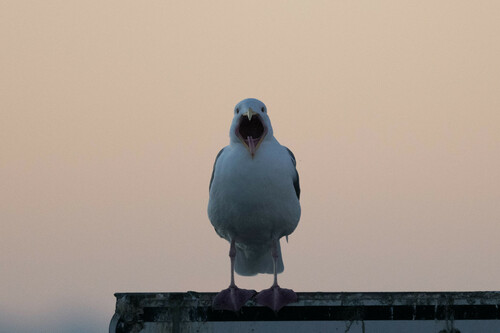 アメリカオオセグロカモメ
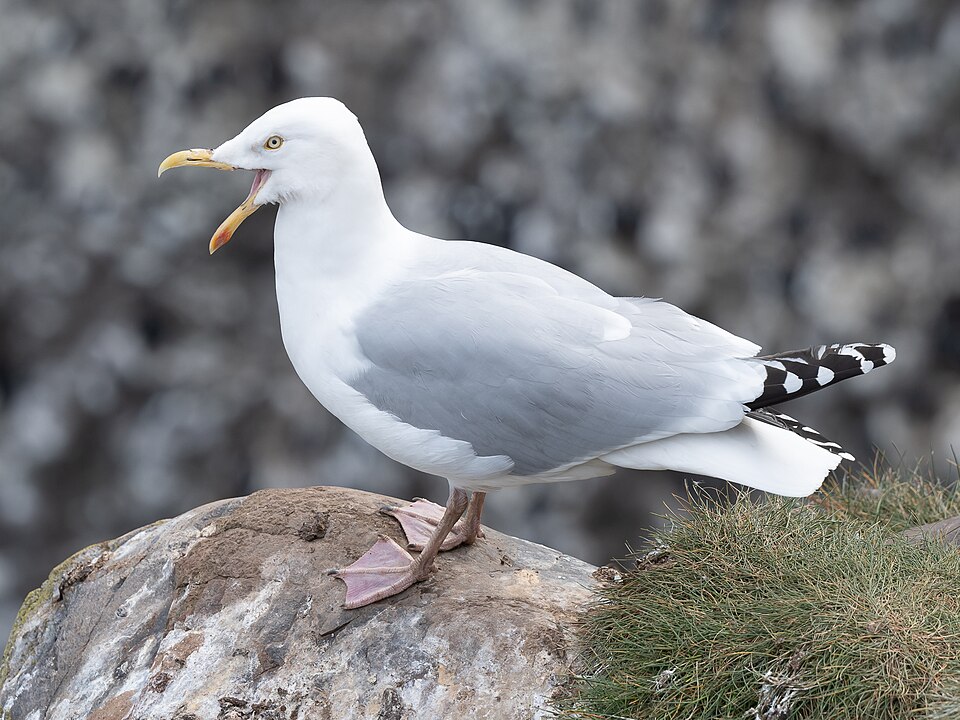 Herring Gull
要点
The most reliable field mark between Western Gull and Herring Gull is the mantle (back) color in adults: Western Gull shows a distinctly darker slate-gray mantle, while Herring Gull's mantle is a paler, silvery gray. In flight, adults of both species show black wingtips with white 'mirrors,' but the overall contrast with the mantle is much stronger in Western Gull. Immature birds are more challenging: both are mottled brown, but Herring Gull immatures are generally paler and show more extensive streaking, especially on the head and underparts, while Western Gull immatures tend to be duskier overall. Bill and leg color, as well as head streaking in nonbreeding adults, are also useful—Western Gull usually has a cleaner white head year-round, while Herring Gull develops brown streaks in winter. Structural differences are subtle but can help with experience.
識別のコツ
- Mantle Color (Adults): Western Gull adults have a distinctly darker slate-gray mantle compared to the paler silvery-gray of Herring Gull. This is the most reliable field mark in side-by-side views or good light.
- Head Streaking (Nonbreeding): Herring Gull adults develop brown streaks on the head and neck in winter; Western Gull usually keeps a clean white head year-round (especially in pure birds, not hybrids). This works best in winter.
- Bill Color and Shape: Both have yellow bills with a red spot, but Western Gull's bill is often stouter and more bulbous-tipped. Herring Gull's bill may appear slightly longer and slimmer, but this is subtle and variable.
- Leg Color: Herring Gull legs are pink at all ages (rarely yellowish in Baltic birds); Western Gull's legs are not described as diagnostic in the sources, so use with caution.
- Eye Color: Western Gull's eye color varies: pale yellow in southern birds, darker in northern. Herring Gull usually has pale eyes with a yellow orbital ring. This is subtle and overlaps.
- Juvenile/Immature Plumage: Herring Gull juveniles are paler brown with more streaking, especially on the head and underparts, and a dark bill. Western Gull immatures are duskier overall, with less contrast and less head streaking. In flight, look for overall darkness and contrast.
- Second/Third-winter Birds: Herring Gull immatures show a greyer back and whiter head earlier, with brown in the wings and dark bill markings. Western Gull immatures remain duskier and may reach adult-like plumage faster (especially southern subspecies).
- Wingtips (Adults): Both species have black wingtips with white 'mirrors,' but the contrast with the mantle is much stronger in Western Gull. Herring Gull's black wingtips blend more with the paler gray mantle.
- Habitat: Western Gull is strictly coastal on the Pacific coast of North America; Herring Gull is widespread in Europe and often found inland. Out-of-range records should be viewed with skepticism.
- Hybrid Pitfall: In the Pacific Northwest, Western Gull often hybridizes with Glaucous-winged Gull, producing birds with intermediate mantle and wingtip color. These hybrids can be confusing and may show more head streaking than pure Western Gulls.
- Size: Both are large gulls; Herring Gull can be slightly bulkier, especially males, but size is not reliable unless birds are together.
- Sex Differences: Male Herring Gulls are larger than females, but plumage is identical. Western Gull sexual dimorphism is not described as obvious.
- Flight Jizz: Both species are broad-winged and heavy-bodied, but Western Gull may appear slightly more compact and darker above in flight.
- Seasonal Context: If seen in Europe, it's almost certainly Herring Gull; if on the Pacific coast of North America, especially south of British Columbia, it's likely Western Gull.
- Bill Markings in Immatures: Herring Gull immatures have a dark bill; Western Gull immatures may also have a dark bill, but overall plumage is duskier and less streaked.
大きさ
Both species are large gulls and overlap in length and wingspan. Western Gull averages slightly smaller in mass (886 g [avonet/wikidata]) compared to Herring Gull (adult males 1,050–1,525 g, females 710–1,100 g [wikipedia]), but this is not a reliable field mark unless birds are side-by-side. Wing chord, bill, and tarsus lengths are similar, with Herring Gull sometimes appearing a bit bulkier, especially in males. Size alone is not a safe separator.
羽色
- Juvenile/First-winter: Both species are mottled brown, but Herring Gull juveniles are paler with more obvious streaking on the head and underparts, and a dark bill and eyes. Western Gull immatures are duskier, especially on the upperparts, and often appear less streaked on the head.
- Second-winter: Herring Gull shows a whiter head and underparts, less streaking, and a greyer back. Western Gull immatures remain darker overall, with less contrast between back and wings.
- Third-winter: Herring Gull is approaching adult plumage but retains some brown in the wings and dark bill markings. Western Gull (especially southern subspecies) may already be near adult plumage, but with some retained immature features.
- Adult breeding: Western Gull has a dark slate-gray mantle, white head (little to no streaking even in winter), yellow bill with red spot, and variable eye color (pale yellow in south, darker in north). Herring Gull has a paler gray mantle, white head in breeding, but develops brown streaks on the head and neck in nonbreeding. Bill is yellow with red spot, legs are pink (rarely yellowish in some Baltic birds), and eyes are pale with a yellow orbital ring. Both have black wingtips with white 'mirrors,' but the contrast with the mantle is much stronger in Western Gull.
行動
Both are typical large gulls: omnivorous, opportunistic, and often seen scavenging. Herring Gulls are noted for dropping shelled prey to break them and may use bait to catch fish. Western Gull behavior is not described as distinctive in the sources. Both species are aggressive at colonies and will take eggs or chicks of other birds.
生息環境
Western Gull is strictly coastal, found along the Pacific coast from British Columbia to Baja California, rarely straying far inland. Herring Gull is much more widespread, breeding throughout northern and western Europe and found in a variety of habitats, including coasts, inland lakes, rivers, and urban areas. If seen far inland in North America, Western Gull is very unlikely; Herring Gull is common in both coastal and inland settings in its range.