

Motmot

ヨーロッパクイナ 対 クイナ

Rallus aquaticus 対 Rallus indicus

ヨーロッパクイナとクイナのクイズ
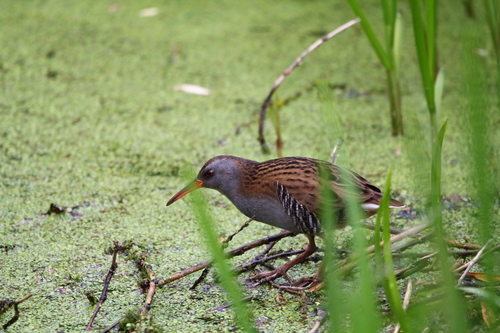
ヨーロッパクイナ (Rallus aquaticus) ヨーロッパクイナ
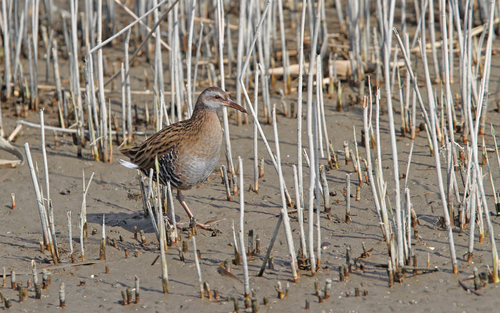
クイナ (Rallus indicus) クイナ

メディア

読み込み中…

要点

ヨーロッパクイナとクイナの間で最も信頼できるフィールドマークは、腹部と顔の色とパターンです:ヨーロッパクイナは青灰色の腹部と顔を持ち、赤いくちばしがありますが、クイナは茶色がかった腹部と明確な茶色のアイストライプを持っています。両種の幼鳥は鈍い色合いですが、ヨーロッパクイナの幼鳥はバフ色の腹部とコントラストが少なく、クイナの幼鳥は茶色の顔のストライプを保持しています。両種はサイズと形が似ていますが、クイナは平均してわずかに大きいです。鳴き声は明確に異なり、クイナは鋭く、クリアな鳴き声を出します。フィールドでは、最も一貫した区別のために顔のパターン、腹部の色、くちばしの色に注目してください。

識別のコツ

  1. 顔のパターン:ヨーロッパクイナは暗いスレートブルーの顔と腹部を持ち、くちばしと目の間に黒っぽい部分があります;クイナは明確な茶色のアイストライプと淡い茶色がかった腹部を示します。これは良い光の中で最も早いフィールドチェックです。
  2. くちばしの色と形:ヨーロッパクイナは長く、赤く、わずかに下向きに曲がったくちばしを持っています(クイナの頭の残りよりも長く、全体の頭の長さの約55〜58%);クイナのくちばしはそれほど鮮やかな赤ではなく、比例的に長くありません。これは成鳥では信頼できますが、幼鳥ではあまり信頼できません。
  3. 腹部の色:成鳥のヨーロッパクイナは青灰色の腹部を持ち、特に頭と腹の側面にあります;クイナは下側が茶色がかっており、白い喉とより茶色の胸を持っています。幼鳥では、ヨーロッパクイナはバフまたは白の腹部を持ち、暗いバーがありますが、クイナはより茶色のままです。
  4. 側面のバリング:成鳥のヨーロッパクイナは黒と白のバンドがある側面を持っています;クイナの側面はそれほど強くバンドされておらず、より茶色がかっています。幼鳥では、ヨーロッパクイナの側面は茶色とバフであり、黒と白ではありません。
  5. 尾の覆羽:両種は白い尾を持っていますが、ヨーロッパクイナは特にオスで暗いストリークを示すことがよくあります;クイナの尾はそれほどストリークがありません。これは微妙で、尾がはねたときに最もよく見えます。
  6. 上面:ヨーロッパクイナはオリーブブラウンの上面を持ち、特に肩に黒いストリークがあります;クイナは上面が淡く、ストリーキングが少ないです。これは微妙で、直接比較で最もよく使用されます。
  7. 幼鳥の混乱:幼鳥のヨーロッパクイナは青灰色のトーンが欠けており、バフの腹部と黒っぽい冠を持っています;クイナの幼鳥は全体的により茶色がかっており、茶色のアイストライプを保持しています。茶色の顔のストライプを持つ幼鳥を見たら、クイナを疑ってください。
  8. 声:ヨーロッパクイナの鳴き声は豚のような鳴き声です;クイナは鋭い「キュー」と金属的な「シュリンク、シュリンク」の音を出します。鳥の声を聞いたら、これを主な区別点として使用してください。
  9. サイズ:クイナはわずかに大きくて重い場合がありますが、重なりがかなりあります;直接比較がない限り、サイズに頼らないでください。
  10. 足の色:ヨーロッパクイナは肉色の足を持っています;クイナの足の色は特徴的とは記述されていないため、これは信頼できる区別点ではありません。
  11. 性差:両性は両種で似ています;雌のヨーロッパクイナはわずかに小さく、より細いくちばしを持っていますが、これはフィールドでは信頼できません。
  12. 飛行の視点:両種は飛ぶのを嫌がり、飛行中の構造は似ています。どちらにも特徴的な上翼パターンは記述されていないため、飛行中に見られた場合は体と顔の色に注目してください。
  13. 生息地と範囲:範囲を文脈の手がかりとして使用してください—ヨーロッパクイナはヨーロッパ/北アフリカに、クイナは北東アジアに生息し、東南アジアで越冬します。重なりのある地域では、羽毛と声に頼ってください。
  14. 換羽と飛行不能:ヨーロッパクイナは繁殖後約3週間飛行できません;クイナも同様の換羽期間があると思われますが、これはフィールドマークではありません。
  15. 個体の尾のパターン:成鳥のヨーロッパクイナは独自の尾のマーキングを持っていますが、これは種の区別には役立ちません—研究における個体識別のためのものです。

大きさ

両種は中型のクイナで、ヨーロッパクイナは長さ23〜28 cm、クイナは23〜29 cmです。クイナはわずかに重い場合があり(記録範囲75〜190 g)、ヨーロッパクイナは(オス114〜164 g、雌92〜107 g、平均111.5 g)です。しかし、この重なりはサイズだけでは信頼できるフィールドマークではありません。両者は葦を通って移動するために側面が圧縮されており、全体の比率は非常に似ています。

羽色

幼鳥と未熟な羽毛は主な落とし穴です:ヨーロッパクイナの幼鳥はバフまたは白の腹部を持ち、暗いバーと黒っぽい冠があり、成鳥の青灰色のトーンが欠けています;彼らの側面は茶色とバフであり、黒と白ではありません。クイナの幼鳥は詳細に記述されていませんが、重要な特徴は茶色のアイストライプの存在と、若い鳥でも一般的に茶色がかっていることです。成鳥では、ヨーロッパクイナはオリーブブラウンのストリークのある上面、暗いスレートブルーの顔と腹部、黒と白のバンドのある側面、暗いストリークのある白い尾を示します。クイナの成鳥は淡い、ストリークの少ない上面、茶色がかった腹部、茶色のアイストライプ、白い喉を持っています。ヨーロッパクイナのくちばしは長くて赤いですが、クイナのくちばしはそれほど鮮やかな色ではありません。両者の尾は白ですが、ヨーロッパクイナの尾は特にオスで黒いストリークを示す可能性が高いです。

行動

両種は秘密主義で、密な葦原や湿地の植生の中を移動します。彼らの行動、巣の構造、食事の習慣は基本的に同じであり、情報源に記載されています。両者は水辺を這い回ったり、追い立てられたときに短い飛行をするのを見ることができます。フィールドでの区別のための信頼できる行動の違いはありません。

生息環境

生息地はフィールドでの強力な区別点ではなく、両者はよく植生のある湿地、葦原、湿地に生息しています。ヨーロッパクイナはヨーロッパ、北アフリカ、西アジアに見られ、クイナは北東アジア(モンゴル、シベリア、中国、韓国、日本)で繁殖し、東南アジアで越冬します。重なりのある地域(例:移動の迷子)では、生息地だけでは彼らを区別できません。

声

鳴き声は強力な区別点です:ヨーロッパクイナは豚のような鳴き声を出し、クイナの鳴き声は鋭く、クリアで、「キュー」と金属的な「シュリンク、シュリンク」の音を含みます。クイナはヨーロッパクイナの録音に反応せず、その逆も同様です。鳴き声をよく聞いたら、これは彼らを区別する信頼できる方法です。

より良い説明を送る

比較と同じ項目を使ってください。文章はすぐに公開されます。

The most reliable field mark between Water Rail and Brown-cheeked Rail is the color and pattern of the underparts and face: Water Rail shows blue-grey underparts and face with a red bill, while Brown-cheeked Rail has brown-tinged underparts and a distinct brown eyestripe. Juveniles of both are duller, but Water Rail juveniles have buff underparts and less contrast, whereas Brown-cheeked Rail juveniles retain the brown facial stripe. Both species are similar in size and shape, but Brown-cheeked Rail is slightly larger on average. Vocalizations are distinctly different, with Brown-cheeked Rail giving sharper, clearer calls. In the field, focus on the face pattern, underpart color, and bill color for the most consistent separation.

  1. Face pattern: Water Rail has a dark slate-blue face and underparts, with a blackish area between bill and eye; Brown-cheeked Rail shows a distinct brown eyestripe and paler, brown-tinged underparts. This is often the fastest field check in good light.
  2. Bill color and shape: Water Rail has a long, red, slightly down-curved bill (longer than the rest of the rail's head, about 55–58% of total head length); Brown-cheeked Rail's bill is less vividly red and not as long proportionally. This is reliable in adults, less so in juveniles.
  3. Underpart color: Adult Water Rail has blue-grey underparts, especially on the sides of the head and belly; Brown-cheeked Rail is brown-tinged below, with a white throat and browner breast. In juveniles, Water Rail is buff or white below with darker bars, while Brown-cheeked Rail remains browner.
  4. Flank barring: Water Rail adults have black and white barred flanks; Brown-cheeked Rail's flanks are less strongly barred and more brownish. In juveniles, Water Rail's flanks are brown and buff, not black and white.
  5. Undertail coverts: Both have a white undertail, but Water Rail often shows dark streaks, especially in males; Brown-cheeked Rail's undertail is less streaked. This is subtle and best seen when the tail is flicked.
  6. Upperparts: Water Rail has olive-brown upperparts with black streaks, especially on the shoulders; Brown-cheeked Rail is paler above, with less streaking. This is subtle and best used in direct comparison.
  7. Juvenile confusion: Juvenile Water Rail lacks blue-grey tones and has buff underparts and a blackish crown; Brown-cheeked Rail juveniles are browner overall and retain the brown eyestripe. If you see a juvenile with a brown facial stripe, suspect Brown-cheeked Rail.
  8. Voice: Water Rail's call is a pig-like squeal; Brown-cheeked Rail gives a sharp 'kyu' and metallic 'shrink, shrink' notes. If you hear the bird, use this as a primary separator.
  9. Size: Brown-cheeked Rail can be slightly larger and heavier, but the overlap is substantial; do not rely on size unless you have direct comparison.
  10. Leg color: Water Rail has flesh-brown legs; Brown-cheeked Rail's leg color is not described as distinctive, so this is not a reliable separator.
  11. Sex differences: Both sexes are similar in both species; female Water Rail is slightly smaller with a more slender bill, but this is not reliable in the field.
  12. Flight views: Both species are reluctant fliers and show similar structure in flight. No distinctive upperwing pattern is described for either, so focus on body and face color if seen in flight.
  13. Habitat and range: Use range as a context clue—Water Rail in Europe/North Africa, Brown-cheeked Rail in northeast Asia and wintering in Southeast Asia. In areas of overlap, rely on plumage and voice.
  14. Moult and flightlessness: Water Rail is flightless for about three weeks after breeding due to moult; Brown-cheeked Rail likely has a similar moult period, but this is not a field mark.
  15. Individual undertail patterns: Water Rail adults have unique undertail markings, but this is not useful for species separation—more for individual identification in studies.

Both species are medium-sized rails, with Water Rail measuring 23–28 cm in length and Brown-cheeked Rail 23–29 cm. Brown-cheeked Rail can be slightly heavier (recorded range 75–190 g) compared to Water Rail (males 114–164 g, females 92–107 g, average 111.5 g). However, this overlap means size alone is not a reliable field mark. Both are laterally compressed for moving through reeds, and their overall proportions are very similar.

Juvenile and immature plumage is the main pitfall: Water Rail juveniles have buff or white underparts with darker bars and a blackish crown, lacking the blue-grey tones of adults; their flanks are marked brown and buff, not black and white. Brown-cheeked Rail juveniles are not described in detail, but the key feature is the presence of a brown eyestripe and generally browner underparts, even in young birds. In adults, Water Rail shows olive-brown streaked upperparts, dark slate-blue face and underparts, black and white barred flanks, and a white undertail with dark streaks. Brown-cheeked Rail adults have paler, less streaked upperparts, brown-tinged underparts, a brown eyestripe, and a white throat. The bill of Water Rail is longer and redder, while Brown-cheeked Rail's bill is less vividly colored. In both, the undertail is white, but Water Rail's is more likely to show black streaks, especially in males.

Both species are secretive, moving through dense reedbeds and wetland vegetation. Their behavior, nest structure, and feeding habits are essentially the same, as noted in the sources. Both can be seen creeping along the water's edge or making short flights when flushed. There are no reliable behavioral differences for field separation.

Habitat is not a strong separator in the field, as both occupy well-vegetated wetlands, reedbeds, and marshes. Water Rail is found across Europe, North Africa, and western Asia, while Brown-cheeked Rail breeds in northeast Asia (Mongolia, Siberia, China, Korea, Japan) and winters in Southeast Asia. In areas of overlap (e.g., migration vagrancy), habitat alone will not distinguish them.

Vocalizations are a strong separator: Water Rail gives a pig-like squeal, while Brown-cheeked Rail's calls are sharper and clearer, including a piping 'kyu' and metallic slurred 'shrink, shrink' notes. Brown-cheeked Rail does not respond to Water Rail recordings, and vice versa. If you hear the call well, this is a reliable way to separate them.

変更を破棄しますか?

保存していない編集があります。今離れると失われます。

ヨーロッパクイナ · クイナ · 苦手な鳥