

Porciglione vs Brown-cheeked Rail
Rallus aquaticus contro Rallus indicus
Fai un quiz con Porciglione e Brown-cheeked Rail
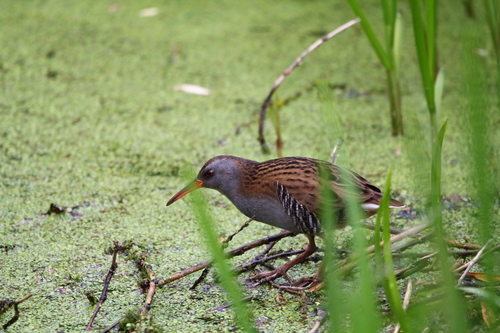 Porciglione
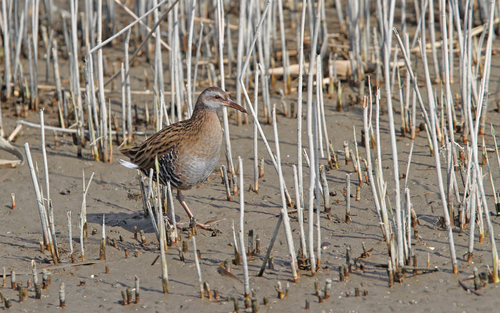 Brown-cheeked Rail
In breve
Il segno di campo più affidabile tra Porciglione e Brown-cheeked Rail è il colore e il motivo delle parti inferiori e del viso: il Porciglione mostra parti inferiori e viso blu-grigio con un becco rosso, mentre il Brown-cheeked Rail ha parti inferiori con sfumature marroni e una distintiva striscia marrone attorno agli occhi. I giovani di entrambi sono più opachi, ma i giovani del Porciglione hanno parti inferiori color crema e meno contrasto, mentre i giovani del Brown-cheeked Rail mantengono la striscia facciale marrone. Entrambe le specie sono simili in dimensioni e forma, ma il Brown-cheeked Rail è leggermente più grande in media. Le vocalizzazioni sono nettamente diverse, con il Brown-cheeked Rail che emette richiami più acuti e chiari. Sul campo, concentrati sul motivo del viso, sul colore delle parti inferiori e sul colore del becco per la separazione più coerente.
Consigli di identificazione
- Motivo del viso: Il Porciglione ha un viso e parti inferiori blu scuro, con un'area nerastra tra becco e occhio; il Brown-cheeked Rail mostra una distintiva striscia marrone attorno agli occhi e parti inferiori più chiare, con sfumature marroni. Questo è spesso il controllo di campo più veloce in buona luce.
- Colore e forma del becco: Il Porciglione ha un becco lungo, rosso, leggermente curvato verso il basso (più lungo rispetto al resto della testa del rail, circa il 55–58% della lunghezza totale della testa); il becco del Brown-cheeked Rail è meno vividamente rosso e non così lungo proporzionalmente. Questo è affidabile negli adulti, meno nei giovani.
- Colore delle parti inferiori: L'adulto Porciglione ha parti inferiori blu-grigio, specialmente sui lati della testa e dell'addome; il Brown-cheeked Rail è con sfumature marroni sotto, con una gola bianca e un petto più marrone. Nei giovani, il Porciglione è color crema o bianco sotto con barre più scure, mentre il Brown-cheeked Rail rimane più marrone.
- Striature laterali: Gli adulti del Porciglione hanno fianchi barrati in bianco e nero; i fianchi del Brown-cheeked Rail sono meno fortemente barrati e più marroni. Nei giovani, i fianchi del Porciglione sono marroni e color crema, non in bianco e nero.
- Copritail: Entrambi hanno un sottocoda bianco, ma il Porciglione spesso mostra striature scure, specialmente nei maschi; il sottocoda del Brown-cheeked Rail è meno striato. Questo è sottile e meglio visibile quando la coda viene scossa.
- Parti superiori: Il Porciglione ha parti superiori marrone oliva con striature nere, specialmente sulle spalle; il Brown-cheeked Rail è più chiaro sopra, con meno striature. Questo è sottile e meglio utilizzato in confronto diretto.
- Confusione nei giovani: Il giovane Porciglione manca di toni blu-grigi e ha parti inferiori color crema e una corona nerastra; i giovani del Brown-cheeked Rail sono più marroni e mantengono la striscia marrone attorno agli occhi. Se vedi un giovane con una striscia facciale marrone, sospetta il Brown-cheeked Rail.
- Voce: Il richiamo del Porciglione è un grido simile a quello di un maiale; il Brown-cheeked Rail emette un acuto 'kyu' e note metalliche 'shrink, shrink'. Se senti l'uccello, usa questo come separatore principale.
- Dimensioni: Il Brown-cheeked Rail può essere leggermente più grande e pesante, ma la sovrapposizione è sostanziale; non fare affidamento sulle dimensioni a meno che tu non abbia un confronto diretto.
- Colore delle gambe: Il Porciglione ha gambe color carne-marrone; il colore delle gambe del Brown-cheeked Rail non è descritto come distintivo, quindi questo non è un separatore affidabile.
- Differenze sessuali: Entrambi i sessi sono simili in entrambe le specie; la femmina del Porciglione è leggermente più piccola con un becco più snello, ma questo non è affidabile sul campo.
- Viste in volo: Entrambe le specie sono riluttanti a volare e mostrano una struttura simile in volo. Non è descritto alcun motivo distintivo per l'ala superiore per entrambe, quindi concentrati sul colore del corpo e del viso se visti in volo.
- Habitat e distribuzione: Usa la distribuzione come indizio contestuale—Porciglione in Europa/Nord Africa, Brown-cheeked Rail nel nord-est asiatico e invernante nel sud-est asiatico. Nelle aree di sovrapposizione, fai affidamento sulla livrea e sulla voce.
- Muta e incapacità di volare: Il Porciglione è incapace di volare per circa tre settimane dopo la riproduzione a causa della muta; il Brown-cheeked Rail probabilmente ha un periodo di muta simile, ma questo non è un segno di campo.
- Schemi individuali del sottocoda: Gli adulti del Porciglione hanno marcature uniche nel sottocoda, ma questo non è utile per la separazione delle specie—più per l'identificazione individuale negli studi.
Taglia
Entrambe le specie sono rail di dimensioni medie, con il Porciglione che misura 23–28 cm di lunghezza e il Brown-cheeked Rail 23–29 cm. Il Brown-cheeked Rail può essere leggermente più pesante (intervallo registrato 75–190 g) rispetto al Porciglione (maschi 114–164 g, femmine 92–107 g, media 111.5 g). Tuttavia, questa sovrapposizione significa che le dimensioni da sole non sono un segno di campo affidabile. Entrambi sono compressi lateralmente per muoversi tra le canne, e le loro proporzioni complessive sono molto simili.
Piumaggio
La livrea giovanile e immatura è il principale ostacolo: i giovani del Porciglione hanno parti inferiori color crema o bianche con barre più scure e una corona nerastra, mancando dei toni blu-grigi degli adulti; i loro fianchi sono marcati in marrone e color crema, non in bianco e nero. I giovani del Brown-cheeked Rail non sono descritti in dettaglio, ma la caratteristica chiave è la presenza di una striscia marrone attorno agli occhi e generalmente parti inferiori più marroni, anche nei giovani uccelli. Negli adulti, il Porciglione mostra parti superiori striate di marrone oliva, viso e parti inferiori blu scuro, fianchi barrati in bianco e nero, e un sottocoda bianco con striature scure. Gli adulti del Brown-cheeked Rail hanno parti superiori più chiare, meno striate, parti inferiori con sfumature marroni, una striscia marrone attorno agli occhi e una gola bianca. Il becco del Porciglione è più lungo e rosso, mentre il becco del Brown-cheeked Rail è meno vividamente colorato. In entrambi, il sottocoda è bianco, ma quello del Porciglione è più probabile che mostri striature nere, specialmente nei maschi.
Comportamento
Entrambe le specie sono segrete, muovendosi attraverso densi canneti e vegetazione umida. Il loro comportamento, la struttura del nido e le abitudini alimentari sono essenzialmente gli stessi, come notato nelle fonti. Entrambi possono essere visti strisciare lungo il bordo dell'acqua o fare brevi voli quando vengono disturbati. Non ci sono differenze comportamentali affidabili per la separazione sul campo.
Habitat
L'habitat non è un forte separatore sul campo, poiché entrambe occupano zone umide ben vegetate, canneti e paludi. Il Porciglione si trova in tutta Europa, Nord Africa e Asia occidentale, mentre il Brown-cheeked Rail nidifica nel nord-est asiatico (Mongolia, Siberia, Cina, Corea, Giappone) e inverna nel sud-est asiatico. Nelle aree di sovrapposizione (ad es., vagabondaggio migratorio), l'habitat da solo non li distinguerà.
Voce
Le vocalizzazioni sono un forte separatore: il Porciglione emette un grido simile a quello di un maiale, mentre i richiami del Brown-cheeked Rail sono più acuti e chiari, inclusi un 'kyu' fischiante e note metalliche 'shrink, shrink'. Il Brown-cheeked Rail non risponde alle registrazioni del Porciglione, e viceversa. Se senti bene il richiamo, questo è un modo affidabile per separarli.