

Motmot

タウンゼンドウミツバメ 対 エインリーウミツバメ

Hydrobates socorroensis 対 Hydrobates cheimomnestes

タウンゼンドウミツバメとエインリーウミツバメのクイズ
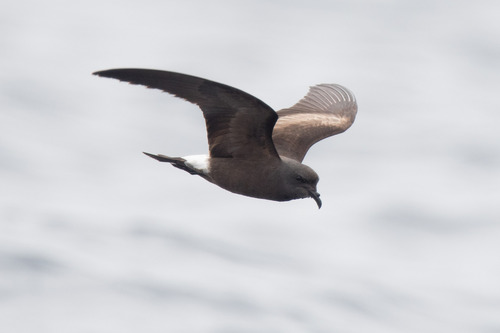
タウンゼンドウミツバメ (Hydrobates socorroensis) タウンゼンドウミツバメ
エインリーウミツバメ (Hydrobates cheimomnestes) エインリーウミツバメ

メディア

読み込み中…

要点

タウンゼンドウミツバメとエインリーウミツバメをフィールドで分ける最も信頼できる方法は、グアダルーペ島でのタイミングと場所によるものです:タウンゼンドは夏に繁殖し、エインリーは冬に繁殖します。構造的にも羽色も、これら二種は非常に似ており、どちらも暗いすすけた茶色から黒っぽい羽色を示し、白い尾羽の斑点、適度に長い分岐した尾、長い翼を持っています。エインリーは、羽が摩耗した前換羽の羽色でわずかに茶色がかって見えることがあり、その尾羽の斑点は中央にあまり定義されていない暗い部分を持つU字型と説明されています。実際には、外見だけに基づくフィールドでの分離は非常に難しく、近くで見るか手に持って見ることがなければ不可能なことが多いため、文脈と季節が重要です。

識別のコツ

  1. 繁殖シーズンのタイミングは最も信頼できるフィールドの手がかりです: グアダルーペ島でウミツバメに出会った場合、夏にいるのはタウンゼンド、冬にいるのはエインリーです。これはフィールドでの最も実用的な分離です。
  2. 尾羽の斑点の形: エインリーは、中央にあまり定義されていない暗い部分を持つU字型の白い尾羽の斑点を持つと説明されています。素晴らしい視界や写真があれば、このパターンを探してください。ただし、これは微妙であり、常に見えるわけではないことに注意してください。
  3. 摩耗した鳥の羽色のトーン: 前換羽の成鳥エインリーは、羽が摩耗したときに、一般的に黒っぽいタウンゼンドと比べて、より茶色がかって見えることがあります。しかし、この違いはわずかで、両種の光の加減や摩耗に影響されることがあります。
  4. 全体的な色合い: 両種は暗いすすけた茶色から黒っぽいので、エインリーの茶色のトーンが明らかで、摩耗の文脈がある場合を除いて、一般的な色に頼って分離しないでください。
  5. 尾と翼の構造: 両方とも適度に長い分岐した尾と長い翼を持っています。これらの特徴は二種を分けるのには役立ちませんが、他のウミツバメ種を除外するのには役立ちます。
  6. 足の突出: 両種とも、飛行中に足が尾を超えて伸びることはないため、これは分離の印ではありません。
  7. くちばし、脚、足の色: 両種ともにすべて黒であり、分離には役立ちません。
  8. 幼鳥と未成熟の羽色: 両種において、特徴的な幼鳥や未成熟の上翼や飛行の印は記載されていないため、年齢によるフィールドでの分離は提供されません。
  9. 繁殖以外の地理的範囲: タウンゼンドは南カリフォルニア北部から10°Nまでの範囲が多く、エインリーはガラパゴスまで南下します。繁殖の文脈からよく見られた場合は、広い範囲を考慮してくださいが、重複の可能性があります。
  10. コロニーの行動: 両種ともに隙間や巣穴に巣を作り、コロニーでは夜行性です。これはフィールドIDには役立ちません。
  11. 声: 情報源には声の違いは記載されていないため、呼び声や歌に頼らないでください。
  12. 豊富さ: 両種ともにグアダルーペ島で珍しく、地元の繁殖者であり、エインリーはおそらく数千羽しかいない可能性があります。地域でバードウォッチングをする場合は、季節と文脈を注意深く確認してください。
  13. 落とし穴: ほとんどのフィールドマークは微妙であり、近くでの観察や手に持っての検査がなければ信頼できません。尾羽の斑点の形や茶色のトーンのわずかな違いを過剰に解釈しないでください。強い支持文脈(季節、場所)がない限り。

大きさ

両種は中型のウミツバメで、エインリーは約18 cm(7.1インチ)と記載されており、情報源にはタウンゼンドの直接的な測定は記載されていません。両方ともかなり長い翼と適度に長い分岐した尾を持っています。これら二種の間でフィールドで役立つサイズの違いは文書化されていません。

羽色

すべての年齢において、両種は一般的に暗いすすけた茶色から黒っぽく、白い尾羽の斑点を持っています。エインリーウミツバメの尾羽の斑点は、中央にあまり定義されていない暗い部分を持つU字型と説明されており、これはタウンゼンドとの微妙な違いかもしれませんが、これは独特であるとは述べられておらず、常に信頼できるわけではありません。前換羽の成鳥エインリーは、羽が摩耗したときにより茶色がかって見えることがありますが、これは微妙で変動する印です。両種ともに黒いくちばし、脚、足を持ち、飛行中に足が尾を超えて伸びることはありません。両種において特徴的な幼鳥や未成熟の翼のパターンに関するノートはなく、年齢特有の飛行印はここでは診断的ではありません。

行動

両種は外洋性であり、オープンオーシャンの上で多くの時間を過ごし、グアダルーペ島で繁殖のために戻ります。繁殖コロニーでは、エインリーは夜行性で、他のウミツバメと同様に隙間や巣穴に巣を作ります。彼らの飛行と採餌行動は非常に似ている可能性が高く、フィールド識別に役立つ行動の違いは記載されていません。

生息環境

両種はグアダルーペ島で繁殖しますが、繁殖の時期は異なります:タウンゼンドは夏に、エインリーは冬に繁殖します。繁殖シーズン以外では、タウンゼンドは南カリフォルニア北部から東太平洋の10°N緯度までの範囲があり、エインリーはガラパゴス諸島まで南下し、繁殖中はバハカリフォルニア半島沖で見られます。両種ともに繁殖地から離れると厳密に外洋性であるため、繁殖のタイミングを除いて生息地の重複は高いです。

より良い説明を送る

比較と同じ項目を使ってください。文章はすぐに公開されます。

The most reliable way to separate Townsend's and Ainley's Storm-Petrels in the field is by their timing and location on Guadalupe Island: Townsend's breeds in summer, Ainley's in winter. Structurally and in plumage, these two are extremely similar, both showing dark sooty-brown to blackish plumage with a white rump patch, moderately long forked tails, and long wings. Ainley's may show a slightly browner tone in worn pre-moult plumage, and its rump patch is described as U-shaped with a central poorly defined dark area. In practice, field separation based on appearance alone is extremely challenging and often not possible without close or in-hand views, so context and season are crucial.

  1. Breeding season timing is the most reliable field clue: If you encounter storm-petrels on Guadalupe Island, those present in summer are Townsend's, while those in winter are Ainley's. This is the single most practical separation in the field.
  2. Rump patch shape: Ainley's is described as having a U-shaped white rump patch with a central, poorly defined dark area. If you have excellent views or photos, look for this pattern, but be aware that this is subtle and may not always be visible or diagnostic.
  3. Plumage tone in worn birds: Pre-moult adult Ainley's can appear more brownish when the plumage is worn, compared to the generally blackish look of Townsend's. However, this difference is slight and can be affected by lighting and wear in both species.
  4. Overall coloration: Both species are dark sooty-brown to blackish, so do not rely on general color for separation unless the brown tone in Ainley's is obvious and you have context for wear.
  5. Tail and wing structure: Both have moderately long, forked tails and long wings with blunt points. These features are not useful for separating the two, but can help rule out other storm-petrel species.
  6. Feet projection: In both species, the feet do not extend beyond the tail in flight, so this is not a separating mark.
  7. Bill, legs, and feet color: All are black in both species; not useful for separation.
  8. Juvenile and immature plumage: No distinctive juvenile or immature upperwing or flight marks are described for either species, so age does not provide a field separation.
  9. Geographic range outside breeding: Townsend's is more likely north to southern California and south to 10°N, while Ainley's ranges south to the Galápagos. If seen well outside the breeding context, consider the broader range, but overlap is possible.
  10. Colony behavior: Both nest in crevices and burrows and are nocturnal at colonies; this does not help with field ID.
  11. Voice: No vocal differences are described in the sources, so do not rely on calls or songs.
  12. Abundance: Both are rare and local breeders on Guadalupe Island, with Ainley's possibly numbering only a few thousand birds. If you are birding in the area, check the season and context carefully.
  13. Pitfalls: Most field marks are subtle and unreliable without close study or in-hand examination. Do not overinterpret slight differences in rump patch shape or brownish tones unless you have strong supporting context (season, location).

Both species are medium-sized storm-petrels, with Ainley's described as about 18 cm (7.1 in) long, and no direct measurement given for Townsend's in the sources. Both have fairly long wings and moderately long, forked tails. There is no documented size difference that is useful in the field between these two species.

For all ages, both species are generally dark sooty-brown to blackish, with a white rump patch. Ainley's Storm-Petrel's rump patch is described as U-shaped with a central, poorly defined dark area, which may be a subtle distinction from Townsend's, but this is not stated as unique or always reliable. Pre-moult adult Ainley's may appear more brownish when the plumage is worn, but this is a subtle and variable mark. Both species have black beaks, legs, and feet, and the feet do not extend beyond the tail in flight. There are no notes on distinctive juvenile or immature wing patterns for either species, so age-specific flight marks are not diagnostic here.

Both species are pelagic and spend much of their lives over open ocean, returning to breed on Guadalupe Island. At breeding colonies, Ainley's is nocturnal and nests in crevices and burrows, similar to other storm-petrels. Their flight and foraging behavior are likely very similar, and there are no behavioral distinctions noted that would help in field identification.

Both species breed on Guadalupe Island, but at different times of year: Townsend's in summer, Ainley's in winter. Outside the breeding season, Townsend's ranges north to southern California and south to 10°N latitude in the Eastern Pacific, while Ainley's ranges south to the Galápagos Islands and is found off the Baja California Peninsula during breeding. Both are strictly pelagic away from breeding sites, so habitat overlap is high except for the timing of breeding.

変更を破棄しますか?

保存していない編集があります。今離れると失われます。

タウンゼンドウミツバメ · エインリーウミツバメ · 苦手な鳥