

Townsend's Storm-Petrel vs Ainley's Storm-Petrel
Hydrobates socorroensis contro Hydrobates cheimomnestes
Fai un quiz con Townsend's Storm-Petrel e Ainley's Storm-Petrel
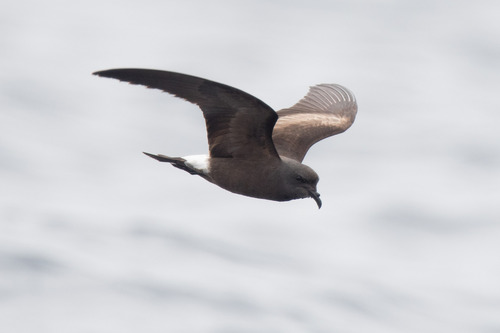 Townsend's Storm-Petrel
 Ainley's Storm-Petrel
In breve
Il modo più affidabile per separare i Townsend's e gli Ainley's Storm-Petrels sul campo è attraverso il loro tempismo e la loro posizione sull'isola di Guadalupe: i Townsend's si riproducono in estate, gli Ainley's in inverno. Strutturalmente e nel piumaggio, questi due sono estremamente simili, entrambi mostrano piumaggio di un marrone scuro fuligginoso a nerastro con una macchia bianca sul dorso, code forked di lunghezza moderata e ali lunghe. Gli Ainley's possono mostrare una tonalità leggermente più marrone nel piumaggio usurato pre-muta, e la loro macchia sul dorso è descritta come a forma di U con un'area centrale scura poco definita. In pratica, la separazione sul campo basata solo sull'aspetto è estremamente impegnativa e spesso non è possibile senza viste ravvicinate o in mano, quindi il contesto e la stagione sono cruciali.
Consigli di identificazione
- Il tempismo della stagione di riproduzione è l'indizio più affidabile sul campo: Se incontri storm-petrels sull'isola di Guadalupe, quelli presenti in estate sono i Townsend's, mentre quelli in inverno sono gli Ainley's. Questa è la separazione più pratica sul campo.
- Forma della macchia sul dorso: Gli Ainley's sono descritti come aventi una macchia bianca sul dorso a forma di U con un'area centrale scura poco definita. Se hai ottime viste o foto, cerca questo schema, ma sii consapevole che è sottile e potrebbe non essere sempre visibile o diagnostico.
- Tonalità del piumaggio negli uccelli usurati: Gli Ainley's adulti pre-muta possono apparire più marroni quando il piumaggio è usurato, rispetto all'aspetto generalmente nerastro dei Townsend's. Tuttavia, questa differenza è lieve e può essere influenzata dall'illuminazione e dall'usura in entrambe le specie.
- Colorazione generale: Entrambe le specie sono di un marrone scuro fuligginoso a nerastro, quindi non fare affidamento sul colore generale per la separazione a meno che la tonalità marrone negli Ainley's non sia ovvia e tu abbia contesto per l'usura.
- Struttura della coda e delle ali: Entrambi hanno code forked di lunghezza moderata e ali lunghe con punte smussate. Queste caratteristiche non sono utili per separare i due, ma possono aiutare a escludere altre specie di storm-petrel.
- Proiezione dei piedi: In entrambe le specie, i piedi non si estendono oltre la coda in volo, quindi questo non è un segno di separazione.
- Colore del becco, delle gambe e dei piedi: Tutti sono neri in entrambe le specie; non utile per la separazione.
- Piumaggio giovanile e immaturo: Non ci sono segni distintivi di piumaggio giovanile o immaturo descritti per nessuna delle due specie, quindi l'età non fornisce una separazione sul campo.
- Gamma geografica al di fuori della riproduzione: I Townsend's sono più probabili a nord fino alla California meridionale e a sud fino a 10°N, mentre gli Ainley's si estendono a sud fino alle Galápagos. Se visti bene al di fuori del contesto di riproduzione, considera la gamma più ampia, ma è possibile una sovrapposizione.
- Comportamento delle colonie: Entrambi nidificano in crepe e tane e sono notturni nelle colonie; questo non aiuta con l'ID sul campo.
- Voce: Non ci sono differenze vocali descritte nelle fonti, quindi non fare affidamento su richiami o canti.
- Abbondanza: Entrambi sono allevatori rari e locali sull'isola di Guadalupe, con gli Ainley's che potrebbero contare solo poche migliaia di uccelli. Se stai osservando uccelli nella zona, controlla attentamente la stagione e il contesto.
- Insidie: La maggior parte dei segni sul campo è sottile e inaffidabile senza uno studio ravvicinato o un esame in mano. Non sovrainterpretare lievi differenze nella forma della macchia sul dorso o tonalità marroni a meno che tu non abbia un forte contesto di supporto (stagione, posizione).
Taglia
Entrambe le specie sono storm-petrels di dimensioni medie, con gli Ainley's descritti come lunghi circa 18 cm (7,1 in), e nessuna misura diretta fornita per i Townsend's nelle fonti. Entrambi hanno ali abbastanza lunghe e code forked di lunghezza moderata. Non ci sono differenze di dimensioni documentate che siano utili sul campo tra queste due specie.
Piumaggio
Per tutte le età, entrambe le specie sono generalmente di un marrone scuro fuligginoso a nerastro, con una macchia bianca sul dorso. La macchia sul dorso dell'Ainley's Storm-Petrel è descritta come a forma di U con un'area centrale scura poco definita, che potrebbe essere una distinzione sottile dai Townsend's, ma questo non è dichiarato come unico o sempre affidabile. Gli Ainley's adulti pre-muta possono apparire più marroni quando il piumaggio è usurato, ma questo è un segno sottile e variabile. Entrambe le specie hanno becchi, gambe e piedi neri, e i piedi non si estendono oltre la coda in volo. Non ci sono note su schemi distintivi di ali per uccelli giovanili o immaturi per nessuna delle due specie, quindi i segni di volo specifici per età non sono diagnostici qui.
Comportamento
Entrambe le specie sono pelagiche e trascorrono gran parte della loro vita sopra l'oceano aperto, tornando a riprodursi sull'isola di Guadalupe. Nelle colonie di riproduzione, gli Ainley's sono notturni e nidificano in crepe e tane, simili ad altri storm-petrels. Il loro comportamento di volo e di foraggiamento è probabilmente molto simile, e non ci sono distinzioni comportamentali notate che aiuterebbero nell'identificazione sul campo.
Habitat
Entrambe le specie si riproducono sull'isola di Guadalupe, ma in tempi diversi dell'anno: i Townsend's in estate, gli Ainley's in inverno. Al di fuori della stagione di riproduzione, i Townsend's si estendono a nord fino alla California meridionale e a sud fino a 10°N di latitudine nel Pacifico orientale, mentre gli Ainley's si estendono a sud fino alle Isole Galápagos e si trovano al largo della penisola di Baja California durante la riproduzione. Entrambi sono strettamente pelagici lontano dai siti di riproduzione, quindi la sovrapposizione dell'habitat è alta tranne che per il tempismo della riproduzione.
Townsend's Storm-Petrel · Ainley's Storm-Petrel · I miei uccelli difficili