

Motmot

アラナミキンクロ 対 ヨーロッパビロードキンクロ

Melanitta perspicillata 対 Melanitta fusca

アラナミキンクロとヨーロッパビロードキンクロのクイズ
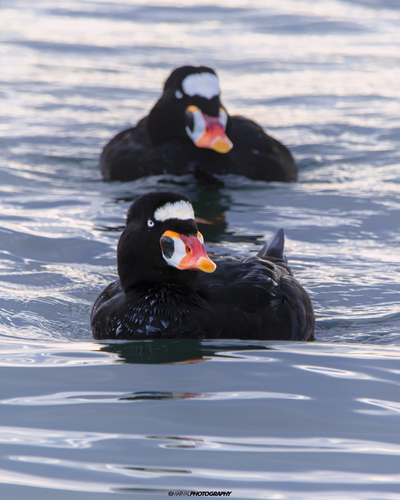
アラナミキンクロ (Melanitta perspicillata) アラナミキンクロ
ヨーロッパビロードキンクロ (Melanitta fusca) ヨーロッパビロードキンクロ

メディア

読み込み中…

要点

アラナミキンクロとヨーロッパビロードキンクロをすべての羽色で、特に飛行中に区別するための最も信頼できるフィールドマークは、大胆な白い翼のパッチの有無です:すべての年齢と性別のヨーロッパビロードキンクロは、上翼に大きく目立つ白いパッチを示しますが、アラナミキンクロの翼は完全に暗いです。成鳥のオスのアラナミキンクロは、白い額と後頭部のパッチ、そして膨らんだ多色のくちばしでさらに区別されますが、Velvetのオスは目の後ろに小さな白いマークがあり、部分的にオレンジのくちばしを持っています。メスと幼鳥はより難しいですが、アラナミキンクロのメスと若い鳥は、より四角くて太いくちばしを持ち、時には淡い後頭部のパッチを持っていますが、ヨーロッパビロードキンクロのメスはより茶色で、Surfの頭のパターンがありません。サイズも手がかりです:ヨーロッパビロードキンクロはアラナミキンクロよりもはるかに重く、翼が長いです。特に飛行中や遠くから鳥を観察する際は、常に翼のパターンを最初に確認してください。

識別のコツ

  1. 白い翼のパッチの飛行中: すべての年齢と性別のヨーロッパビロードキンクロは、飛行中および時には休息中に上翼に大きく大胆な白いパッチを示します。アラナミキンクロは決して白い翼のパッチを示さず、その翼は完全に暗いです。これは、特に幼鳥やメスにとって最も信頼できるマークです。
  2. 頭のパターン(成鳥のオス): アラナミキンクロのオスは額と後頭部に白いパッチがあります;ヨーロッパビロードキンクロのオスは目の後ろに小さな白い点がありますが、額や後頭部には白がありません。近距離で成鳥のオスを観察する際にこれを使用してください。
  3. くちばしの形と色(成鳥のオス): アラナミキンクロのオスは膨らんだ多色のくちばしを持っています(遠くからはオレンジ色で、白、赤、黄色、そして基部近くに黒い点があります)。ヨーロッパビロードキンクロのオスは長くて広いくちばしを持っていますが、Surfの膨らんだ多色の外観はありません。
  4. メスと幼鳥の頭のパターン: メスのアラナミキンクロはより茶色で、目の下の頬に不明瞭な淡いパッチがあり、時には淡い後頭部のパッチを持っています(スコーターの中でユニークです)。ヨーロッパビロードキンクロのメスは鈍く、茶色で、Surfの後頭部のパッチがなく、淡い頬のパッチも示しません。
  5. くちばしの構造(メス/幼鳥): アラナミキンクロのメスと幼鳥は、より太くて四角いくちばしを持ち、頭のプロファイルがより平らです。ヨーロッパビロードキンクロのくちばしは長くて広いですが、基部での角が少ないです。
  6. 幼鳥/幼鳥の腹部: 幼鳥のアラナミキンクロは全体的により淡く、茶色で、白っぽい胸と腹を持っています;ヨーロッパビロードキンクロの幼鳥は成鳥のメスに似ていますが、常に茶色で、Surfの淡い腹がなく、再度、白い翼のパッチが最良の区別点です。
  7. サイズと体重: ヨーロッパビロードキンクロはアラナミキンクロよりもはるかに大きく、重いです。両方を一緒に見ると、Velvetはより太く、翼が長く見えます。注意してください:孤立した鳥は姿勢や距離によって誤解を招くことがあります。
  8. 光沢と羽の質(成鳥のオス): ヨーロッパビロードキンクロのオスは光沢のある黒です;アラナミキンクロのオスはベルベットのような黒です。これは微妙で、良い光の下で近距離でのみ役立ちます。
  9. 尾の形: ヨーロッパビロードキンクロはより尖った尾を持っています;アラナミキンクロの尾はあまり尖っていません。これは小さなマークで、フィールドで使用するのは難しいです。
  10. 地理的範囲: 北アメリカでは、アラナミキンクロが期待されます;ヨーロッパビロードキンクロは珍しい迷鳥です。ヨーロッパでは、逆が真実です。IDを作成する際は、常に場所を考慮してください。
  11. 羽毛の季節性: アラナミキンクロのオスは夏(エクリプス羽毛)により茶色で鈍く見えることがありますが、白い翼のパッチは依然としてありません。ヨーロッパビロードキンクロの白い翼のパッチは年間を通じて存在します。
  12. 2年目のオス: アラナミキンクロの2年目のオスは完全な白い額のパッチが欠けていることがあり、より茶色に見えますが、依然としてVelvetの白い翼のパッチはありません。
  13. 混合スコーターフロック: フロックをスキャンする際は、白い翼のパッチを使用してアラナミキンクロの中からVelvetを選び出すか、その逆を行ってください。照明や翼の位置に注意してください。
  14. 休息中: 翼が部分的に開いている場合、ヨーロッパビロードキンクロが水に止まっているときでも白いパッチが見えることがあります;アラナミキンクロはこれを決して示しません。
  15. 疑わしい場合: 翼のパターンが見えない場合は、頭のパターン、くちばしの形、サイズの組み合わせを使用してください。ただし、メスと幼鳥は非常に似ている可能性があるため、可能な限り翼のパッチを優先してください。

大きさ

ヨーロッパビロードキンクロはアラナミキンクロよりもはるかに大きく、重いです。Velvetの平均体重は1762gで、体長は51〜56cm、翼幅は90〜99cmですが、アラナミキンクロの平均は950g、体長は44〜48cm、翼幅は76〜77cmです。これにより、ヨーロッパビロードキンクロはより太く、翼が長くなります。両種が一緒に見られるときや混合スコーターフロックで明らかになることがあります。ただし、サイズだけでは距離や孤立した鳥で誤解を招く可能性があるため、他のマークと組み合わせて使用してください。

羽色

すべての年齢における最も診断的な羽毛の違いは、飛行中の翼のパターンです:ヨーロッパビロードキンクロ(オス、メス、幼鳥)は、上翼に大きく大胆な白いパッチを示し、休息中(翼が部分的に開いているとき)および特に飛行中に見えます。アラナミキンクロの翼は、どの年齢や性別でも白いパッチがなく、均一に暗いです。

成鳥のオスのアラナミキンクロはベルベットのような黒で、額と後頭部に白いパッチがあり、膨らんだ多色のくちばしを持っています。ヨーロッパビロードキンクロのオスは光沢のある黒ですが、額/後頭部の白が欠けています;代わりに、目の後ろに小さな白い点があり、大きな白い翼のパッチがあります。メスのアラナミキンクロはより茶色で、やや暗い冠、目の下の不明瞭な淡い頬のパッチ、時には淡い後頭部のパッチ(スコーターの中でユニーク)を持ち、さらに太いくちばしを持っています。メスのヨーロッパビロードキンクロは鈍く、茶色で、Surfの淡い後頭部のパッチと頬のパターンがなく、飛行中には常に白い翼のパッチを示します。幼鳥のアラナミキンクロはメスに似ていますが、下側がより淡く、白っぽい腹と胸を持っています;Velvetの幼鳥は成鳥のメスに似ていますが、白い翼のパッチを示します。2年目のオスのアラナミキンクロは完全な白い額のパッチが欠けていることがあり、成鳥よりも茶色で、よりクリーンカットに見えますが、依然としてVelvetの白い翼のパッチはありません。エクリプスまたは非繁殖羽毛では、アラナミキンクロのオスは鈍く見えることがありますが、翼のパターンは診断的です。

行動

両種は大型の潜水性海ガモで、しばしば開けた水面で群れで見られます。ヨーロッパビロードキンクロはより大きく、重いため、飛行中や水面でより重々しく見えることがあり、首が太く、くちばしが長く広いです。アラナミキンクロは、特にメスや幼鳥において、よりコンパクトでやや四角い頭の外観を持つ傾向があります。両種は食物を求めて潜水し、他のスコーターと一緒にいるのを見ることができますが、行動は広く似ており、信頼できる区別にはなりません。

生息環境

アラナミキンクロは北アメリカに生息し、カナダ北部とアラスカで繁殖し、太平洋と大西洋の両岸で越冬します。ヨーロッパビロードキンクロは北ヨーロッパの最北部と西パレアクティックで繁殖し、ヨーロッパおよび西アジアの沿岸水域で越冬します。北アメリカでは、ヨーロッパビロードキンクロは非常に珍しく、迷鳥となります;ヨーロッパでは、アラナミキンクロが珍しいです。生息地の重複は、例外的な状況(例:迷鳥)でのみ可能であるため、地理的な文脈は通常強力な手がかりです。

より良い説明を送る

比較と同じ項目を使ってください。文章はすぐに公開されます。

The most reliable field mark to separate Surf Scoter from Velvet Scoter in all plumages—especially in flight—is the presence or absence of a bold white wing patch: Velvet Scoter of all ages and sexes shows a large, striking white patch on the upperwing, while Surf Scoter’s wings are entirely dark. Adult male Surf Scoters are further distinguished by their white forehead and nape patches and a swollen, multicolored bill, while Velvet males have a smaller white mark behind the eye and a partly orange bill. Females and immatures are trickier, but Surf Scoter females and young birds have a squarer, bulkier bill and sometimes a pale nape patch, while Velvet Scoter females are browner and lack the Surf’s head pattern. Size is also a clue: Velvet Scoter is much heavier and longer-winged than Surf Scoter. Always check wing pattern first, especially when viewing birds in flight or at a distance.

  1. White wing patch in flight: Velvet Scoter of all ages and sexes shows a large, bold white patch on the upperwing, visible in flight and sometimes at rest. Surf Scoter never shows a white wing patch—its wings are entirely dark. This is the single most reliable mark, especially for immatures and females.
  2. Head pattern (adult males): Surf Scoter males have a white patch on the forehead and nape; Velvet Scoter males have a small white spot behind the eye but no white on the forehead or nape. Use this when viewing adult males at close range.
  3. Bill shape and color (adult males): Surf Scoter males have a swollen, multicolored bill (orange at a distance, with white, red, yellow, and a black spot near the base). Velvet Scoter males have a long, broad bill that is partly orange but lacks the Surf’s swollen, multicolored look.
  4. Female and immature head pattern: Female Surf Scoters are browner with indistinct pale patches on the cheeks below the eye and sometimes a pale nape patch (unique among scoters). Velvet Scoter females are duller, browner, lack the Surf’s nape patch, and do not show pale cheek patches.
  5. Bill structure (females/immatures): Surf Scoter females and immatures have a bulkier, squarer bill with a more flattened head profile. Velvet Scoter’s bill is long and broad but less squared-off at the base.
  6. Juvenile/immature underparts: Juvenile Surf Scoters are paler and browner overall, with a whitish breast and belly; Velvet Scoter juveniles are similar to adult females but are always browner and lack the Surf’s pale belly, but again, the white wing patch is the best separator.
  7. Size and bulk: Velvet Scoter is much larger and heavier than Surf Scoter. If you see both together, Velvet will look bulkier and longer-winged. Beware: lone birds can be misleading due to posture or distance.
  8. Gloss and feather quality (adult males): Velvet Scoter males are glossy black; Surf Scoter males are velvety black. This is subtle and only useful at close range in good light.
  9. Tail shape: Velvet Scoter has a more pointed tail; Surf Scoter’s tail is less pointed. This is a minor mark and hard to use in the field.
  10. Geographic range: In North America, Surf Scoter is expected; Velvet Scoter would be a rare vagrant. In Europe, the reverse is true. Always consider location when making an ID.
  11. Plumage seasonality: Surf Scoter males may appear browner and duller in summer (eclipse plumage), but the white wing patch is still absent. Velvet Scoter’s white wing patch is present year-round.
  12. Second-year males: Surf Scoter second-year males may lack the full white forehead patch and look browner, but still lack the white wing patch of Velvet.
  13. Mixed scoter flocks: When scanning flocks, use the white wing patch to pick out Velvet among Surf Scoters or vice versa. Be cautious of lighting and wing position.
  14. At rest: If the wing is partially open, the white patch may be visible on Velvet Scoter even when perched on water; Surf Scoter will never show this.
  15. When in doubt: If you cannot see the wing pattern, use a combination of head pattern, bill shape, and size, but be aware that females and immatures can be very similar—prioritize the wing patch whenever possible.

Velvet Scoter is significantly larger and heavier than Surf Scoter. Velvet averages 1762 g in body mass and measures 51–56 cm in length with a wingspan of 90–99 cm, while Surf Scoter averages 950 g, 44–48 cm in length, and a wingspan of 76–77 cm. This makes Velvet Scoter bulkier and longer-winged, which can be apparent when both species are seen together or in mixed scoter flocks. However, size alone can be misleading at a distance or with lone birds, so use in combination with other marks.

The most diagnostic plumage difference at all ages is the wing pattern in flight: Velvet Scoter (male, female, and immature) shows a large, bold white patch on the upperwing, visible both at rest (when the wing is partially open) and especially in flight. Surf Scoter’s wings are uniformly dark with no white patch at any age or sex.

Adult male Surf Scoters are velvety black with a white patch on the forehead and nape, and a swollen, multicolored bill. Velvet Scoter males are glossy black but lack the forehead/nape white; instead, they have a small white spot behind the eye and a large white wing patch. Female Surf Scoters are browner, with a slightly darker crown, indistinct pale cheek patches below the eye, and sometimes a pale nape patch (unique among scoters), plus a bulkier bill. Female Velvet Scoters are duller, browner, and lack the Surf’s pale nape patch and cheek pattern, but always show the white wing patch in flight. Juvenile Surf Scoters resemble females but are paler below, with a whitish belly and breast; Velvet juveniles are similar to adult females but still show the white wing patch. Second-year male Surf Scoters may lack the full white forehead patch, appearing browner and less clean-cut than adults, but still lack the white wing patch of Velvet. In eclipse or non-breeding plumage, Surf Scoter males may look duller, but the wing pattern remains diagnostic.

Both species are large, diving sea ducks, often seen in flocks on open water. Velvet Scoter, being larger and heavier, may appear more ponderous in flight and on the water, with a thicker neck and longer, broader bill. Surf Scoter tends to have a more compact, slightly squarer-headed look, especially in females and immatures. Both species dive for food and can be seen associating with other scoters, but their behavior is broadly similar and not a reliable separator.

Surf Scoter is native to North America, breeding in northern Canada and Alaska and wintering along both Pacific and Atlantic coasts. Velvet Scoter breeds in far northern Europe and the western Palearctic and winters in European and western Asian coastal waters. In North America, Velvet Scoter is extremely rare and would be a vagrant; in Europe, Surf Scoter is the rarity. Habitat overlap is possible only in exceptional circumstances (e.g., vagrancy), so geographic context is usually a strong clue.

変更を破棄しますか?

保存していない編集があります。今離れると失われます。

アラナミキンクロ · ヨーロッパビロードキンクロ · 苦手な鳥