

Surf Scoter vs Orco marino
Melanitta perspicillata contro Melanitta fusca
Fai un quiz con Surf Scoter e Orco marino
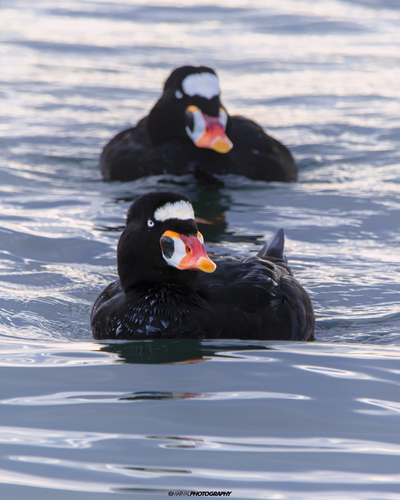 Surf Scoter
 Orco marino
In breve
Il segno di campo più affidabile per separare il Surf Scoter dall'Orco marino in tutte le livree—specialmente in volo—è la presenza o l'assenza di una grande macchia bianca sulle ali: l'Orco marino di tutte le età e sessi mostra una grande e vistosa macchia bianca sulla parte superiore dell'ala, mentre le ali del Surf Scoter sono completamente scure. I maschi adulti di Surf Scoter si distinguono ulteriormente per le macchie bianche sulla fronte e sul nape e un becco gonfio e multicolore, mentre i maschi di Orco marino hanno una piccola macchia bianca dietro l'occhio e un becco parzialmente arancione. Le femmine e gli immaturi sono più difficili da distinguere, ma le femmine di Surf Scoter e i giovani hanno un becco più quadrato e massiccio e talvolta una macchia chiara sul nape, mentre le femmine di Orco marino sono più marroni e mancano del motivo della testa del Surf. Anche le dimensioni sono un indizio: l'Orco marino è molto più pesante e ha ali più lunghe rispetto al Surf Scoter. Controlla sempre prima il motivo delle ali, specialmente quando osservi gli uccelli in volo o a distanza.
Consigli di identificazione
- Macchia bianca sulle ali in volo: L'Orco marino di tutte le età e sessi mostra una grande e audace macchia bianca sulla parte superiore dell'ala, visibile in volo e talvolta a riposo. Il Surf Scoter non mostra mai una macchia bianca sulle ali—le sue ali sono completamente scure. Questo è il segno più affidabile, specialmente per gli immaturi e le femmine.
- Motivo della testa (maschi adulti): I maschi di Surf Scoter hanno una macchia bianca sulla fronte e sul nape; i maschi di Orco marino hanno una piccola macchia bianca dietro l'occhio ma nessuna bianca sulla fronte o sul nape. Usa questo quando osservi i maschi adulti da vicino.
- Forma e colore del becco (maschi adulti): I maschi di Surf Scoter hanno un becco gonfio e multicolore (arancione a distanza, con bianco, rosso, giallo e una macchia nera vicino alla base). I maschi di Orco marino hanno un becco lungo e largo che è parzialmente arancione ma manca dell'aspetto gonfio e multicolore del Surf.
- Motivo della testa delle femmine e degli immaturi: Le femmine di Surf Scoter sono più marroni con macchie chiare indistinte sulle guance sotto l'occhio e talvolta una macchia chiara sul nape (unico tra gli scoter). Le femmine di Orco marino sono più opache, più marroni, mancano della macchia chiara sul nape del Surf e non mostrano macchie chiare sulle guance.
- Struttura del becco (femmine/immaturi): Le femmine di Surf Scoter e gli immaturi hanno un becco più massiccio e quadrato con un profilo della testa più appiattito. Il becco dell'Orco marino è lungo e largo ma meno squadrato alla base.
- Parte inferiore giovanile/immatura: I giovani Surf Scoter sono più chiari e marroni in generale, con un petto e una pancia biancastri; i giovani di Orco marino sono simili alle femmine adulte ma sono sempre più marroni e mancano della pancia chiara del Surf, ma ancora una volta, la macchia bianca sulle ali è il miglior separatore.
- Dimensioni e massa: L'Orco marino è molto più grande e pesante del Surf Scoter. Se vedi entrambi insieme, l'Orco apparirà più massiccio e con ali più lunghe. Fai attenzione: gli uccelli solitari possono essere fuorvianti a causa della postura o della distanza.
- Lucentezza e qualità delle piume (maschi adulti): I maschi di Orco marino sono neri lucidi; i maschi di Surf Scoter sono neri vellutati. Questo è sottile e utile solo a distanza ravvicinata in buona luce.
- Forma della coda: L'Orco marino ha una coda più appuntita; la coda del Surf Scoter è meno appuntita. Questo è un segno minore e difficile da usare sul campo.
- Distribuzione geografica: In Nord America, il Surf Scoter è atteso; l'Orco marino sarebbe un raro vagabondo. In Europa, il contrario è vero. Considera sempre la posizione quando fai un'identificazione.
- Stagionalità della livrea: I maschi di Surf Scoter possono apparire più marroni e opachi in estate (livrea di eclissi), ma la macchia bianca sulle ali è ancora assente. La macchia bianca dell'Orco marino è presente tutto l'anno.
- Maschi di secondo anno: I maschi di Surf Scoter di secondo anno possono mancare della macchia bianca completa sulla fronte e apparire più marroni, ma mancano ancora della macchia bianca dell'Orco.
- Frotte miste di scoter: Quando osservi le frotte, usa la macchia bianca sulle ali per individuare l'Orco tra i Surf Scoter o viceversa. Fai attenzione all'illuminazione e alla posizione delle ali.
- A riposo: Se l'ala è parzialmente aperta, la macchia bianca può essere visibile sull'Orco marino anche quando è appollaiato sull'acqua; il Surf Scoter non mostrerà mai questo.
- Quando hai dubbi: Se non riesci a vedere il motivo delle ali, usa una combinazione di motivo della testa, forma del becco e dimensioni, ma sii consapevole che le femmine e gli immaturi possono essere molto simili—dai priorità alla macchia delle ali ogni volta che è possibile.
Taglia
L'Orco marino è significativamente più grande e pesante del Surf Scoter. L'Orco pesa in media 1762 g e misura 51–56 cm di lunghezza con un'apertura alare di 90–99 cm, mentre il Surf Scoter pesa in media 950 g, 44–48 cm di lunghezza e un'apertura alare di 76–77 cm. Questo rende l'Orco marino più massiccio e con ali più lunghe, il che può essere evidente quando entrambe le specie vengono viste insieme o in frotte miste di scoter. Tuttavia, le dimensioni da sole possono essere fuorvianti a distanza o con uccelli solitari, quindi usa in combinazione con altri segni.
Piumaggio
La differenza di livrea più diagnostica a tutte le età è il motivo delle ali in volo: l'Orco marino (maschio, femmina e immaturo) mostra una grande e audace macchia bianca sulla parte superiore dell'ala, visibile sia a riposo (quando l'ala è parzialmente aperta) che specialmente in volo. Le ali del Surf Scoter sono uniformemente scure senza macchia bianca a qualsiasi età o sesso.
I maschi adulti di Surf Scoter sono neri vellutati con una macchia bianca sulla fronte e sul nape, e un becco gonfio e multicolore. I maschi di Orco marino sono neri lucidi ma mancano della macchia bianca sulla fronte/nape; invece, hanno una piccola macchia bianca dietro l'occhio e una grande macchia bianca sulle ali. Le femmine di Surf Scoter sono più marroni, con una corona leggermente più scura, macchie chiare indistinte sulle guance sotto l'occhio, e talvolta una macchia chiara sul nape (unico tra gli scoter), oltre a un becco più massiccio. Le femmine di Orco marino sono più opache, più marroni, e mancano della macchia chiara sul nape del Surf e del motivo delle guance, ma mostrano sempre la macchia bianca sulle ali in volo. I giovani Surf Scoter somigliano alle femmine ma sono più chiari sotto, con una pancia e un petto biancastri; i giovani di Orco marino sono simili alle femmine adulte ma mostrano ancora la macchia bianca sulle ali. I maschi di Surf Scoter di secondo anno possono mancare della macchia bianca completa sulla fronte, apparendo più marroni e meno definiti rispetto agli adulti, ma mancano ancora della macchia bianca dell'Orco. In livrea di eclissi o non riproduttiva, i maschi di Surf Scoter possono apparire più opachi, ma il motivo delle ali rimane diagnostico.
Comportamento
Entrambe le specie sono grandi anatre marine tuffatrici, spesso viste in frotte su acque aperte. L'Orco marino, essendo più grande e pesante, può apparire più pesante in volo e sull'acqua, con un collo più spesso e un becco più lungo e largo. Il Surf Scoter tende ad avere un aspetto più compatto e leggermente più quadrato, specialmente nelle femmine e negli immaturi. Entrambe le specie si tuffano per cercare cibo e possono essere viste associarsi con altri scoter, ma il loro comportamento è ampiamente simile e non è un separatore affidabile.
Habitat
Il Surf Scoter è nativo del Nord America, nidificando nel Canada settentrionale e in Alaska e svernando lungo entrambe le coste del Pacifico e dell'Atlantico. L'Orco marino nidifica nel nord dell'Europa e nel Palearctico occidentale e sverna nelle acque costiere europee e dell'Asia occidentale. In Nord America, l'Orco marino è estremamente raro e sarebbe un vagabondo; in Europa, il Surf Scoter è la rarità. L'overlap degli habitat è possibile solo in circostanze eccezionali (ad es., vagabondaggio), quindi il contesto geografico è di solito un forte indizio.