

Motmot

メジロヒラハシタイランチョウ 対 カンムリヒラハシタイランチョウ

Platyrinchus cancrominus 対 Platyrinchus coronatus

メジロヒラハシタイランチョウとカンムリヒラハシタイランチョウのクイズ
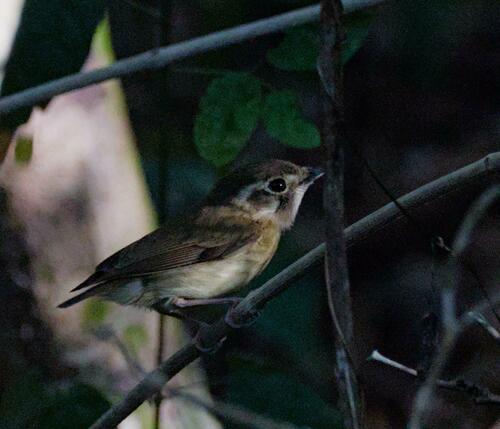
メジロヒラハシタイランチョウ (Platyrinchus cancrominus) メジロヒラハシタイランチョウ
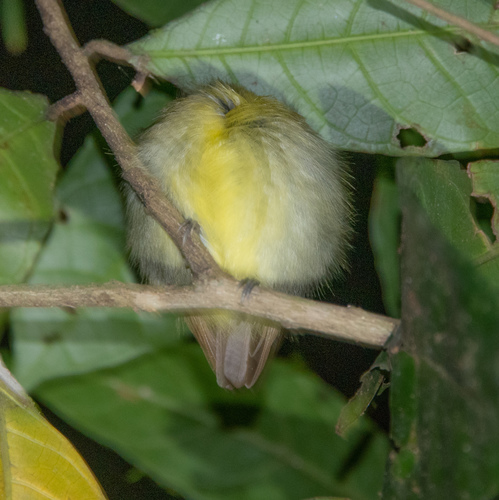
カンムリヒラハシタイランチョウ (Platyrinchus coronatus) カンムリヒラハシタイランチョウ

メディア

読み込み中…

要点

メジロヒラハシタイランチョウとカンムリヒラハシタイランチョウを区別するための最も信頼できるフィールドマークは、カラフルな冠の斑点の有無です:カンムリヒラハシタイランチョウの成鳥は、特徴的なオレンジまたは赤褐色の冠の斑点を示します(しばしば部分的に隠れています)が、メジロヒラハシタイランチョウは完全に冠の斑点がありません。幼鳥のカンムリヒラハシタイランチョウは冠の斑点が欠けていますが、顔の模様がより淡く、翼の縁が黄土色で、Stub-tailedでは見られません。両種は小さく、丸い頭を持つ捕虫性の鳥で、広く平らなくちばしと短い尾を持っていますが、Stub-tailedはわずかに大きく、重く、全体的に茶色のトーンがあり、冠がより減少または欠如しています。特に止まっている鳥の冠、顔の模様、微妙な羽毛の違いに注意を払うことが、正しい同定の鍵です。

識別のコツ

  1. Crown Patch (Adults): カンムリヒラハシタイランチョウの成鳥は、中央にオレンジまたは赤褐色の斑点(オスは赤褐色、メスはオレンジ)のある黒い冠を持ち、しばしば部分的に隠れていますが、近くで見ると見えるか、鳥が冠の羽を上げると見えます。メジロヒラハシタイランチョウは、すべての年齢で冠の斑点や対照的な冠の色が全くありません。これは成鳥にとって最も信頼できるフィールドマークです。
  2. Juvenile Wing and Face Pattern: 幼鳥のカンムリヒラハシタイランチョウは冠の斑点が欠けていますが、顔の模様がより淡く、翼の覆羽と飛翔羽の縁が黄土色です。メジロヒラハシタイランチョウの幼鳥はこれらの特徴を持っているとは記載されていないため、黄土色の翼の縁と淡い顔を持つ幼鳥はGolden-crownedの可能性が高いです。
  3. Facial Pattern: カンムリヒラハシタイランチョウは、ロアの上、目の輪、後眼帯、耳の斑点に淡い黄色の大胆な顔の模様を持ち、目の上と下に暗い線が対照的です。メジロヒラハシタイランチョウは黄色の後眼帯を持っていますが、その他は淡い顔の模様があまり広がっていません。
  4. Crown Structure: メジロヒラハシタイランチョウは冠が大幅に減少または欠如しており、頭がより均一に茶色に見えます。カンムリヒラハシタイランチョウは、明確な冠の斑点(成鳥)または少なくとも暗い冠の領域(幼鳥)を持つ大きな頭を持っています。
  5. Upperparts Color: メジロヒラハシタイランチョウは頭、マントル、翼が全体的に茶色で、背景に溶け込んでいます。カンムリヒラハシタイランチョウは上面がオリーブ色で、茶色のトーンが少ないです。
  6. Underparts: 両者は淡い黄色の腹部を持っていますが、メジロヒラハシタイランチョウのオスはより明るい黄色の腹を持ち、メスはより茶色い場合があります。カンムリヒラハシタイランチョウの腹部は淡い黄色で、胸にオリーブ色の洗いや筋が見られます。
  7. Throat: 両者は白っぽいまたは淡い喉を持っていますが、Stub-tailedの喉は白で、茶色の上面からよりはっきりと区別されています。
  8. Tail: 両者は短くて太い尾を持っていますが、メジロヒラハシタイランチョウの尾は特に短くて茶色で、「太い」外観を与え、名前の由来となっています。
  9. Bill: 両種は淡い下顎とピンク色の足を持つ広く平らなくちばしを持っています。くちばしの構造は、これら二つの間で信頼できる診断にはなりません。
  10. Size: メジロヒラハシタイランチョウはわずかに大きく、重いですが、これは微妙であり、両者が一緒に見られない限り強いフィールドマークではありません。
  11. Voice: 聞こえた場合、メジロヒラハシタイランチョウは鼻声で急速で揺れる呼び声を出し、カンムリヒラハシタイランチョウの歌は弱く高音のトリルで、昆虫の音と簡単に混同されます。Stub-tailedの呼び声はより特徴的で機械的です。
  12. Habitat and Range: 中央アメリカでは、Stub-tailedはより乾燥したまたは低地の森林に生息する可能性が高く、Golden-crownedは湿った低地や丘陵の森林に生息します。中央アメリカの外では、Golden-crownedのみが生息します。
  13. Behavior: 両者は混成種の群れに参加し、下草で餌を探すことができますが、Golden-crownedのオスは繁殖期に短い羽音を立てて飛ぶことがあります。
  14. Sex Differences: カンムリヒラハシタイランチョウは、冠の斑点の色合い(オスは赤褐色、メスはオレンジ)を除いて、性的二形性がほとんど見られません。メジロヒラハシタイランチョウのオスは下部がより明るい黄色で、メスはより茶色いです。
  15. Pitfalls: 冠の斑点が欠けた未成熟のカンムリヒラハシタイランチョウはStub-tailedと混同される可能性がありますが、Golden-crownedの幼鳥では黄土色の翼の縁と淡い顔を探してください。常に冠の斑点の有無と淡い顔の模様の範囲を確認してください。

大きさ

メジロヒラハシタイランチョウはカンムリヒラハシタイランチョウよりもわずかに大きく、重い(体重約11g、長さ最大9.5cm)です(体重約9.2g、長さ8.5〜9cm)。フィールドでは、この違いは微妙であり、両者が並んで見られない限り診断にはなりにくいですが、Stub-tailedは少しずんぐりしたり、より頑丈に見えることがあります。両者は最小の捕虫性の鳥の中でも最小ですが、Golden-crownedはその属の中で最も小さいです。

羽色

行動

両種は通常、熱帯森林の下層や下草に見られ、混成種の群れに参加することがあります。メジロヒラハシタイランチョウは、その秘密主義的で孤独またはペアの行動と、茶色の羽毛によって背景に溶け込む能力で知られています。カンムリヒラハシタイランチョウのオスは繁殖期に羽音を立てて短いディスプレイフライトを行います。両者は節足動物や小さな果物を探しますが、行動の違いは微妙であり、フィールドで信頼できる診断にはなりません。

生息環境

メジロヒラハシタイランチョウは中央アメリカ(南メキシコからコスタリカ)に限定され、熱帯の乾燥または湿った低地の森林を好み、通常500m以下ですが1500mまでの標高に生息します。カンムリヒラハシタイランチョウは、ホンジュラスからパナマを経て南アメリカのほとんど(南部のコーンを除く)に広範な範囲を持ち、海面から1250m(中央アメリカ)またはアンデスやアマゾンでそれ以上の湿った低地や丘陵の森林に生息します。範囲が重なる場所(ホンジュラス-パナマ)では、両者は類似の森林タイプに生息することがありますが、Stub-tailedはより乾燥した低地の森林に結びついています。

声

メジロヒラハシタイランチョウは、短い飛行の後によく出る鼻声で急速で揺れる「キディディディディリル」という呼び声を出します。カンムリヒラハシタイランチョウの歌は非常に高音で急速で、シューというトリルで、波打ち、昆虫と簡単に間違えられ、弱くて遠くではほとんど聞こえません。実際には、Stub-tailedの呼び声はより機械的で特徴的であり、Golden-crownedの方は柔らかく、より昆虫のようです。これらの違いは、鳥が声を出している場合に役立つかもしれませんが、両者は騒がしい森林の中で見落とされやすいです。

より良い説明を送る

比較と同じ項目を使ってください。文章はすぐに公開されます。

The most reliable field mark for separating Stub-tailed Spadebill from Golden-crowned Spadebill is the presence or absence of a colorful crown patch: Golden-crowned Spadebill adults show a distinctive orange or rufous crown patch (often partly hidden), while Stub-tailed Spadebill lacks any crown patch entirely. Juvenile Golden-crowned Spadebills lack the crown patch but have paler facial markings and ochraceous wing edges, which are not seen in Stub-tailed. Both species are small, round-headed flycatchers with broad, flat bills and stubby tails, but Stub-tailed is slightly larger and heavier, with a browner overall tone and a more reduced or absent crown. Careful attention to the crown, face pattern, and subtle plumage differences, especially in perched birds, is key to correct identification.

  1. Crown Patch (Adults): Golden-crowned Spadebill adults have a black crown with a central orange or rufous patch (males rufous, females orange), often partly hidden but visible at close range or when the bird raises its crown feathers. Stub-tailed Spadebill lacks any crown patch or contrasting crown color at all ages. This is the single most reliable field mark for adults.
  2. Juvenile Wing and Face Pattern: Juvenile Golden-crowned Spadebills lack the crown patch but show paler facial markings and ochraceous edges to the wing coverts and flight feathers. Stub-tailed Spadebill juveniles are not described as having these features, so a juvenile with ochraceous wing edges and pale face is likely Golden-crowned.
  3. Facial Pattern: Golden-crowned Spadebill has a bold, pale yellow facial pattern: a patch above the lores, eye-ring, postocular stripe, and ear patch, all contrasting with a dark line through and under the eye. Stub-tailed Spadebill has a yellow postocular stripe but otherwise less extensive pale facial markings.
  4. Crown Structure: Stub-tailed Spadebill has a greatly reduced or absent crown, giving the head a more uniformly brown appearance. Golden-crowned Spadebill has a large head with a distinct crown patch (adults) or at least a darker crown area (juveniles).
  5. Upperparts Color: Stub-tailed Spadebill is overall brown on the head, mantle, and wings, blending into the background. Golden-crowned Spadebill is olive above, with less brown tone.
  6. Underparts: Both have pale yellow underparts, but Stub-tailed Spadebill males have a brighter yellow belly, while females may be browner. Golden-crowned Spadebill's underparts are pale yellow with an olive wash or streaks on the breast.
  7. Throat: Both have whitish or pale throats, but Stub-tailed's is described as white and more sharply set off from the brown upperparts.
  8. Tail: Both have short, stubby tails, but Stub-tailed Spadebill's tail is especially short and brown, giving a 'stubby' appearance that is the origin of its name.
  9. Bill: Both species have a broad, flat bill with a pale mandible and pinkish feet. Bill structure is not reliably diagnostic between these two.
  10. Size: Stub-tailed Spadebill is slightly larger and heavier, but this is subtle and not a strong field mark unless both are seen together.
  11. Voice: If heard, Stub-tailed Spadebill gives a nasal, rapid, shaky call, while Golden-crowned Spadebill's song is a weak, high-pitched trill easily confused with insect noise. Stub-tailed's call is more distinctive and mechanical.
  12. Habitat and Range: In Central America, Stub-tailed is more likely in drier or lower-elevation forests, while Golden-crowned is in humid lowland and foothill forests. Outside Central America, only Golden-crowned occurs.
  13. Behavior: Both can join mixed-species flocks and forage in the undergrowth, but Golden-crowned males may display with short, whirring flights in the breeding season.
  14. Sex Differences: Golden-crowned Spadebill shows little sexual dimorphism except for the hue of the crown patch (rufous in males, orange in females). Stub-tailed Spadebill males are brighter yellow below; females are browner.
  15. Pitfalls: Immature Golden-crowned Spadebills lacking a crown patch may be confused with Stub-tailed, but look for ochraceous wing edges and paler face in Golden-crowned juveniles. Always check for the presence or absence of a crown patch and the extent of pale facial markings.

Stub-tailed Spadebill is slightly larger and heavier (body mass ~11 g, length up to 9.5 cm) than Golden-crowned Spadebill (body mass ~9.2 g, length 8.5–9 cm). In the field, this difference is subtle and unlikely to be diagnostic unless both are seen side by side, but Stub-tailed may appear a bit bulkier or more robust. Both are among the smallest flycatchers, but Golden-crowned is the smallest in its genus.

  • Juveniles: Golden-crowned Spadebill juveniles lack the adult's crown patch and have paler facial markings, paler underparts, grayish-olive upperparts, and ochraceous (yellowish-brown) edges to the wing coverts and flight feathers. Stub-tailed Spadebill juveniles are not described in detail, but there is no mention of ochraceous wing edges or a crown patch at any age.
  • Adults: Golden-crowned Spadebill adults have a black crown with a central orange-rufous (male) or orange (female) patch, bold pale yellow facial markings (above lores, eye-ring, postocular stripe, ear patch), olive upperparts, and pale yellow underparts with an olive wash or streaks on the breast. Stub-tailed Spadebill adults have brown feathering on the head, mantle, and wings, a white throat, yellow (male) or brown/yellow (female) belly, and a notably reduced or absent crown. Both have broad, flat bills with a pale mandible and pinkish feet, but only Golden-crowned has the colorful crown patch and more extensive pale facial pattern.

Both species are typically found in the lower strata or undergrowth of tropical forests and may join mixed-species flocks. Stub-tailed Spadebill is noted for its secretive, solitary or paired behavior and its ability to blend into the background due to its brownish plumage. Golden-crowned Spadebill males perform short display flights with whirring wings during the breeding season. Both forage for arthropods and small fruits, but behavioral differences are subtle and not reliably diagnostic in the field.

Stub-tailed Spadebill is restricted to Central America (southern Mexico to Costa Rica) and prefers tropical dry or moist lowland forests, often below 500 m but up to 1500 m elevation. Golden-crowned Spadebill has a much broader range, from Honduras through Panama and across most of South America (except the southern cone), occupying humid lowland and foothill forests from sea level up to 1250 m (Central America) or higher in the Andes and Amazon. Where ranges overlap (Honduras–Panama), both may occur in similar forest types, but Stub-tailed is more tied to drier and lower-elevation forests.

Stub-tailed Spadebill gives a nasal, rapid, shaky 'ki-di-di-di-rrril' call, often after short flights. Golden-crowned Spadebill's song is a very high-pitched, rapid, hissing trill that undulates and is easily mistaken for an insect, being weak and barely audible at a distance. In practice, Stub-tailed's call is more mechanical and distinctive, while Golden-crowned's is softer and more insect-like. These differences can be helpful if the bird is vocalizing, but both are easily overlooked in the noisy forest.

変更を破棄しますか?

保存していない編集があります。今離れると失われます。

メジロヒラハシタイランチョウ · カンムリヒラハシタイランチョウ · 苦手な鳥